 Bellingham Exterior
 Fairhaven's Exterior Climate Challenge
Fairhaven sits close to Bellingham Bay, which means homes here deal with a combination of stresses that inland Whatcom County neighborhoods see less of. Salt-laden air moves in off the water and settles on exterior surfaces. Driving rain off the Sound arrives sideways during winter storms, working its way into seams, joints, and anywhere a building envelope has a weak point. And the deep shade from mature trees, combined with our long wet season, gives moss and algae months at a time to establish themselves on roofs, siding, and decking.
None of this is unique to any one house in Fairhaven — it's a neighborhood-wide condition. But it does mean the exterior materials and installation practices that work fine in a drier, more sheltered part of the county don't always hold up the same way here. We've built our approach around what actually survives this environment long-term, not just what looks good on installation day.
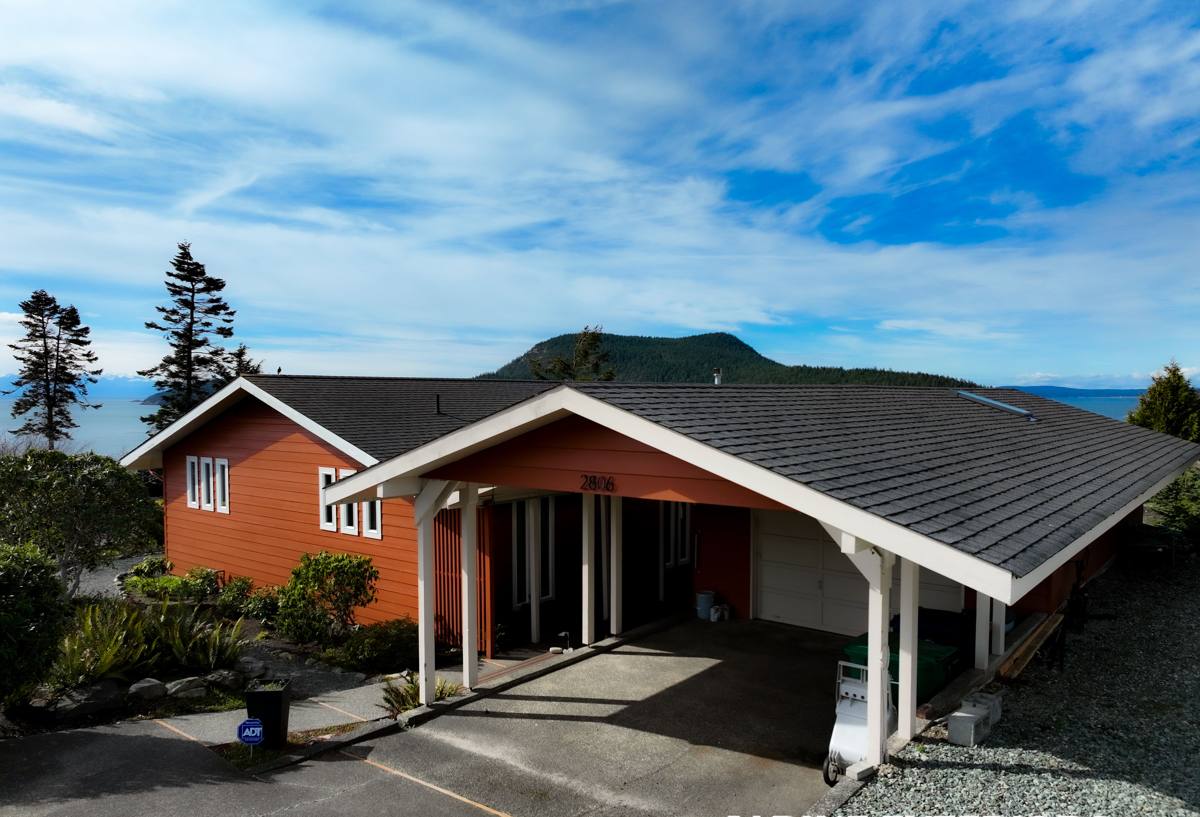
Siding in Fairhaven: Why We Only Install James Hardie
We install James Hardie fiber cement siding exclusively. We don't offer vinyl, LP SmartSide, Cemplank, Allura, primed spruce, or cedar. That's a deliberate standard, not a lack of options, and it's worth explaining why — especially for a neighborhood like Fairhaven where salt air and moisture are constant factors.
What Salt Air Does to Different Siding Materials
Salt air accelerates the breakdown of a lot of common siding products. Vinyl siding can become brittle and discolored faster near the water, and it expands and contracts with temperature swings in ways that open gaps at seams over time. Wood-based products — cedar, primed spruce, engineered wood like LP SmartSide — depend on an intact paint or coating layer to keep moisture out. Once that layer is compromised by salt exposure, UV, and constant damp, the wood substrate underneath is vulnerable to swelling, rot, and delamination at the edges.
Fiber cement doesn't have that same vulnerability. It's made from cement, sand, and cellulose fibers, so it doesn't rot, and it isn't a food source for the fungi that cause wood decay. James Hardie's ColorPlus factory-applied finish is also baked on under controlled conditions, which gives it better adhesion and UV resistance than field-applied paint — a real advantage in a neighborhood that gets a lot of both sun exposure in summer and driving rain the rest of the year.
Moss, Moisture, and Fiber Cement
Moss doesn't cause the same structural damage to fiber cement that it can to wood siding, because there's no organic substrate underneath for it to feed into once moisture works past the surface. That doesn't mean moss won't grow on Hardie board in a shaded Fairhaven yard — it will, given enough time and shade — but it stays a surface issue rather than a rot issue. We install using Hardie's specified clearances and flashing details so water sheds away from the wall assembly instead of sitting against it, which is where most of the real damage in wet climates actually starts.
Roofing for Fairhaven Homes
Roofs in Fairhaven do a lot of work. Between the tree cover and the marine air, moss growth on roofing is one of the most common issues we see, and it's rarely just cosmetic.
Moss and Roof Longevity
Moss holds moisture against roofing material long after rain has stopped elsewhere. On asphalt shingles, that trapped moisture accelerates granule loss and can work under shingle edges over years, especially on north-facing slopes that stay shaded most of the day. We look at moss patterns during any roof inspection as an indicator of where a roof is retaining water longest, which tells us as much about the roof's condition as the moss itself does.
Ventilation and Rain
Proper attic ventilation matters everywhere, but it matters more in a climate with as much sustained damp as ours. Poor ventilation traps moisture under the roof deck, which can lead to problems from the inside out — separate from anything happening on the exterior surface. When we replace or repair a roof, we check ventilation as part of the job, not as an upsell.
Windows: Sealing Out Driving Rain
Wind-driven rain off Bellingham Bay tests window installations in ways that calm-weather climates don't. Water doesn't just run down a window face here — it gets pushed sideways and upward into gaps around frames and under trim. A window that's simply set into an opening without proper flashing and sealant detail can leak for years before the damage shows up inside a wall.
We flash and seal window installations to handle that kind of exposure, integrating the window opening with the surrounding siding and building wrap so water is directed out and down, not trapped behind the frame. This is especially important on the water-facing sides of Fairhaven homes, where the pressure from wind-driven rain is highest.
Decks Built for a Marine Environment
Outdoor living spaces in Fairhaven face constant damp for large parts of the year, plus the same moss and algae growth that affects roofs and siding. Deck framing and ledger connections are worth particular attention here — a ledger board that isn't properly flashed against the house is one of the more common sources of hidden rot on older decks in wet climates. We build and repair decks with attention to drainage, proper flashing at the house connection, and fasteners rated for the moisture and salt exposure this area sees.
Comparing Siding Materials in a Coastal, Moss-Prone Climate
| Material | Salt air exposure | Moss/algae impact | Maintenance need |
|---|---|---|---|
| James Hardie fiber cement | Non-combustible, dimensionally stable, factory finish resists UV fade | Surface growth only, no rot risk | Occasional wash; no repainting on ColorPlus finish |
| Vinyl | Can become brittle, seams can shift with temperature swings | Surface growth, can trap moisture behind panels | Low, but limited repair options if damaged |
| Cedar | Coating breaks down faster near salt air | Feeds fungal growth once coating fails | Regular refinishing required |
| Primed spruce / engineered wood | Vulnerable once coating or edge sealing is compromised | Substrate can swell or delaminate at damaged spots | Ongoing paint and edge maintenance |
This is a general comparison based on how these materials behave in coastal, wet climates — every installation's real-world performance also depends on detailing, ventilation, and upkeep.
Why a Local Crew Matters
A crew that works around Bellingham and Whatcom County regularly knows what Fairhaven's microclimate actually does to a house — which walls take the worst of the driving rain, where moss tends to build up fastest, and how flashing details need to be handled differently near the water than they might be twenty minutes inland. That local knowledge shows up in the small decisions made on a job site: how tight to set siding clearances, where extra flashing is worth the time, which roof slopes need closer attention during inspection. It's the difference between a crew that follows a generic install spec and one that adapts it to the site in front of them.
What to Expect: Our Process
Whether the project is a full siding replacement, a roof, new windows, or a deck, our process starts with an honest look at the current condition of the exterior — not just the surface, but what's happening underneath it where moisture damage usually starts. From there we walk through material options, realistic cost factors, and a timeline that accounts for weather. We don't push a product we don't stand behind, which is exactly why we've standardized on James Hardie for siding rather than offering a menu of materials with different trade-offs.
Seasonal Exterior Maintenance Checklist for Fairhaven Homes
- Clear moss and debris from roof valleys and north-facing slopes before the wet season builds up
- Check gutters and downspouts for clogs, especially under tree cover, so water isn't backing up against the roofline or siding
- Inspect caulking and sealant around windows and doors annually for cracking or gaps
- Look at deck ledger boards and fastener points for signs of moisture staining or soft wood
- Rinse siding periodically to keep salt residue and surface moss from building up
- Watch for paint or finish failure on any wood trim, which is often the first sign of moisture getting past a coating
Cost Factors to Expect
Every Fairhaven property is different, and pricing depends on the scope of work, the current condition of the structure underneath, and the size and complexity of the home. Rather than quote broad numbers that don't reflect your actual project, we walk each property individually and give a clear, itemized estimate before any work begins.
If you're weighing options for siding, roofing, windows, or a deck on a Fairhaven property, we're happy to take a look and talk through what we're seeing — no pressure, no obligation. Reach out using the form below for a free estimate.