 Bellingham Exterior
 Exterior Work Built for Lynden's Climate
Lynden sits inland from Bellingham Bay in the Nooksack River valley, and that location shapes what a house here goes through year after year. Winters bring long stretches of low cloud and steady rain off the Pacific, spring and fall carry heavy fog through the valley, and the flat, open farmland around town means wind-driven rain hits exterior walls at an angle instead of falling straight down. None of this is dramatic weather. It's just relentless moisture, month after month, and that's exactly the kind of exposure that wears out the wrong exterior materials faster than most homeowners expect.
We're a Bellingham-based exterior contractor that works throughout Whatcom County, including Lynden, and we've built our business around materials and installation practices that hold up to this specific climate rather than a generic one. That means siding, roofing, windows, and decks selected and installed with Pacific Northwest moisture in mind, not just whatever's cheapest or fastest to put up.
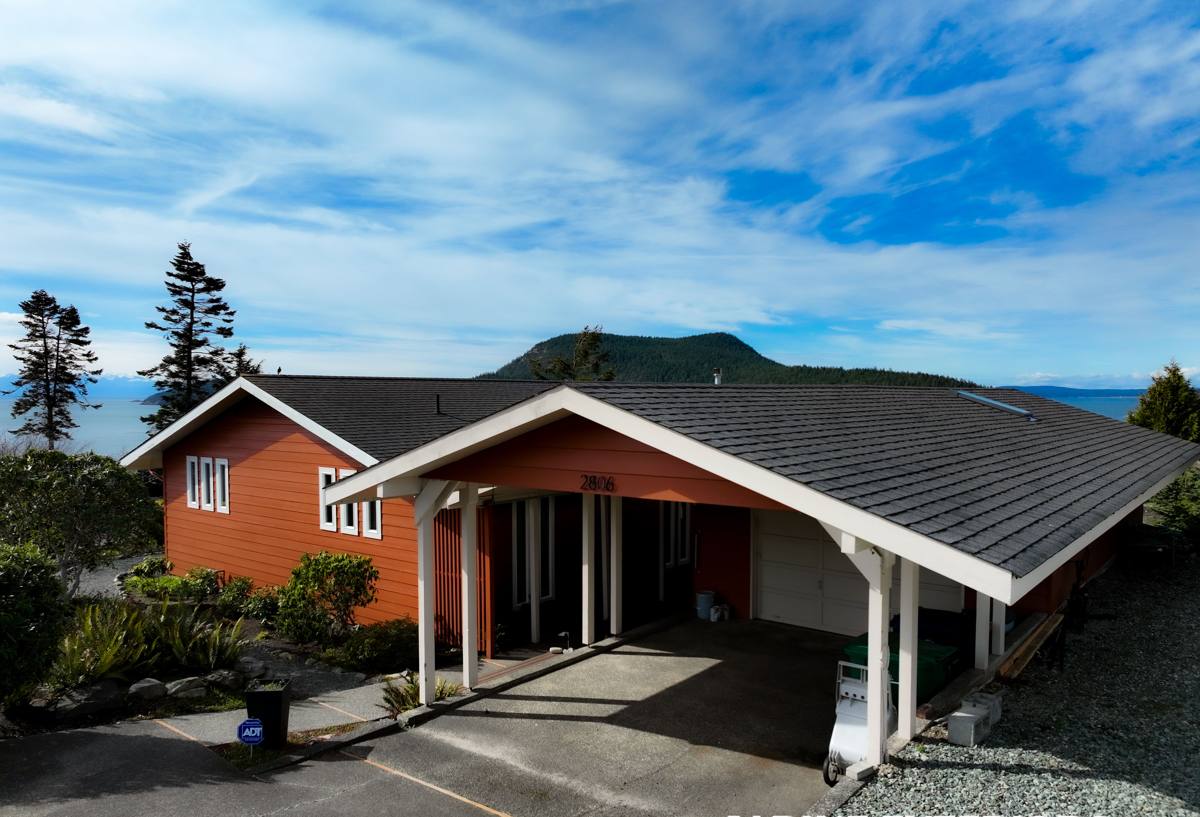
What Whatcom County Weather Does to a House
Persistent Moisture and Moss
Whatcom County doesn't get the kind of intense storms that show up in national weather headlines. What it gets instead is worse for a building envelope in some ways: long seasons of low-intensity rain and damp air that never fully dries out between events. Roofs, siding, and any exterior wood trim stay wet or damp for extended stretches, especially on north-facing walls and shaded rooflines that don't get much direct sun. That's a moss and algae problem as much as it's a water problem. Moss holds moisture against roofing material and siding surfaces, and over time that trapped moisture is what causes real damage — not the rain itself, but the rain that never gets a chance to leave.
Driving Rain on Exposed Walls
Lynden's open, flat terrain means wind has room to build before it hits a house. Wind-driven rain finds its way into laps, seams, and fastener penetrations that would stay dry in calmer conditions. This is where the quality of the installation matters as much as the material itself — flashing details, house wrap integration, and proper overlap at siding joints are what actually keep water out, regardless of what product is on the wall.
Freeze-Thaw Swings
Winter in Lynden isn't brutally cold, but it does dip below freezing regularly, and it swings back above freezing just as often. Materials that absorb water and then freeze are put through repeated expansion and contraction cycles over a winter. Products that hold water — untreated wood trim, some composite products, and siding with compromised caulking or paint — are the ones that show cracking, splitting, and paint failure first.
Siding: Why We Only Install James Hardie
We install James Hardie fiber cement siding exclusively. We don't install vinyl, LP SmartSide, Cemplank, Allura, or primed wood siding like spruce or cedar, and that's a deliberate professional standard, not a sales gimmick. Each of those products has legitimate strengths, but each also has a real-world trade-off that shows up over time in a climate like this one.
- Vinyl siding is inexpensive and low-maintenance, but it expands and contracts with temperature swings, can warp or crack in impacts, and doesn't hold paint if a color change is ever wanted later.
- LP SmartSide and other engineered wood products perform well when installation and maintenance are perfect, but they're wood-based, and wood-based siding is inherently more vulnerable to sustained moisture exposure — exactly the condition Whatcom County winters create.
- Cemplank and Allura are fiber cement products similar in concept to James Hardie, but we've standardized on one manufacturer so we can guarantee consistent installation specs, warranty coverage, and factory finish quality across every job.
- Primed spruce or cedar is a traditional, attractive option, but bare wood siding demands a repainting and caulking maintenance schedule that most homeowners underestimate, and a missed cycle in a wet climate leads to rot faster than in drier regions.
James Hardie fiber cement is non-combustible, doesn't absorb water the way wood-based products do, and holds its factory-applied ColorPlus finish for years without the repainting cycle that wood and some engineered products require. Hardie's HZ5 product line is specifically engineered for colder, wetter climate zones like ours, and the company backs its siding with a strong, transferable limited warranty. When it's installed to manufacturer spec — correct clearances, proper flashing, correct fastening — it's one of the most durable siding systems available for a place like Lynden.
James Hardie Product Lines We Work With
| Product | Typical Use | Why It Fits Whatcom County |
|---|---|---|
| HardiePlank lap siding | Most common wall application | Traditional look, engineered for wet climate zones (HZ5) |
| HardiePanel vertical siding | Modern facades, accent walls | Clean lines, strong moisture resistance |
| HardieShingle | Accent gables, dormers | Detail work without the maintenance of cedar shingle |
| HardieTrim | Corners, fascia, window trim | Won't rot or split like wood trim under repeated wetting |
Roofing That Handles Moss and Moisture
Roofs in Lynden face the same moss and sustained-moisture pressure as siding, but with more consequences if it's ignored — a compromised roof affects everything under it. We look at roof condition as part of any exterior project because a siding or window job is only as good as the roof draining water away from it. That includes checking flashing at valleys, chimneys, and roof-to-wall intersections, since those transition points are where most leaks actually start, not in the middle of open roof sections.
Moss growth on a roof isn't just cosmetic. Moss holds moisture against shingles, works its way under the edges of roofing material, and accelerates granule loss on asphalt shingles over time. Regular moss management and correct ventilation in the attic space both matter more here than in drier parts of the country, because the roof rarely gets a long dry stretch to fully recover between wet periods.
Windows: Sealing Out a Wet Climate
Old or poorly sealed windows are one of the most common sources of moisture intrusion and energy loss in older Lynden homes, especially in farmhouses and older residential construction around town. Wind-driven rain finds gaps around window frames the same way it finds gaps in siding, and a window that isn't sealed and flashed correctly can quietly let water into the wall cavity for years before it shows up as visible damage inside.
When we replace windows, we treat flashing and integration with the surrounding siding as the critical step, not just the window unit itself. A high-quality window installed with poor flashing will still leak. We also talk homeowners through realistic options for energy performance, since Whatcom County's long heating season means window efficiency has a real, measurable effect on utility bills.
Decks Built for Year-Round Exposure
A deck in Lynden sits outside through every one of the conditions described above — rain, moss, freeze-thaw cycles — with none of the protection a wall or roof gets. Deck framing, ledger board attachment, and surface material choice all matter more here than in a dry climate, because a poorly flashed ledger board or a surface that traps water is a rot problem waiting to happen. We build decking with proper drainage, correct ledger flashing against the house, and materials chosen for how they'll actually perform through a wet Pacific Northwest winter, not just how they look on install day.
Why a Local Crew Matters for This Kind of Work
Exterior work in Whatcom County isn't the same job as exterior work in a dry climate, and it isn't quite the same job as coastal Bellingham either — Lynden's inland location, agricultural surroundings, and valley fog patterns come with their own quirks. A crew that works this specific region regularly knows how local moisture patterns behave, which details tend to fail first on older Lynden homes, and how to sequence a project around a weather window that can close quickly. That local knowledge shows up in the small decisions — flashing details, product selection, scheduling — that determine whether an exterior holds up for decades or starts showing problems in five years.
What to Expect When You Work With Us
- An on-site assessment of your current siding, roofing, windows, or deck condition — not a sales pitch, an honest look at what's actually going on
- A clear explanation of why we recommend James Hardie fiber cement siding, and what the real trade-offs are with other products
- Attention to the flashing, drainage, and installation details that matter most in a wet climate, not just the visible finish work
- A written scope and timeline before any work begins
- Straightforward communication throughout the project, including realistic weather-related scheduling
Getting Started
Whether you're dealing with moss buildup on an aging roof, siding that's showing its age, drafty windows, or a deck that needs attention, it helps to have a local crew take a look before small issues turn into expensive ones. We offer free, no-pressure estimates for homeowners in Lynden and throughout Whatcom County — fill out the form below and we'll get in touch to schedule a time to assess your home's exterior.