 Bellingham Exterior
 New Roof Installation Built for Lynden's Weather, Not Just Any Weather
Lynden sits inland from Bellingham Bay in the Nooksack River valley, which means the roof over your head deals with a mix of conditions: long stretches of steady Pacific Northwest rain, damp air that never fully clears through much of the fall and winter, and enough moisture-loving moss and moss spores drifting in from the surrounding tree cover and farmland to turn a neglected roof green within a couple of seasons. Add in the salt-laden air that moves inland from Bellingham Bay and the Strait of Georgia during wind events, and you've got a climate that is quietly harder on a roof than it looks on a sunny July afternoon.
A new roof installation here isn't just about picking a shingle color. It's about building an assembly — deck, underlayment, ventilation, flashing, and the finish material — that is matched to how water, moisture, and organic growth actually behave in this part of Whatcom County. Get any one of those layers wrong and the roof will look fine for a year or two before problems start showing up as stains, soft spots, or premature granule loss.
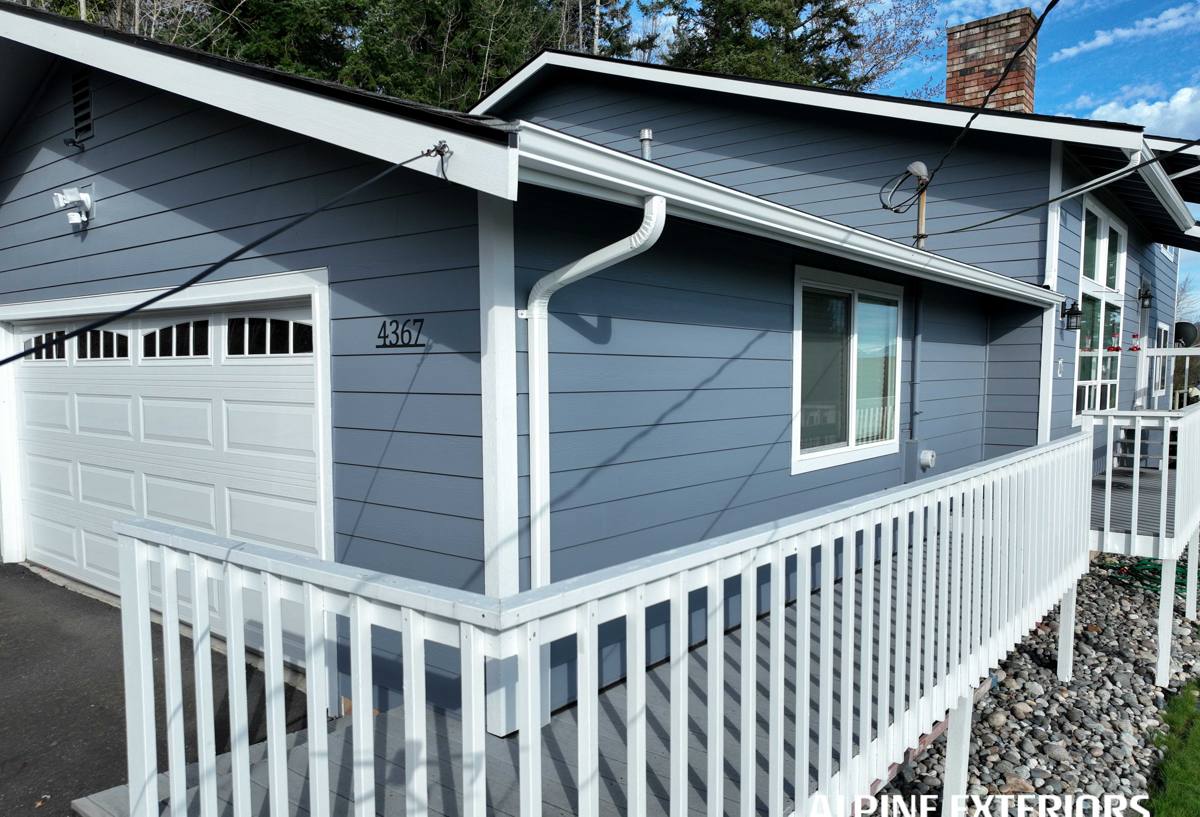
What Lynden's Climate Actually Does to a Roof
Driving Rain and Wind-Driven Water
Whatcom County doesn't usually get dramatic downpours — it gets long, low-intensity rain that falls at an angle when the wind picks up, which is often. That kind of weather pushes water sideways under shingle tabs and around fasteners, exposed nail heads, and poorly lapped flashing. A roof that would hold up fine in a drier climate can leak here simply because the water has more time and more wind assistance to find a way in.
A Long Moss Season
Moss needs shade, moisture, and organic debris to get started, and Lynden's tree cover and farmland setting supply all three for much of the year. Moss holds water against the roof surface, works its way under shingle edges as it grows, and can lift granules and shorten shingle life significantly if it's never addressed. North-facing slopes and roofs shaded by trees are almost always the first to show it.
Salt Air and Corrosion
Homes closer to Bellingham Bay deal with more direct salt exposure, but even inland in Lynden, coastal air moving through the valley during storms carries enough salt to accelerate corrosion on unprotected metal — flashing, fasteners, vents, and gutter hardware. Over a roof's 25-plus year life, that adds up, which is why material choice and fastener quality matter more here than they would in a landlocked climate.
Signs a Repair Won't Cut It Anymore
Not every roof problem means a full replacement, but there are clear signs that patching is no longer the honest recommendation:
- Shingles are curling, cupping, or losing granules across large sections rather than one isolated spot
- Moss has been growing for multiple seasons and has lifted shingle edges rather than just sitting on the surface
- You've had two or more separate leak repairs in different areas within the last few years
- The roof deck feels soft or spongy underfoot in any area during inspection
- Flashing around chimneys, skylights, or valleys is original and visibly rusted, cracked, or separating
- The roof is at or past its material's expected service life and insurance or resale is becoming a factor
What a Correct New Roof Installation Includes
Full Tear-Off and Deck Inspection
We don't recommend installing new roofing over old layers. A full tear-off lets us inspect the actual roof deck for soft spots, rot, or delamination that's often hidden under the old shingles — problems that are common on older Lynden homes where a slow leak went unnoticed for years. Any damaged decking gets replaced before anything new goes down; skipping this step is one of the most common ways a new roof fails early.
Underlayment Matched to the Climate
Given how much time water spends sitting on or moving across a roof here, we use synthetic underlayment as the standard base layer and add self-adhering ice-and-water membrane at vulnerable areas — eaves, valleys, and around penetrations — where wind-driven rain and ice damming risk are highest.
Ventilation That Actually Works
A roof assembly that traps moisture from inside the attic is just as much a problem as one that lets rain in from outside. Balanced intake and exhaust ventilation keeps moist air moving out of the attic, which reduces condensation on the underside of the deck and helps prevent the kind of hidden rot that shortens roof life regardless of how good the shingles are.
Flashing and Detail Work
Most roof leaks don't happen in the open field of shingles — they happen at transitions: chimneys, skylights, dormers, sidewalls, and valleys. New step flashing, counterflashing, and valley metal, properly lapped and sealed, matter more to long-term performance than almost anything else in the job.
Choosing a Roofing Material for Lynden
There's no single "best" roofing material — the right choice depends on your budget, roof pitch, how much shade and moss exposure the roof gets, and how long you plan to stay in the home. Here's how the common options compare for this climate:
| Material | Typical Lifespan | Moss Resistance | Cost Position |
|---|---|---|---|
| Architectural asphalt shingles | 25–30 years | Moderate — improves with algae-resistant granules | Most affordable |
| 3-tab asphalt shingles | 15–20 years | Lower — flatter profile holds more debris and moisture | Lowest upfront cost |
| Standing seam metal | 40–50+ years | High — smooth surface sheds moss and debris well | Higher upfront, lower long-term cost |
| Synthetic/composite shingles | 30–50 years | Good, varies by product | Mid to upper range |
We generally steer homeowners away from flatter, budget shingle profiles on heavily shaded or north-facing roofs in this area — the maintenance burden and moss recurrence tend to outweigh the initial savings. That's a judgment based on how these products perform in wet, shaded conditions, not a knock on any manufacturer.
How Our Installation Process Works
- On-site inspection and estimate — we look at the current roof, attic ventilation, and any problem areas before recommending anything
- Material selection — we walk through the tradeoffs above based on your roof's exposure, pitch, and budget
- Scheduling around weather — in a climate with this much rain, timing the tear-off and dry-in matters, and we plan around forecasts rather than the calendar
- Tear-off, deck repair, and dry-in — old roofing removed, deck inspected and repaired, underlayment installed same-day whenever possible
- Installation of new roofing, flashing, and ventilation — completed to manufacturer specifications so warranties stay valid
- Cleanup and final walk-through — magnetic sweep for debris and a walk-through so you understand what was done and why
Why Hiring a Crew That Already Works in Lynden Matters
Roofing crews that mostly work in drier climates sometimes underbuild for what Whatcom County actually throws at a roof — lighter underlayment, less attention to valley and eave detailing, standard venting that doesn't account for how much moisture sits in the air here for much of the year. A crew that regularly works Lynden and the surrounding Bellingham area already knows which slopes hold moss the longest, which older homes tend to have deck issues under the shingles, and how to sequence a tear-off around a forecast that can change by the hour. That local pattern recognition shows up in fewer callbacks and a roof that's actually built for the conditions it will face, not a generic spec sheet.
What Affects the Cost of a New Roof in Lynden
Every roof is priced individually after inspection, but the main factors that move the number are consistent:
- Roof size and the number of planes, valleys, and penetrations to flash
- Pitch and accessibility — steep or complex roofs take longer and require more safety setup
- Condition of the existing deck — hidden rot found during tear-off adds material and labor
- Material choice — asphalt, synthetic, and metal have different upfront costs and long-term value
- Ventilation and flashing upgrades needed to bring an older roof up to current standards
We'd rather walk your specific roof and give you real numbers than throw out a broad range that doesn't mean much until we've seen the deck condition and complexity in person.
Caring for a New Roof After Installation
A properly installed roof still benefits from basic upkeep in this climate. Keep gutters clear so water isn't backing up under the eaves, trim back overhanging branches that shade the roof and feed moss growth, and have the roof looked at every couple of years so small issues — a lifted shingle edge, early moss growth, a small flashing gap — get caught before they turn into a deck repair. A new roof done right shouldn't need much, but "shouldn't need much" isn't the same as "never look at it again."
If your roof in Lynden is showing its age or you're just planning ahead, we're happy to take a look and give you a straightforward, no-pressure estimate — no scare tactics, just an honest read on what your roof actually needs. Use the form below to get started.