 Bellingham Exterior
 Exteriors Built for York's Corner of Bellingham
York sits close enough to Bellingham Bay and the Salish Sea that homes here deal with a specific combination of punishment most inland neighborhoods never see: salt-laden air moving off the water, long stretches of driving rain through fall and winter, and a moss season that seems to start earlier and last longer every year. None of that is unusual for Whatcom County, but it adds up differently depending on how a house is built and what it's clad in. We work on homes throughout York and the surrounding Bellingham neighborhoods, and we've built our whole approach around exteriors that can actually take what this stretch of Washington throws at them.
This page is meant to be useful whether you're planning a full siding replacement, patching storm damage on a roof, replacing tired windows, or rebuilding a deck that's finally given out. We'll walk through what the climate does to each part of a home's exterior, how our process works, and why we've made some deliberate choices about materials — including refusing to install certain popular siding products.
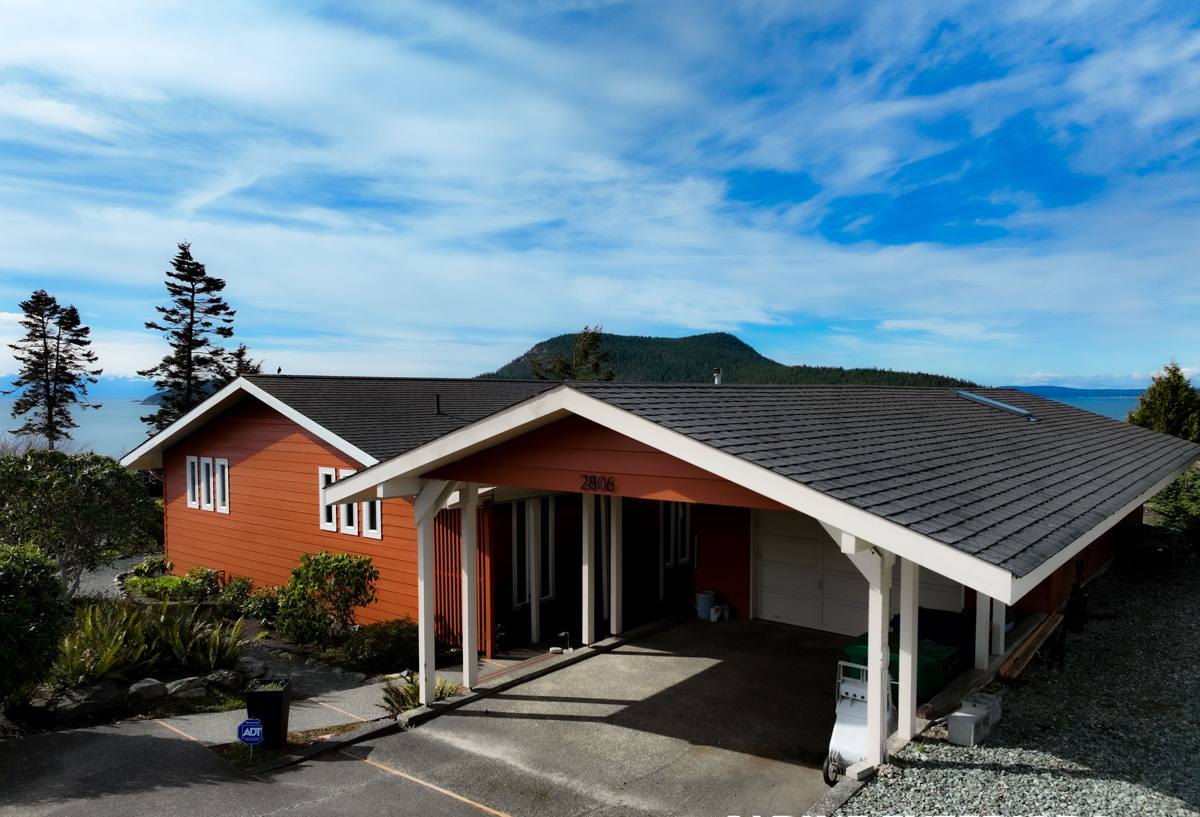
What Salt Air, Rain, and Moss Actually Do to a House
Salt Air
Proximity to Bellingham Bay means airborne salt settles on siding, trim, gutters, and fasteners even a few miles inland. Salt is corrosive to bare or poorly coated metal — nails, flashing, hinges, and screws all degrade faster near the water than they would in a dry inland climate. It also accelerates the breakdown of lower-quality paint films and finishes, which is part of why factory-applied, baked-on finishes hold up so much better here than field-applied paint.
Driving Rain
Whatcom County doesn't get the heaviest rainfall totals in the state, but it gets a lot of wind-driven rain, especially during fall and winter storms coming off the water. Wind-driven rain doesn't just fall on a wall — it gets pushed sideways into laps, seams, and butt joints. Siding systems and window installations that aren't detailed for that kind of exposure will eventually let moisture behind the cladding, where it can sit against sheathing and framing far longer than anyone notices from the outside.
Moss and Sustained Dampness
Long, cool, wet stretches with limited direct sun are ideal moss and algae conditions, especially on north-facing walls, roof slopes, and anywhere shaded by mature trees. Moss holds moisture against a surface for extended periods. On a roof it can lift shingle edges and hold water under them; on siding it keeps a surface damp long after the rain has stopped, which matters a great deal depending on what that siding is made of.
Siding in York: Why the Material Choice Matters More Here
In a climate like this, siding material isn't just an aesthetic decision — it's the single biggest factor in how much maintenance a home needs and how long the exterior actually lasts before something starts failing. We install James Hardie fiber cement siding exclusively, and we want to be upfront about why, because it shapes every recommendation we make.
Why We Don't Install Vinyl, LP SmartSide, or Cedar
Each of these products has legitimate strengths, and we're not going to pretend otherwise:
- Vinyl siding is inexpensive and low-maintenance in mild climates, but it's a plastic product that expands and contracts with temperature swings, can crack in impact or extreme cold, and its seams and J-channels give wind-driven rain more opportunities to get behind it over time.
- LP SmartSide and similar engineered wood products perform well when installed and maintained precisely to spec, but they're wood-based — meaning any lapse in caulking, paint maintenance, or field-cut edge sealing creates a path for moisture absorption and swelling, which is a real risk in a climate with this much sustained dampness.
- Cedar and primed spruce look beautiful and are genuinely traditional in the Pacific Northwest, but real wood siding demands a maintenance schedule — repainting, resealing cut ends, watching for rot at grade — that most homeowners underestimate until they're a decade in and facing a bigger repair than expected.
We're not saying these products fail on every house. We're saying that after years of doing this work in a wet, salt-exposed climate, we decided we didn't want to keep telling homeowners "this will be fine as long as you maintain it perfectly forever." We wanted a product where the moisture behavior, the finish durability, and the warranty structure all held up on their own merits.
Why James Hardie
James Hardie fiber cement is non-combustible, dimensionally stable in wet-dry cycling, and available in HZ5 formulations engineered for exactly this kind of marine, high-moisture climate. The ColorPlus factory finish is baked on under controlled conditions rather than brushed on in the field, which means far more consistent coverage and resistance to fading and chipping than site-applied paint — a real advantage when salt air is working against every painted surface on the house. Hardie backs the product with a strong transferable warranty, which matters both for your own peace of mind and for resale. When it's installed correctly — proper clearances, correct fastening, sealed joints — it's a system built to handle sustained coastal exposure without the constant maintenance loop that wood and vinyl both eventually demand.
Roofing for a Long Wet Season
Roofs in York take a beating from the same conditions that affect siding: driving rain testing every flashing point, and moss finding a foothold on shaded or north-facing slopes. We look closely at flashing detail around chimneys, valleys, and roof-wall intersections, since that's where the majority of leaks in this climate actually start — not from failed field shingles, but from compromised flashing and underlayment at transitions. Proper attic and roof ventilation also matters more here than in drier climates, since trapped moisture under a roof deck accelerates rot and gives mold a place to take hold.
Signs a Roof Needs Attention
- Moss buildup on shaded slopes or along ridge lines
- Granule loss showing up in gutters
- Curling, lifted, or missing shingles after a windstorm
- Staining on interior ceilings, especially near chimneys or valleys
- Sagging or soft spots when walking the roof deck
Windows: Sealing Out Salt Air and Driving Rain
Old, poorly sealed windows are one of the most common sources of hidden moisture intrusion we find on Bellingham-area homes. Wind-driven rain will find any gap in flashing tape, sill pan, or perimeter sealant, and once water gets behind a window frame it can sit against wall framing for a long time before it shows up as visible damage. When we replace windows, we pay close attention to flashing sequencing and sill pans, not just the window unit itself, because in this climate the installation detail matters as much as the product.
Decks: Standing Up to Pacific Northwest Weather
Decks in this part of Whatcom County spend most of the year either wet or damp, which is hard on fasteners, ledger connections, and any wood surface that isn't properly sealed or drained. We build and repair decks with attention to proper ledger flashing, drainage away from the house, and hardware rated for wet, coastal exposure — the same corrosion concerns that affect siding fasteners apply here too. A deck that traps moisture against the house band joist is a slow, quiet way to create rot damage that's expensive to fix later.
Why a Local Crew Matters
A crew that works Bellingham and Whatcom County neighborhoods regularly already knows which details matter most on a given street — how much wind exposure a lot gets off the bay, which walls stay shaded and mossy longest, how local permitting and inspection works. That local knowledge shows up in small decisions: where we add extra flashing, how we detail a butt joint, which side of the house needs the most attention. It also means we're a short drive away if a question comes up after the work is done, not a crew that finished the job and moved three counties away.
How We Approach a Project
- Walk the exterior with you and point out what the climate has actually done to the current siding, roof, windows, or deck
- Give an honest assessment of what needs replacement now versus what can wait
- Explain material and product options plainly, including trade-offs — not just the option we sell
- Provide a written scope and estimate before any work begins
- Detail flashing, fastening, and sealing to the standard this climate actually requires, not just the manufacturer's minimum
Cost Factors to Understand Before You Budget
| Factor | Why It Affects Cost |
|---|---|
| House size and wall complexity | More corners, gables, and trim detail mean more labor and material waste |
| Existing exterior condition | Rot or water damage found during tear-off adds repair scope before new material goes on |
| Material selection | Fiber cement, roofing type, and window grade all carry different material costs and lifespans |
| Access and site conditions | Steep lots, limited access, or mature landscaping can add labor time |
| Scope bundling | Combining siding, roofing, or window work in one project can reduce duplicated setup and staging costs |
A Simple Homeowner Checklist
- Check north-facing and shaded siding or roof areas for moss buildup each fall
- Look at caulking and sealant around windows and doors for cracking or gaps
- Keep gutters clear so water isn't overflowing against siding or fascia
- Watch for soft or discolored siding near the ground, decks, or downspouts — early signs of moisture damage
- Have a roof and exterior walkthrough done before the wettest months of the year, not after a leak shows up
Let's Take a Look at Your Home
If you're in York or anywhere else in the Bellingham area and dealing with tired siding, a roof that's due for a closer look, drafty windows, or a deck that's seen better days, we're glad to come take a look. There's no pressure and no cost to get our honest read on what your home needs — fill out the form below and we'll get in touch to schedule a free estimate.