 Bellingham Exterior
 Exteriors Built for Edgemoor's Waterfront Climate
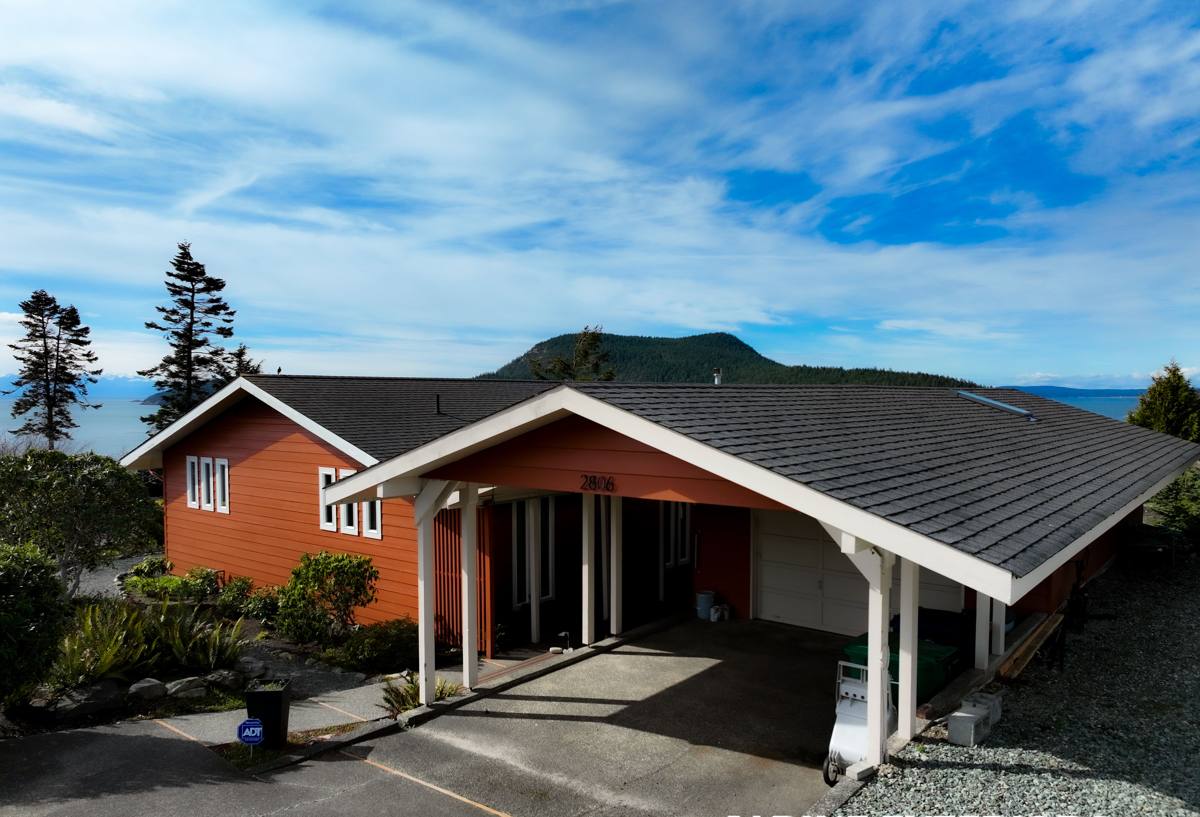
Edgemoor sits on the bluffs above Bellingham Bay, and that setting is exactly what makes exterior work here different from a job three miles inland. Homes in this neighborhood catch salt-laden air coming off the water, take on driving rain during the fall and winter storm cycles that roll through Whatcom County, and sit under enough tree canopy that moss and algae growth is a year-round concern rather than a seasonal nuisance. We've worked on enough homes along this stretch of Bellingham to know that "standard" exterior materials and generic installation practices don't hold up the way they should out here.
This page walks through what we actually see on Edgemoor homes, how our siding, roofing, window, and deck work is approached for this specific environment, and why we think a local crew — not a regional franchise or a crew driving in from out of county — makes a measurable difference in how an exterior performs ten and twenty years down the line.
What Salt Air and Constant Moisture Do to a Home
Proximity to Bellingham Bay means Edgemoor homes deal with airborne salt in addition to the region's already heavy rainfall. Salt air accelerates corrosion on fasteners, flashing, and any exposed metal trim, and it can degrade certain paints and coatings faster than manufacturers' standard test data would suggest for an "average" Pacific Northwest home. Combine that with the driving, wind-blown rain that comes off the water during winter storms — rain that hits siding and window trim at an angle instead of falling straight down — and you get a lot more water intrusion opportunity at every seam, joint, and penetration than a home would face in a drier, more sheltered part of the county.
Add the tree cover common to Edgemoor's wooded lots and you get shaded, slow-drying surfaces — the exact conditions moss, algae, and mildew need to establish themselves on roofing, siding, and deck boards. None of this means an Edgemoor home is doomed to premature failure. It means the materials and installation details have to account for a genuinely tougher-than-average exposure, which is the lens we use on every job in this neighborhood.
The Moss Season Reality
In Whatcom County generally, and on shaded Edgemoor lots especially, moss isn't a once-a-year cleanup job. It's an ongoing pressure that starts building again within weeks of a cleaning if the underlying roofing and siding details weren't set up to shed water and dry out quickly. Moss holds moisture against roofing material and can work its way under shingle edges and into siding laps, which is why we pay close attention to drainage planes, ventilation, and material selection rather than treating moss control as a maintenance afterthought.
Siding: Why We Install Only James Hardie Fiber Cement
Siding is the single biggest factor in how an Edgemoor exterior handles salt air and driving rain, and it's also where we've drawn a hard line as a company: we install James Hardie fiber cement siding exclusively. We don't install vinyl, LP SmartSide, Cemplank, Allura, or primed wood siding like spruce or cedar. That's not a marketing position — it's a standard we hold because of what we've seen these products do (and not do) in this exact climate.
Fiber cement is non-combustible, dimensionally stable, and doesn't absorb and release moisture the way wood-based or engineered-wood products do. In a marine-influenced environment like Edgemoor's, that moisture stability matters more than in a drier climate, because the constant wet-dry cycling is what drives premature swelling, delamination, and paint failure in less moisture-resistant materials. James Hardie's ColorPlus factory-applied finish is baked on under controlled conditions rather than field-painted, which gives it better adhesion and UV resistance than site-applied paint on lap siding — a real advantage when a home is getting more sun exposure on the water-facing side and more shade and moisture on the tree-covered side, sometimes on the same wall.
Hardie also makes HZ5 and HZ10 product lines specifically engineered for climate zones with heavier moisture exposure, which is relevant for a bluff-top, bay-adjacent neighborhood like Edgemoor. The warranty structure is transferable, which matters for a coastal Bellingham neighborhood where homes change hands and buyers want documented protection on a major exterior investment, not just a manufacturer's general assurance.
What We're Saying No To, and Why
- Vinyl siding: Lightweight and inexpensive, but it can warp or crack under UV and temperature swings and doesn't offer the impact or fire resistance of fiber cement.
- LP SmartSide and other engineered wood products: Improved over older wood composites, but still wood-based at the core, meaning ongoing sensitivity to sustained moisture exposure — a real factor in a shaded, salt-air environment like Edgemoor.
- Cemplank and Allura: Also fiber cement, and reasonable products in general, but we've standardized our crews, training, and warranty backing entirely around the Hardie system rather than running two different install specs.
- Primed spruce or cedar: Beautiful when new, but primed wood requires disciplined repainting on a schedule most homeowners underestimate, and in constant damp shade it's more prone to rot at end grain, laps, and fastener points.
We'd rather be straightforward about this up front than sell an Edgemoor homeowner a product we don't believe holds up to the specific punishment this neighborhood's climate delivers.
Roofing for a Wooded, Waterfront Lot
Roofing decisions in Edgemoor need to account for both wind-driven rain off the bay and moss pressure from tree cover. That means correct underlayment and flashing detail at every valley, penetration, and edge — the places where driving rain finds its way in — and it means choosing roofing materials and ventilation strategies that let a roof dry out between rain events rather than staying damp for days at a time. Proper attic and roof ventilation also reduces the temperature and moisture differential that can accelerate moss growth and shorten shingle life.
We also look hard at gutter sizing and roof-to-wall flashing on Edgemoor jobs, since undersized or poorly integrated gutter systems are one of the most common causes of hidden water damage we find at the base of exterior walls and around window trim on homes in wetter parts of the county.
Windows: Managing Condensation and Wind-Driven Rain
Older windows on Edgemoor homes often show two related problems: condensation between panes (a sign the seal has failed) and water staining at the sill or interior trim from wind-driven rain working past aging flashing. Replacement windows address the energy and comfort side of things, but the flashing and integration with the siding system is what actually determines whether a window stays dry through a real Bellingham winter storm. We tie window flashing into the housewrap and siding drainage plane as one continuous system rather than treating windows as a standalone product swap, which is especially important on a wall that's taking rain at an angle off the water.
Decks: Built for Salt Air and Standing Water
Decks on Edgemoor properties face the same salt-air corrosion risk as siding fasteners, plus the added challenge of horizontal surfaces that collect standing water and shaded debris. Fastener selection matters more here than on an inland deck — coastal-rated hardware resists corrosion that can otherwise stain decking and weaken connections over time. Proper board spacing, joist flashing, and ledger board waterproofing all matter more in an environment where a deck rarely gets a long, uninterrupted dry stretch to fully shed moisture.
Why a Local Bellingham Crew Matters Here
Edgemoor's combination of bay exposure, tree cover, and driving rain isn't something you learn from a general training manual — it's something a crew learns by working on homes in this exact part of Whatcom County, season after season. A local crew knows which details tend to fail first on a bluff-facing wall versus a tree-shaded one, understands how local permitting and code requirements apply to exterior work in this jurisdiction, and can respond quickly if a storm exposes an issue rather than scheduling a callback weeks out. We're not a national franchise cycling through unfamiliar territory — we're working in Bellingham's specific climate on an ongoing basis, which shapes every material and installation decision we make.
Comparing Siding Options for a Marine-Exposure Neighborhood
| Material | Moisture Behavior in Salt Air | Maintenance Burden | Typical Warranty |
|---|---|---|---|
| James Hardie fiber cement | Dimensionally stable, factory finish resists coastal wear | Low — periodic washing, no repainting cycle needed for years | Transferable, product + finish coverage |
| Vinyl | Doesn't rot, but can warp/fade under UV and temperature swings | Low, but limited repair options if damaged | Varies widely by manufacturer/grade |
| LP SmartSide / engineered wood | Wood-based core stays moisture-sensitive at cut edges and seams | Moderate — edge sealing and inspection needed | Manufacturer-specific, often exclusions for moisture damage |
| Primed cedar/spruce | Highest moisture sensitivity; damp shade accelerates rot risk | High — repainting on a set schedule required | Typically no material warranty beyond the paint product |
Signs Your Edgemoor Exterior Needs Attention
- Moss or dark streaking building back quickly after cleaning, especially on shaded roof slopes or north-facing siding
- Soft spots, bubbling paint, or visible swelling at siding seams and butt joints
- Rust staining running down from fasteners, flashing, or hardware
- Condensation or fogging between window panes
- Deck boards that stay damp or spongy well after the rain has stopped
- Gutters overflowing or pulling away from the fascia during heavy storms
Catching these early is far cheaper than repairing structural water damage behind siding or under a roof deck, which is often invisible until it's significant.
What to Expect Working With Us
We start with an honest look at what your exterior is actually facing — the exposure of your specific lot, the age and condition of the existing siding, roofing, windows, or deck, and where water has historically caused problems. From there we talk through material options, and for siding that conversation is straightforward: we install James Hardie fiber cement because we believe it's the right long-term answer for Edgemoor's climate, and we'll explain the reasoning rather than just asserting it. There's no pressure and no scripted upsell — just a clear picture of condition, options, and realistic costs so you can make the call.
If you're in Edgemoor and dealing with moss buildup, water staining, aging siding, or you're just planning ahead for a home that's going to keep facing salt air and driving rain for decades to come, we're happy to take a look. Reach out for a free, no-pressure estimate using the form below.