 Bellingham Exterior
 Exterior Contracting for Birch Bay Homes
Birch Bay sits right on the water in northern Whatcom County, and that location shapes everything about how a house ages here. Homes a few blocks from the beach take a different kind of beating than homes ten miles inland in Bellingham. Salt-laden air, near-constant onshore wind, driving rain off the Strait, and a moss season that seems to stretch longer every year all work on siding, roofing, trim, and decking in ways that catch a lot of homeowners off guard. We work throughout Whatcom County, and Birch Bay is one of the areas where we spend the most time explaining why "what works in a typical neighborhood" isn't always what works two blocks from the water.
This page covers what we see on Birch Bay homes, how our siding, roofing, window, and deck work is adapted for this specific environment, and why we think a crew that actually understands this stretch of coastline matters more here than in most places.
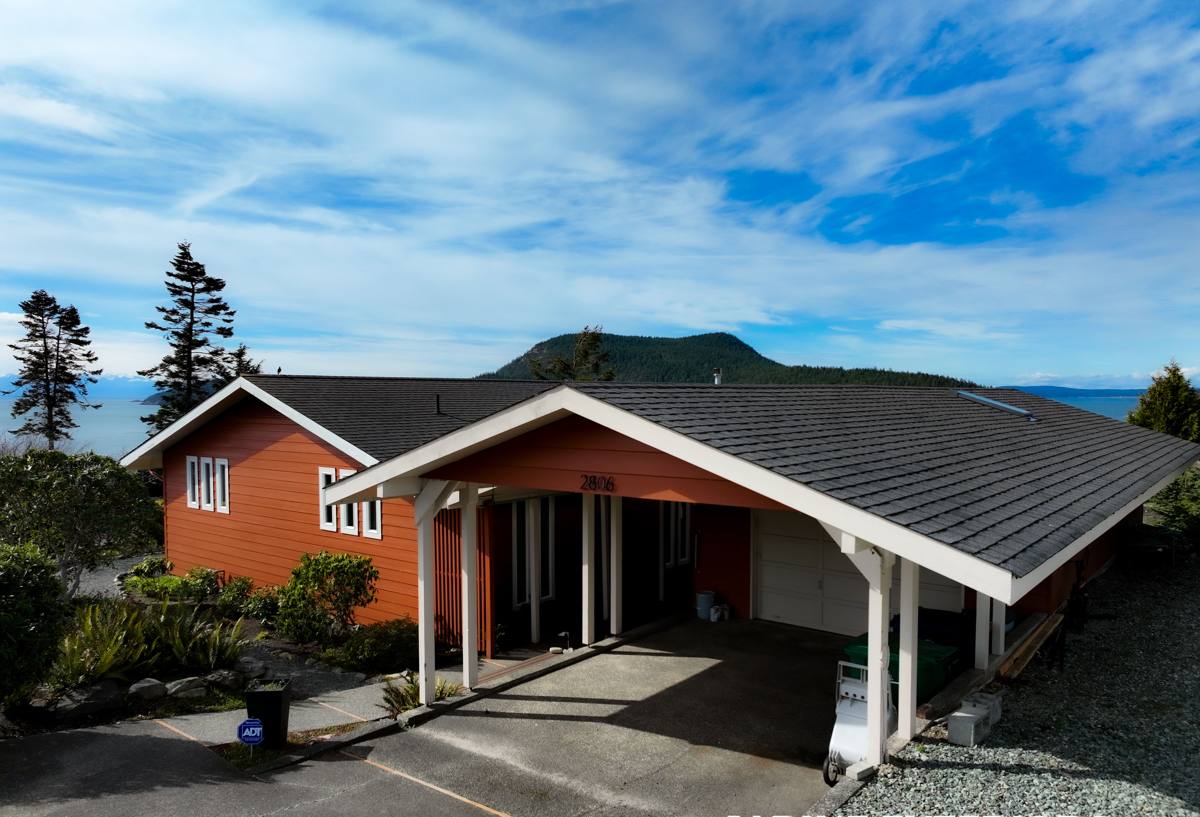
What the Birch Bay Climate Does to a House
Salt Air and Corrosion
Coastal salt spray doesn't just affect boats and railings. It settles on siding, works into fastener heads, and accelerates corrosion on anything metal that isn't rated for a marine-adjacent environment — flashing, nail heads, hinges, gutter hardware. Over years, that corrosion shows up as rust streaking, failed fasteners, and premature paint breakdown, especially on the ocean-facing side of a home.
Wind-Driven Rain
Birch Bay gets exposed to wind off the water in a way that pushes rain sideways into walls rather than letting it run straight down. That matters more than people expect, because a lot of siding and trim products are designed and tested assuming rain falls mostly vertically. Wind-driven rain finds gaps in flashing, works behind poorly lapped siding, and drives moisture into seams that would stay dry in a more sheltered part of the county.
Moss, Algae, and a Long Damp Season
Like most of Western Washington, Whatcom County has a wet season that runs long, but the combination of shade, moisture, and mild temperatures near the water lets moss and algae get a foothold on roofs and north-facing siding earlier in the fall and hang on later into spring. Moss holds moisture against the surface it's growing on, which is a problem for roofing shingles and for any siding material that isn't dimensionally stable when wet.
Wind Exposure
Birch Bay's open exposure to the water also means real wind loads on roofing and siding fasteners, especially on homes closer to the beach or on elevated lots with less tree cover than a typical inland property.
Siding: Why We Only Install James Hardie
We install James Hardie fiber cement siding exclusively. We don't install vinyl, LP SmartSide, Cemplank, Allura, primed spruce, or cedar, and in a place like Birch Bay that decision matters more than it might in a drier, more sheltered part of the state.
Wood-based and engineered wood siding products can perform well in the right conditions, but they depend on an intact factory coating and careful field sealing of every cut edge to keep moisture out. In a salt-air, wind-driven-rain environment, that margin for error shrinks. Any nick in the coating, any cut edge left unsealed, any lap joint that isn't detailed correctly becomes a point where moisture gets in — and once wood-based product starts absorbing water, swelling and softening follow. Vinyl siding, for its part, is a lower-maintenance option in many climates, but it isn't rigid, it can distort in sustained wind and temperature swings, and it doesn't offer the fire resistance or long-term color retention that fiber cement does.
James Hardie fiber cement is cement-based, not wood-based. It doesn't absorb water the way wood products can, it's non-combustible, and it holds up to direct sun and salt exposure without the swelling, delamination, or coating breakdown we've seen on other products installed near the water. Hardie's ColorPlus factory finish is baked on and warrantied against fading and peeling, which matters on a home that's facing sun reflecting off open water for a good part of the year. For a coastal Whatcom County property, we think it's the only siding worth putting our name behind.
Hardie Product Lines We Use
| Product Line | Best For | Notes |
|---|---|---|
| HardiePlank Lap Siding | Most homes, classic and modern styles | Available in smooth or cedar-textured finish |
| HardieShingle | Accent gables, Cape Cod and cottage styles | Popular for Birch Bay's beach-house aesthetic |
| HardiePanel | Modern vertical siding, board-and-batten looks | Common on garages and contemporary builds |
| HardieTrim | Corners, fascia, window and door trim | Paired with lap or panel siding for a finished look |
Roofing
Roofing in Birch Bay has to account for both moss and wind. We look at ventilation, underlayment, and flashing details as closely as the shingle or roofing material itself, because a roof that sheds water well but traps moist air underneath will grow moss faster and shorten its own lifespan. On homes closer to the water, we also pay extra attention to fastener corrosion resistance and to how flashing is lapped at valleys and penetrations, since wind-driven rain finds weak details that a calmer inland roof would never expose.
Regular moss removal and gutter maintenance matter more here than in a lot of other parts of the county — moss left to grow on a roof holds water against the surface and can work under shingle edges over a season or two.
Windows
Older single-pane and early dual-pane windows are common in Birch Bay's mix of long-time beach cottages and newer builds. On a windy, salt-exposed lot, failing seals and worn weatherstripping show up as drafts, condensation between panes, and higher heating bills faster than they would somewhere more sheltered. We replace windows with an eye toward proper flashing and sealing at the rough opening — a well-chosen window installed with a poor water management detail will still leak in a wind-driven rain event, so the installation matters as much as the product.
Signs a Home May Need Window Attention
- Visible condensation or fogging between panes
- Noticeable drafts near the frame during windy weather
- Wood rot or soft trim at the sill or casing
- Difficulty opening, closing, or locking
- Rising heating bills without a clear cause
Decks
A deck in Birch Bay often does double duty as the main spot for taking in the water view, which means more sun and salt exposure than a deck tucked under trees elsewhere in the county. Fastener corrosion is a real issue here — we use hardware rated for exterior and coastal exposure rather than standard-grade fasteners, since standard hardware can start showing rust streaks within a season or two this close to the water. Framing, ledger board attachment, and proper flashing where the deck meets the house are just as important as the decking material itself, especially given how much wind-driven rain can find its way behind a poorly flashed ledger.
Why a Local Crew Matters in Birch Bay
Birch Bay isn't a generic Pacific Northwest job site — it's a specific microclimate within Whatcom County, and the details that matter here (fastener corrosion resistance, wind-driven rain detailing, moss-prone roof geometry) are the kind of thing you only learn by working on homes in this exact area over time. A crew that mostly works inland projects can still do competent work, but they're less likely to catch the small details — an unsealed cut edge on a wind-facing wall, standard-grade deck hardware, a flashing detail that's fine in a sheltered yard but fails two blocks from the water — that make the real difference in how long an exterior job actually lasts here.
We're based in Bellingham and work throughout Whatcom County, including Birch Bay, so we're not learning the local conditions on your project — we already know what this stretch of coastline does to a house.
What to Expect When You Call Us
Our Process
- A walkthrough of your home's exterior, noting existing damage, moisture entry points, and wind/salt exposure
- An honest assessment of what needs attention now versus what can wait
- A written estimate with clear scope — no vague line items
- Scheduling that accounts for Whatcom County's weather windows, since some exterior work is best timed around the wetter months
Questions Worth Asking Any Contractor Before Hiring
- Are you licensed and insured to work in Washington State?
- What fastener and flashing details do you use for coastal exposure?
- Can you explain, product by product, why you use what you use?
- What does your warranty actually cover, and for how long?
- Do you have experience working specifically in this area, not just the general region?
Cost Factors to Understand Before You Budget
| Factor | Why It Matters in Birch Bay |
|---|---|
| Proximity to water | Homes closer to the beach need more corrosion-resistant hardware and detailing |
| Existing moisture damage | Hidden rot behind old siding or around windows adds scope once uncovered |
| Roof pitch and shading | Steeper, more shaded roofs need more moss-prevention attention over time |
| Access and site conditions | Beachfront lots and elevated sites can affect staging and labor time |
| Material choice | Fiber cement siding costs more upfront than vinyl but requires far less long-term maintenance |
If your Birch Bay home is due for new siding, a roof inspection, window replacement, or deck work, we're happy to come take a look and give you a straightforward, no-pressure estimate. Fill out the form below and we'll get in touch to schedule a time.