 Bellingham Exterior
 Roofing on the Bay Is Its Own Challenge
Birch Bay sits right on the water, and that changes what a roof has to deal with compared to a home a few miles inland in Bellingham or Ferndale. The salt air coming off the bay works its way into metal fasteners, flashing, and vent caps year-round. Add in the driving rain that blows nearly sideways during winter storms off the Strait of Georgia, and a long, damp moss season that runs from fall through spring, and you have a roof environment that's genuinely harder on materials than most of Whatcom County.
None of this means Birch Bay roofs fail faster than they should. It means they need repairs done with an understanding of what's actually attacking them — corrosion, wind-driven water intrusion, and organic growth — rather than a generic patch job that ignores the coastal setting.
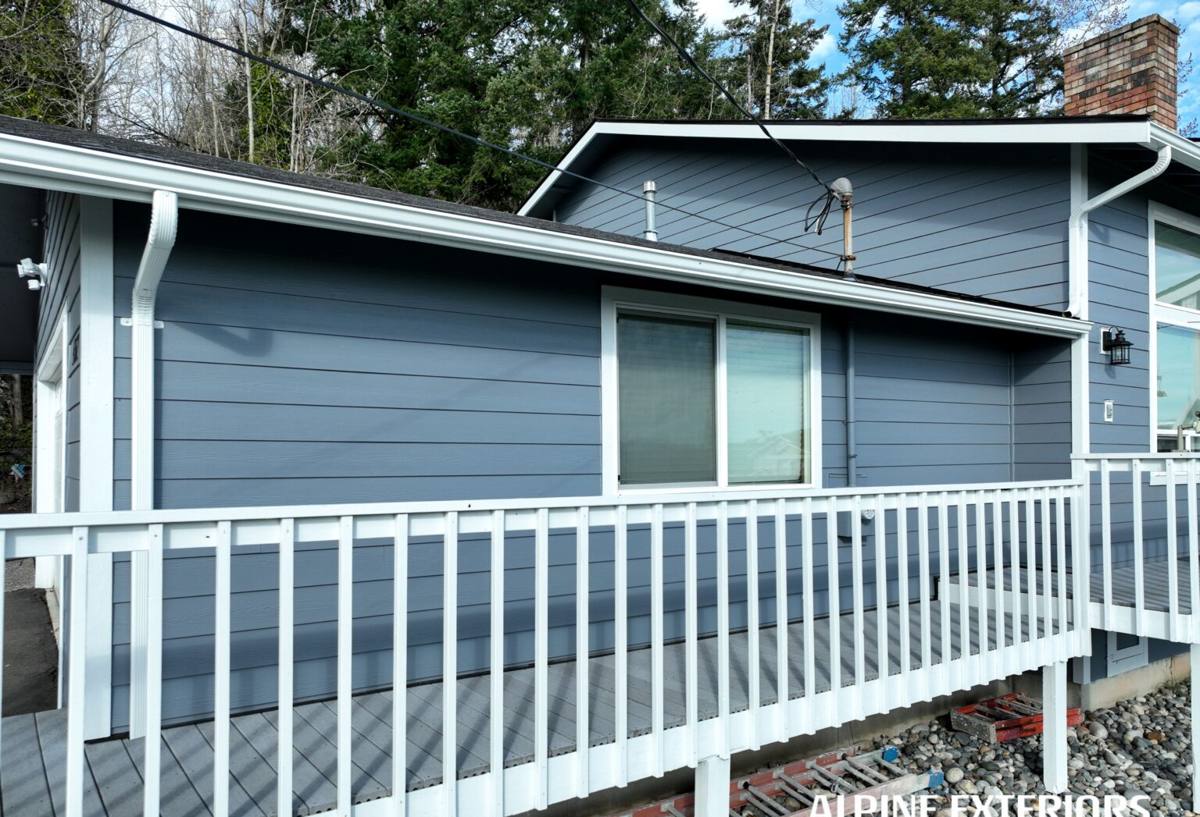
What Salt Air, Rain, and Moss Actually Do to a Roof
Salt Air and Metal Fatigue
Airborne salt accelerates corrosion on anything metal on your roof: nail heads, flashing around chimneys and vents, gutter hangers, and metal roofing panels themselves if you have them. Corroded fasteners back out or lose their grip, and pitted flashing stops shedding water the way it's supposed to. This is a slower process than storm damage, but it's constant, and it's specific to homes within a mile or two of the shoreline.
Driving Rain and Wind-Driven Water
Rain that falls straight down is easy for a roof to handle. Rain that's being pushed sideways by wind off the water finds every gap — under shingle tabs, around poorly sealed flashing, at ridge caps — and drives water uphill under the roofing material. This is why a repair that only addresses the visible leak point, without checking the flashing and underlayment nearby, often fails again in the next storm.
Moss and the Long Wet Season
Whatcom County's moss season is long because the shade, moisture, and mild temperatures rarely let a roof fully dry out for months at a time. Moss holds moisture against the roofing material, works its way under shingle edges as it grows, and can lift tabs enough to let water in. Left unaddressed, moss growth is one of the most common reasons a repairable roof turns into a replacement job.
Signs a Birch Bay Roof Needs Repair
- Granule buildup in gutters or at the base of downspouts (a sign of shingle wear, worse near the coast)
- Moss or dark streaking concentrated on north-facing or shaded slopes
- Rust staining below metal flashing, vents, or fasteners
- Soft spots or discoloration on ceilings after a windy rainstorm, not just steady rain
- Lifted or curling shingle tabs, especially on the side of the roof that faces the bay
- Gaps or separation at flashing around chimneys, skylights, and roof-to-wall transitions
- Visible daylight or gaps in the attic at ridge vents or soffits
Any one of these on its own might be minor. Several showing up together, especially after a fall or winter storm, usually means it's time for a proper inspection rather than waiting.
What a Correct Repair Actually Involves
A roof repair done right isn't just sealing the spot where water is showing up inside the house. Water often travels along the roof deck before it drips through, so the interior stain and the actual entry point can be several feet apart. A correct repair process looks like this:
- Trace the leak from the interior sign back to its real source on the roof, not just the nearest visible damage.
- Inspect flashing, underlayment, and fasteners in the surrounding area, not just the failed spot, since salt-air corrosion and wind-driven rain tend to affect a whole section rather than one shingle.
- Check the roof deck itself for soft or rotted wood before closing anything back up — patching over a wet deck just delays a bigger repair.
- Replace damaged shingles, flashing, or underlayment with materials matched to what's already on the roof, or upgraded where the original material was clearly undersized for coastal exposure.
- Reseal and re-secure with fasteners and sealants rated for the corrosion and moisture load this close to the water.
Skipping steps two and three is the most common reason a "fixed" roof leaks again within a year — the visible symptom gets addressed, but the underlying cause doesn't.
Roofing Materials and How They Hold Up in Birch Bay
Most homes in Birch Bay and the surrounding areas use asphalt composition shingles, with a smaller number of cedar shake and metal roofs. Each has different repair considerations given the local climate.
| Material | Salt Air Exposure | Moss Resistance | Typical Repair Notes |
|---|---|---|---|
| Asphalt composition shingle | Moderate — fasteners and flashing are the weak point, not the shingle itself | Low to moderate; algae-resistant shingles help but don't eliminate moss | Most common repair type; individual shingle and flashing replacement is usually straightforward |
| Cedar shake | Moderate — wood itself holds up, but hardware corrodes | Low; cedar retains moisture and is prone to moss without regular maintenance | Requires more frequent moss removal; rot at shaded, moisture-holding spots is the main repair driver |
| Metal roofing | Higher risk if fasteners and coatings aren't marine-rated | High resistance to moss growth | Repairs usually center on fastener corrosion and sealant failure at seams and penetrations, not the panels themselves |
We don't push homeowners toward one material over another as a blanket rule — each has honest trade-offs in maintenance, upfront cost, and how it ages on a coastal roof. What matters more is whether the flashing, fasteners, and installation details were done with this specific environment in mind.
Our Repair Process
When we come out for a roof repair in Birch Bay, we start with a full visual inspection of the roof, not just the area you called about. That includes checking flashing, vents, ridge lines, and the attic if it's accessible, since interior moisture signs or insulation staining often tell us more than the roof surface alone. We give you a straight assessment of what's actually failing, what's cosmetic versus structural, and what a repair will realistically fix versus what might be a sign of a bigger issue down the road.
From there we walk you through the repair scope in plain terms before any work starts — what materials we're using, why, and what it should cost. We don't upsell a full replacement when a targeted repair will genuinely hold up, and we don't undersell a repair when the deck or underlying structure needs more attention. If moss is part of the problem, we address the growth as part of the repair rather than just patching around it, since leaving moss in place undermines the fix.
Ongoing Maintenance for a Coastal Roof
A repair is only as good as the maintenance that follows it. For homes in Birch Bay's climate, a few habits go a long way toward avoiding repeat repairs:
- Clear moss buildup at least once a year, more often on heavily shaded roof sections
- Keep gutters and downspouts clear so wind-driven rain has somewhere to go instead of backing up under shingle edges
- Have flashing and fasteners checked every couple of years given the accelerated corrosion this close to the water
- Trim back overhanging branches to reduce shade and debris, both of which feed moss growth
- Address small leaks early — a small flashing repair now is a fraction of the cost of deck repair or replacement later
Why It Matters That We Already Work in Birch Bay
A crew that mostly works inland doesn't see salt-air corrosion or wind-driven rain damage often enough to know what it actually looks like versus a normal aging roof. We work Birch Bay and the rest of Whatcom County regularly, so we know which failure patterns are typical for homes this close to the water versus which ones point to something else entirely — a ventilation problem, a original installation shortcut, or storm damage that's more serious than it looks from the ground.
That local familiarity also means we're not guessing at what materials and fastener specs actually hold up here. We use what we've seen work on coastal roofs in this area, not just what's standard for a roof twenty miles inland where the air and rain exposure are milder.
Repair or Replace? A Straight Answer
Not every roof problem in Birch Bay needs a full replacement, and not every leak is a quick fix. A few honest factors that push the decision one way or the other:
| Factor | Leans toward repair | Leans toward replacement |
|---|---|---|
| Roof age | Under 15-20 years for asphalt, with damage isolated to one area | Near or past expected lifespan, especially with widespread wear |
| Extent of damage | One or two sections, isolated flashing or fastener failures | Multiple areas failing, or damage found across several roof planes |
| Roof deck condition | Solid, dry wood under the damaged area | Soft, rotted, or repeatedly wet decking |
| Moss/algae history | Manageable with cleaning and targeted repair | Long-term moss damage has compromised multiple sections |
We'll tell you honestly which side of that line your roof falls on. If a repair is the right call, that's what we'll recommend and price out.
If you're dealing with a leak, moss buildup, or storm damage on a Birch Bay roof, we're happy to take a look and give you a straightforward, no-pressure estimate — just fill out the form below to get started.