 Bellingham Exterior
 Two Very Different Materials Wearing Similar Colors
From the curb, engineered wood siding and fiber cement siding can look surprisingly alike — both come pre-primed or factory-finished, both mimic cedar lap or panel profiles, and both are marketed as low-maintenance upgrades over solid wood. But the two products are built from fundamentally different raw materials, and that difference matters more in Bellingham than it would in a dry climate. LP SmartSide is an engineered wood product: strand board or fiberboard made from wood fibers bonded with resin and treated with a zinc-borate additive to resist fungal decay and insects. James Hardie siding is fiber cement: a mix of Portland cement, sand, and cellulose fiber, cured into a dense, inorganic board. One is wood, chemically treated to fight the things wood is naturally vulnerable to. The other simply isn't organic material to begin with. That distinction is the whole reason this page exists.
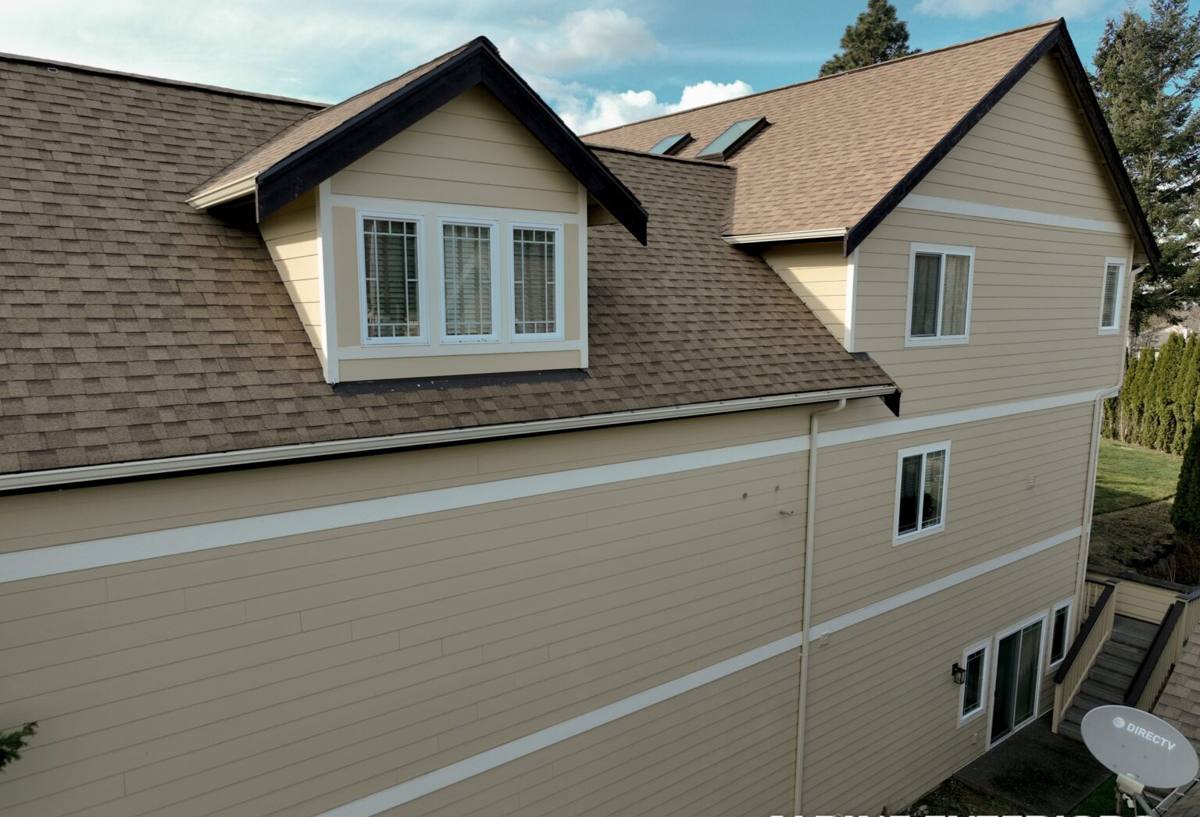
What LP SmartSide Gets Right
We want to be straightforward about this: LP SmartSide is a legitimate, engineered product, not a gimmick. It has real advantages that make it a reasonable choice for a lot of homes and a lot of budgets.
- Lighter than fiber cement, so it's faster and less physically demanding to install
- Easier to cut and nail without the silica dust and blade wear fiber cement requires
- Lower material cost, which shows up in the final bid
- A traditional wood grain texture that some homeowners prefer over fiber cement's finish
- A manufacturer warranty that, when the product is installed and maintained correctly, covers manufacturing defects for a meaningful term
If a homeowner's priority is stretching a renovation budget on a home with generous roof overhangs and good sun exposure, LP SmartSide isn't an unreasonable pick in the abstract. Our reservations are specific to what happens to that product on this coastline, over decades, not a blanket dismissal.
Where Engineered Wood Struggles in a Whatcom County Climate
Bellingham doesn't just get rain — it gets driving, wind-pushed rain off the Strait and Bellingham Bay, salt-laden air near the water, and long stretches of the year where north- and west-facing walls stay damp for days at a time. Add the tree cover common on Whatcom County lots, and you get a moss season that can run from fall through spring. That combination is exactly the environment engineered wood products are most sensitive to.
The Seams and Cut Edges Are the Weak Point
LP SmartSide's factory treatment protects the face of the board. Every cut edge made on-site, every butt joint, and every seam around a window or fixture is a place where that treated layer has been interrupted. Manufacturer specs require those cuts to be primed and sealed before installation, and the caulking at joints has to be inspected and refreshed on a schedule. Skip a step, or let caulk fail a few years down the road without anyone noticing, and that's the entry point for moisture into wood fiber that will swell, and in bad cases delaminate, once it's wet enough for long enough.
Moss and Standing Moisture
In shaded, damp corners of a property — common around here — moss and algae hold moisture against the siding face far longer than open, sunny walls dry out. On an inorganic material that's a cosmetic cleaning issue. On a wood-based substrate, prolonged surface moisture next to a compromised seam is a much less forgiving combination.
Maintenance Is Not Optional, It's Structural
None of this means LP SmartSide fails on every home. It means the product's long-term performance depends on a maintenance routine — recaulking joints, repainting on schedule, catching and sealing any exposed cut edges — that has to happen for the life of the siding, not just at installation. A lot of homeowners don't sign up for that when they buy a "low-maintenance" product, and in a marine climate with a long wet season, the margin for a missed maintenance cycle is thinner than it would be somewhere dry.
What James Hardie Fiber Cement Is Built to Handle
Fiber cement doesn't solve moisture exposure by treating wood against decay — it sidesteps the problem by not being wood. Portland cement, sand, and cellulose fiber cured into a dense board simply doesn't rot, swell, or feed fungal growth the way a wood-based product can, because there's no organic structure for moisture to break down.
Climate-Engineered Product Lines
James Hardie builds region-specific formulations under its HZ5 and HZ10 designations, engineered for different moisture and freeze-thaw profiles across the country. For a Pacific Northwest climate like Bellingham's — wet winters, moderate freeze-thaw cycling, and sustained humidity — installing the product line Hardie actually engineers for this region is part of doing the job right, not an upsell.
ColorPlus Factory Finish
Hardie's ColorPlus finish is baked on at the factory under controlled conditions, rather than field-painted after installation. That finish is formulated to resist the fading and cracking that field-applied paint is more prone to, and it comes with its own finish warranty separate from the substrate warranty.
Non-Combustible
Fiber cement doesn't burn. In a region where wildfire smoke and ember exposure have become a real seasonal concern even west of the Cascades, that's a genuine safety difference between the two materials, not a marketing footnote.
Side-by-Side: The Honest Comparison
| Factor | LP SmartSide (Engineered Wood) | James Hardie (Fiber Cement) |
|---|---|---|
| Core material | Wood strand/fiber, resin-bonded | Cement, sand, cellulose fiber |
| Moisture vulnerability | At cut edges and joints if unsealed | Not organic; doesn't rot or swell |
| Combustibility | Combustible (wood-based) | Non-combustible |
| Finish | Primed; field paint typically required | Factory ColorPlus finish available |
| Maintenance schedule | Regular recaulk/repaint required | Lower ongoing paint maintenance |
| Material weight/install | Lighter, faster to handle | Heavier, requires proper tools and technique |
| Upfront material cost | Generally lower | Generally higher |
Installation Sensitivity: Why the Crew Matters as Much as the Product
Both products can be installed poorly, and both can fail prematurely because of it — this isn't purely a material argument. But the failure modes look different. A poorly installed engineered wood job accelerates the moisture problems described above: unsealed cuts, gapped joints, wrong nailing patterns that split the board and open a path for water. A poorly installed fiber cement job tends to show up as cracking, popped fasteners, or clearance issues at grade — serious, but generally not a moisture-into-the-substrate problem, because the material itself isn't feeding on that moisture.
We install exclusively to Hardie's published fastening, clearance, and flashing specifications: correct nail placement, proper gaps at butt joints, minimum clearance from grade, decks, and roof lines, and flashing details at every penetration. That's true whether the job is a full re-side in Bellingham proper or a smaller project out toward Ferndale or Lynden. Getting these details right is what actually delivers the 30+ year performance fiber cement is capable of — the material and the installation are one package, not two.
Warranty Structure and Long-Term Cost
Both manufacturers back their products with warranties, but the practical difference shows up in what voids them. Engineered wood warranties typically hinge on documented, ongoing maintenance — recaulking, repainting, sealing cut edges — performed on schedule. If that maintenance lapses and moisture damage results, coverage can be disputed. Hardie's warranty structure is built around correct installation to spec rather than an ongoing maintenance obligation of that kind, with a separately warrantied factory finish on ColorPlus products. Over a 20-30 year ownership horizon, that lower repainting burden is a real cost factor, even though the upfront material price is higher.
A Checklist Before You Commit to Either Product
- Ask what climate zone or product line the siding is actually engineered for — not just the general product name
- Ask what voids the manufacturer warranty, specifically, in writing
- Ask how cut edges and joints are treated during installation, and by whom
- Ask what the ongoing maintenance schedule looks like for the next 20 years, not just the next 2
- Ask whether your installer is manufacturer-certified for the specific product they're proposing
- Walk your own property for shaded, damp, moss-prone wall sections before deciding — they matter more than the rest of the house
Why We Standardized on Hardie
We made a business decision to install James Hardie fiber cement exclusively, and not LP SmartSide, vinyl, or the other engineered and wood-based products on the market. That's not because those products can't perform when installed and maintained correctly — it's because we've concluded that fiber cement's non-organic core, region-specific HZ engineering, and warranty structure give homeowners the best odds of a siding job that still looks and performs the way it should in year 25, on a coastline that gets salt air, driving rain, and a moss season most of the year. We'd rather stand behind one product we install to spec every time than split our attention across several.
If you're weighing a re-side in Bellingham or anywhere else in Whatcom County, we're glad to walk your property, look at your specific exposure and shade conditions, and give you a straight answer about what it would take to do the job right. Reach out for a free, no-pressure estimate using the form below.