 Bellingham Exterior
 Exterior Work in Ferndale: A Different Set of Conditions
Ferndale sits close enough to the water and far enough into Whatcom County's weather patterns that its homes take a specific kind of beating year-round. It isn't dramatic weather — no hail storms, no hurricane-force winds most years — but it's persistent. Salt-tinged air off the bay, long stretches of driving rain pushed in by marine wind, and a moss season that can run from October well into spring. None of these problems announce themselves quickly. They work on a house slowly, over years, which is exactly why the exterior materials and installation details matter more here than they would in a drier inland climate.
We work throughout Bellingham and the surrounding Whatcom County communities, and Ferndale is a regular part of that route. The homes here range from older farmhouses on larger lots to newer construction closer to town, but the exterior challenges are consistent across almost all of them: moisture management, salt exposure on anything metal or painted, and near-constant humidity that keeps organic growth active almost year-round.
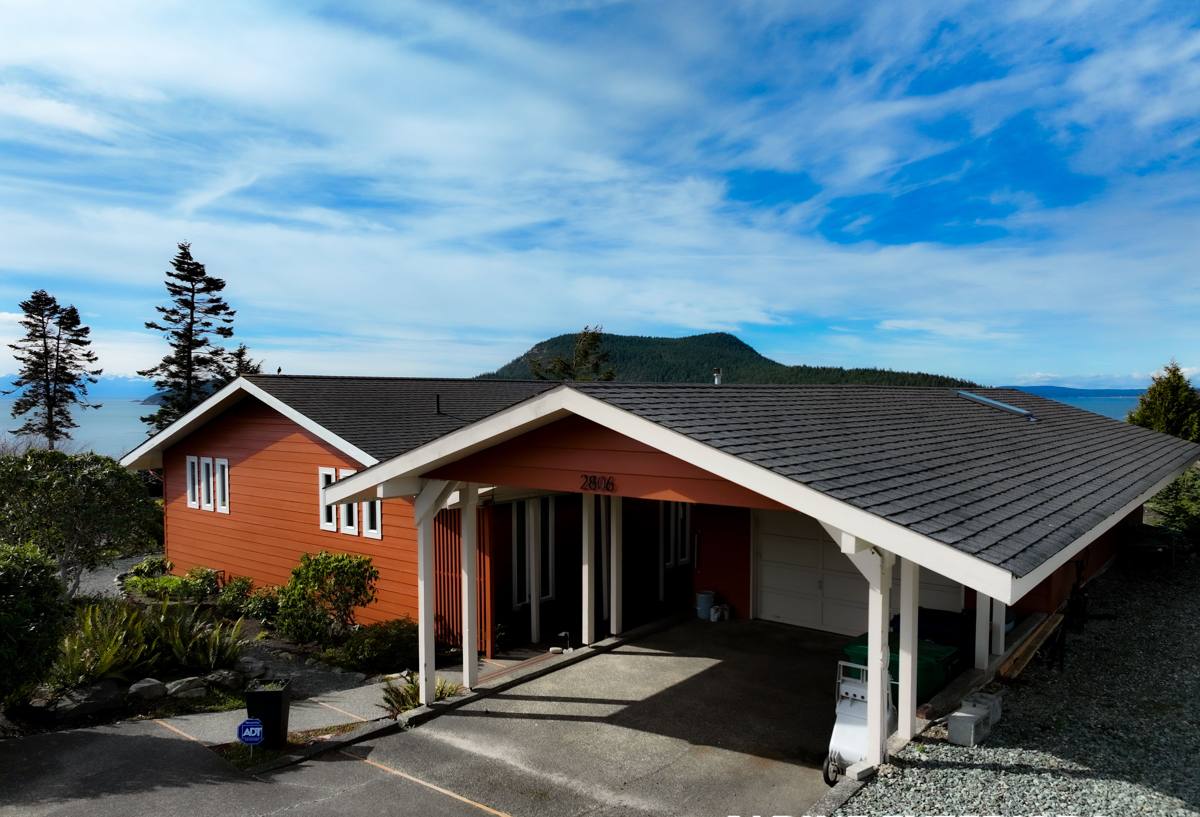
What Salt Air and Driving Rain Actually Do to a House
Salt air doesn't just affect homes right on the waterfront — moisture carrying trace salt travels inland on wind, and Ferndale gets enough of it to accelerate corrosion on fasteners, flashing, and any exposed metal trim. Combined with wind-driven rain that gets pushed sideways into wall assemblies rather than falling straight down, you end up with two compounding problems: materials that corrode faster than manufacturer specs assume, and water intrusion at joints and seams that wouldn't be an issue in a calmer climate.
This is why flashing details, caulking choices, and fastener selection matter as much as the siding, roofing, or window product itself. A product that performs well in a lab test in a dry climate can still fail on a Ferndale home if it was installed without accounting for how water moves under wind pressure, not just gravity.
Moss: The Quiet, Constant Threat
Whatcom County's moss season is long because the conditions that grow moss — shade, moisture, and mild temperatures — are present for most of the year here. Moss on a roof holds moisture against shingles and underlayment, shortening roof life. Moss and algae on siding hold moisture against the substrate and can stain lighter-colored finishes. On decks, it turns walking surfaces slick and traps moisture against wood fibers. None of this is catastrophic in year one. It's a cumulative problem that shows up as premature failure five, ten, fifteen years down the line if it isn't designed around from the start.
Siding in Ferndale: Why We Only Install James Hardie
We install James Hardie fiber cement siding exclusively. We don't install vinyl, LP SmartSide, Cemplank, Allura, primed spruce, or cedar, and that's a deliberate standard, not a limitation of what we're capable of installing.
Each of those alternatives has real strengths, and we're not going to pretend otherwise. Vinyl is inexpensive and low-maintenance in the short term. Wood siding like cedar has genuine visual warmth. Engineered wood products like LP SmartSide close some of the moisture gap that plagued older OSB-based siding. But in a climate like Ferndale's — sustained humidity, salt exposure, and a long wet season — the trade-offs of those products show up faster than they would in a drier region:
- Vinyl expands and contracts with temperature swings, can warp or crack in wind-driven rain conditions over time, and isn't repairable in sections the way fiber cement is — damaged panels typically need full replacement.
- Wood siding (cedar, primed spruce) requires disciplined repainting and caulking maintenance to stay ahead of moisture intrusion. Skip a cycle in a climate this wet and rot risk climbs quickly, especially at butt joints and lower courses near grade.
- Engineered wood (LP SmartSide) has improved moisture resistance over older OSB products, but it's still a wood-based substrate, and long-term performance in sustained wet climates depends heavily on caulking and paint maintenance being kept current.
- Other fiber cement brands (Cemplank, Allura) are legitimate fiber cement products, but we've standardized on one manufacturer so our crews install to one spec, one set of factory-finish standards, and one warranty structure — consistency that matters more to us than offering multiple brands.
James Hardie fiber cement is non-combustible, doesn't expand and contract the way vinyl does, and its HZ5 product line is engineered specifically for climates with high moisture exposure — which describes Whatcom County well. The ColorPlus factory finish process bakes color onto the board under controlled conditions rather than relying on field-applied paint, which matters directly in a climate where field-painted surfaces are fighting rain more days than not. It also carries a strong transferable warranty, which matters to homeowners who may sell before they've lived in the house for decades.
None of this means Hardie is maintenance-free. It still needs correctly caulked joints, proper clearance from grade and hardscaping, and periodic inspection. But it starts from a materials position that's built for exactly the kind of weather Ferndale sees, and that's why it's the only siding we put on homes.
Roofing That Accounts for Whatcom County Weather
Roofing in this region has to handle sustained rain exposure and moss pressure more than it has to handle extreme heat or hail. That changes what matters in both material choice and installation: proper underlayment, correctly lapped flashing at valleys and penetrations, and adequate ventilation to keep moisture from condensing in the attic space. A roof that's watertight on install day but poorly ventilated will still develop problems over a few wet seasons, just from the inside out rather than the outside in.
We also pay attention to how a roof is set up to shed moss pressure — things like keeping overhanging branches trimmed back where we can advise on it, and installation choices that don't create extra shaded, slow-drying areas where moss gets a foothold.
Windows: Sealing Out Wind-Driven Rain
Window failures in this climate are rarely about the glass — they're about the seal and the flashing around the frame. Wind-driven rain finds any gap in a window's integration with the wall assembly, and once water gets behind a window frame, it can travel and cause damage well beyond the window itself before anyone notices a problem. Correct window installation here means proper flashing tape sequencing, sill pans that direct any intruding water back out rather than into the wall cavity, and sealant details that account for the direction rain actually hits the house, not just straight-down exposure.
Beyond moisture performance, newer windows also help with the condensation that's common in humid coastal climates — older, poorly sealed windows tend to fog and sweat on the inside during Ferndale's damper months, which is as much a comfort issue as a durability one.
Decks Built for Marine Air and a Long Moss Season
Decks take the most direct hit from Ferndale's climate because they're horizontal, exposed, and walked on. Standing moisture, moss growth on walking surfaces, and corrosion on fasteners and hardware are the three issues we design around. That means using fastener and hardware systems rated for the exposure, spacing and drainage details that let water actually leave the deck surface instead of pooling, and material choices — whether wood or composite — that match how much upkeep the homeowner actually wants to commit to.
A deck built without those details in mind might look fine for a season or two, but in a climate with this much sustained moisture, poor drainage and inadequate fasteners show up as soft boards, rust staining, and slick, moss-covered surfaces well before they should.
What Working With a Local Crew Actually Means
A lot of exterior problems in this region aren't caused by bad materials — they're caused by installation details that were fine for a drier climate but wrong for a wet, salt-influenced one. A crew that works Whatcom County regularly knows to flash a window differently than they would in a dry inland market, knows which corners of a roof collect moss first, and knows how far siding needs to sit off grade and hardscaping given how much standing moisture this area holds through the wet months.
That local knowledge doesn't show up as a line item on an estimate, but it's the difference between an exterior that performs for its expected lifespan and one that develops problems five years early.
Cost Factors to Understand Before You Start
Every exterior project has variables that affect price, and it's worth understanding them before you're comparing quotes. Broad ranges below are for general planning only — every home is different, and the only way to get an accurate number is a walk-through.
| Project | Key Cost Drivers | Ferndale-Specific Consideration |
|---|---|---|
| Siding (James Hardie) | Home size, siding profile, trim complexity, tear-off of old material | Extra attention to flashing and caulking detail given wet-season exposure |
| Roofing | Roof size and pitch, material tier, number of layers to remove, decking condition | Ventilation and moss-resistant detailing add value even if not always visible in price |
| Windows | Number of openings, frame material, glass package, whether it's a full-frame or insert replacement | Full-frame replacement allows better flashing correction on older, leak-prone openings |
| Decks | Square footage, material (wood vs. composite), railing style, structural condition below the surface | Fastener and hardware grade matters more here than in drier inland climates |
A Simple Maintenance Checklist for Ferndale Homes
Whatever exterior work you have done, a little seasonal attention goes a long way in this climate. Homeowners who stay ahead of these basics consistently get more life out of their exteriors:
- Rinse moss and algae off roof surfaces and siding before it builds up a thick layer — a soft wash is far gentler on materials than pressure washing.
- Check and refresh caulking at siding joints, window frames, and trim annually, especially before the wet season sets in.
- Keep gutters clear so water isn't overflowing directly onto siding or pooling near the foundation.
- Inspect deck fasteners and hardware yearly for early rust or corrosion, particularly if the deck is closer to open, salt-influenced air.
- Trim back vegetation that keeps sections of roof or siding shaded and slow to dry, since those spots are where moss and algae take hold first.
- Walk the exterior after major windstorms to check for loose trim, lifted shingles, or new gaps at flashing points.
If you're weighing exterior work on a Ferndale home — whether it's siding that's showing its age, a roof due for replacement, windows that leak or sweat, or a deck that's gone soft or slick — we're happy to take a look and walk you through what we're seeing. Reach out for a free, no-pressure estimate using the form below.