 Bellingham Exterior
 Exterior Contracting for Blaine's Coastal Conditions
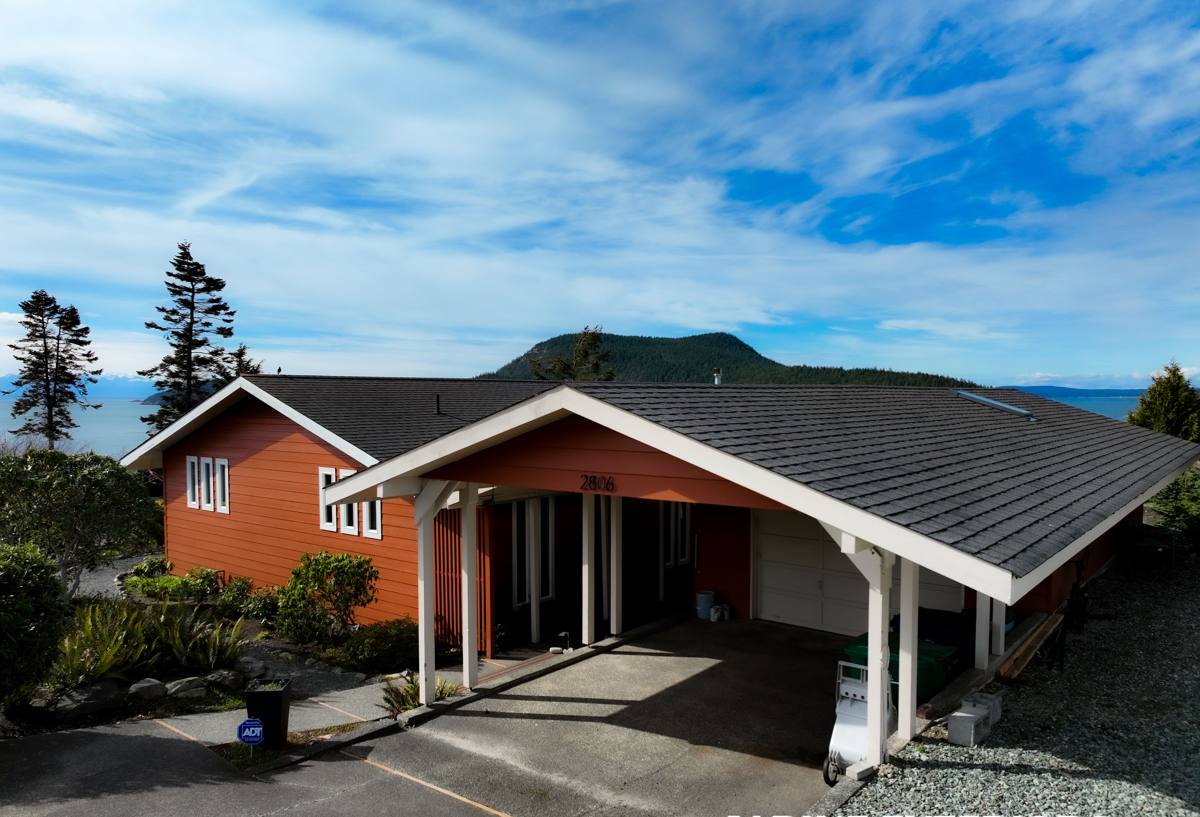
Blaine sits right up against the water in the northwest corner of Whatcom County, and that location shapes everything about how a house ages here. Homes close to Semiahmoo Bay and the Strait of Georgia take on a mix of salt-laden air, near-constant winter moisture, and wind that comes straight off open water with nothing to slow it down. Add in a Pacific Northwest moss and mildew season that can run eight months out of the year, and you have a climate that is genuinely harder on exteriors than most homeowners realize until they see the damage up close.
We work throughout Bellingham and Whatcom County, and Blaine is one of the areas where the difference between a generic install and a coastal-aware install shows up fastest. Materials, fastener choices, flashing details, and even paint sheen all matter more here than they would twenty miles inland.
What Salt Air Actually Does to a House
Salt air isn't just a smell — it's airborne moisture carrying dissolved salts that settle on every exterior surface and accelerate corrosion and material breakdown. On a home a few blocks from the water, this shows up in a few predictable ways:
- Metal fasteners, flashing, and trim corrode faster than published product lifespans suggest, especially if the wrong fastener alloy was used originally
- Painted and coated surfaces chalk and fade quicker, since salt residue holds moisture against the finish
- Wood trim and siding absorb and release moisture more aggressively, which speeds up swelling, checking, and rot at joints and end cuts
- Window hardware — locks, hinges, tracks — can bind or corrode years before it would in a drier, inland location
None of this means a house near the water is doomed to fail early. It means the materials and details need to be chosen with salt exposure in mind from the start, not patched after the fact.
Driving Rain and Wind-Driven Moisture
Blaine's exposure to open water means storms often arrive with real wind behind them, which pushes rain sideways into wall assemblies rather than letting it run straight down and off. Wind-driven rain finds every gap in flashing, every under-caulked joint, and every place where siding wasn't lapped correctly. Over years, that moisture works its way behind the cladding and into sheathing, and by the time it's visible as a stain or soft spot inside the house, the damage underneath is usually already significant. This is why flashing details around windows, doors, and roof-to-wall intersections matter as much as the siding material itself.
Siding for a Coastal Whatcom County Home
We install James Hardie fiber cement siding exclusively, and a marine-influenced climate like Blaine's is exactly the kind of environment that makes the case for it. Fiber cement is non-combustible, dimensionally stable, and doesn't absorb and release moisture the way wood-based products do, which matters a great deal when a home is regularly hit with wind-driven rain and salt-laden humidity.
We don't install vinyl, LP SmartSide, Cemplank, Allura, primed spruce, or cedar, and we're upfront about why. Vinyl can warp and become brittle with UV and temperature swings, and its seams and J-channels give wind-driven rain more opportunities to work behind the material. Wood-based and wood-composite sidings need consistent paint maintenance to keep moisture out, and in a climate with this much sustained dampness, gaps in that maintenance schedule show up as rot faster than they would inland. Cedar is a genuinely attractive, honest material, but it demands a maintenance commitment — refinishing, caulking, moisture monitoring — that many homeowners underestimate when they choose it, especially this close to salt water.
James Hardie's ColorPlus factory-applied finish is baked on and backed by its own warranty, so the color layer isn't relying on a field-applied coat of paint holding up against salt spray and UV. The HZ5 product line is engineered for exactly this kind of moisture-heavy, moderate-climate exposure. It's not a marketing claim we take on faith — it's the reason we standardized on one product system instead of offering several and letting homeowners guess which one fits their location.
Siding Comparison for Coastal Exposure
| Material | Moisture Behavior | Maintenance Near Salt Air | Finish Durability |
|---|---|---|---|
| James Hardie Fiber Cement | Dimensionally stable, does not swell or rot | Low — occasional wash | Factory ColorPlus finish, warrantied |
| Vinyl | Can warp with heat/cold cycling; seams allow water intrusion | Low but limited lifespan in wind exposure | Fades over time, not repaintable easily |
| Cedar | Absorbs/releases moisture; prone to checking | High — refinishing every few years | Depends entirely on maintenance schedule |
| Primed Spruce / Engineered Wood | Vulnerable at cut edges and fastener points if seal breaks | Moderate to high — paint upkeep is critical | Field-applied paint, variable results |
Roofing That Handles Moss and Wind
Whatcom County's moss season is long, and a roof near Blaine's waterfront also has to shed wind-driven rain rather than just handle vertical rainfall. Moss holds moisture against roofing material, lifts shingle edges over time, and works its way into vulnerable spots at valleys, penetrations, and eaves. A roof that isn't detailed for moisture control here will show granule loss, soft decking, or leaks well before it should.
We pay close attention to underlayment quality, valley and penetration flashing, and proper ventilation — a roof deck that can't breathe traps moisture underneath the shingles even when the surface looks fine. Ice isn't the primary concern this close to the water, but sustained dampness and moss are, and the detailing for one is different from the detailing for the other.
Windows for Salt Air and Wind Exposure
Window performance near open water comes down to two things: how well the unit itself resists corrosion and moisture intrusion, and how well it's flashed into the wall. We see both older wood windows with failing seals and hardware that's corroded from salt exposure, and newer installs where the window itself was fine but flashing was cut corners on, leaving the surrounding wall vulnerable.
When we replace windows in Blaine, we treat the flashing and integration with the siding as equally important to the window unit itself. A high-quality window installed with poor flashing will still leak; a modest window installed correctly with proper flashing and drainage will often outperform it.
Decks Built for Wind and Wet Conditions
Decks facing open water take a different kind of beating — direct sun and salt exposure on top, standing moisture and reduced airflow underneath if the structure wasn't built with drainage and ventilation in mind. Fastener corrosion is a common early failure point on coastal decks, especially where a builder used standard hardware instead of coastal-rated fasteners and connectors.
We build and replace decks with attention to substructure ventilation, proper flashing where the deck ties into the house, and hardware rated for the exposure the deck will actually see. A deck that looks fine on the surface can still have a compromised ledger board connection or corroding joist hangers underneath — problems that are much cheaper to prevent during construction than to fix later.
Why a Local Crew Matters Here
Every exterior product has an installation manual, but manuals are written for average conditions, not for a specific lot a few blocks from Semiahmoo Bay with wind coming off the water most winter afternoons. A crew that works Whatcom County regularly knows which details to tighten up for salt exposure, which flashing sequences actually matter in driving rain, and where homes in this area tend to fail first. That knowledge doesn't come from a product spec sheet — it comes from doing the work here, season after season, and seeing what holds up and what doesn't.
What to Ask Before Hiring for Coastal Exterior Work
- Do they have specific experience with homes near open water, not just general regional experience?
- What fastener and flashing materials do they use, and are those choices suited to salt air exposure?
- Are they licensed and insured to work in Washington, and can they provide proof?
- Do they explain why they use the products they use, or just what's cheapest to source?
- Will they walk you through moisture management details — not just the visible finish — before work begins?
Get a Straightforward Look at Your Home's Exterior
If you're dealing with siding that's holding moisture, a roof that's fighting a losing battle with moss, windows that are letting in more than light, or a deck that's seen better days, we're glad to take a look and give you an honest assessment — no pressure, no sales script. Request a free estimate below and we'll walk your property with Blaine's coastal conditions in mind.