 Bellingham Exterior
 Building a Deck That Actually Belongs in Blaine
Blaine sits right on the water, and that changes what a deck needs to survive. A deck built with the same materials and details you'd use in a dry inland climate will show problems here years before it should — soft spots at the ledger, corroded fasteners, black streaks and slick green film on the boards by late fall. A deck built for Blaine has to account for salt-laden air off the bay, long stretches of driving rain, and a moss season that can run from October well into spring. None of that means you have to give up on a nice-looking custom deck. It means the framing, hardware, decking material, and drainage details all need to be chosen for this environment specifically, not assumed from a generic plan.
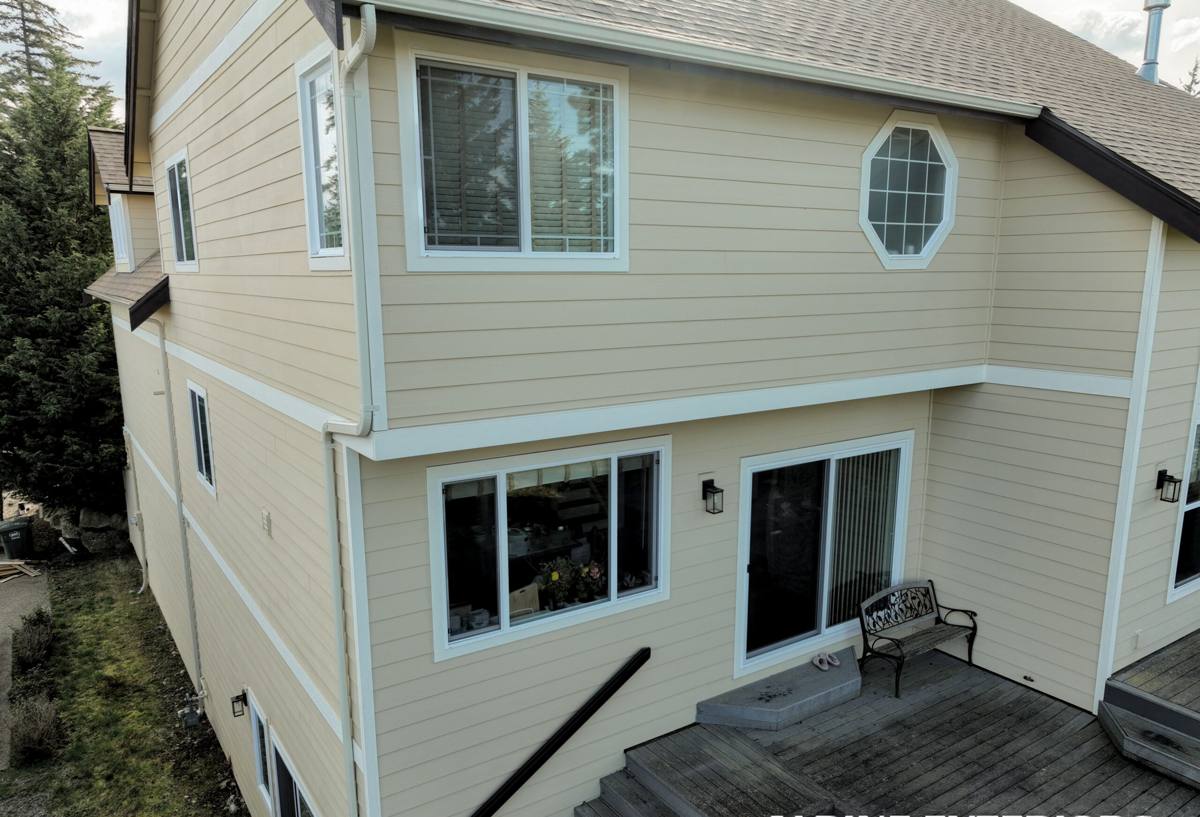
What Blaine's Climate Actually Does to a Deck
Salt Air and Corrosion
Proximity to Semiahmoo Bay and the Strait of Georgia means the air here carries more salt than it does even a few miles inland. Salt air accelerates corrosion on any exposed metal — fasteners, joist hangers, post bases, and railing hardware. On a deck built with standard interior-grade or even basic exterior-rated hardware, you'll start to see rust streaks bleeding through the decking within a couple of seasons, and hidden structural hardware can weaken well before it's visibly obvious.
Driving Rain
Rain in this part of Whatcom County doesn't just fall straight down — wind off the water frequently drives it sideways, which pushes moisture into joints, ledger connections, and end grain that a calmer rain pattern would mostly miss. That means flashing details and gaps between boards matter more here than they would in a more sheltered yard.
Moss Season
Cool, damp, low-light conditions for months at a stretch are exactly what moss and algae need to take hold on horizontal wood and composite surfaces. Once moss establishes on a deck, it holds moisture against the board surface, which speeds up rot in wood decking and can stain or etch some composite and PVC products if it's left too long. A deck designed with the right spacing, slope, and material choice will fight moss naturally; one that isn't will need constant cleaning to stay ahead of it.
Framing and Footings Done Right
The structure underneath a deck is what determines whether it's still solid in fifteen years, long after the decking boards themselves may have been replaced once or twice. In this climate, we pay close attention to a few details that get skipped on lower-quality builds:
- Footings poured to the depth and bearing required for Whatcom County soil and frost conditions, not just "deep enough to look right"
- Ledger board attachment flashed properly where the deck meets the house, so driving rain can't work its way behind the siding
- Joist hangers, structural screws, and post bases rated for coastal/marine exposure, not standard exterior-grade hardware
- Proper spacing and slope built into the frame so water sheds off the deck instead of pooling under it
- Post-to-beam and beam-to-footing connections sized for our actual snow and wind load requirements, not a minimum-code shortcut
None of this is visible once the deck is finished, which is exactly why it's worth asking a contractor to walk you through it before the boards go down.
Choosing the Right Decking Material for a Salt-Air Yard
There's no single "best" decking material for every home — it depends on your budget, how much upkeep you want to do, and how close your yard is to the water. Here's how the common options actually perform in Blaine's conditions:
| Material | How It Handles Salt Air & Rain | Moss/Algae Resistance | Maintenance |
|---|---|---|---|
| Pressure-treated wood | Good if fasteners and hardware are corrosion-rated; wood itself handles moisture reasonably well when sealed | Needs regular cleaning and sealing to resist moss buildup | Annual cleaning, re-sealing every 1-2 years |
| Cedar | Naturally moisture- and insect-resistant, but still needs protection from driving rain at joints and end grain | Better natural resistance than PT wood, but still needs upkeep | Periodic cleaning and oiling to maintain color and protection |
| Composite decking | Excellent — doesn't absorb moisture like wood, resists salt corrosion in the board itself | Can still grow surface algae/moss if not cleaned; capped composites resist staining better than uncapped | Occasional washing; no sealing or staining required |
| PVC decking | Very good — fully synthetic, doesn't absorb water or salt | Smooth, non-porous surface resists moss better than most wood options | Lowest maintenance; periodic washing |
Whatever material you choose, the hardware fastening it down matters just as much as the board itself. We use fasteners and structural connectors rated for coastal exposure regardless of which decking material you pick, because that's the piece most likely to fail quietly.
Hardware and Fasteners: The Detail Most Decks Get Wrong
This is worth its own section because it's the single most common shortcut we see on decks that were built without local conditions in mind. Standard exterior screws and galvanized joist hangers are fine in a lot of the country, but in a salt-air environment they corrode faster than the wood or composite around them. We spec stainless steel or otherwise coastal-rated fasteners and connectors for the structural elements — ledger bolts, joist hangers, post bases — because those are the hardest and most expensive parts to replace later. Visible fasteners on the decking surface get the same consideration, since rust streaks bleeding through a light-colored composite board are one of the most common complaints we hear about decks built by out-of-area crews.
Drainage and Moss Prevention Built Into the Design
Fighting moss after the fact with a pressure washer every spring is a lot more work than designing a deck that resists it in the first place. A few things we build in from the start:
- Board spacing sized to let water drain through instead of sitting on the surface
- Slight slope in the framing so water moves toward the yard rather than pooling against the house
- Clearance under the deck for airflow, so the underside dries out between rain events instead of staying damp all winter
- Gutter or drip-edge details where a deck sits under a roofline that dumps extra water onto it
- Material choices in shaded, north-facing, or tree-covered yards that account for the extra moss risk those spots carry
If your lot is heavily shaded or tucked close to mature trees, that's worth discussing up front — it can change which decking material makes the most sense.
Permits, Code, and Whatcom County Requirements
Most custom deck projects in this area require a building permit, and the requirements cover things like guardrail height, baluster spacing, stair geometry, and footing depth. Skipping the permit process might save time up front, but it creates real problems later — unpermitted decks can hold up a home sale, complicate insurance claims, and in some cases require costly rework to bring up to code before they can be sold or refinanced. We handle the permit process and inspections as part of the job, so you're not left tracking down paperwork or explaining an unpermitted structure down the road.
Our Process for a Blaine Deck Project
Every property is a little different, but the process we follow stays consistent:
- On-site assessment of your yard's sun/shade exposure, drainage, and proximity to the water, since that changes the moss and corrosion risk
- Design conversation covering layout, material options, and honest cost tradeoffs for your specific site
- Permit submission and any required engineering for footings or structural spans
- Framing built with corrosion-rated hardware and proper flashing at the ledger
- Decking installation with attention to spacing, fastening, and drainage
- Final walkthrough covering how to maintain the specific material you chose through moss season
Why Hiring a Crew That Already Works in Blaine Matters
A contractor based farther inland, or one that mostly works drier parts of the state, may not think twice about hardware grade or moss-resistant spacing — because it simply doesn't matter as much where they usually build. A crew that regularly works Blaine and the surrounding Whatcom County coastline has already seen what happens when those details get skipped: the corroded joist hangers, the ledger rot behind a poorly flashed connection, the deck that's slick with moss every winter because there wasn't enough slope or airflow underneath. That experience shows up in the choices made before a single board is cut, not just in the finished look.
Keeping Your Deck in Shape Once It's Built
Even a well-built deck benefits from a little seasonal attention in this climate. A yearly rinse to clear pollen, debris, and early moss growth before it gets a foothold goes a long way, especially heading into fall. Wood and cedar decks should be checked for sealer wear and re-treated on the schedule appropriate to that product. Composite and PVC decks need far less upkeep, but it's still worth checking fastener heads and railing hardware periodically for any early signs of corrosion, particularly on decks closest to the water. Catching a small hardware issue early is a lot cheaper than dealing with a structural repair later.
If you're planning a new deck or replacing one that hasn't held up to Blaine's weather, we're happy to take a look and talk through what makes sense for your yard. Reach out for a free, no-pressure estimate using the form below.