 Bellingham Exterior
 Two Fiber Cement Products, Two Different Standards
Homeowners doing their research on siding replacement in Bellingham often come across Cemplank as a lower-cost fiber cement option and wonder why we don't offer it as an alternative to James Hardie. It's a fair question. Both are fiber cement products, both hold up better than vinyl or wood in our climate, and on paper the category looks interchangeable. It isn't, and the differences matter most in exactly the conditions we deal with here — salt air off Bellingham Bay, long stretches of driving rain, and a moss season that runs most of the year on shaded, north-facing walls.
This page isn't a takedown of Cemplank as a category of product. Fiber cement in general is a sound choice, and we're glad more homeowners are moving away from vinyl and wood. What we want to explain is why, after installing and researching siding in this county for years, we chose to standardize on one manufacturer instead of offering a menu of fiber cement brands at different price points.
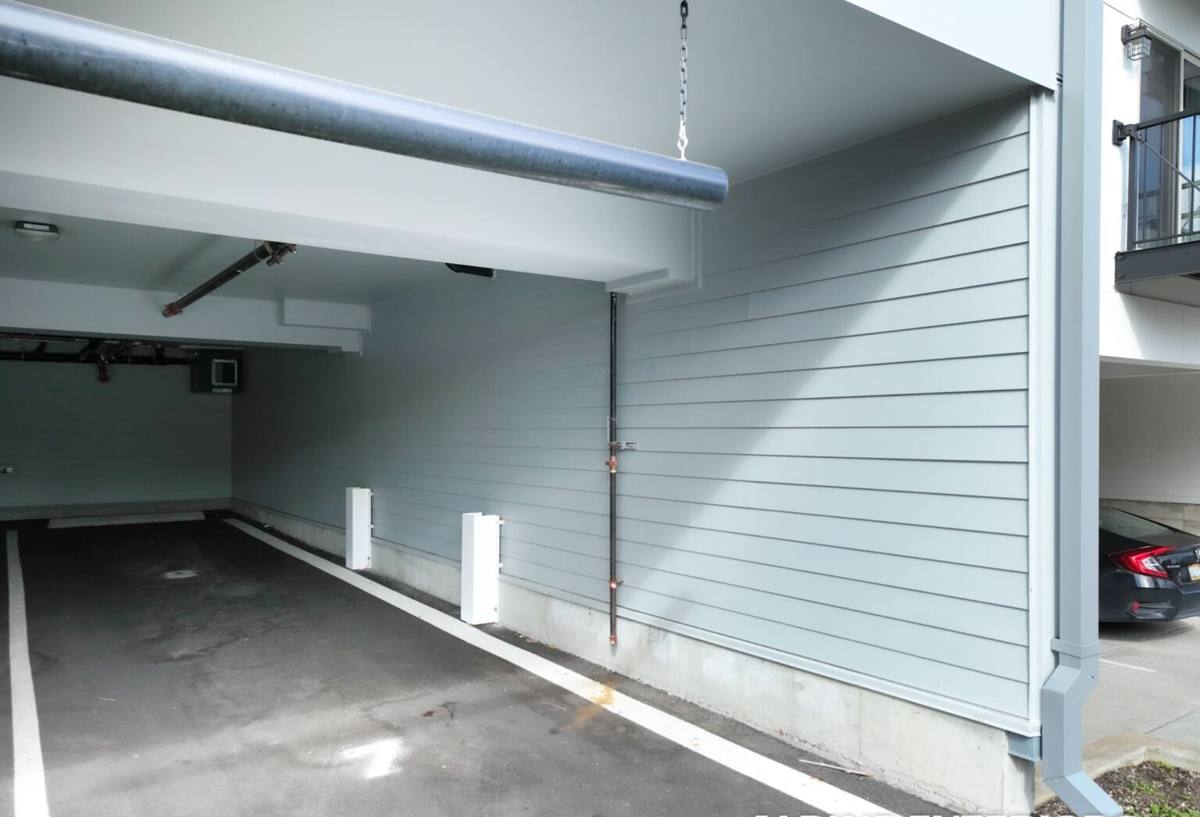
What Cemplank Gets Right
Credit where it's due: Cemplank is a genuine fiber cement product, not a vinyl or composite imitation. It's non-combustible, it doesn't rot the way wood siding does, and it resists the swelling and warping that ruins engineered wood products like LP SmartSide in wet climates. For a homeowner on a tight budget who's choosing between Cemplank and vinyl, Cemplank is the better long-term material almost every time.
Where it competes on price, it's often positioned as a value-tier alternative to the premium fiber cement brands, sold through big-box and regional building supply channels rather than a dedicated professional dealer network. That distribution model keeps the material cost down. It also changes almost everything downstream of the purchase — finish quality, warranty administration, product consistency, and who's accountable if something goes wrong five or ten years after installation.
Where the Difference Actually Shows Up: The Factory Finish
Siding fails visually long before it fails structurally. In Whatcom County, the first thing to go wrong on a lower-grade fiber cement job usually isn't the board itself — it's the paint. Field-primed or basic factory-primed fiber cement still needs a full-quality topcoat applied on-site, and that finish is only as good as the weather window, the crew, and the paint used the day it was installed.
James Hardie's ColorPlus finish is baked on at the factory in a controlled process, cured before the board ever reaches the jobsite, and backed by its own dedicated finish warranty separate from the substrate warranty. That matters directly in our climate: driving rain and prolonged damp periods are exactly the conditions that cause field-applied paint to fail early — chalking, fading, and peeling at the joints. A factory-cured finish removes weather and site conditions from the equation entirely.
Cemplank's finish options vary by product line, and in many cases the color coat is not engineered or warrantied to the same standard as a dedicated factory-finish system. That's not a defect — it's a function of price point. But it's the single biggest reason a "cheaper" fiber cement job can end up needing a full repaint at year eight or ten, while a ColorPlus-finished home is still original.
Why This Isn't Cosmetic Nitpicking
Repainting fiber cement siding isn't like repainting a fence. It typically means full prep, primer, and two coats across the entire exterior, plus caulking rework at every joint — a job that can approach a meaningful fraction of the original siding cost. A finish that's engineered to last the life of the substrate, rather than needing mid-life maintenance, is where the real value gap between products shows up.
Engineered for Region, Not Just "Fiber Cement in General"
Fiber cement performs differently depending on humidity, freeze-thaw cycles, and rainfall exposure. James Hardie engineers its HZ (HardieZone) product lines specifically for regional climate conditions — the formulation sold into the Pacific Northwest is built around our wet, moderate climate rather than a single generic product sold nationwide.
That matters here in a way it wouldn't in a dry climate. Bellingham sits in a marine environment with near-constant moisture exposure much of the year, moss and algae growth on shaded elevations, and salt-laden air close to the water. Siding that's engineered as a one-size-fits-all national product is a compromise; siding engineered for wet, coastal, moderate climates is not.
Warranty Structure: What's Actually Transferable
Every fiber cement manufacturer offers some form of warranty, but the details determine whether that warranty is worth anything to you as a homeowner ten or fifteen years from now.
| Factor | James Hardie | Typical Value-Tier Fiber Cement |
|---|---|---|
| Substrate warranty length | Long-term, non-prorated in most cases | Often shorter or prorated after early years |
| Factory finish warranty | Separate, dedicated ColorPlus finish warranty | Varies by product; not always a distinct finish warranty |
| Transferability to new owner | Yes, in most cases, simplifying resale | Varies by manufacturer and product line |
| Regional climate engineering | HZ product lines matched to zone | Often a single national formulation |
| Installer network | Dedicated preferred contractor program | Sold through general building supply retail |
The transferability point is easy to overlook but it's a real factor at resale. A prospective buyer's inspector or agent asking "what siding is this and is the warranty still active" is a much easier conversation when the answer is a well-known, transferable, long-standing warranty than when it's a value-tier product with a shorter or non-transferable term.
Availability, Color-Matching, and Long-Term Repairs
Every siding job eventually needs a repair — a tree limb, a delivery truck backing into a wall, a remodel that requires opening up one section. When that happens years down the road, the question is whether you can get a matching board.
James Hardie's national distribution and long product-line stability mean color-matched replacement boards are realistically available for years after your original install. Value-tier and regionally distributed products are more prone to discontinued colors, changed formulations, or a manufacturer exiting a market, which leaves homeowners with a visible patch of mismatched siding after a simple repair. This is a quiet cost of the cheaper option that only shows up when something goes wrong — which, on a house, it eventually will.
Installation Sensitivity — Same Material, Different Margin for Error
Fiber cement in general is less forgiving to install than vinyl. Cut clearances, fastener placement, caulking at joints, and flashing details all affect how the siding performs against wind-driven rain. This is true of any fiber cement product, Cemplank included — but it's compounded by a value-tier product typically being installed by a broader, less specialized pool of contractors buying from general retail rather than a dealer network with product-specific installation training and accountability.
We install to manufacturer spec on every job, using Hardie's published installation guidelines, because those guidelines are what keeps the warranty valid and what keeps the siding performing in exactly the wet, wind-driven conditions Whatcom County sees every winter.
Why We Standardized on One Product
We made a business decision to install only James Hardie fiber cement rather than offering a range of brands at different price points. It's simpler for us to train crews, stock trim and accessories, and stand behind our work when we're not juggling installation specs, finish systems, and warranty terms across multiple manufacturers. It also means every homeowner we work with gets the same answer to "what's the best fiber cement option for a Bellingham house" — not a menu of trade-offs disguised as choices.
Before you choose a siding product or a contractor, here's what we'd suggest asking, regardless of who you hire:
- Is the color finish factory-applied and separately warrantied, or field-primed and painted on-site?
- Is the product engineered for this climate zone, or is it a single national formulation?
- Is the substrate warranty transferable to a future homeowner, and for how long?
- Will color-matched replacement boards realistically be available in 10-15 years?
- Is the installer trained and certified on that specific manufacturer's installation requirements?
- What does the contractor install on their own home, and why?
What This Means for Your Bellingham Home
If you're comparing quotes and one contractor is proposing Cemplank at a lower price than another proposing James Hardie, you're not comparing two prices for the same outcome — you're comparing two different products with different finish systems, different warranty structures, and different long-term maintenance costs. That's a legitimate choice for a homeowner to make with full information. We simply decided, after years in this trade and in this climate, that we didn't want to install anything less than the product we're most confident will still look right and perform right after another decade of Whatcom County winters.
If you're weighing siding options for a home in Bellingham or elsewhere in Whatcom County, we're happy to walk through what we install, why, and what it would look like on your house. Reach out for a free, no-pressure estimate — no obligation, just a straight answer.