 Bellingham Exterior
 Exterior Work Built for a Lake Whatcom Property
Sudden Valley sits along the south shore of Lake Whatcom, tucked into the kind of dense, forested terrain that makes this part of Whatcom County beautiful to live in and genuinely hard on a house. Homes here aren't just dealing with the same weather that hits downtown Bellingham — they're dealing with it under a tree canopy, next to a large body of water, on lots where the sun rarely reaches every wall of the house. That combination changes how fast exteriors wear out, and it changes what actually holds up.
Across Whatcom County generally, exterior materials contend with driving rain off the Sound, salt-laden marine air working its way inland, and a moss season that can run most of the year. Sudden Valley adds its own layer on top of that: heavy shade from second-growth forest, humidity that lingers near the lake, and siding, trim, and roofing that stay damp longer than they would on an open, sun-exposed lot elsewhere in the county. We built our approach around that reality, not a generic weatherproofing checklist.
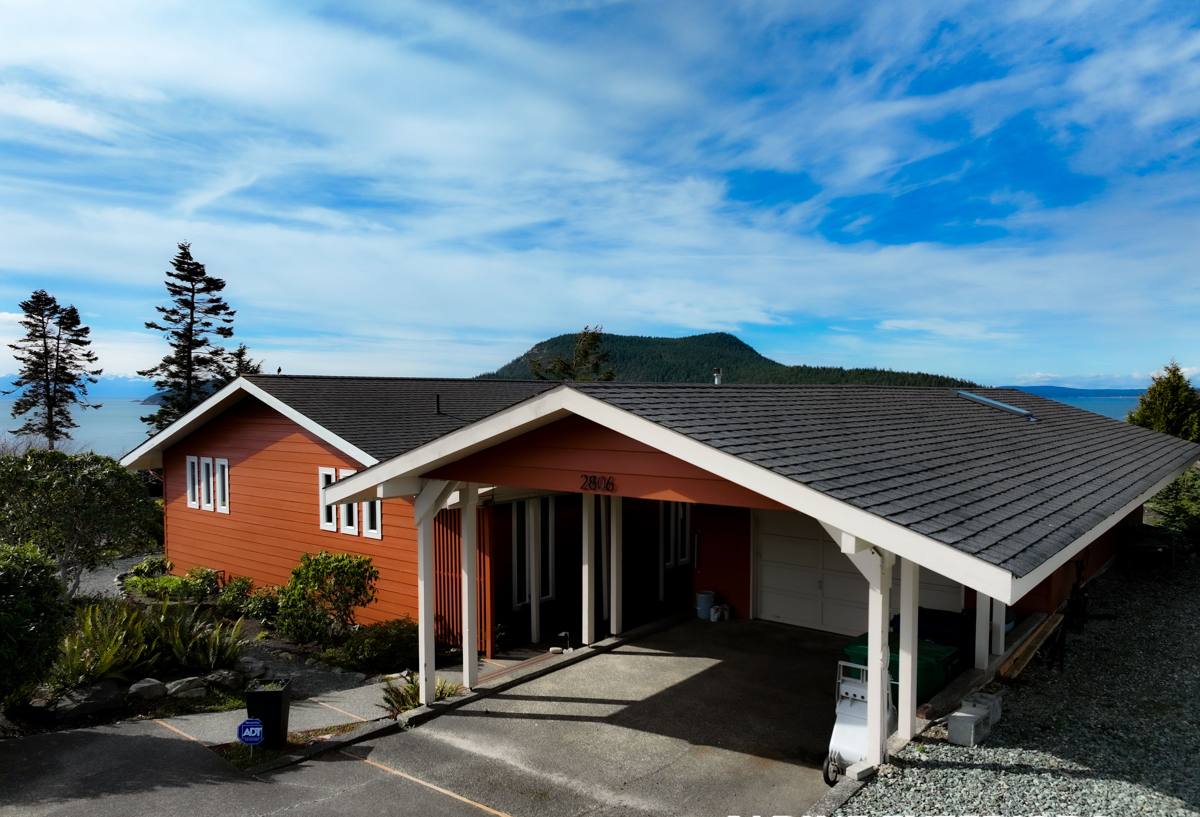
What Wears Out First on a Sudden Valley Home
Moss, Algae, and Constant Moisture
Shade is the defining feature of a lot of Sudden Valley properties, and shade means slower drying. Siding, fascia boards, and roof edges that stay damp for days after a storm are exactly where moss and algae take hold. Over time, moss doesn't just look bad — it holds moisture against the surface underneath it, which is where real damage starts on materials that aren't built to handle sustained wet exposure.
Wood Rot and Swelling
Older siding products — cedar, primed wood trim, and some engineered wood sidings — are especially vulnerable in a shaded, high-humidity environment like this. Once moisture gets past the paint or coating layer, wood-based products swell, soften, and eventually rot from the inside out, often before it's visible from the ground.
Roof and Gutter Load
Falling needles, leaf litter, and moss debris from surrounding trees clog gutters and valleys faster here than on an open lot. That debris holds water against the roofline, which shortens the life of roofing materials and increases the chance of leaks at transitions and penetrations.
Siding for Sudden Valley Homes — Why We Only Install James Hardie
We install James Hardie fiber cement siding exclusively. We don't install vinyl, LP SmartSide, Cemplank, Allura, primed spruce, or cedar — not because those products don't have their place in the industry, but because we've made a professional decision about what we're willing to put our name behind on homes in this climate, and especially in a shaded, moisture-heavy setting like Sudden Valley.
Vinyl siding is inexpensive and low-maintenance in dry climates, but it expands and contracts with temperature swings, can warp under sustained moisture and shade, and isn't repairable in the way fiber cement is — a damaged panel usually means a full replacement of that section, and matching faded vinyl years later is often impossible. Wood-based engineered sidings like LP SmartSide use treated wood strand technology that performs reasonably well when installation and maintenance are perfect, but any breach in the factory coating — a nail pop, a caulking gap, a scuff during a tree-trimming job — gives moisture a path into a wood-based core, which is a real risk on a shaded lot that rarely fully dries out. Cedar and primed spruce are attractive but require ongoing painting, staining, and moisture vigilance that most homeowners underestimate until they're a few years in.
James Hardie fiber cement is non-combustible, dimensionally stable, and doesn't rot, warp, or feed moss growth the way wood-based products can. The ColorPlus factory finish is baked on under controlled conditions, which holds up better against the region's damp, shaded conditions than field-applied paint. Hardie's HZ5 product line is engineered specifically for climates with heavy moisture exposure, which describes Sudden Valley about as well as any neighborhood in the county. It comes with a strong, transferable manufacturer warranty, which matters for a shaded, high-turnover lakefront community where the next owner will want documentation just as much as the current one does.
Roofing in a Shaded, Moss-Prone Environment
Roofing decisions in Sudden Valley need to account for the tree cover most homes sit under. That means attention to proper ventilation, ice-and-water shield at vulnerable transitions, and material choices that resist moss colonization better than older asphalt products. It also means gutter and valley detailing that accounts for the volume of organic debris a wooded lot generates — clogged water has nowhere to go but under the shingles or behind the fascia.
A roof replacement or repair in this area isn't just about matching shingles. It's about correcting the ventilation and drainage details that let a roof survive years of shade and needle drop without trapping moisture underneath.
Windows: Condensation, Drafts, and Heat Loss in a Damp Climate
Homes near Lake Whatcom deal with more ambient humidity than homes further from the water, and shaded lots amplify that by keeping surface temperatures cooler and drying times longer. Older single-pane or poorly sealed windows are prone to interior condensation, fogging between panes, and drafts that drive up heating costs through a long, wet Whatcom County winter. Replacement windows with proper flashing and modern glazing address both the comfort problem and the moisture-intrusion problem at the same time, since a poorly flashed window is one of the most common points where water gets behind the exterior wall assembly in the first place.
Decks Near the Lake — Moisture From Both Directions
A lot of Sudden Valley properties are built to take advantage of lake or forest views, which usually means a deck that sees heavy shade, falling debris, and moisture rising off the lake as well as rain from above. Deck framing and decking material both need to be chosen and maintained with that double exposure in mind — a deck that dries quickly on an open, sunny lot elsewhere in the county may stay damp for days here, accelerating rot in wood framing and encouraging surface mold and mildew on the decking itself. Composite decking, proper fastener selection, and correct ledger flashing all matter more in a setting like this than they would on a drier, more exposed lot.
Comparing Siding Options for a Shaded, Moisture-Heavy Lot
| Factor | Vinyl | Wood-Based Engineered Siding | Cedar / Primed Wood | James Hardie Fiber Cement |
|---|---|---|---|---|
| Moisture tolerance in shade | Moderate; can warp | Dependent on coating integrity | Low without diligent upkeep | High; engineered for wet climates |
| Moss/algae resistance | Moderate | Moderate | Low | High with factory finish |
| Repairability | Panel replacement, color match issues | Section replacement possible | Repairable but labor-intensive | Repairable, durable finish |
| Fire resistance | Low | Moderate | Low | Non-combustible |
| Typical maintenance | Low, but limited lifespan in tough spots | Regular inspection of coating | Ongoing paint/stain cycle | Occasional washing, minimal painting |
What to Expect When You Hire a Local Crew
- A walk-around assessment that looks specifically at shade patterns, tree proximity, and moisture staining on your current siding, trim, and roofline
- An honest conversation about which sides of the house are taking the worst of the moss and moisture damage, and why
- A written scope that covers flashing, ventilation, and drainage details — not just the visible material
- Straightforward answers about why we install James Hardie and not the alternatives, including the trade-offs of each
- A realistic timeline that accounts for Whatcom County's wet-weather scheduling constraints
- Cleanup that accounts for the debris load typical of a wooded Sudden Valley lot
Why a Local Whatcom County Crew Matters
Sudden Valley isn't a generic subdivision, and it doesn't get treated like one by a crew that mostly works in drier, more open parts of the region. Knowing which walls of a house stay wet the longest, how much moss pressure a shaded roofline actually sees over a winter, and how lake-adjacent humidity behaves differently than coastal salt exposure elsewhere in the county isn't something you get from a one-size-fits-all installation crew. It comes from doing this work, on homes like this, in this specific stretch of Whatcom County, season after season.
If your siding, roof, windows, or deck are showing the wear that's common on a shaded Lake Whatcom lot — moss buildup, soft trim, persistent damp patches, or drafty windows — we're happy to take a look. Reach out for a free, no-pressure estimate, and we'll walk the property with you and lay out exactly what we're seeing and why.