 Bellingham Exterior
 Windows Built for Sudden Valley's Wet, Shaded Climate
Sudden Valley sits close to Lake Whatcom under heavy tree cover, which makes it one of the more demanding microclimates in Whatcom County for exterior work. The lake keeps humidity high, the tree canopy keeps siding and window frames shaded and slow to dry, and the driving rain that rolls in off the Pacific through much of the year finds every gap in a window's flashing and seal. Add a moss season that runs long even by Bellingham standards, and you have a setting where a window that's installed "close enough" will show problems years before it should.
We install windows across Bellingham and Whatcom County, and Sudden Valley is a neighborhood we know well — the tree density, the moisture load, and the age mix of homes out there all change how a window installation should be planned and executed. This page covers what that means in practice, from what a correct install looks like to what to expect when you call us.
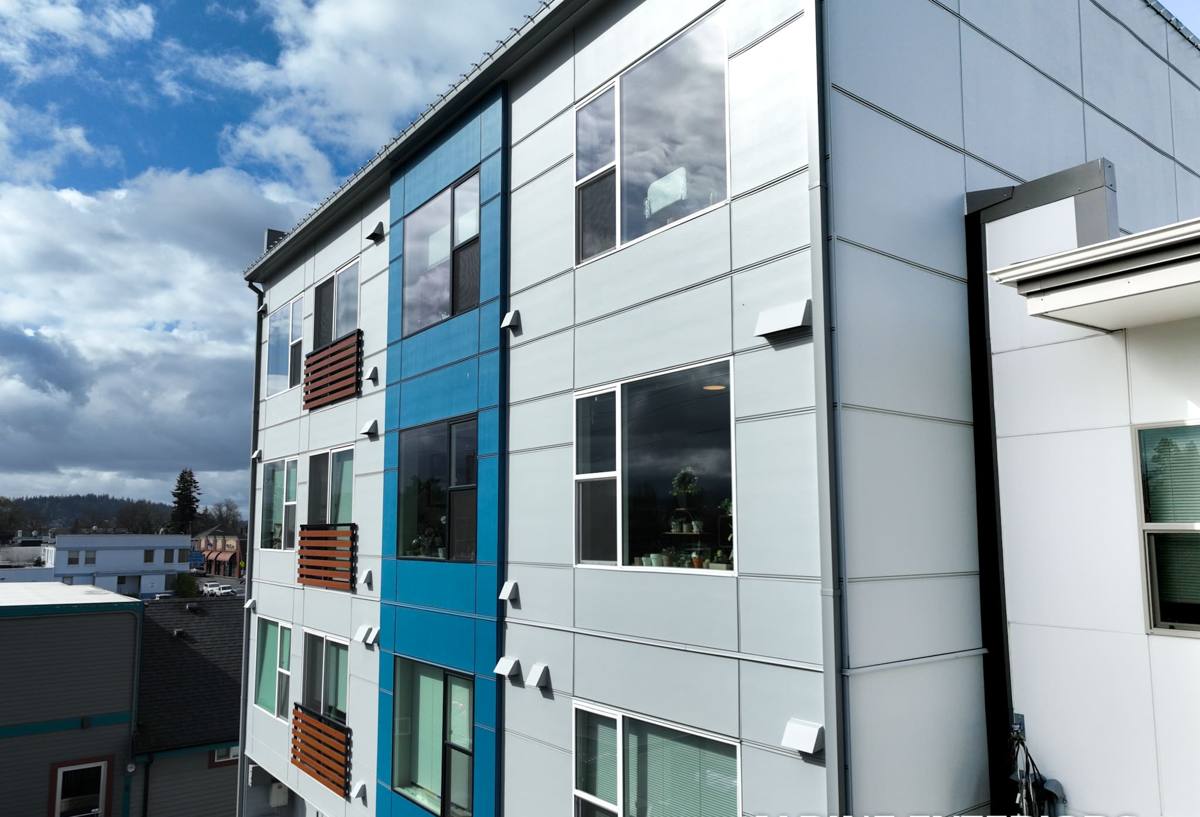
Why Windows Wear Out Faster on Homes Like These
Every window eventually needs replacing, but a handful of local conditions speed that timeline up around Sudden Valley:
- Shade and slow drying: Homes tucked under trees stay damp longer after a storm. Wood sashes, sills, and trim that don't get sun exposure hold moisture, which accelerates rot at the corners and bottom rail long before the glass unit itself fails.
- Moss and organic buildup: A long moss season means algae and moss don't just grow on roofs — they build up in window tracks, weep holes, and exterior trim, holding water against the frame and clogging the drainage paths that are supposed to let it escape.
- Wind-driven rain: Storms off the water push rain sideways, not straight down. Older flashing details that only handle vertical water shed can let wind-driven rain track up and under, leading to hidden moisture behind the siding rather than an obvious drip inside.
- Condensation from lake-driven humidity: Consistently higher humidity near the lake means single-pane or poorly sealed double-pane windows fog and sweat more, which over time damages sills and the wall cavity below them.
None of this means Sudden Valley is a bad place for wood-frame homes — it just means window installation has to account for water management first, aesthetics second.
What a Correct Window Installation Actually Involves
A window installation is judged by what you can't see once the trim goes back on. Three things separate a job that lasts twenty-plus years from one that leaks in five.
Flashing and Water Management
Every opening needs a sill pan that directs any water that gets past the window to the exterior, not into the wall framing. Head flashing needs to integrate with the weather-resistant barrier in the correct shingle-lap order — flashing over the barrier at the top, barrier over the flashing at the sides and bottom — so water is always directed outward and down, never trapped behind the cladding.
Fit, Shimming, and Insulation
A window that's shimmed out of square will bind, leak air, and stress the glass seal over time. Gaps around the frame need to be insulated with a material that stays flexible — rigid foam or overpacked insulation restricts the frame's natural expansion and contraction and can crack seals in a home that swings through the region's temperature range.
Sealing and Finish
Exterior sealant is the last line of defense, not the first — a window that relies on caulk alone to stay dry is a window that will eventually fail. We treat sealant as a backstop to correct flashing, not a substitute for it, and we use sealants rated for sustained UV and moisture exposure rather than a generic caulk that hardens and cracks after a season or two.
Choosing the Right Window Material for This Climate
Material choice matters more here than in a drier inland climate, because whatever you install will spend more of the year wet or humid than dry. Here's how the common options hold up:
| Material | Moisture Behavior | Maintenance | Typical Fit for Sudden Valley |
|---|---|---|---|
| Vinyl | Won't rot or absorb water; performs consistently in humidity | Low — occasional cleaning | Strong all-around choice for shaded, damp lots |
| Fiberglass | Very stable in moisture and temperature swings; minimal expansion/contraction | Low | Good for larger openings or homes wanting a longer-life frame |
| Wood-clad | Interior wood needs protection from any moisture intrusion at the seal | Higher — finish and seals need periodic attention | Best when there's confidence in ongoing upkeep, or covered exposures |
| Aluminum | Conducts cold and can condense heavily in humid, cool conditions | Moderate | Rarely our recommendation for tree-shaded, lake-adjacent lots |
We don't push one material on every home. The right call depends on sun exposure, how sheltered the wall is, and what the homeowner wants to maintain over time — we'll walk through the honest trade-offs for your specific openings rather than a one-size answer.
Our Installation Process
- On-site assessment: We look at each opening individually — sill condition, existing flashing, sun and wind exposure, and any signs of past moisture intrusion around the frame or siding.
- Product selection: Based on that assessment and your priorities, we recommend materials and glass packages suited to that specific wall, not a blanket spec for the whole house.
- Careful removal: Old windows come out with attention to what's underneath — sheathing and framing get inspected for rot or hidden damage before anything new goes in.
- Correct flashing sequence: Sill pan, then window, then head and side flashing integrated properly with the weather-resistant barrier.
- Precision fit and insulation: Shimmed square and level, insulated with a flexible material that allows for normal seasonal movement.
- Sealing and trim: Exterior sealant appropriate for sustained moisture exposure, interior trim finished to match the home.
- Final walkthrough: We check operation, seals, and drainage before we consider the job done.
Signs Your Sudden Valley Home May Need New Windows
- Condensation building up between the panes (a sign the seal has failed)
- Visible soft spots, discoloration, or paint failure on the sill or bottom corners of the frame
- Moss or algae buildup inside the track or along the exterior sill that keeps returning
- Noticeable drafts or a cold wall area near the window even when it's closed
- Windows that are difficult to open, close, or lock — a sign the frame has shifted or swollen
- A visible gap or separation between the window frame and the siding or trim
Why a Local Bellingham Crew Matters Here
Sudden Valley is a private, gated community, and that changes some practical logistics that an out-of-town crew won't be set up to handle smoothly — access coordination, scheduling around the neighborhood's own rules, and simply knowing the roads and lot layouts without wasted time. We work in this neighborhood regularly, so those pieces are already worked out before your crew shows up.
Just as important is what we've learned from years of pulling old windows out of homes in this exact microclimate. We know which corners of a frame tend to show rot first on a shaded lot, which flashing shortcuts cause problems five years down the road, and what it takes for a seal to hold up through a Whatcom County winter. That's knowledge you only get from doing the work here, not from a general install checklist.
Permits for window replacement in Whatcom County depend on the scope of work — a straight swap in an existing opening is often handled differently than a resize or structural change. We handle that determination and the paperwork as part of the job, so you're not left guessing what's required.
Energy Performance and Comfort in a Wet, Shaded Climate
Bellingham's climate doesn't hit the extreme cold of inland areas, but the combination of persistent humidity, wind, and long overcast stretches means comfort is as much about controlling moisture and drafts as it is about insulation value. Low-E coatings help manage heat loss through the glass, and properly sealed frames stop the cold, damp air infiltration that makes rooms near windows feel chilly even when the thermostat says otherwise. Getting the installation right does more for comfort here than chasing the highest-rated glass package on paper — a well-rated window installed with poor flashing will underperform a mid-range window installed correctly.
Get an Estimate for Your Sudden Valley Home
If you're noticing drafts, moisture, or wear on your windows, we're happy to take a look and give you an honest read on what's going on and what it would take to fix it — no pressure, no obligation. Fill out the form below and we'll set up a time to come out.