 Bellingham Exterior
 Exterior Work Built for South Hill's Terrain and Weather
South Hill sits above downtown Bellingham on a slope that gives many homes a clear line of sight to Bellingham Bay. That elevation and exposure is a selling point for the view, but it's also a factor in how hard the exterior of a house works over the years. Homes higher on the hill catch wind and wind-driven rain that lower, more sheltered lots don't see as much of. Add in Whatcom County's long, wet fall-through-spring stretch, and you have an exterior that's rarely given a break to fully dry out.
We've worked on enough homes in this part of Bellingham to know the pattern: siding that looks fine from the street but is soft at the bottom courses, roof valleys holding onto moss and debris, window frames with the finish worn off the weather-facing side, and decks with rot starting at the ledger board or post bases. None of that is unusual for the neighborhood — it's just what happens when a building envelope faces this climate for a couple of decades without the right materials or a periodic hard look from someone who knows what to check.
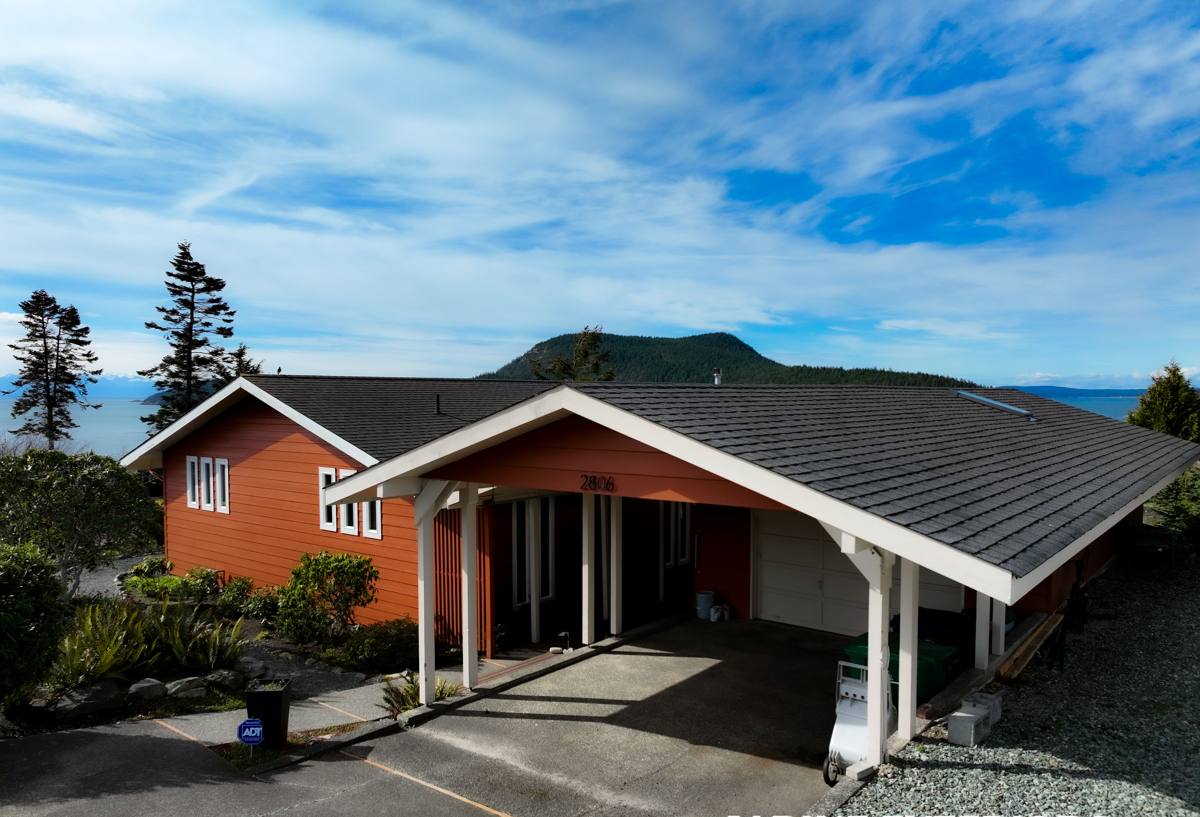
What South Hill Homes Are Up Against
Salt Air and Elevation
Being close to the water means airborne salt is part of the equation, even a few blocks up the hill. Salt-laden moisture accelerates corrosion on fasteners, flashing, and any metal trim that isn't rated for it, and it can also affect how paint and finishes hold up over time. It's a slower, quieter problem than a roof leak, but it adds up.
Driving Rain
Bellingham's rain doesn't always fall straight down. When wind pushes it sideways against a wall, water finds every seam, nail hole, and lap joint that wasn't sealed or lapped correctly. On a hillside lot with less wind protection than a downtown or valley-floor property, that wind-driven rain is a bigger factor in how the exterior performs over time.
Moss Season
Between the tree cover common in older South Hill neighborhoods and the region's damp stretch from October into May, moss and algae get a long runway to establish themselves on roofs, siding, decking, and anywhere shaded and slow to dry. Moss holds moisture against the surface it's growing on, which is where problems start — not from the moss itself, but from what it traps underneath it.
Siding: The First Line of Defense
Siding is the single biggest factor in how well a home's exterior handles this climate, and it's also where we've drawn a hard line as a company. We install James Hardie fiber cement siding exclusively. We don't install vinyl, LP SmartSide, or other engineered wood siding products, and we don't install primed spruce or cedar. That's a deliberate standard, not a lack of options.
Why We Standardized on Hardie
- Non-combustible material — fiber cement doesn't feed a fire the way wood-based products can, which matters more every year in this region.
- Moisture behavior — Hardie's fiber cement doesn't swell, delaminate, or absorb water the way engineered wood or untreated wood siding can when it's exposed to sustained damp conditions.
- Factory-applied ColorPlus finish — baked-on color that resists fading and chipping better than field-applied paint, which matters when you're not repainting every few years.
- Climate-engineered product lines — Hardie makes HZ10 formulations specifically for regions with freeze-thaw cycles and sustained moisture, which describes the Pacific Northwest well.
- Transferable, long-term warranty — backed by the manufacturer, and it follows the house if it's sold.
We've seen what happens to lower-cost siding products after fifteen or twenty years in this climate, and we're not willing to put our name on an install we don't believe will hold up. If a homeowner wants vinyl or engineered wood siding, that's their right — it's just not a job we'll take on.
What a Siding Job Actually Involves
Correct installation matters as much as the product itself. That means proper flashing at windows, doors, and roof intersections; correct fastener spacing and type; rainscreen or drainage plane details where called for; and butt joints and laps installed to keep water moving out and down, not in. A good siding job is mostly invisible work — the parts you don't see are what determine whether it lasts.
Roofing: Managing Moss and Water in One System
On a hillside property with tree cover, roofing isn't just about keeping water out — it's about managing what accumulates on the roof between rain events. Moss growth in valleys and along the north-facing slopes of a roof holds moisture against shingles or roofing material longer than it should sit, which shortens the life of the roof even if there's never an active leak.
We look at the whole system when we're up on a roof in this neighborhood: underlayment condition, flashing at chimneys and penetrations, valley construction, and ventilation. A roof that's not ventilated properly traps moisture from inside the house against the underside of the decking, which compounds whatever moisture pressure is coming from outside.
Common Roof Issues We See on South Hill Homes
| Issue | Why It Happens Here | What It Leads To |
|---|---|---|
| Moss buildup in valleys and shaded slopes | Tree cover plus long wet season | Trapped moisture, granule loss, premature wear |
| Corroded or failing flashing | Salt air plus years of exposure | Water intrusion at penetrations and edges |
| Poor attic ventilation | Older construction, added insulation without airflow updates | Trapped moisture, decking rot, ice/condensation issues |
| Wind-lifted or damaged shingles | Elevated, less-sheltered lots | Water entry points during driving rain |
Windows: Sealing Out Wind-Driven Rain
Older homes on South Hill often still have original or early-replacement windows, and the weak point is rarely the glass — it's the seal around the frame. Wind-driven rain finds gaps in flashing and caulking that have degraded over the years, and that water can travel behind siding or into wall cavities before it ever shows up as a visible stain inside.
When we replace windows, we treat the flashing and integration with the siding as seriously as the window unit itself. A well-made window installed without proper flashing will leak eventually; a modest window installed correctly, with the water management detailed right, will outperform it. We also look at energy performance while we're there — older single-pane or early dual-pane windows lose a lot of heat, which matters on a hill that catches more wind than sheltered parts of the city.
Decks: Built for a Wet, Shaded Climate
Decks on wooded or hillside lots take a specific kind of abuse — shade slows drying, debris collects between boards, and ledger connections to the house are a common spot for hidden rot if flashing wasn't done right originally. We build and repair decks with drainage, ventilation underneath, and proper ledger flashing as non-negotiables, not upgrades.
Deck Checklist for South Hill Homeowners
- Check the ledger board connection to the house for soft spots or staining — this is the most common hidden failure point.
- Look underneath the deck for standing water, moss, or debris buildup between joists.
- Inspect post bases for rot or contact with soil or standing water.
- Check railings and stair connections for looseness, which can signal fastener corrosion.
- Note any areas that stay wet or mossy longer than the rest of the deck after rain — that's where drainage or airflow needs attention.
Why a Local Crew Matters Here
Exterior work in a climate like Whatcom County's isn't something you can do the same way everywhere. A crew that mostly works in drier regions doesn't think about wind-driven rain the same way, and a crew that doesn't know Bellingham's hillside neighborhoods might not account for the extra wind exposure or salt air that South Hill properties see compared to more sheltered parts of town. We're based here, we work on homes across Bellingham and Whatcom County year-round, and we see how our own work — and other contractors' work — holds up over years, not just at the final walkthrough.
That's also part of why we're selective about materials. We're not choosing Hardie siding because it's trendy — we're choosing it because we've watched how different products age in this exact climate, and we'd rather turn away a job than install something we don't think will hold up on a South Hill hillside lot facing salt air and driving rain for the next thirty years.
What to Expect When You Call Us
We start with a walk-around of the exterior — siding, roof, windows, and any decks or attached structures — and point out what we see, good and bad. We're not going to invent problems to sell a job, and we're not going to gloss over something that needs attention. If a repair makes more sense than a full replacement, we'll say so. If the siding is holding up fine and the real issue is a roof detail or a deck ledger, that's what we'll focus on.
If you're on South Hill and want an honest look at where your home's exterior stands, we'd be glad to come take a look. There's no pressure and no cost to get our assessment and a straightforward estimate — fill out the form below and we'll get in touch.