 Bellingham Exterior
 Exterior Work Built for Birchwood's Climate
Birchwood is one of Bellingham's established residential neighborhoods, with a mix of mid-century ranch homes, newer infill construction, and everything in between. Like the rest of Whatcom County, homes here deal with a marine climate that doesn't let up for long: cool, wet winters, a short dry summer window, and enough overcast, drizzly days in between to keep every exterior surface damp more often than not. That combination is exactly why we standardized on one siding system instead of offering a menu of options — because in this climate, the difference between a product that's engineered for moisture and one that merely tolerates it shows up on the wall within a few years.
Salt-tinged air off Bellingham Bay, driving rain that comes in sideways during winter storms, and a moss season that can stretch from October through May all take a toll on siding, roofing, trim, and decking. We've built our whole approach — materials, installation details, and maintenance advice — around that reality rather than around what's cheapest to install.
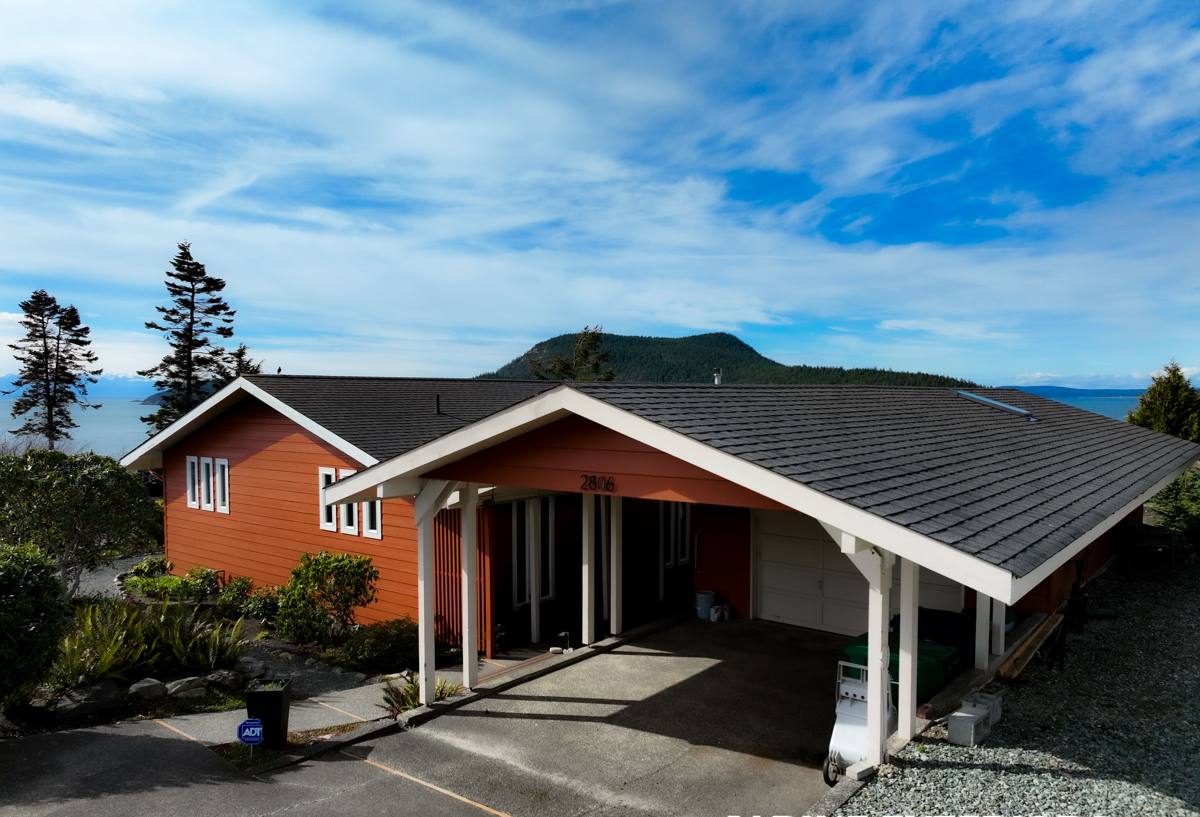
What Birchwood Homes Typically Face
Moisture That Doesn't Quit
Whatcom County's rainy season is long and low-intensity — lots of steady, soaking rain rather than short downpours. That's actually harder on a building envelope than an occasional heavy storm, because siding, trim, and roofing stay wet for extended stretches. Materials that absorb moisture (wood, some fiber cement without a proper factory finish, and OSB-based products) swell, and that swelling is what eventually causes paint failure, delamination, and rot at seams and butt joints.
Moss and Algae Growth
Shaded north- and east-facing walls, roof valleys, and anywhere debris collects are prone to moss and algae growth for a good chunk of the year. On roofing, moss holds moisture against shingles and can work its way under tabs over time. On siding, algae staining is mostly cosmetic but signals a surface that's staying wet longer than it should.
Salt Air and Wind-Driven Rain
Bellingham's proximity to the Bay means a mild but real salt-air component in the weathering equation, especially for homes closer to the water or exposed to westerly wind. Combined with wind-driven rain during winter storms, exterior surfaces — particularly on the windward side of a house — see more direct water exposure than homes further inland.
Siding: Why We Only Install James Hardie
We get asked fairly often why we don't offer vinyl, LP SmartSide, primed spruce, cedar, or other fiber cement brands like Cemplank or Allura. It's not that these products don't have their place — it's that after years of doing exterior work in this specific climate, we decided to build our business around the one product line that consistently held up best to Whatcom County's conditions with the least long-term maintenance burden.
The Short Version
- Vinyl is affordable and low-maintenance in mild climates, but it expands and contracts significantly with temperature swings, can crack in impacts, and doesn't offer the same fire performance or resale perception as fiber cement.
- LP SmartSide is an engineered wood product — it performs well when detailing and maintenance are kept up, but it relies on an intact factory coating and careful field-cutting/sealing to keep moisture out of the wood strand core, which is a lot to depend on in a climate this wet.
- Primed spruce and cedar are traditional, attractive options, but raw or primed wood siding in a marine climate demands a repainting and caulking cycle most homeowners underestimate, and it's the most vulnerable of the group to moisture-driven rot.
- Cemplank and Allura are legitimate fiber cement competitors to James Hardie, but we standardized on one manufacturer so our crews install one system to spec every time, and Hardie's ColorPlus factory finish and HardieZone engineering are what we've found perform most consistently here.
Why James Hardie
James Hardie fiber cement is non-combustible, dimensionally stable across our temperature swings, and available in HZ5 (Northwest-specific) formulations engineered for exactly this kind of climate. The ColorPlus factory finish is baked on under controlled conditions and backed by its own finish warranty, which sidesteps a lot of the field-paint failure we see with other siding types in wet climates. It's also backed by a strong, transferable product warranty — a real factor when a homeowner in Birchwood goes to sell.
None of this means Hardie is maintenance-free. It still needs proper caulking at trim, correct flashing details, and periodic washing to keep moss and algae from taking hold. But the maintenance is predictable and manageable, rather than the kind of chronic paint-and-patch cycle wood or lower-grade composite siding tends to demand here.
| Siding Type | Moisture Behavior in Whatcom County | Typical Maintenance Cycle |
|---|---|---|
| James Hardie fiber cement | Dimensionally stable, factory-finished, engineered for Pacific Northwest zones | Periodic wash, caulk checks; repaint (if ever) on a long cycle |
| Vinyl | Doesn't absorb water but expands/contracts, seams can open over time | Low, but impact damage and fading are common issues |
| LP SmartSide | Wood-strand core depends on intact coating and sealed cut edges | Regular inspection of seams, edges, and caulk lines |
| Primed spruce/cedar | Most moisture-vulnerable; absorbs and swells if coating fails | Repaint every few years; ongoing caulk and rot inspection |
Roofing for a Long Moss Season
Roofing in Birchwood has to do double duty: shed a lot of steady winter rain and resist moss colonization through a long, mild growing season. We look at ventilation, underlayment quality, and valley/flashing details as closely as the shingle or roofing material itself, because in this climate the details around the field of the roof are usually where problems start — not the shingles themselves. Proper attic and roof ventilation also matters more here than people expect, since trapped moisture inside a roof assembly compounds the moss and rot risk from outside.
Where a roof is already showing granule loss, moss buildup in valleys, or soft spots at penetrations, we'll walk through honest options — spot repair versus full replacement — rather than defaulting to the most expensive fix.
Windows: Comfort and Moisture Control
Older single-pane or early dual-pane windows are common in Birchwood's mid-century housing stock, and they're often a bigger source of drafts, condensation, and heat loss than homeowners realize. Window replacement isn't just a comfort upgrade — it also affects how moisture behaves at the wall opening, which matters when we're also addressing siding. When we're doing siding work anyway, it's often the most efficient time to handle window flashing and replacement together, since the wall is already open.
Decks: Built for Wet, Not Just Summer
A deck in Bellingham spends most of the year wet, not dry — which changes what "durable" means here. Ledger board flashing, joist protection, and drainage away from the house are as important as the decking material on top. We build and repair decks with that reality in mind, whether the finished surface is composite or wood, because a deck that looks fine in July but traps water against the house through the winter isn't actually built for this climate.
Why a Local Crew Matters
Exterior work in Whatcom County isn't generic exterior work. A crew that installs the same siding system across warm, dry climates and cold, wet ones without adjusting flashing details, caulking practices, or ventilation planning is setting a home up for problems that won't show up until a few winters in. We work in this specific climate — the same moss, the same rain patterns, the same wind-driven exposure that Birchwood homes deal with every year — and that shows up in the details: how we flash a window, how we lap siding courses, where we route roof and deck drainage.
Local also means we're not going anywhere. If a warranty issue or a maintenance question comes up two or five years down the road, we're still working in Bellingham and still available.
What to Look For Before Hiring Anyone
- Washington state contractor license and proof of insurance, confirmed before any work starts
- Manufacturer-specific installation training for the siding system being installed, not just general carpentry experience
- A written scope that spells out flashing, house-wrap/weather barrier details, and fastener schedule — not just "siding replacement"
- Willingness to explain trade-offs between materials honestly, rather than pushing whatever they have on hand
- Local references or a local track record, given how much climate-specific detailing matters here
- A clear warranty explanation — both the manufacturer's product warranty and the contractor's workmanship warranty
Getting Started
If you're in Birchwood and dealing with siding that's showing its age, a roof that's holding onto moss longer each year, drafty windows, or a deck that's starting to feel soft in spots, we're happy to take a look and give you a straightforward assessment. We'll tell you what we'd actually recommend and why — including if that means a repair instead of a full replacement. Reach out for a free, no-pressure estimate using the form below.