 Bellingham Exterior
 Board & Batten Siding in Birchwood: Built for This Specific Climate
Birchwood sits close enough to the water and the surrounding tree cover that its homes take a particular kind of beating year-round. Salt-laden air moves in off the bay, driving rain comes sideways during winter storms, and the long, damp shoulder seasons give moss and algae months to establish themselves on anything that holds moisture. Board and batten siding is a popular choice for the neighborhood's mix of craftsman, farmhouse, and modern homes because of its clean vertical lines and strong shadow lines, but that same style lives or dies on the material behind it and the install underneath it. We install board and batten exclusively in James Hardie fiber cement, and we've built our process around what Birchwood homes actually need to survive Whatcom County weather, not just what looks good on install day.
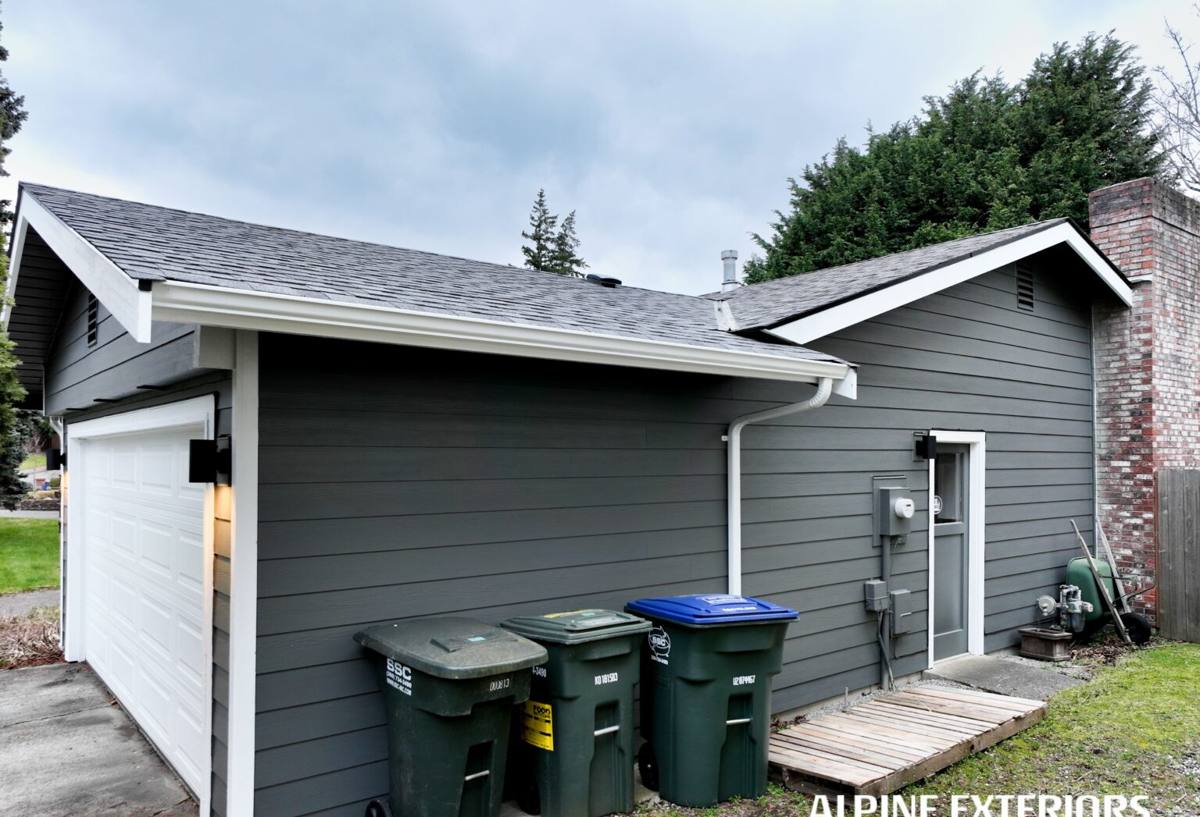
Why Board & Batten Is a Good Fit for Birchwood — With Caveats
The vertical board and batten profile suits a lot of the architecture we see in and around Birchwood. It reads as more contemporary or farmhouse than traditional lap siding, and it pairs well with the gable rooflines and covered porches common in the area. But the profile itself creates more seams, more butt joints, and more battens than a standard lap job — every one of those is a potential water entry point if it's not detailed correctly. In a climate that gets sustained wind-driven rain off the water, that's not a minor detail. It's the difference between siding that looks good for two years and siding that performs for decades.
What the Style Demands From the Material
Because board and batten shows more raw material surface per square foot than overlapping lap siding, whatever you clad the house in has to resist moisture absorption, cupping, and rot at the cut ends and joints — not just on the face of the board. This is where the material choice matters more for this style than almost any other.
What a Correct Board & Batten Job Requires in This Climate
A board and batten installation that's actually built for Birchwood's weather isn't just about nailing boards to the wall in a vertical pattern. It comes down to a handful of details that either get done right or become the reason you're calling a contractor back out in three years.
- A properly installed weather-resistive barrier and rainscreen gap behind the siding, so any moisture that gets past the cladding has somewhere to drain and dry instead of sitting against the sheathing
- Factory-primed or factory-finished cut ends sealed on-site, since raw cut edges are the single most common point of moisture intrusion on any fiber cement job
- Correct fastener placement and spacing at both the boards and the battens, matched to Hardie's published installation instructions rather than "close enough"
- Flashing detail at every horizontal transition — window heads, roof lines, deck ledgers — since board and batten's vertical runs cross more of these transitions than lap siding does
- Adequate clearance from grade, decks, and roof lines to keep splash-back and standing moisture away from the base of the siding
- Batten spacing and reveal that's consistent enough to shed water evenly across the wall, not just consistent enough to look even from the street
Skip any one of these and you don't get an obvious failure right away — you get a slow one. Moss gets a foothold in a joint that's holding moisture, water works behind a batten that wasn't flashed, and by the time it's visible from the outside there's often sheathing damage behind it.
Why We Only Install James Hardie for This Application
Board and batten siding gets specified in a lot of materials — engineered wood, vinyl, primed spruce, even cedar in some higher-end builds. We don't install any of those for this profile, and it's worth being straightforward about why. Engineered wood products can perform well when detailing is perfect, but they depend on maintaining an intact factory coating at every cut edge and joint for their entire service life — in a style with this many joints, that's a lot of vulnerable points to maintain. Vinyl board and batten profiles exist, but vinyl expands and contracts with temperature swings in ways that show at the seams over time, and it doesn't hold paint if you ever want to change the look. Primed spruce and cedar are real wood — they need ongoing sealing, repainting, and vigilance against exactly the kind of moss and moisture Whatcom County throws at them, and board and batten's extra seams multiply the maintenance points.
James Hardie fiber cement is non-combustible, dimensionally stable across our temperature swings, and holds its ColorPlus factory finish for years without the fading and chalking that raw-primed products show early. Hardie's HZ5 product line is engineered specifically for climates like ours — freeze-thaw cycles, sustained moisture exposure, and the kind of year-round dampness that makes moss and mildew resistance a real performance factor, not a marketing line. For a profile like board and batten, where the material has to hold up at more seams and more exposed edges than lap siding, that stability matters even more.
Comparing Materials for Board & Batten in This Climate
| Material | Moisture Behavior at Seams/Joints | Maintenance Burden | Typical Lifespan Here |
|---|---|---|---|
| James Hardie Fiber Cement | Stable; factory-sealed edges when detailed correctly | Occasional wash; no repainting needed for years | 30+ years with proper install |
| Engineered Wood | Vulnerable if coating is compromised at cuts | Requires vigilance at every joint and edge | Highly install and maintenance dependent |
| Vinyl | Seams can gap/warp with temperature swings | Low, but not paintable or repairable | Variable; UV and cold can shorten lifespan |
| Primed Spruce / Cedar | Absorbs moisture readily at exposed grain | Regular repainting and sealing required | Depends heavily on upkeep |
Our Process for a Birchwood Board & Batten Project
We start with a walk-through of the home and a real look at the existing wall assembly — what's behind the current siding matters as much as what goes back on. From there, our process is the same discipline every time, because that consistency is what actually prevents callbacks:
- On-site assessment of the existing siding, sheathing, and any moisture or rot issues found during removal
- Installation of a code-compliant weather-resistive barrier and rainscreen system suited to the home's wall assembly
- Flashing and sealing at every window, door, roofline, and horizontal transition before a single board goes up
- Hardie board and batten installation to manufacturer spec — fastener pattern, spacing, and clearances
- Final inspection of every joint, batten seam, and cut edge before we consider the job complete
We don't shortcut the barrier and flashing work to save a day of labor, because that's exactly the work nobody sees once the siding is up — and exactly the work that determines whether the house is dry in ten years.
Why It Matters to Hire a Crew That Already Works Birchwood
A lot of siding problems in this area aren't material failures — they're installation choices that didn't account for local conditions. A crew that's worked in and around Bellingham knows how far to plan for wind-driven rain off the water, how aggressively moss establishes itself on north-facing walls that don't get much sun, and how the region's rainscreen and drainage requirements actually get inspected. That local pattern recognition shows up in decisions you'd never think to ask about — where to add extra flashing, which walls need more attention to ventilation, how tight to set batten reveals given the amount of rain the wall will see. It's the difference between a crew executing a generic install and a crew building specifically for Whatcom County.
What to Expect for Cost Factors
Board and batten pricing depends on a handful of variables that are worth understanding before you get quotes, since the profile itself carries some cost differences from standard lap siding.
| Factor | Why It Affects Cost |
|---|---|
| Wall complexity | More corners, gables, and transitions mean more cuts, more battens, and more flashing detail |
| Existing siding removal and disposal | Tear-off adds labor and disposal costs versus a bare-wall install |
| Sheathing or moisture repair | Any rot or damage found underneath the old siding needs to be addressed before new siding goes on |
| Batten spacing and reveal | Tighter spacing uses more material and more labor hours per square foot |
| Color and finish | Factory ColorPlus finishes versus field-painted options carry different material costs |
We give straightforward, written estimates based on an actual look at your home rather than a phone-quote guess, because board and batten pricing swings too much on wall condition and complexity to estimate blind.
Signs Your Current Siding Is Past Its Service Life
If you're in Birchwood and wondering whether it's time to look at replacement, a few signs are worth taking seriously rather than watching for another season: soft spots or give when you press on the siding, persistent moss or dark streaking that comes back within weeks of cleaning, visible gaps or separation at joints and battens, and paint that's failing faster than a normal repaint cycle would explain. Any of these can point to moisture that's already working behind the surface, which is a different and more urgent problem than a siding that just looks tired.
If you're planning a board and batten project in Birchwood or want a second opinion on what's happening with your current siding, we're happy to come take a look and give you a straightforward, no-pressure estimate — no obligation, just an honest read on what your home actually needs.