 Bellingham Exterior
 Why Silver Beach Roofs Wear Differently Than Roofs Across Town
Silver Beach sits among mature trees and close to Lake Whatcom, and that setting is part of what makes the neighborhood desirable — it's also exactly what shortens a roof's working life. Heavy tree canopy means long stretches of shade on north-facing and lake-side slopes, which means those sections of roof stay damp far longer after every rain than a roof out in the open would. Add in Whatcom County's long wet season, the driving rain that comes off Pacific storm systems, and the salt-tinged marine air that moves through the Bellingham area, and you have a combination that ages roofing materials from more than one direction at once.
A roof replacement done right in Silver Beach isn't just "the same job as anywhere else, but with better shingles." It's a job that accounts for shade patterns, moisture retention, and moss pressure that a roof three miles away in full sun may never deal with.
The Moss Problem
Moss doesn't just look bad — it holds water against the shingle surface, works its way under tabs and around fasteners, and lifts the roofing material as it grows. On shaded Silver Beach lots, moss can establish itself within a couple of years of installation if the roof wasn't detailed with moss resistance in mind. Once moss gets a foothold on a north slope that barely sees direct sun, scraping it off periodically only slows the damage — it doesn't stop it.
Wind-Driven Rain and Flashing
Storms moving through this part of Washington often bring rain sideways, not straight down. That matters most at the details — valleys, chimney flashing, skylight curbs, and the transitions where a roof meets a wall. A roof can have new shingles and still leak within a season or two if the flashing underneath wasn't rebuilt correctly during the tear-off. This is one of the most common causes of a "brand new roof that still leaks" call we get.
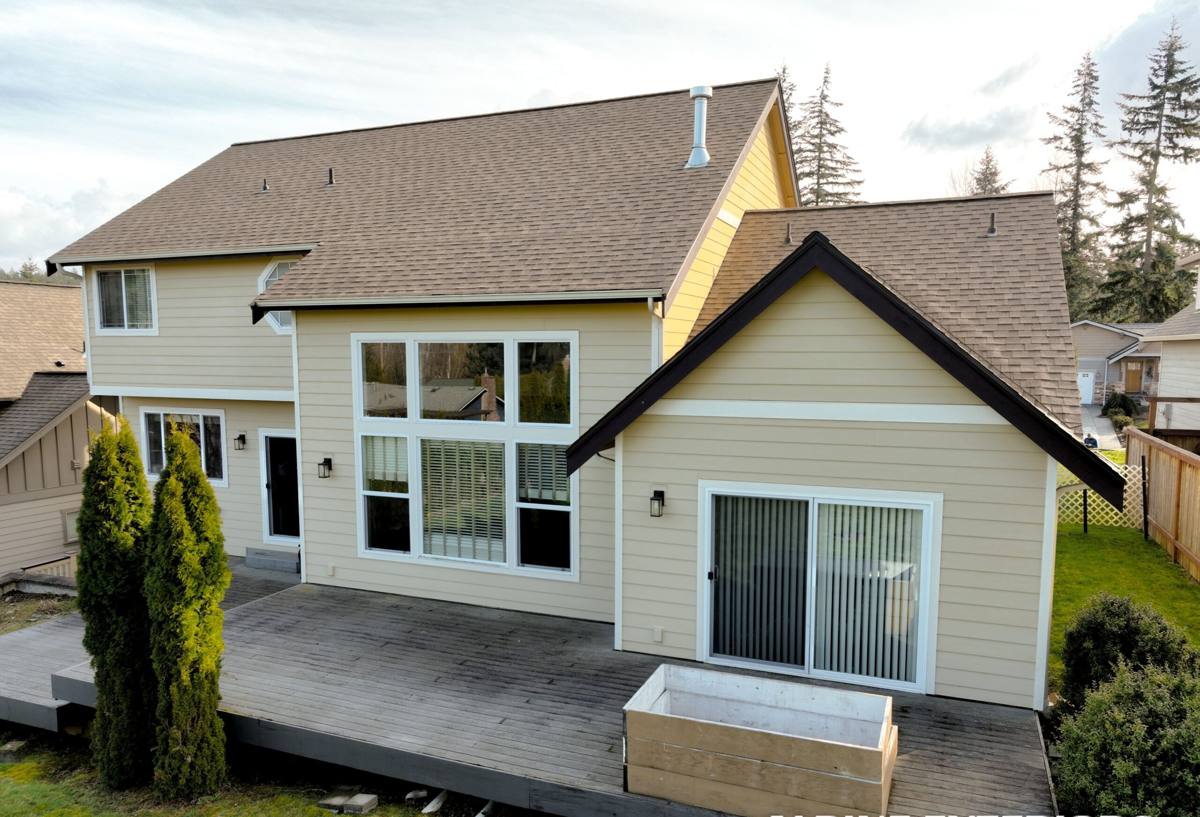
Signs a Silver Beach Roof Is Due for Replacement, Not Another Repair
Repair makes sense when a roof has isolated damage on an otherwise sound system. Replacement makes sense once the roofing material itself has aged out or the damage has spread past a few localized spots. On shaded, moss-prone lots, that line tends to arrive sooner than manufacturer lifespan charts suggest.
- Granule loss heavy enough that you can see bare asphalt in valleys or on south-facing slopes
- Moss mats thick enough to hold visible moisture, especially on north-facing sections
- Shingles that are cupping, curling, or cracking rather than lying flat
- Soft or spongy decking felt underfoot when walked, or sagging visible from the ground
- Daylight visible through the roof deck from inside the attic
- Repeated leak repairs in different spots over the past couple of years
- A roof original to the house and past 18–20 years old in this climate, even if it "looks okay" from the street
If you're only seeing one or two of these, a repair may still be the right call. If several apply at once, a replacement will almost always cost less over time than another round of patchwork.
What a Correct Roof Replacement Actually Involves
Full Tear-Off, Not an Overlay
Layering new shingles over old is faster and cheaper up front, but it traps moisture that's already worked into the old roofing system and hides decking problems instead of fixing them. On a lot with the moisture load Silver Beach sees, an overlay is a false economy. A proper replacement strips the roof down to the deck.
Decking Inspection and Repair
Tear-off is also the only point where anyone can actually see the condition of the plywood or plank decking underneath. On homes with a history of moss or slow leaks, it's common to find sections of decking that have softened from years of retained moisture. Any soft, delaminated, or rotted decking gets replaced before a single new shingle goes down — nothing new should ever be fastened to compromised wood.
Underlayment and Ice-and-Water Barrier
A synthetic underlayment goes down over the entire deck as the roof's real waterproof layer — shingles shed most of the water, but underlayment is what keeps the deck dry if wind drives rain underneath them. Self-adhering ice-and-water membrane belongs at eaves, valleys, and around penetrations, where wind-driven rain and ice damming (during the occasional hard freeze) put the most stress on the system.
Ventilation
An underventilated attic traps warm, moist air against the underside of the deck, which accelerates rot from the inside and can encourage moss growth on the outside by keeping the roof surface warmer and damper than it should be. Balanced intake at the eaves and exhaust at the ridge is part of a correct replacement, not an upsell.
Flashing Rebuilt, Not Reused
Chimney flashing, step flashing along walls, and valley metal should be replaced as part of the job, not caulked and reused. Old flashing has already been through years of expansion, contraction, and corrosion from the marine air — reusing it just carries the same failure point into the new roof.
Choosing Materials for a Shaded, Damp Lot
Every roofing material handles this climate differently. None of them are wrong choices in the abstract — the right one depends on how much shade a particular roof gets, how steep it is, and how much upkeep you want to take on.
| Material | Typical Lifespan Here | Moss/Moisture Behavior | Upkeep | Relative Cost |
|---|---|---|---|---|
| Architectural asphalt shingle | 20–25 years | Good with proper ventilation and moss-resistant granules; still needs periodic treatment on shaded slopes | Low to moderate | $ |
| Standing seam metal | 40–50+ years | Sheds moisture quickly, sheds moss and debris well on steeper pitches | Low | $$$ |
| Synthetic slate/shake | 30–40 years | Doesn't absorb moisture the way natural wood does; holds up well in shade | Low | $$$ |
| Natural cedar shake | 15–25 years, shorter in heavy shade | Absorbs moisture and is more prone to moss, rot, and splitting on damp, shaded slopes | High | $$ |
On heavily shaded Silver Beach lots, we're generally cautious about recommending untreated natural cedar shake. It's a good-looking product and can perform fine in full sun with diligent upkeep, but on a slope that stays wet for days after a storm, wood shake takes on moisture in a way that shortens its life and raises the maintenance burden well beyond what most homeowners want to keep up with. That's a trade-off worth knowing before you commit, not a knock on the material itself.
Our Roof Replacement Process
- On-site inspection — we walk the roof and the attic, not just look from the ground, and check for the shade, moss, and moisture patterns specific to that lot.
- Written estimate — material options, scope of work, and timeline, with the reasoning behind the recommendation explained in plain terms.
- Scheduling around the weather — we work with Whatcom County's wet season rather than pretending it isn't a factor, and we protect the open deck if weather turns during the job.
- Tear-off and disposal — old roofing removed down to the deck and hauled off site.
- Decking repair — any soft or damaged sheathing replaced before anything else goes down.
- Underlayment, flashing, and ice-and-water barrier — installed at eaves, valleys, and penetrations.
- Shingle or panel installation — installed to manufacturer specification, not shortcut for speed.
- Ventilation check and correction — intake and exhaust balanced for the attic's actual size and use.
- Cleanup — a magnetic sweep for stray fasteners and full debris removal before we consider the job done.
- Final walkthrough — we go over the finished roof and the warranty paperwork with you directly.
Why Hiring a Crew That Already Works Silver Beach Matters
Lots in this neighborhood come with real access challenges — narrow driveways, tree cover close to the roofline, and slopes that stay slick longer than an open, sunny roof would. A crew that hasn't worked lots like this before will underestimate setup time, safety precautions, and how much longer tear-off takes when branches and shade are in the way. That shows up as delays, or worse, shortcuts.
A crew that's already replaced roofs in Silver Beach and around greater Bellingham knows what these lots require before the first ladder goes up: where to expect soft decking, how to route material and debris around mature trees without damaging landscaping, and how much the moss and moisture pattern on a given slope should influence the material conversation. That's local experience you can't get from a crew that only occasionally works this side of Whatcom County.
Maintenance That Extends a New Roof's Life Here
A correctly installed roof still benefits from upkeep suited to a shaded, moisture-heavy lot. None of this is complicated, but skipping it is how a 20-25 year roof turns into a 15 year roof.
- Clear gutters and downspouts at least twice a year — clogged gutters back water up under the shingle edge
- Treat moss-prone slopes on a regular schedule rather than waiting until moss is visibly thick
- Trim back overhanging limbs to cut down on shade, debris, and abrasion against the roof surface
- Have the attic checked periodically for adequate airflow and any sign of moisture buildup
- Address any small leak or soft spot right away — on a shaded roof, small problems don't stay small for long
What Affects the Cost of a Roof Replacement
Every estimate we write is specific to the house, but the same handful of factors drive most of the variation between one Silver Beach roof and the next: the total roof area and number of stories, roof pitch and how safely it can be accessed, how many layers of existing roofing need to come off, how much decking repair turns up once we open it up, and which material you choose. A steep, tree-shaded lake-view roof with two layers to remove and some decking repair will cost more than a simple, accessible roof in good shape underneath — that's true anywhere, but it's worth knowing up front so an estimate makes sense once you see it broken down.
If you're weighing options for a roof in Silver Beach, we're happy to walk it with you and put together a free, no-pressure estimate — including an honest read on whether repair or full replacement is the right call for your specific roof. There's a form below to get started.