 Bellingham Exterior
 Siding Installation in York: Built for Bellingham's Coastal Climate
York is one of Bellingham's older, closer-in residential neighborhoods, with a mix of home vintages sitting under a lot of mature tree canopy. That combination matters more than most homeowners realize when it comes to siding. Shade from mature trees keeps siding damp longer after a storm, tree cover feeds Whatcom County's long moss season, and Bellingham's proximity to the Sound means salt-laden air and driving, wind-pushed rain are part of the deal almost every week from fall through spring. Siding here isn't just a cosmetic layer. It's the thing standing between your framing and a climate that stays wet, cool, and salty for most of the year.
Siding installation done right in York accounts for all of that: the right product, the right water management details behind it, and a crew that isn't guessing at how Bellingham weather behaves because they've already worked on homes a few blocks over.
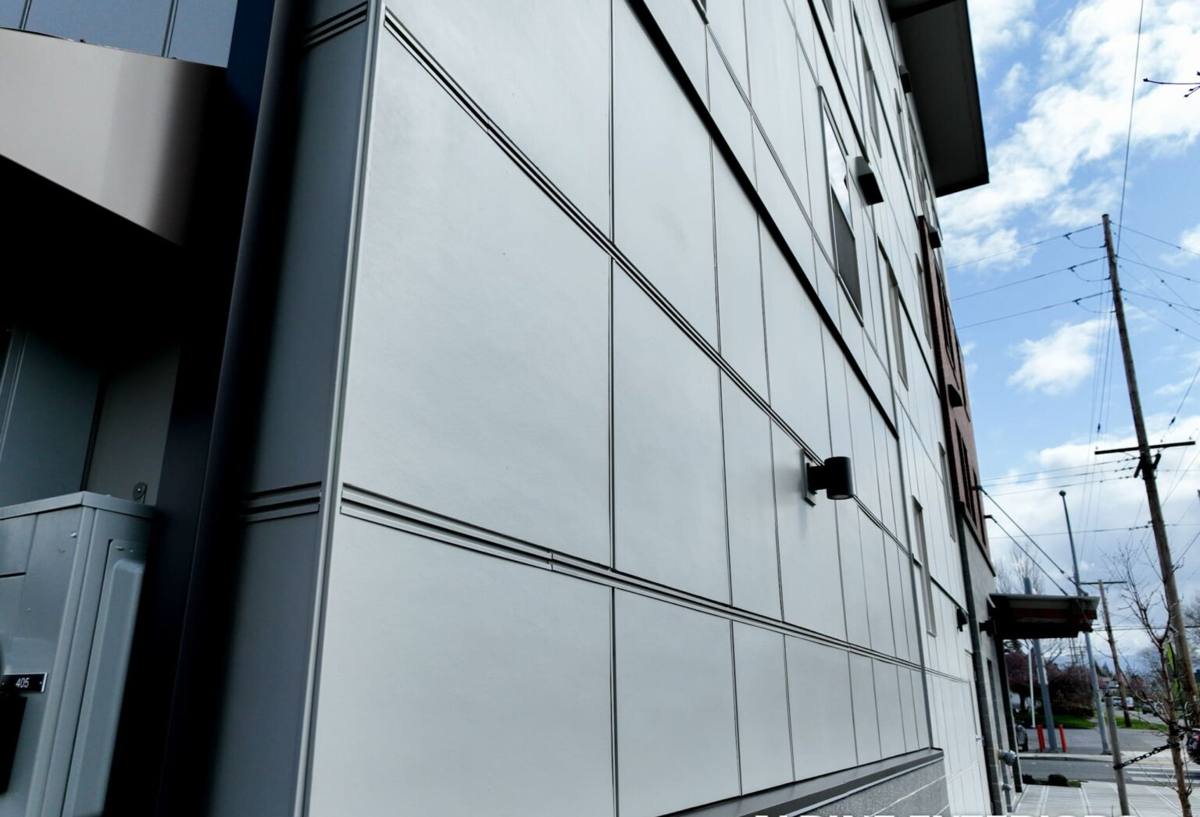
What Correct Siding Installation Actually Involves
Siding installation is often sold as a simple swap — old boards off, new boards on. That approach is exactly how call-backs happen two or three winters later, once the first hard wind-driven rain finds a gap the old install never sealed. A correct job has several layers that all matter more in a marine climate than they would somewhere dry.
Tear-off and substrate inspection
Once the old siding is off, the sheathing underneath gets inspected for rot, soft spots, and prior water damage — common on homes that have been through a few decades of Pacific Northwest winters. Any compromised sheathing gets repaired before anything new goes up. Installing new siding over damaged sheathing just hides a problem that will keep spreading.
Weather-resistive barrier and flashing
A new weather-resistive barrier goes on before the siding, along with flashing at every window, door, and roofline intersection. This is the layer that actually keeps driving rain out of the wall assembly — the siding itself is the first line of defense, not the only one. Flashing details around penetrations are where most moisture problems in this climate actually start.
Rainscreen gap and drainage
Behind the new siding, a ventilated gap lets any moisture that does get past the siding drain and dry out instead of sitting against the wall. In a climate with as much sustained damp weather as Whatcom County sees, this detail is the difference between siding that lasts decades and siding that traps moisture against the sheathing.
Fastening, clearances, and caulking
Fasteners are set to the manufacturer's spacing and depth spec — over-driven or under-driven nails are a common source of early failure. Ground clearance and roof-to-wall clearances are kept to spec so splashback and runoff don't sit against the bottom courses. Caulking is used sparingly and correctly, at joints and penetrations, not as a substitute for proper flashing.
Why We Install Only James Hardie Fiber Cement
We don't install LP SmartSide, vinyl, Cemplank, Allura, primed spruce, or cedar. That's a deliberate standard, not a lack of options. Each of those products has real strengths, but each also comes with a trade-off that shows up hardest in a climate like Bellingham's — vinyl expands and contracts and can crack in sustained cold snaps, wood-based products need more diligent maintenance to keep moisture out of the substrate, and engineered wood siding depends heavily on caulking and paint discipline holding up year after year of wet weather.
James Hardie fiber cement is non-combustible, doesn't rot, and holds paint and factory finish far longer than wood-based alternatives because it isn't wood — it's cement, sand, and cellulose fiber. Hardie's ColorPlus factory finish is baked on and warrantied against fading and chipping, which matters on a coastal property where UV, salt air, and moisture are all working against a paint job at once. Hardie also makes HZ5 product lines specifically engineered for wetter, harsher climates, which is exactly the environment Bellingham sits in. We standardized on it because it's the product we're comfortable standing behind on every home we touch, including our own warranty.
Comparing Siding Options for a York Home
| Factor | James Hardie Fiber Cement | Vinyl | Wood / Engineered Wood |
|---|---|---|---|
| Moisture resistance | Excellent — won't rot, engineered for wet climates | Good, but seams and expansion gaps can let water track behind panels | Depends entirely on maintenance and sealed edges |
| Fire resistance | Non-combustible | Combustible, can melt or warp near heat | Combustible |
| Finish longevity | Factory ColorPlus finish, long warranty | Color molded in but can fade and chalk over time | Needs repainting/restaining on a regular cycle |
| Performance in salt air | Strong, doesn't corrode or degrade from salt exposure | Generally stable, but can become brittle in cold | Salt-laden moisture accelerates wood decay |
| Maintenance in moss-prone areas | Occasional washing keeps it clean | Occasional washing, but seams can trap growth | Requires closer attention — trapped moisture under moss speeds rot |
Our Process From Estimate to Cleanup
- On-site assessment: we walk the exterior, check current siding and trim condition, and look for existing moisture or ventilation issues before quoting anything.
- Written estimate: a clear scope covering tear-off, repairs if needed, product and profile selection, and timeline — no vague allowances.
- Prep and protection: landscaping, walkways, and windows get protected before tear-off starts.
- Tear-off and sheathing repair: old siding comes off, sheathing is inspected and repaired as needed.
- Water management install: weather-resistive barrier, flashing, and rainscreen gap go in before any new siding.
- Hardie installation: siding, trim, and accessories installed to manufacturer spec and local code.
- Caulking, touch-up, and final inspection: joints sealed, any factory-finish touch-up done, full walk-around with the homeowner.
- Cleanup and haul-away: job site cleared of old material and debris.
Signs a York Home Needs New Siding
Some warning signs are obvious; others are easy to miss under a coat of moss or behind a shaded wall. Worth checking before winter each year:
- Soft or spongy spots when you press on the siding, especially near the bottom courses or under windows
- Persistent moss or algae growth that comes back within weeks of cleaning
- Paint that's peeling, bubbling, or chalking heavily rather than just fading evenly
- Visible warping, cupping, or separation at the seams and corners
- Cracks or holes that let daylight or drafts through from inside
- A musty smell or visible staining on interior walls that back up to exterior siding
- Siding that's original to a home built more than 25-30 years ago and has never been replaced
Cost Factors for Siding Installation in York
Every home is different, but the same handful of factors drive most of the cost variation we see on jobs in this area:
| Factor | Why It Matters |
|---|---|
| Home size and wall complexity | More corners, gables, and dormers mean more cutting, flashing, and labor time |
| Sheathing condition | Rot or damage found during tear-off adds repair scope before new siding goes on |
| Siding profile chosen | Lap siding, shingle-style panels, and board-and-batten all price differently in labor and material |
| Trim and accessory scope | Corner boards, window trim, and fascia work add to the total beyond the field siding |
| Access and site conditions | Mature landscaping, tight setbacks, or multi-story walls can add time and equipment needs |
Why Hiring a Crew That Already Works in York Matters
Bellingham's building code, wind exposure, and moisture load aren't uniform across every neighborhood, and a crew that mostly works drier inland markets can miss details that matter here — clearance heights that account for local rain intensity, flashing sequencing that holds up against sustained wind-driven storms, and product choices suited to homes sitting under heavy tree cover. A crew that's already worked on siding in York and the surrounding Bellingham neighborhoods knows what the moss season actually does to a wall over a few years, not just in theory. That local track record shows up in fewer surprises during tear-off and a finished install that's actually built for the weather it has to survive, not just the weather on the day it went up.
Maintaining Your New Siding in Whatcom County's Climate
James Hardie siding is low-maintenance, not no-maintenance. A yearly rinse-down knocks back moss and algae before it gets established, especially on shaded walls. Keep gutters clear so overflow doesn't run down the siding face, and keep an eye on caulking at trim joints every couple of years — caulk is the one component that wears out faster than the siding itself. Trimming back tree branches that overhang or brush against the wall helps as well, since constant contact keeps a section of siding damp longer than the rest of the house and gives moss a head start.
If you're weighing siding replacement for a home in York, we're happy to take a look and give you a straight, no-pressure estimate — no obligation, just an honest read on where your siding actually stands. Use the form below to get started.