 Bellingham Exterior
 Why Cordata's Climate Puts Real Demands on a Roof
Cordata sits in north Bellingham, close enough to the water and the lowland drainages of Whatcom County that homes here take on a specific mix of weather stress: salt-tinged air moving in off Bellingham Bay and the Strait of Georgia, long stretches of driving rain through fall and winter, and shaded, moisture-heavy lots where moss gets a foothold and never really lets go. None of that is unusual for this part of Washington, but it adds up differently on a roof than it does on siding or trim. A roofing system that isn't specified for this environment will show it early — streaking, granule loss, soft spots at the eaves, moss creeping under the first course of shingles.
Metal roofing, installed correctly, handles this combination better than most alternatives. It sheds water fast, doesn't absorb moisture the way organic shingle mat can, and gives moss and algae far less to grab onto. But "installed correctly" is doing a lot of work in that sentence. A metal roof is only as good as its underlayment, flashing, and fastening detail — and those details are exactly where a lot of roofing problems in this region actually start.
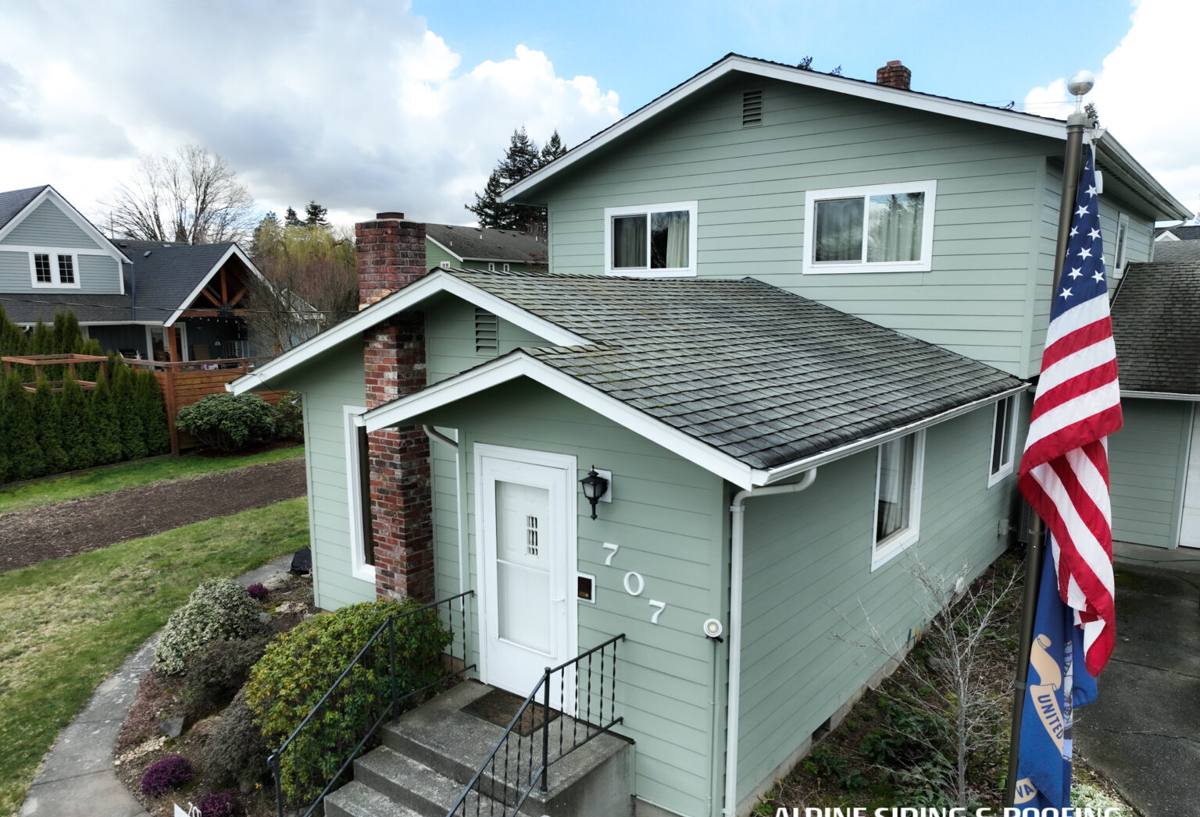
What a Correct Metal Roof Actually Requires
Metal roofing has a reputation as a "install it and forget it" product, and in terms of the panel material itself, that's largely true. The panels are not usually where failures start. Failures start in the assembly underneath and around them — the parts that don't get discussed enough when a metal roof is being sold.
Underlayment and Moisture Management
Under a metal roof, the underlayment is doing more work than people expect, especially in a climate that sees extended rain events rather than short downpours. We use synthetic or self-adhered underlayment rated for metal roofing, with particular attention at valleys, eaves, and any low-slope transitions where water sits longer before it drains. In a yard with heavy tree cover or persistent shade — common on the more wooded lots around Cordata — that underlayment is also the backstop against the slow moisture load that comes with moss and needle debris sitting on the roof between cleanings.
Fastening and Panel Systems
How a panel is fastened affects both its wind performance and how it ages. Exposed-fastener panels rely on screws driven through the panel face with a rubber washer; those washers are a wear item, and in a wet climate they eventually need attention or replacement. Standing seam panels use concealed clips, so there's no fastener penetrating the panel face at all — nothing for water to work at over time. We'll walk through both options honestly rather than defaulting to whichever is easier to install.
Flashing Details That Actually Matter
Most metal roof leaks that we get called out to inspect aren't panel failures — they're flashing failures. Chimneys, skylights, sidewall transitions, and valleys are where water is redirected, and redirection is where mistakes show up. Properly formed, properly lapped flashing, sealed with the right sealant for metal-to-metal or metal-to-wall contact, is the difference between a roof that holds up through a Whatcom County winter and one that starts leaking in year three.
Metal Roofing Options for Cordata Homes
Not every metal roofing system fits every house, budget, or roofline. Here's how the common options compare for this climate and area:
| System | Best For | Moisture & Moss Resistance | Maintenance |
|---|---|---|---|
| Standing seam | Steeper roofs, homes wanting a clean modern or farmhouse look, long-term ownership | Excellent — no exposed fasteners, tight seams shed water fast | Low; periodic debris clearing |
| Exposed-fastener panel (e.g. 5V, corrugated) | Budget-conscious projects, outbuildings, simpler rooflines | Good, but washers age and need eventual inspection or replacement | Moderate; check fasteners every few years |
| Metal shingle/shake panels | Homes wanting a traditional shingle or shake look with metal durability | Good; interlocking profile sheds water well | Low to moderate |
For most Cordata homes, we recommend standing seam when the budget allows, specifically because of how little maintenance it demands in a climate where moss and constant moisture are working against the roof year-round. That said, exposed-fastener systems are a legitimate, durable choice for the right project and budget — we won't push a homeowner toward the more expensive system if it isn't the right fit.
Moss, Algae, and Long-Term Maintenance in Whatcom County
Moss doesn't care what your roof is made of, but it has a much harder time establishing on metal than on asphalt or wood. There's no granule surface for spores to catch on, and the smooth, sloped panel surface drains faster, so there's less standing moisture for moss and algae to use. That said, "moss-resistant" doesn't mean "moss-proof." Overhanging branches, north-facing slopes, and roof valleys that collect needles and leaf litter can still build up organic debris, and where debris sits, moisture follows.
A simple annual or biannual check — clearing debris from valleys and gutters, confirming flashing sealant hasn't cracked, and looking for any panel that's shifted or lifted — keeps a metal roof performing the way it's supposed to for decades. We're happy to walk a homeowner through what to look for themselves between professional inspections, or handle that maintenance directly if that's preferred.
Our Process, Start to Finish
- On-site assessment. We look at the existing roof structure, decking condition, ventilation, and any problem areas — not just the roof surface, but what's underneath it.
- Honest system recommendation. Based on your roofline, budget, and how the house sits relative to shade and tree cover, we'll recommend a panel system and explain the trade-offs rather than upselling by default.
- Written estimate. Clear scope, materials, and pricing before anything is scheduled — no surprise add-ons once work has started.
- Tear-off and deck inspection. If the old roofing is coming off, we check the decking underneath for rot or soft spots before anything new goes down, since covering a compromised deck just hides the problem.
- Underlayment, flashing, and panel installation. Done in the sequence and to the spec the system requires — not shortcut to save a day of labor.
- Final walkthrough. We go over the finished roof with you, point out anything you should watch for, and answer questions before we consider the job done.
Cost Factors for a Cordata Metal Roof
Metal roofing costs more upfront than asphalt shingles, and the honest answer to "what will it cost" depends on several variables specific to your house:
- Panel system — standing seam runs higher than exposed-fastener panels due to material and labor complexity.
- Roof complexity — valleys, dormers, skylights, and multiple roof planes all add flashing work and labor time.
- Existing deck condition — if the decking needs repair or replacement once the old roof is off, that's additional scope.
- Tear-off vs. overlay — metal can sometimes go over existing shingles depending on local code and roof condition, but a full tear-off gives us a chance to inspect and fix what's underneath.
- Access and pitch — steep roofs or difficult site access add labor time and safety equipment requirements.
Because of the durability and low maintenance involved, most homeowners see metal roofing as a long-horizon investment rather than a like-for-like swap with asphalt — the upfront cost is higher, but it's spread over a much longer service life with far less spent on repairs and moss treatment along the way.
Why a Crew That Already Works in Cordata Matters
A roofing crew that works regularly in this specific part of Whatcom County has already seen how the local conditions play out over years, not just on install day. That means knowing which flashing details tend to need extra attention on north-facing, shaded lots, how much moss buildup is normal versus a sign of a drainage issue, and what panel and fastener choices actually hold up here versus what looks fine on a spec sheet from a drier climate. It also means being reachable after the job is done — for a maintenance question, a storm-damage check, or a warranty issue — without you having to track down a crew that only passed through once.
Signs Your Current Roof May Need Attention
Before jumping to a full metal roof replacement, it's worth knowing what to watch for on your existing roof:
- Moss visibly growing on or under shingle edges, especially on shaded or north-facing slopes
- Granules collecting in gutters or at downspout outlets
- Dark streaking or discoloration across large sections of the roof
- Soft or spongy spots when the roof is walked (a sign of deck moisture damage)
- Daylight visible through the roof deck from inside the attic
- Curling, cracking, or missing shingles after a windy winter
- Rusted or deteriorating flashing around chimneys, vents, or skylights
Any one of these is worth a professional look before it turns into a bigger repair — and if a roof is nearing the end of its service life anyway, that's the right time to have a real conversation about whether metal roofing makes sense for your home.
Get a Straight Answer for Your Roof
If you're weighing metal roofing for a Cordata home, we're glad to take a look, answer your questions honestly, and give you a written estimate with no pressure attached. Use the form below to request a free estimate, and we'll go from there.