 Bellingham Exterior
 Sudden Valley's Siding Problem Isn't Cosmetic — It's Moisture
Sudden Valley sits along Lake Whatcom on the east side of Bellingham, tucked against forested slopes that trap moisture and limit direct sun on a lot of home exteriors. That combination — tree cover, lake-effect humidity, and Whatcom County's long wet season — means siding here spends more of the year damp than siding on an open lot closer to town. Add the driving rain that comes off Puget Sound storms and the salt air that reaches inland with coastal weather systems, and you've got an exterior envelope that's under sustained pressure almost year-round.
None of that is unusual for this part of Washington. What matters is whether the siding installed on a Sudden Valley home was chosen and installed with that reality in mind, or whether it was installed the same way it would be on a dry-climate build. We see the difference in service calls: siding that looks fine from the road but is holding moisture at the seams, the trim joints, or the bottom courses where splashback and shade keep things wet longest.
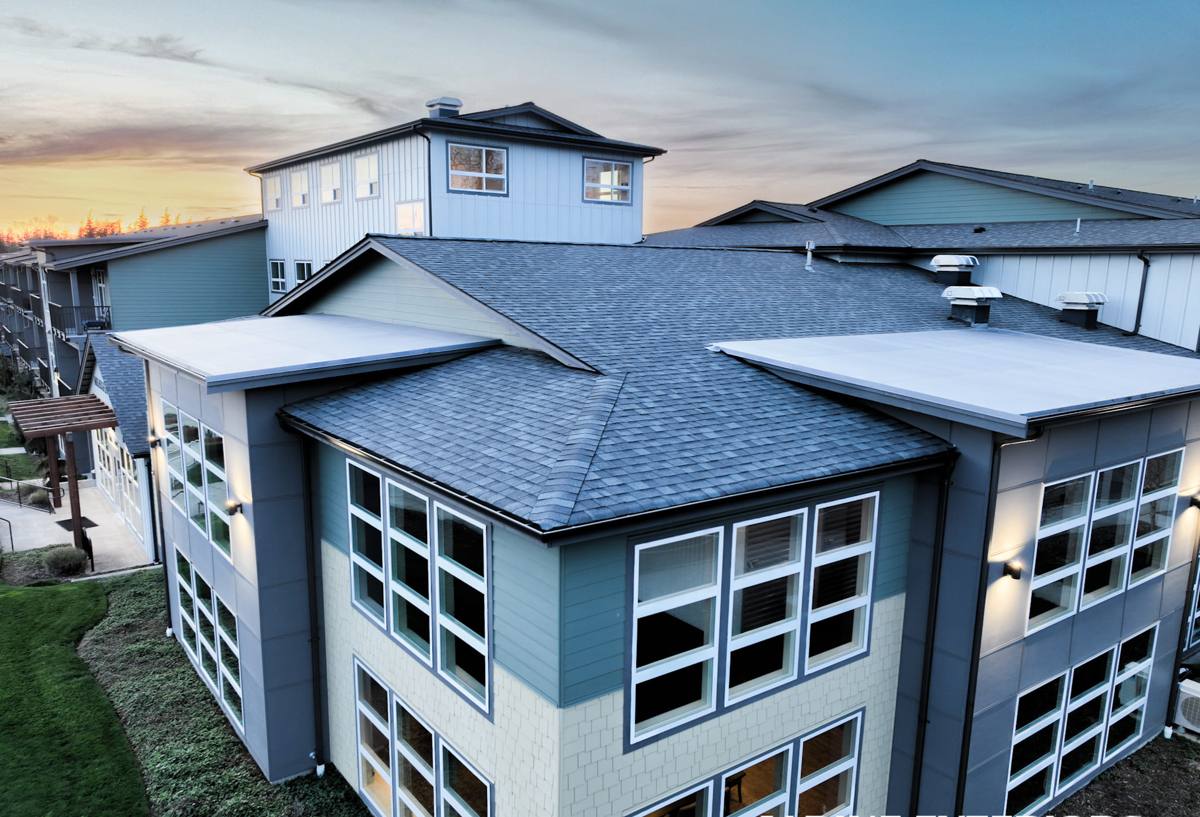
What Siding Actually Needs to Do Here
In a shaded, damp neighborhood like Sudden Valley, siding has three jobs, and they're not equally hard:
- Shed water fast. Every horizontal joint, window, and door is a place water wants to collect. Slow-draining details turn into rot starters within a few wet seasons.
- Resist moss and algae growth. Shaded, damp siding grows organic material faster than siding in full sun. The material and finish matter as much as the cleaning schedule.
- Hold paint and color without cracking. Constant wet-dry cycling stresses any coating. A finish that's baked on at the factory holds up differently than one applied on site.
A siding job that nails the water management but uses a moisture-sensitive material still fails early. A siding job with the right material but sloppy flashing details fails too, just for a different reason. Both halves have to be right.
Why We Install Only James Hardie Fiber Cement
We don't install vinyl, LP SmartSide, primed wood, or the lower-cost fiber cement alternatives like Cemplank or Allura. That's a deliberate standard, not a sales position, and it's worth explaining honestly rather than just asserting it.
What the alternatives get right
Vinyl is inexpensive and low-maintenance in dry climates. Engineered wood products like LP SmartSide have a warmer look and are lighter to install. Other fiber cement brands are legitimate products in many markets. None of these are bad products in the abstract — they're just not the right match for what Sudden Valley's climate does to an exterior over 15-20 years.
Why they fall short here specifically
Vinyl expands and contracts with temperature swings and can warp or crack in cold snaps; it also doesn't hold up well against sustained salt exposure. Engineered wood siding is wood at its core — treated and engineered, but still wood — and in a shaded, high-moisture pocket like Sudden Valley, any breach in the coating gives moisture a path into a material that swells and deteriorates once it's wet. Lower-cost fiber cement brands share Hardie's basic chemistry but often use thinner formulations or less rigorous factory finishing, which shows up as more visible fading, chalking, or edge damage over time.
Why James Hardie
James Hardie fiber cement is non-combustible, dimensionally stable across our wet-dry-cold cycles, and doesn't feed moss or algae the way wood-based products can. Its ColorPlus factory finish is baked on under controlled conditions — more consistent and more UV/moisture-resistant than field-applied paint. Hardie also engineers specific product lines (HZ5 for the Pacific Northwest) for exactly this climate zone, and backs the product with a long, transferable limited warranty. That's the combination that holds up in a neighborhood like Sudden Valley: the right chemistry, the right factory process, and a warranty structure that means something if a homeowner sells the house in year eight.
What a Correct Installation Involves
Water Management Comes Before the Siding Goes On
The siding itself is the least important part of keeping water out of the wall assembly — the underlying water-resistive barrier, flashing at every window and door, and properly lapped seams do the real work. On a Sudden Valley home, we pay particular attention to:
- Flashing above windows, doors, and any horizontal trim, so water is directed out and away rather than behind the cladding
- Proper drainage plane behind the siding, so any moisture that does get past the surface has somewhere to go
- Kick-out flashing at roof-to-wall intersections, a detail that's frequently missed and a common source of hidden rot
- Correct lap and overlap on every horizontal joint, following Hardie's published installation specs rather than shortcuts
Fastening and Clearances
Fiber cement has to be fastened correctly to perform — proper nail placement, spacing, and depth matter for both structural integrity and warranty coverage. We also hold correct clearances from grade, roof lines, and decks, since tight clearances are one of the most common reasons siding traps moisture at the bottom courses, which is exactly where we see the earliest damage on homes in shaded, damp settings.
Caulking and Sealant — Used Correctly, Not Everywhere
Over-caulking is a common mistake. Sealant belongs at specific transition points, not smeared along every seam as a substitute for correct flashing. Sealant that's doing a flashing detail's job will fail — usually a few years in, once the material dries out and cracks — and by then it's hiding a moisture problem instead of preventing one.
Our Process for Sudden Valley Homes
- On-site assessment. We look at the existing siding, trim, and any signs of moisture intrusion — particularly at ground-contact areas, deck ledgers, and roof-to-wall junctions, which tend to be the trouble spots in this neighborhood's tree-shaded lots.
- Scope and product selection. We spec the correct Hardie product line and profile for the home, factoring in sun exposure, tree cover, and the specific wall assembly.
- Removal and inspection of sheathing. Old siding comes off and we inspect the sheathing underneath before anything new goes up — this is where hidden damage from a prior installation typically surfaces.
- Water-resistive barrier and flashing. Installed to spec before a single piece of siding goes on.
- Siding installation. Following James Hardie's published fastening, clearance, and lap specifications exactly, not a general contractor's shortcut version.
- Final detailing. Trim, caulking at appropriate transition points only, and a walk-through.
Cost Factors on a Sudden Valley Project
| Factor | Why It Matters Here |
|---|---|
| Existing sheathing condition | Shaded, damp lots are more likely to have hidden moisture damage that needs repair before new siding goes on |
| Home access and lot slope | Sudden Valley's terrain and tree cover can affect staging, scaffolding, and material access |
| Trim and detail complexity | Homes with more window/door trim, dormers, or roof intersections need more flashing work per square foot |
| Siding profile chosen | Lap siding, shingle-style panels, and board-and-batten carry different material and labor costs |
| Removal scope | Full tear-off versus siding over an existing layer (which we generally don't recommend) changes labor significantly |
We give a firm, itemized estimate after the on-site assessment rather than a rough per-square-foot number sight unseen — the sheathing condition and detail complexity move the price too much to guess accurately from a phone call.
Moss, Algae, and Ongoing Maintenance
Even with the right material and a correct installation, a shaded, damp property like a typical Sudden Valley lot will still see some moss and algae growth over time — no siding product is immune to biological growth in a climate this wet. What changes with a correct Hardie installation is how much it affects the material underneath. The factory finish resists staining and doesn't feed organic growth the way untreated wood substrates can, and periodic gentle washing (never pressure-washing directly into seams) keeps the surface looking clean without damaging the finish or forcing water behind the cladding.
Checklist: What to Confirm Before Hiring Anyone for This Job
- Do they inspect and repair sheathing before installing new siding, or just cover what's there?
- Do they follow James Hardie's published fastening and clearance specifications, and can they explain them?
- Do they install proper flashing at every window, door, and roof-to-wall intersection — not just caulk over gaps?
- Have they worked on homes in shaded, high-moisture settings like Sudden Valley specifically?
- Is the warranty transferable, and is it backed by the manufacturer or just the installer?
- Will they give you a written, itemized estimate after seeing the actual condition of your walls?
Why Local Experience in Sudden Valley Matters
A crew that's worked in Sudden Valley before already knows what this neighborhood's tree cover and lake proximity do to a wall assembly over time. They know which corners of a typical lot stay wet longest, where kick-out flashing tends to get missed on older builds, and how much moss growth is normal versus a sign of a bigger moisture problem. That's not something a contractor coming from a drier part of Whatcom County picks up on the first job — it's pattern recognition built from working this specific kind of site repeatedly.
If your siding is original to the house, showing soft spots, heavy moss buildup, or visible gaps at the trim, it's worth having it looked at before those issues turn into sheathing repairs. We offer a free, no-pressure estimate — we'll walk the exterior with you, tell you honestly what we see, and give you a clear scope and price if replacement makes sense.