 Bellingham Exterior
 Roof Repair Built for Birchwood's Wet, Mossy Climate
Birchwood sits in one of the wetter pockets of Bellingham, and the roofs here take a beating that homeowners further inland simply don't deal with in the same way. Long stretches of drizzle, driving rain off the Salish Sea, and salt-laden air combine with heavy tree cover to create ideal conditions for moss, algae, and slow moisture intrusion. If you own a home in this neighborhood, your roof isn't fighting an occasional storm — it's fighting a season that can run eight or nine months out of the year.
That's the backdrop for every roof repair call we take in this part of Whatcom County. We're not guessing at what local homes need; we see the same failure patterns repeat block after block, and we've built our repair process around them.
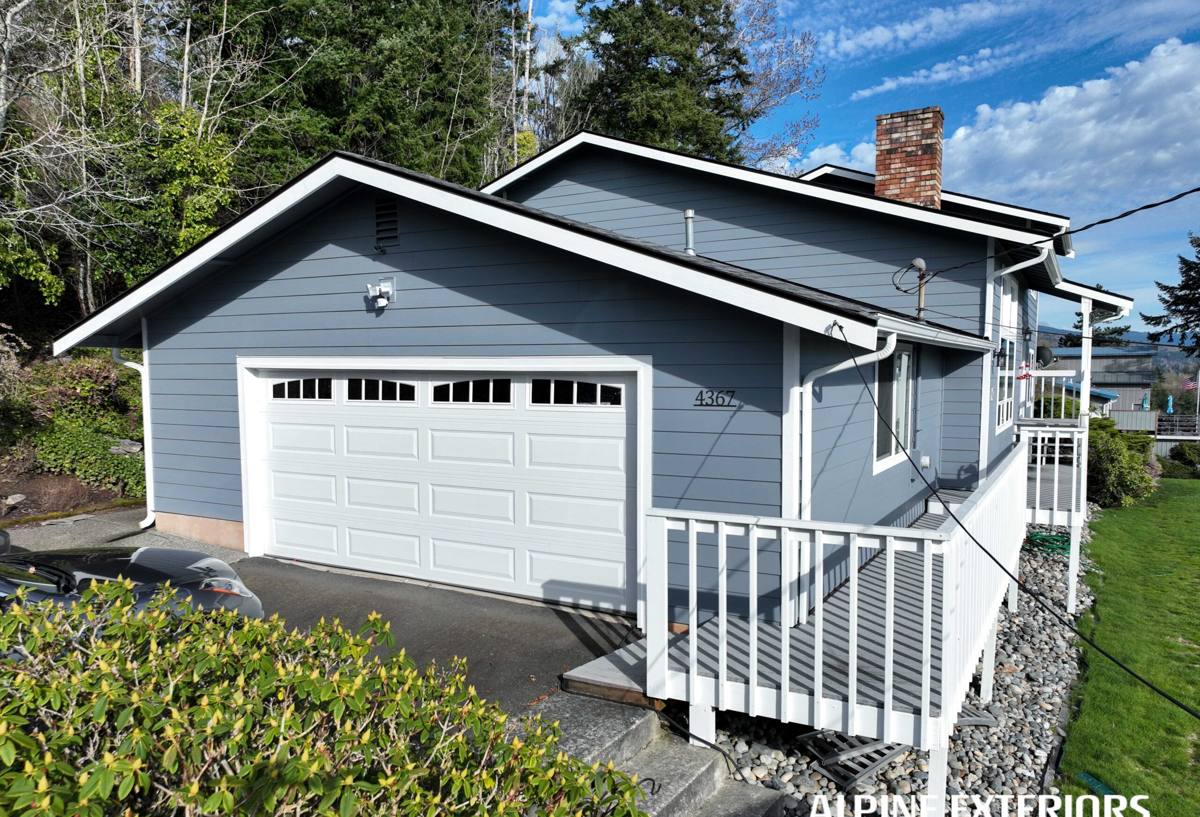
Why Birchwood Roofs Fail Differently Than Roofs Elsewhere
Roof damage in Birchwood rarely shows up as a single dramatic event. Instead, it accumulates quietly over years until a homeowner notices a stain on a ceiling or a soft spot underfoot in the attic. The main contributors we see are:
Moss and Organic Growth
Shaded lots, moisture-heavy air, and mature tree canopy make Birchwood an easy environment for moss to establish itself on asphalt shingles, especially on north-facing slopes that never fully dry out. Moss doesn't just sit on top of a roof — its root structures work into the granule surface of shingles, and as it grows it lifts shingle edges just enough to let wind-driven rain get underneath.
Salt Air and Metal Corrosion
Being close enough to the water to catch salt air means exposed metal components — flashing, fasteners, vent caps, gutter hardware — corrode faster here than in a drier, inland climate. Corroded flashing is one of the most common sources of active leaks we find during repair calls, particularly around chimneys, skylights, and roof-to-wall transitions.
Driving Rain and Wind-Driven Water
Storms coming off the water don't just fall straight down — they push rain sideways under shingle laps, around vent boots, and into any gap in the roof's water-shedding layers. A roof that would hold up fine in calm, straight-down rain can still leak in Bellingham if it wasn't detailed for wind-driven moisture.
Prolonged Moisture Retention
Because the region gets so little sustained dry weather, roofing materials here stay damp longer after every rain event. That extended moisture contact accelerates the breakdown of underlayment, encourages wood rot in sheathing and fascia, and shortens the effective lifespan of shingles compared to drier climates — even when the shingles themselves are a good product.
What a Correct Roof Repair Actually Involves
A lot of "roof repairs" in this climate are done wrong — not out of laziness, but because a quick patch addresses the visible symptom without solving the underlying moisture problem. A patch over a leak caused by failed flashing will hold for a while and then fail again, often in a worse spot. Doing it right means treating the cause, not just the leak point.
Our Repair Process
- Roof and attic inspection. We walk the roof surface and check the attic from the inside, looking for moisture staining, rot, and signs of past leaks that may not match where the homeowner noticed water.
- Trace the water path. Water rarely enters and shows up in the same spot — it travels along rafters and sheathing before dripping. We trace the actual entry point rather than repairing where the stain appears.
- Assess moss and debris damage. Where moss has been present, we check for granule loss, lifted shingle edges, and softened decking underneath before deciding whether a section needs shingle replacement or just cleaning and treatment.
- Repair flashing and penetrations first. Chimney flashing, vent boots, skylight flashing, and roof-to-wall joints are the most common failure points here, so these get inspected and corrected as a priority, not an afterthought.
- Replace and reseal shingles. Damaged or lifted shingles are replaced to match the surrounding roof as closely as possible, with correct nailing and lap patterns to shed wind-driven rain.
- Confirm underlayment and decking integrity. If sheathing beneath the repair area has softened from prolonged moisture exposure, we address that before closing the repair back up — patching over rotten decking just delays a bigger job.
- Final water test and walkthrough. Where practical, we verify the repair holds under simulated conditions and walk the homeowner through what we found and fixed.
Common Birchwood Roof Repair Scenarios
| Symptom | Likely Cause in This Climate | Repair Approach |
|---|---|---|
| Ceiling stain near a chimney | Corroded or improperly lapped chimney flashing | Remove and replace flashing, reseal counterflashing, verify surrounding shingles |
| Dark streaking or green growth on north-facing slopes | Moss and algae from shade and sustained dampness | Careful removal, treatment, and shingle inspection underneath |
| Soft or spongy spot underfoot | Rotted decking from long-term moisture intrusion | Localized decking replacement before re-roofing that section |
| Leak that appears only during wind-driven storms | Wind-lifted shingles or inadequate underlayment lapping | Reseal and re-nail affected shingles, check underlayment laps |
| Rust streaks near vent pipes | Corroding metal vent boots or flashing from salt air exposure | Replace with corrosion-resistant flashing components |
Repair vs. Replacement: How We Help You Decide
Not every leak means a new roof, and not every roof with moss is failing. Part of an honest repair visit is telling a homeowner clearly which category their roof falls into. We generally look at:
- How much of the roof surface shows granule loss, curling, or lifted shingles versus how much is still sound
- Whether decking damage is isolated to one area or spread across multiple sections
- The age of the existing roofing material relative to its expected service life in this climate
- Whether the flashing system as a whole is original and aging, or has already been updated
- How many separate leak points have shown up over recent seasons — a pattern of repeat leaks in different spots usually points toward broader wear, not one bad flashing detail
When a repair is the right call, we do the repair. We don't push a full replacement on a roof that has years of honest service left in it.
Materials and Products We Use for Repairs
For flashing and metal components in this environment, we favor corrosion-resistant materials over standard galvanized options where budget allows, simply because standard metal doesn't hold up as well against salt air over time. For shingle repairs, matching the existing product as closely as possible matters both for appearance and for making sure the repaired section sheds water the same way the rest of the roof does — mismatched shingle profiles or granule types can create small ridges where water pools.
We're selective about underlayment products in repair work as well. In a climate where a roof surface may stay damp for days at a time, a underlayment with proven wind and moisture resistance is worth the modest added cost over a basic felt product, especially in any section that's being opened up and reworked.
What to Expect Cost-Wise
| Repair Type | General Cost Factors |
|---|---|
| Flashing repair (chimney, vent, skylight) | Number of penetrations, accessibility, extent of corrosion |
| Moss removal and treatment | Roof size, growth severity, whether shingle replacement is also needed |
| Localized shingle replacement | Number of shingles, matching availability, steepness/access |
| Decking repair | Extent of rot, whether interior finishes are also affected |
Exact pricing depends on what we find during inspection — we'll never quote a repair without actually getting eyes on the roof first, and we always explain what's driving the cost before any work starts.
Why a Crew That Already Works Birchwood Matters
Roofing crews who mostly work drier inland areas sometimes underestimate how aggressively moss and moisture move in a neighborhood like this. A repair approach that's perfectly adequate in a low-moisture climate can fall short here, leading to a leak resurfacing within a year or two. Working regularly in Bellingham and across Whatcom County means we know which flashing details tend to fail first in this air, which shade patterns create the worst moss buildup, and which repair shortcuts simply don't hold up against sustained coastal rain.
It also means faster response. We're not driving in from out of the area to look at a leak — we know the neighborhood, we can typically get out for an inspection promptly, and we're not learning the local climate on your roof.
Simple Maintenance That Extends Repair Life
A repair holds longer when the rest of the roof isn't working against it. A few habits make a real difference in this climate:
- Keep gutters clear of needles and debris so water isn't backing up under the roof edge
- Trim back overhanging branches to reduce shade and let roof surfaces dry between rain events
- Address small moss patches early, before they spread and lift shingle edges
- Have flashing checked periodically, especially around chimneys and skylights, since corrosion is gradual and easy to miss from the ground
- Get a professional look after any major windstorm, even if nothing looks obviously wrong
Get a Straightforward Look at Your Roof
If you're dealing with a leak, moss buildup, or just want an honest read on where your roof stands, we're glad to come take a look. We'll tell you plainly what we find, what it will take to fix it, and whether a repair or something bigger makes sense — no pressure either way. Reach out using the form below for a free estimate.