 Bellingham Exterior
 Why Sudden Valley Roofs Wear Differently Than Roofs Elsewhere in Whatcom County
Sudden Valley sits in a pocket of Whatcom County that gets its own microclimate: heavy tree canopy along Lake Whatcom, shaded roof planes that rarely see direct sun, and the same wind-driven rain and marine air that moves in off Bellingham Bay and pushes inland through the valleys. That combination is hard on roofing in ways a roof on an open, sunny lot doesn't experience. We've repaired enough roofs in this neighborhood to know the failure patterns show up in predictable places, and knowing where to look is half the job.
Moss, Shade, and Slow-Drying Roofs
Trees are part of what makes Sudden Valley a desirable place to live, but they're also the biggest reason roofs here need more frequent attention. Shaded roof sections stay damp for days after a storm instead of drying out in an afternoon, and that constant moisture is exactly what moss and algae need to take hold. Once moss establishes itself on a shingle roof, it doesn't just sit on the surface — it works its root structure under shingle tabs and lifts them slightly, which is enough to let wind-driven rain get underneath. A roof that looks intact from the ground can already have moisture working its way into the decking.
Wind-Driven Rain and Valley Weather Patterns
Bellingham's marine climate means rain rarely falls straight down — it comes in at an angle, and Whatcom County's salt-laden air off the bay accelerates corrosion on exposed metal flashing, nail heads, and gutter hardware over time. In a valley setting like Sudden Valley, wind can also funnel and shift direction around tree lines and rooflines in ways it wouldn't on flatter, more open ground. That means valleys, ridge caps, and flashing around chimneys and skylights take a beating from more angles than a standard exposure diagram accounts for.
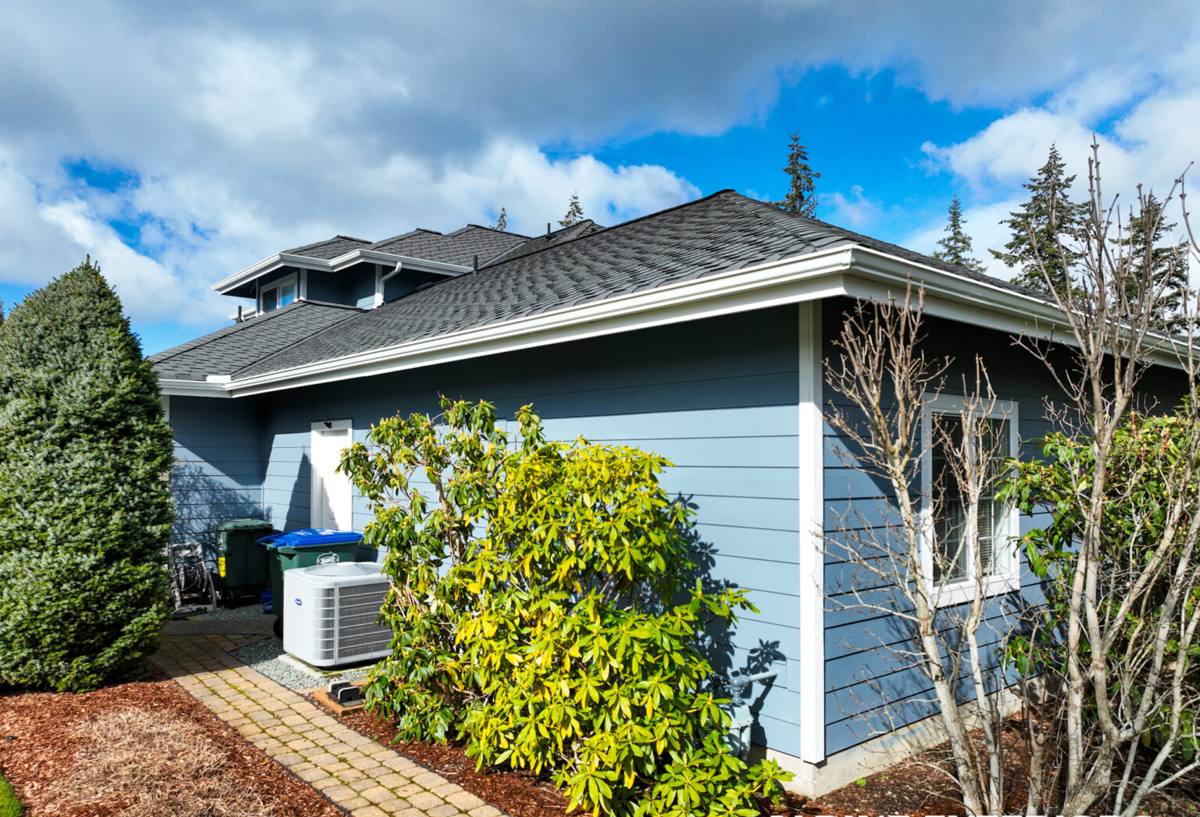
Common Roof Repair Needs We See in Sudden Valley
Most of the repair calls we get from this neighborhood fall into a handful of categories. Recognizing them early is the difference between a straightforward repair and a much larger project involving rotted decking or interior damage.
- Moss and organic growth that has lifted shingle tabs or blocked water flow at valleys
- Cracked, curled, or missing shingles from wind exposure or age
- Flashing failures around chimneys, skylights, and roof-to-wall transitions
- Clogged or damaged gutters causing water to back up under the roof edge
- Nail pops and fastener issues that let water track along the roof deck
- Soft spots or staining on interior ceilings that point to a slow, hidden leak
None of these are unusual for a roof this age or exposure — they're the normal wear pattern for a shaded, tree-heavy property in this climate. What matters is catching them before they turn into a decking or framing repair.
What a Correct Roof Repair Actually Involves
A repair that's done right isn't just replacing what's visibly damaged. It starts with figuring out how water actually got in, because a patched shingle over a bad flashing detail will leak again within a season. We inspect the surrounding area, not just the failure point, before we touch anything.
| Repair Type | What's Actually Involved | When It's the Right Call |
|---|---|---|
| Shingle replacement | Removing damaged shingles, checking the felt or underlayment beneath, replacing with matched material, resealing tabs | Isolated wind or impact damage on an otherwise sound roof |
| Flashing repair | Removing old flashing, checking for rot at the transition, installing new flashing with proper laps and sealant | Leaks at chimneys, skylights, walls, or valleys |
| Moss remediation | Careful removal (not pressure washing), treatment, and inspection of shingles underneath for lifted tabs or granule loss | Heavy moss coverage on shaded slopes |
| Decking repair | Removing shingles and underlayment, replacing rotted plywood or boards, then reroofing that section | Soft spots, sagging, or long-term hidden leaks |
| Gutter and edge repair | Reattaching or replacing damaged gutter runs, correcting slope, clearing debris paths | Water backing up under the roof edge or fascia damage |
The point of breaking it down this way is honesty about scope. A homeowner calling about "a leak" could be looking at a twenty-minute flashing fix or a decking repair that takes a full day — and you deserve to know which one it is before work starts, not after.
Our Roof Repair Process for Sudden Valley Homes
We keep the process straightforward because most homeowners just want to know what's wrong, what it'll take to fix, and what it costs — without a sales pitch.
1. Inspection and Diagnosis
We get on the roof, not just in the attic or at the gutter line, and trace the leak or damage back to its actual source. In a shaded, moss-prone property, that often means checking areas that look fine from the ground but are holding moisture underneath.
2. A Plain-English Explanation
Before any work begins, we explain what we found, what caused it, and what the repair involves — including whether we think it's a contained repair or something that points to a bigger issue like aging underlayment or decking damage.
3. The Repair Itself
We match materials as closely as possible, install flashing and underlayment correctly (not just caulked over), and make sure water has a clear path off the roof once we're done — especially through the shaded valleys and around chimneys and skylights that tend to be the recurring trouble spots in this area.
4. Cleanup and Follow-Up
We clear debris, remove old material, and if moss or organic growth was part of the problem, we'll tell you what to expect going forward and what maintenance actually helps versus what's just marketing.
Roof Repair vs. Replacement — How We Help You Decide
Not every damaged roof needs to be replaced, and not every "just patch it" request is the right long-term call either. We'd rather tell you honestly which side of that line your roof is on than sell you the bigger job by default.
| Factor | Leans Toward Repair | Leans Toward Replacement |
|---|---|---|
| Roof age | Under roughly two-thirds of expected material lifespan | Near or past the material's typical service life |
| Damage extent | Isolated to one section, flashing, or a few shingles | Widespread across multiple slopes or repeated in the same spots |
| Decking condition | Solid, no soft spots found on inspection | Soft, spongy, or showing rot in more than one area |
| Moss history | First occurrence or recently addressed | Chronic, repeated growth causing granule loss over years |
| Material availability | Matching shingles or panels still obtainable | Discontinued product with no reasonable match |
We'll walk you through where your roof actually lands on that table rather than assuming the worst case. Plenty of Sudden Valley roofs just need targeted repair and a plan to manage the moss and shade going forward.
Protecting the Repair You Just Paid For
A repair is only worth what it holds up to, and in a tree-covered, lake-adjacent property, ongoing maintenance matters more than it would on an open, sunny lot. A few habits go a long way toward making sure you're not calling us back for the same spot next winter.
- Keep gutters clear of needles and leaf litter, especially before the fall rains set in
- Trim back branches that overhang the roofline to cut down on shade and debris buildup
- Have moss treated at the first sign of growth rather than waiting for it to spread
- Walk the exterior after major windstorms and check for lifted or missing shingles
- Schedule a roof check every year or two, even if nothing looks obviously wrong
None of this requires getting on the roof yourself — most of it is visual, from the ground or a ladder at the gutter line. The goal is catching small issues while they're still small.
Why Local Experience in Sudden Valley Specifically Matters
Sudden Valley isn't a typical subdivision. Many properties sit on wooded, sloped lots with limited or shared access, and a fair number are part of an HOA with expectations about exterior appearance and material consistency with the surrounding community. A crew that's worked in the neighborhood before understands how to stage equipment on tighter lake-community lots, how to schedule around the wetter shoulder seasons when moss and rain overlap, and how to match repairs so they blend with the existing roof rather than standing out as an obvious patch. That local familiarity saves time and avoids the kind of guesswork that turns a simple repair into a longer visit.
Workmanship and Material Standards We Hold Ourselves To
In a climate that drives rain sideways and keeps roofs shaded and damp for long stretches, cutting corners on flashing or underlayment shows up as a callback within a year or two — so we don't cut them. We install flashing with proper overlap rather than relying on sealant to do the work alone, and in valleys and low-slope transitions prone to standing water or ice damming during cold snaps, we use appropriate water-resistant underlayment rather than the minimum required. Shingle and panel matching is handled carefully, factoring in sun fading on the existing roof so a repair doesn't read as an obvious mismatch from the street or from a neighbor's yard.
If you're dealing with a leak, moss buildup, or storm damage on a Sudden Valley roof, we're happy to take a look and give you a straight answer about what it needs. Reach out for a free, no-pressure estimate using the form below — there's no obligation, and you'll know exactly what you're working with before you decide anything.