 Bellingham Exterior
 Building Decks in Sunnyland: A Climate That Doesn't Forgive Shortcuts
Sunnyland is one of Bellingham's established neighborhoods, and like most of the city it sits close enough to the water that salt air and near-constant moisture are part of daily life for anything built outdoors. A deck here isn't just a place to put a grill and a couple of chairs — it's a structure that has to shed water for months at a stretch, resist the fine salt spray that drifts in off Bellingham Bay, and survive a moss season that can run from early fall well into spring. We've built and repaired enough decks around Whatcom County to know exactly where corners get cut on outdoor structures in this climate, and this page walks through what a deck for a Sunnyland home actually needs — not what a generic deck brochure says it needs.
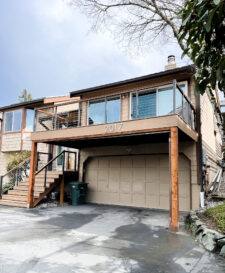
What Bellingham's Weather Does to an Outdoor Deck
Three things drive nearly every deck problem we come across in this part of Whatcom County, and each one calls for a specific building response rather than a generic one.
Driving rain and standing moisture
Bellingham gets a long, steady rainy season rather than short, hard downpours, which means deck surfaces and the framing underneath stay damp for extended stretches instead of getting wet and drying out quickly. Wood that can't shed water and dry between rain events is wood that rots from the inside, usually starting at joints, fastener holes, and anywhere two boards sit tight against each other with no room for air.
Salt air corrosion
Homes in and around Sunnyland get enough airborne salt that untreated or poorly rated metal hardware — joist hangers, screws, bolts, flashing — corrodes faster than it would further inland. Corroding fasteners are a structural issue, not a cosmetic one, since they're what's holding the deck to the house and the frame together underneath the surface boards.
A long moss season
Shade, moisture, and mild temperatures are exactly what moss wants, and a moss season that stretches across much of the year means any decking surface without adequate airflow underneath or slope to shed water will grow a slick green film. That's both a maintenance headache and a genuine slip hazard on stairs and landings, which is where we see the worst buildup.
What a Correctly Built Deck Requires Here
A deck built for Sunnyland's conditions differs from a deck built in a dry climate in a handful of specific, non-negotiable ways — regardless of what decking material a homeowner ultimately chooses:
- Ledger flashing done right. Where the deck attaches to the house is the single most common failure point in this climate; proper flashing, not just caulk, keeps water from running behind the siding and into the wall framing.
- Corrosion-rated fasteners and hardware. Hot-dip galvanized or stainless hardware throughout, matched to whatever decking and framing material is used, so hangers and screws hold up over decades rather than a handful of wet winters.
- Joist tape or a similar protective cap. A membrane over the top of each joist keeps rain from soaking into end grain and fastener holes, which is where rot almost always gets its start.
- Real slope and drainage. Decking run with a slight pitch away from the house, and gaps sized to actually let water through rather than trap it, so surfaces can dry out between rain events instead of staying damp.
- Footings set below frost depth and on solid bearing. Whatcom County soils vary from lot to lot; footings need to be sized and set for what's actually under the deck, not just poured to a bare minimum.
- Airflow underneath. Adequate clearance and, where a deck sits low, skirting that still allows ventilation so moisture and moss don't build up in the space below.
Choosing a Decking Material for This Climate
There's no single "best" decking material — the right choice depends on budget, how much upkeep a homeowner wants to take on, and how the deck will actually be used. Here's how the common options compare for a Sunnyland application specifically:
| Material | Moisture & Moss Resistance | Maintenance | Typical Lifespan |
|---|---|---|---|
| Pressure-treated wood | Good if properly sealed and maintained | Annual cleaning and re-sealing recommended | 15–20 years with upkeep |
| Cedar | Naturally rot- and insect-resistant; still needs sealing in this climate | Periodic cleaning, re-oiling or staining | 15–25 years with upkeep |
| Composite (capped) | Very good — resists moisture absorption and moss staining | Occasional washing; no sealing or staining | 25–30+ years |
| PVC decking | Excellent — essentially non-absorbent | Low; occasional washing | 25–30+ years |
We don't push any one product as "the" answer for every homeowner. Wood costs less up front but asks more of the homeowner every year in this climate — skip a season of sealing and the moisture and moss damage compounds quickly. Composite and PVC cost more initially and have their own installation sensitivities, since fastener spacing, expansion gaps, and substructure requirements vary by manufacturer and matter for warranty coverage, but they hold up with far less annual attention. That trade-off matters more in a neighborhood that gets this much sustained damp weather than it would somewhere drier.
Project cost also depends heavily on size, framing complexity, railing style, and whether an old deck needs to come out first. As a very rough guide, a small ground-level deck can run a few thousand dollars, while a larger multi-level composite deck with railing and stairs can run well into the tens of thousands — every quote we give is specific to the actual site and design, not a flat rate.
Our Deck Building Process
Every Sunnyland project follows the same sequence, whether it's a small ground-level deck off a back door or a larger multi-level structure:
- On-site assessment. We look at the existing structure (if any), grade, drainage patterns, sun and shade exposure, and how the deck ties into the house before recommending anything.
- Design and material selection. We walk through decking, railing, and framing options against the homeowner's budget and maintenance preferences, with honest trade-offs laid out for each.
- Permitting. We handle the permit application and make sure setbacks, height, and guardrail requirements are addressed up front rather than discovered mid-build.
- Demolition or prep. Removal of any failing existing structure, with an eye toward what the demo reveals about the ledger, framing, or footings underneath.
- Framing and flashing. This is where the climate-specific details above get built in — ledger flashing, joist protection, corrosion-rated hardware, proper footing depth.
- Decking, railing, and finish work. Installed to the manufacturer's specifications for fastener spacing and gapping, which matters as much for warranty coverage as for appearance.
- Final walkthrough. We go over the finished deck, how it drains, and what maintenance — if any — it needs going forward.
Permits and Setbacks in Whatcom County
Most new decks and many deck replacements in Bellingham require a building permit, and the specific requirements can shift based on deck height, distance from property lines, and proximity to the house's foundation or any critical areas on the lot. Rather than guess at what applies to a given property, we pull the specifics for each job and handle the application ourselves, so homeowners in Sunnyland aren't the ones tracking down setback rules or guardrail height requirements on their own.
Seasonal Deck Maintenance for This Climate
Whatever material a deck is built from, a little seasonal attention goes a long way toward avoiding the rot and moss problems this climate causes. A reasonable annual routine looks like this:
- Clear leaves and debris from between boards and off the surface before the fall rains set in
- Check and clean any drainage gaps so water keeps moving through rather than pooling on the surface
- Look over railing posts, stair stringers, and ledger connections for soft spots or rust staining
- Wash the surface at least once a year to knock back moss and algae before it gets established
- Re-seal or re-stain wood decking on the schedule the product actually needs, not just when it starts to look bad
- Confirm fasteners and hardware haven't started corroding, especially anywhere hidden under the decking boards
Why Hiring a Crew That Already Works in Sunnyland Matters
A deck built to a generic spec sheet, without accounting for how much moisture this part of Whatcom County holds onto or how corrosive the air is near the water, tends to show problems within a handful of years — soft spots at the ledger, rusting hardware, decking that never fully dries out between storms. We build and repair decks throughout Bellingham, and the details on this page aren't theoretical — they're the specific fixes we make over and over on decks that were built without them in the first place.
Working in this neighborhood regularly also means we already understand the county's permitting process and the drainage realities of these lots, which keeps a project moving instead of stalling on paperwork or on surprises once the old decking comes up. That familiarity is worth something a one-time out-of-area crew simply doesn't bring to the job.
If you're planning a new deck in Sunnyland or replacing one that's showing its age, we're happy to take a look and put together a straightforward estimate — no pressure, no sales pitch, just an honest assessment of what your project needs. Use the form below to get started.