 Bellingham Exterior
 Windows Built for the Sudden Valley Microclimate
Sudden Valley sits in a heavily wooded pocket along Lake Whatcom, and that setting shapes what a window has to survive here. Thick tree canopy means long stretches of shade on north- and east-facing walls, which keeps siding and window sills damp far longer after a storm than they would in an open, sunny lot. Add the driving, wind-pushed rain that rolls through Whatcom County off the Pacific through fall and winter, and you've got a recipe for the moss, mildew, and slow rot that show up around poorly sealed frames a year or two after a bad install.
Across the wider Bellingham area, the marine climate also brings a steady dose of salt-tinged air near the water, which is harder on exposed hardware, screen frames, and unprotected metal fasteners than most homeowners expect. Whether your home sits right on the lake or up in the trees away from it, the combination of moisture, shade, and long wet seasons is the real design problem a window replacement needs to solve — not just picking a style you like.
What This Means in Practice
For Sudden Valley specifically, that translates into three priorities: frames and glass that shed water fast instead of holding it against the wall, seals and flashing detailed for repeated wind-driven rain rather than just vertical rainfall, and finishes that won't feed the moss and algae growth that shaded, damp surfaces are prone to. A window that works fine on a dry, sunny street in another part of the county can still underperform on a shaded Sudden Valley lot if it wasn't specified with that in mind.
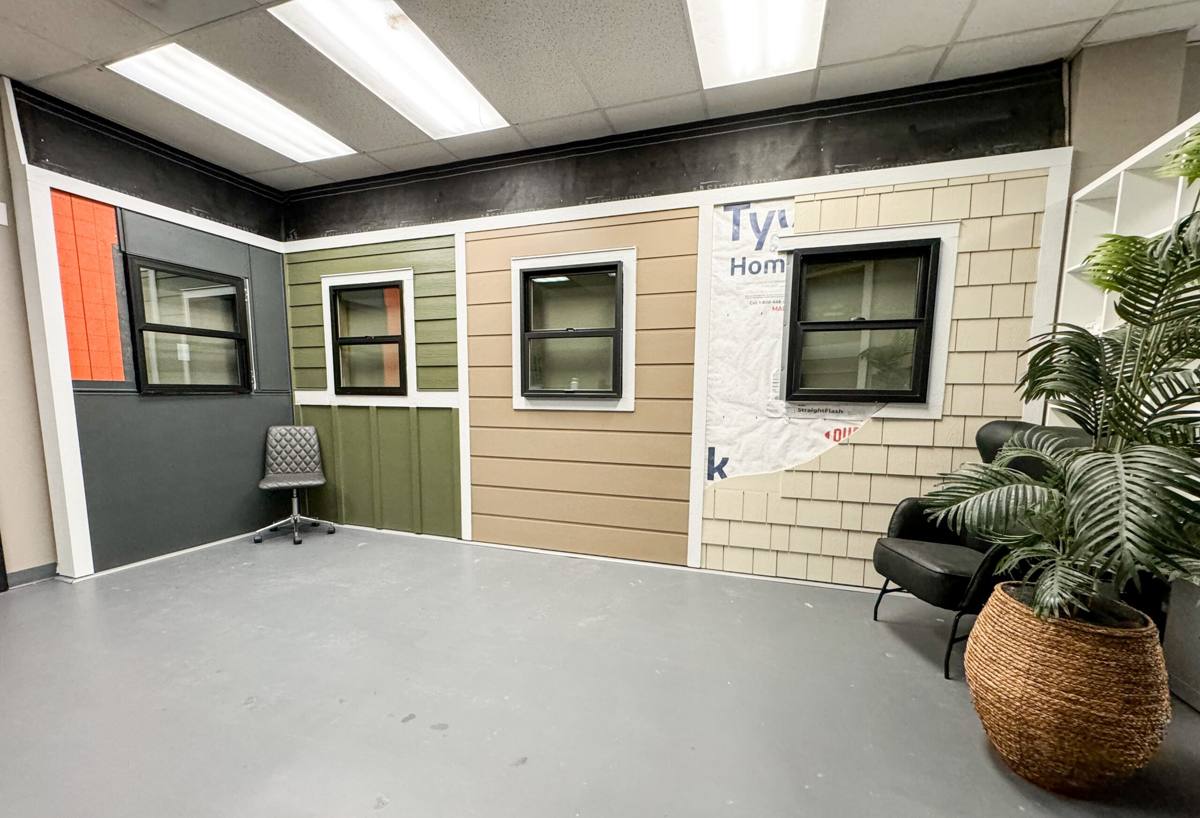
What "Custom" Actually Means for This Neighborhood
Custom doesn't automatically mean expensive or elaborate — it means the window is built to fit your actual opening, your actual home, and your actual view, instead of forcing your house to accommodate a stock size. In Sudden Valley that comes up often because of the mix of home ages and styles in the community, along with lots that step down toward the lake and call for taller or angled openings to capture the view without wasting wall space.
- Non-standard rough openings on older homes where stock sizes leave gaps that get shimmed and caulked instead of properly flashed
- Taller or wider units on lake-facing walls, sized to maximize the view while still meeting structural and energy code
- Matching sightlines and trim profiles across a multi-window wall so the finished look reads as one continuous design, not a patchwork
- Shape changes — arched tops, transoms, or corner configurations — that a one-size product line simply doesn't offer
The trade-off with true custom sizing is lead time and cost versus a stock replacement window. We'll always tell you honestly when a stock size will do the job just as well, and reserve custom fabrication for openings or design goals where it actually matters.
Choosing the Right Frame Material for a Shaded, Wet Site
Frame material matters more in a damp, shaded environment than it does on a dry lot, because the frame is what's sitting in contact with moisture the longest after every storm. Here's how the common options actually perform in this kind of setting, based on how they hold up over years, not just how they look on install day.
| Material | Moisture Behavior | Maintenance in Shade/Moss Conditions | Typical Lifespan |
|---|---|---|---|
| Vinyl | Won't rot; can warp slightly in extreme temperature swings, rarely an issue here | Low — occasional wash to keep grime and algae from settling in the profile | 20–30 years |
| Fiberglass | Excellent — dimensionally stable, resists moisture absorption | Low — holds paint/finish well over time | 30–40 years |
| Wood-clad | Good if the cladding and seals stay intact; wood core is vulnerable if water gets behind the clad exterior | Moderate to high — needs inspection of seals, especially on shaded elevations | 20–30 years with upkeep |
| Aluminum | Won't rot but conducts cold and can condense in our wet winters without a thermal break | Low, but condensation control is a real design factor | 25–30+ years |
Our standard recommendation for shaded, moisture-exposed walls in Sudden Valley is vinyl or fiberglass, both of which don't have a wood core that can hide rot behind an intact-looking exterior. We'll still install wood-clad windows when a homeowner wants that look on a covered or south-facing elevation where exposure is lower — we just walk you through the added maintenance commitment up front rather than glossing over it.
Glass Packages That Make Sense in a Wet, Shaded Environment
Glass selection affects comfort and moisture control as much as frame material does. In a home surrounded by trees and consistently damp air, condensation on the interior glass is a common complaint, and it's usually a sign the glass package or the room's humidity level isn't matched to the window.
Double-Pane vs. Triple-Pane
Double-pane with a quality low-E coating and argon fill is the right call for most Sudden Valley homes — it balances performance, cost, and long-term reliability well. Triple-pane adds real value on north-facing walls, rooms that run cold, or homes right on the lake where wind exposure is higher, but it's a meaningful cost increase that isn't always worth it on a sheltered, tree-protected wall.
Low-E Coatings and Sun Exposure
Because so much of Sudden Valley sits under tree cover, solar heat gain is usually a smaller concern than it would be on an open lot — which means we can prioritize a low-E coating tuned for heat retention rather than heat rejection on most shaded walls, while still using a more solar-control-oriented coating on any south- or west-facing openings that do get direct sun.
Installation Details That Actually Prevent Moisture Damage
Most window failures we see aren't the glass or the frame — they're the installation detailing around the opening. This is where driving rain finds its way in, and it's the single biggest reason to hire a crew that treats window replacement as a moisture-management job, not just a swap-and-caulk job.
- Sill pan flashing installed under every new window, sloped to direct any water that gets past the seal back outside the wall assembly
- Housewrap and flashing tape integrated in the correct shingle-lap order — top piece over bottom piece — so water sheds down and out, never gets trapped behind the siding
- Proper shimming and squaring before fastening, so the sash operates smoothly and the seal isn't stressed unevenly over time
- Low-expansion foam and backer rod at the perimeter instead of caulk alone, which seals better and allows for material movement
- Exterior caulking with a product rated for the joint width and movement, not just whatever's on the truck
Skipping any one of these steps can still look fine on install day and only show up as staining, soft trim, or mold two or three wet seasons later — which is exactly the kind of problem that's expensive to trace and fix once it's hidden behind finished siding.
Our Process, Start to Finish
- On-site assessment: we measure openings, check for existing rot or moisture damage, and talk through your priorities — view, energy performance, maintenance, budget.
- Product selection: we walk through frame material, glass package, and grille/trim options honestly, including trade-offs, not just upsells.
- Written estimate: a clear scope and price, with custom-fabrication lead time called out separately if your openings need it.
- Fabrication and scheduling: custom units are ordered to your exact opening dimensions; we schedule install around the fabrication timeline.
- Removal and flashing: old windows come out, the opening is inspected for hidden damage, and it's flashed and prepped correctly before the new window goes in.
- Install and seal: unit set, shimmed, fastened, insulated, and sealed inside and out.
- Final walkthrough: we test operation, check the seals, and confirm the site is cleaned up before we consider the job done.
Maintenance in a Moss-Prone, Shaded Environment
Even a well-installed window needs some seasonal attention in a setting like Sudden Valley. This isn't about babying the product — it's a short list that protects the investment and catches small problems before they become expensive ones.
- Rinse pollen, moss spores, and grime off frames and tracks a couple of times a year, especially on shaded elevations
- Check exterior caulk lines annually for cracking or separation, particularly after a hard winter
- Keep gutters and downspouts clear so overflow isn't running down the wall and pooling at window heads
- Trim back branches or heavy foliage that keep a wall or window in constant shade and slow drying time
- Operate every sash and lock at least once each season so hardware doesn't seize from disuse
Cost Factors for Custom Windows in Sudden Valley
We won't quote a number without seeing the openings, but the factors below are what actually move the price up or down on a typical project in this area.
| Factor | How It Affects Cost |
|---|---|
| Stock size vs. true custom fabrication | Custom sizing adds cost and lead time but eliminates gaps and shimming compromises |
| Frame material | Vinyl is typically the most affordable; fiberglass and wood-clad run higher |
| Glass package | Triple-pane and specialty coatings add cost over a standard double-pane low-E unit |
| Access and opening condition | Hidden rot, difficult access, or steep lake-facing walls add labor time |
| Number of windows and scheduling | Full-home replacements typically bring a better per-window rate than one-off jobs |
As a broad range, homeowners in this area should expect standard vinyl replacement windows to run toward the lower end of the market, with fiberglass, wood-clad, custom shapes, or triple-pane upgrades pushing toward the higher end. The only way to get a real number is a site visit — too many of these factors depend on the actual condition of your openings.
Why a Crew That Already Works Sudden Valley Matters
Sudden Valley's mix of wooded lots, lake-facing walls, and varied home ages means a crew that hasn't worked here before is often guessing at conditions a local crew already knows to expect — how much extra drying time a shaded wall needs before sealing, which elevations take the worst of the driving rain, or how tree cover on a given lot changes the moss and mildew pattern around openings. That familiarity shows up in fewer surprises during the job and fewer callbacks after it.
It also matters for the boring but important logistics: knowing the roads and access into the community, understanding typical permitting expectations in Whatcom County for window replacement versus a full opening modification, and having a realistic sense of scheduling around the area's wet-season weather windows. None of that is glamorous, but it's the difference between a job that goes smoothly and one that runs into avoidable delays.
If you're weighing a window project in Sudden Valley, we're happy to take a look and give you a straight, no-pressure estimate — no obligation, just an honest read on what your home actually needs. Use the form below to get started.