 Bellingham Exterior
 Siding Repair in York, Bellingham
York is one of Bellingham's older, close-in neighborhoods, which means a lot of its homes are wearing siding that's already lived through decades of Pacific Northwest weather. That's not automatically a problem — siding is meant to take a beating and keep working. But when a section starts to fail, it usually fails quietly at first: a soft spot near a downspout, a hairline crack that lets water in behind the surface, a patch of moss holding moisture against the wall longer than it should. In Whatcom County, where salt-tinged air off the Sound, long stretches of driving rain, and a genuinely long moss season are just part of the climate, those small failures don't stay small for long if they're ignored.
This page is specifically about repairing existing siding on York homes — not a full re-side, though we'll be honest with you if that's what a house actually needs. Done right, siding repair is a focused, technical job: find the real cause of the damage, fix the water path that caused it, and put back a patch that performs and looks like it belongs, not like a bandage.
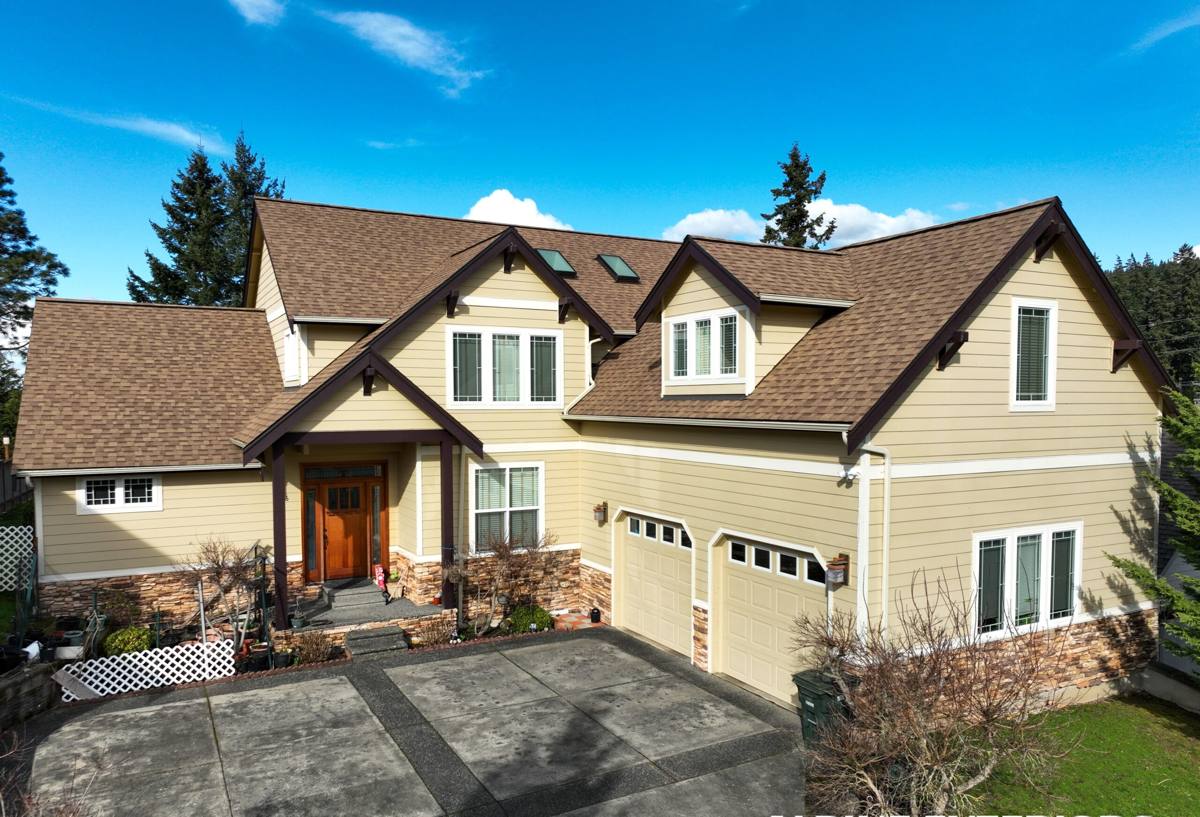
Why York's Housing Stock Shows Repair Needs Early
Mature Tree Canopy and Moss
Established neighborhoods like York tend to have mature trees close to the house — good for shade and character, but it also means more year-round shade on at least one side of most homes, more organic debris collecting in siding laps and trim joints, and more moss and algae growth than a newer subdivision on open ground would see. Moss doesn't just look bad. It holds moisture directly against the siding surface for days at a time, which is exactly the condition that breaks down paint film, softens wood-based products, and keeps fastener penetrations wet longer than they were ever designed to stay.
Salt Air and Driving Rain
Bellingham sits close enough to the water that homes across the city, York included, deal with a fine amount of salt-laden air on top of the region's rain. That combination accelerates corrosion on exposed fasteners and metal flashing, and it makes wind-driven rain — the kind that hits siding at an angle instead of running straight down — more likely to find its way behind poorly sealed joints, old caulk lines, and butt seams that have opened up over the years. A repair that only addresses the visible crack and ignores the flashing or sealant detail behind it tends to fail again within a season or two.
The Warning Signs Worth Calling About
Most siding repair calls we get start with one of these. None of them require you to be a siding expert — you just have to notice them.
- Soft, spongy, or crumbling siding when you press on it, especially near ground level or under windows
- Visible cracks, splits, or gaps at panel edges and corners
- Bubbling, peeling, or discolored paint in one localized area rather than across the whole wall
- Moss or dark streaking that keeps coming back in the same spot no matter how often it's cleaned
- Warped or bowed panels, which usually means moisture is already trapped behind the surface
- Rust streaks running down from fasteners or trim
- A musty smell or visible staining on an interior wall that lines up with an exterior trouble spot
Any one of these on its own might be minor. Two or three together, or one that's been getting worse over a season, is worth a real inspection before it turns into a bigger repair — or spreads to framing behind the siding, which is a different and much more expensive conversation.
What Correct Siding Repair Actually Involves
Diagnosing the Cause, Not Just the Symptom
The single biggest difference between a repair that lasts and one that doesn't is whether anyone bothered to figure out why the damage happened in the first place. A cracked panel might be the result of a one-time impact, or it might be the visible endpoint of a flashing failure, a caulk joint that's been open for two years, or a sprinkler head hitting the same six inches of wall every summer. We pull back the damaged area, check what's underneath — the water-resistive barrier, the flashing, the framing — and confirm whether the cause is still active before we close anything back up.
Matching Materials the Right Way
Repairing siding on an older York home often means matching an existing product, profile, and exposure so the patch doesn't stand out. That takes more care than swapping in whatever's on the shelf — it means checking panel width, reveal, and texture, and being honest with you when a perfect match isn't realistic and a better long-term fix (replacing a full wall section, or eventually the whole elevation) makes more sense than chasing an invisible patch on a mismatched or failing original product.
Repair or Replace? How We Help You Decide
| Factor | Usually Points to Repair | Usually Points to Replacement |
|---|---|---|
| Extent of damage | Isolated to one area or panel run | Scattered across multiple walls or elevations |
| Underlying cause | Identified and fixable (flashing, caulk, isolated impact) | Systemic, e.g. failing water barrier across the wall |
| Age and condition of original siding | Sound overall, still performing elsewhere | Near end of service life, brittle, or discontinued product |
| Material match | Available or close enough to blend in | No reasonable match; patch would be visibly different |
| Framing/sheathing underneath | Dry and sound once opened up | Signs of rot, soft sheathing, or long-term moisture intrusion |
We walk through this with you on-site rather than guessing from the driveway. Most homes end up somewhere in between — repair the active problem now, and plan for a full re-side of one elevation down the road rather than the whole house at once.
Our Process for a York Siding Repair Call
Inspection and Diagnosis
We start by walking the affected area, checking adjacent siding, trim, and flashing, and — when the damage looks deeper than surface-level — opening a small section to see what's actually happening behind the panel. You get a plain explanation of what we found and what caused it before we talk about the fix.
The Repair Itself
Depending on what we find, that might mean replacing individual panels, resealing and re-flashing a joint, cutting out and rebuilding a section of wall, or addressing a moisture source that has nothing to do with the siding itself, like a gutter that's been overflowing onto the wall below. We use James Hardie fiber cement for any panel replacement or patch work — more on why below.
Follow-Up
Before we leave, we check that the repair sheds water the way the rest of the wall does, that fasteners and caulk lines are sound, and that the area is cleaned up. If the repair uncovered something bigger than expected, we'll tell you plainly rather than quietly patching over it.
Why We Repair — and Replace — with James Hardie Fiber Cement Only
We install and repair with James Hardie fiber cement siding exclusively. We don't work in vinyl, LP SmartSide, Cemplank, Allura, primed spruce, or cedar, even for patch work, and that's a deliberate standard, not a limitation we apologize for. Fiber cement is non-combustible, holds paint and factory ColorPlus finishes far longer than most wood-based or vinyl alternatives, and is engineered in HZ product lines specifically for wet, moderate climates like ours — which matters directly for a neighborhood like York where moss, shade, and driving rain are a constant. When we patch a section of siding, using the same category of product the rest of a Hardie-sided home already has means the repair performs the same way the original installation does, backed by the same manufacturer warranty structure. On homes with older wood or other siding types, we'll still tell you honestly what we're seeing — but our repair and replacement work is Hardie, because it's what we're confident standing behind for the long term.
Why a Crew That Already Works in York Matters
Siding repair done well depends on understanding how a specific house, on a specific type of lot, in a specific microclimate, actually gets wet — which side takes the weather, where shade holds moisture longest, where an older home's original detailing tends to fall short of what current wind-driven-rain conditions demand. A crew that regularly works in Bellingham's older, tree-covered, close-in neighborhoods has already seen the patterns that show up on York homes again and again: the same flashing shortcuts, the same moss-prone north walls, the same fastener corrosion near the coast. That familiarity shows up as fewer surprises during the job and a repair that's built for the conditions your house actually faces, not a generic fix.
If you're seeing early signs of siding trouble on a York home, or you just want an honest opinion on whether a repair will hold or a section needs to come off, we'll take a look and give you a straightforward assessment. Reach out for a free, no-pressure estimate using the form below.