 Bellingham Exterior
 Windows in Fairhaven Face a Tougher Job Than Most
Fairhaven sits close to Bellingham Bay, which means the windows on these homes deal with a combination most inland Whatcom County neighborhoods don't: salt-laden air off the water, wind-driven rain that hits siding and window openings sideways instead of straight down, and a moss and mildew season that can stretch for most of the year. None of that is dramatic on its own, but stacked together over years, it's exactly the kind of slow, steady exposure that finds every weak point in a window installation.
A window that's a perfectly good product can still fail early if it's installed without accounting for these conditions. Salt air accelerates corrosion on hardware and fasteners that aren't rated for coastal exposure. Driving rain will find any gap in flashing or sealant and push water sideways and even slightly upward into a wall cavity. And moss and algae hold moisture against sills and trim longer than most homeowners realize, which softens wood and breaks down caulk faster than in a drier climate. Window installation in Fairhaven isn't fundamentally different work — but it has less room for shortcuts.
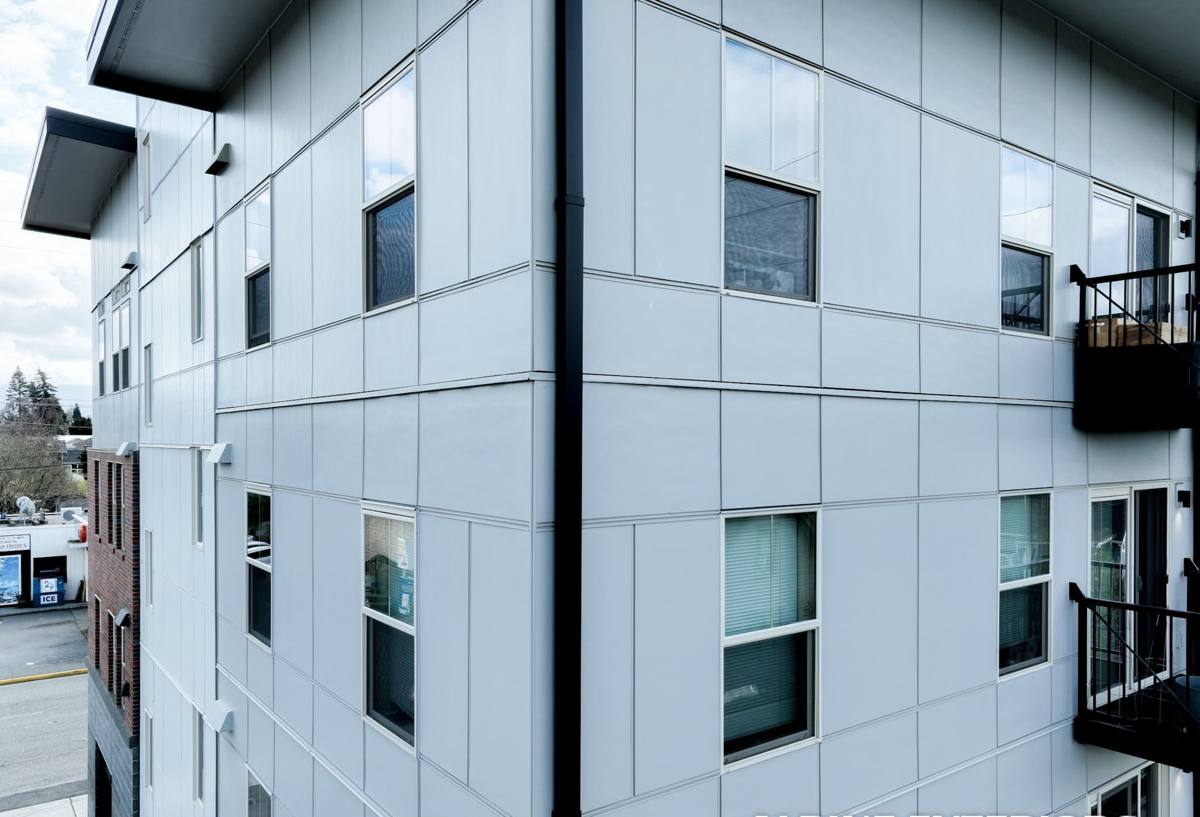
Signs a Fairhaven Home Needs New Windows
Older homes in this neighborhood, along with newer builds that got a rushed or budget installation, tend to show the same handful of warning signs. If you're seeing any of these, it's worth having the windows and the surrounding wall assessed, not just the glass:
- Fogging or moisture between panes — a sign the seal on a double-pane or triple-pane unit has failed
- Soft, discolored, or bubbling paint on the trim or sill, often from water sitting in wood that never fully dries out
- Drafts you can feel near the frame, especially during wind-driven storms off the bay
- Visible gaps, cracked caulk, or daylight around the frame from outside
- Windows that are hard to open, close, or lock — frames can swell or warp with sustained moisture exposure
- Green or black staining on the exterior trim, a sign moss and algae are holding moisture against the window longer than they should
Any one of these can be minor. Several at once usually means water has been getting past the original installation for a while, even if it hasn't caused visible interior damage yet.
What a Correct Window Installation Actually Involves
The window itself is maybe a third of the job. The rest is everything around it — the parts nobody sees once the trim goes back on, and the parts that determine whether the installation lasts fifteen years or fifty.
Flashing and Water Management
Every window opening needs a flashing system that directs water down and out, never sideways or in. That means correctly lapped flashing tape or metal flashing at the sill, jambs, and head, installed in the right order so water sheds downward at every layer — sill first, then jambs, then head, so each piece overlaps the one below it. In a neighborhood exposed to driving rain off the water, a shortcut here is the single most common reason a window installation fails within a few years instead of lasting decades.
Sealing and Insulation
The gap between the window frame and the rough opening needs to be sealed and insulated correctly — not stuffed with excess spray foam, which can bow the frame, and not left loose, which lets moist air condense inside the wall. A proper installation uses backer rod and sealant on the exterior, low-expansion foam or fiberglass insulation in the cavity, and an interior air seal to stop conditioned air from meeting cold, damp air inside the wall.
Level, Plumb, and Square
A window that's out of square will bind, won't lock properly, and stresses the seals over time — accelerating the exact failures that show up as drafts and fogged glass a few years down the road. Getting this right takes more time than a rushed installation allows for.
Exterior Trim and Finish
Trim and caulk need to be installed and sealed in a way that sheds water rather than trapping it against the window frame — particularly important in a climate where moss and algae growth can hold moisture against a surface for extended periods.
Choosing Materials That Hold Up Near the Bay
Window frame material matters more in a coastal, high-moisture climate than in a drier region. There's no single right answer for every home, but the trade-offs are worth understanding before you decide.
| Frame Material | How It Handles Salt Air & Moisture | Maintenance |
|---|---|---|
| Vinyl | Won't corrode or rot; handles salt air well; can expand/contract with temperature swings | Low — occasional cleaning |
| Fiberglass | Very stable in moisture and temperature changes; strong resistance to warping | Low — occasional cleaning |
| Wood | Classic look, especially for Fairhaven's older homes, but vulnerable to moisture and moss-related decay without diligent upkeep | High — regular painting/sealing |
| Wood-clad (wood interior, aluminum or vinyl exterior) | Protects the wood from direct weather exposure while keeping an interior wood look | Moderate |
| Aluminum | Durable but conducts heat and cold; corrosion resistance depends heavily on coating quality in salt air | Moderate |
For homes closer to the water where salt air exposure is most direct, we generally steer homeowners away from bare aluminum or unclad wood on the exterior face unless there's a strong reason (matching a historic look, for example) — not because those materials are bad products, but because they demand a level of ongoing maintenance that most homeowners don't want to keep up with year after year. Vinyl, fiberglass, and wood-clad options tend to be a better match for this specific climate with lower long-term upkeep.
Our Installation Process
- On-site assessment. We look at the existing windows, the condition of the rough openings, and any signs of past water intrusion before recommending anything.
- Honest product recommendation. We walk through frame material, glass package, and performance options based on your home's exposure — not a one-size-fits-all pitch.
- Removal and opening inspection. Once old windows come out, we check the sheathing and framing underneath for hidden moisture damage before installing anything new.
- Flashing and installation. Correct flashing sequence, air sealing, and insulation, with the window set level, plumb, and square.
- Exterior finish and cleanup. Trim, caulk, and paint or finish work matched to your home, with job-site cleanup included.
- Final walkthrough. We test operation, locks, and seals with you before calling the job done.
Common Problems We Find on Past Installations in This Area
Because we work regularly in and around Fairhaven, certain issues come up more often than others. Most trace back to the same root cause: an installation done without accounting for the amount of wind-driven rain and sustained moisture this area sees.
- Missing or improperly lapped flashing, discovered once trim is removed for a replacement
- Caulk used as the only water barrier, with no flashing behind it — caulk alone always fails eventually
- Wood sills and trim that were painted but never properly sealed on end grain, letting water in from the edges
- Spray foam packed too tightly around a frame, causing it to bow slightly and affecting how well the window seals
- Older single-pane or early dual-pane windows with failed seals, now fogged permanently between the panes
None of these are difficult to fix during a full window replacement — they just have to be caught, which is why we always inspect the opening itself, not just the window being replaced.
What Affects the Cost of a Window Installation Project
Every home and every opening is different, so we won't quote a number without seeing the job — but these are the main factors that move the price up or down:
| Factor | Why It Matters |
|---|---|
| Number of windows | Per-window cost typically drops on larger projects due to shared setup and labor efficiency |
| Frame material | Vinyl is generally the most budget-friendly; fiberglass and wood-clad options cost more upfront |
| Glass package | Double vs. triple pane, and Low-E coatings, affect both cost and long-term energy performance |
| Condition of the rough opening | Hidden rot or water damage found during removal adds repair work before the new window goes in |
| Window size and style | Large picture windows, bays, or custom shapes cost more than standard operable sizes |
| Access and site conditions | Second-story or hard-to-access openings take more time and equipment |
We'd rather find and price out a rotten sill during the estimate than discover it mid-job and surprise you with a change order. That's part of why we inspect openings closely before finalizing a quote.
Why It Matters That We Already Work in Fairhaven
A crew that regularly works this neighborhood has already seen how these specific homes age — which materials held up, which didn't, and which parts of an opening tend to hide moisture damage after years near the bay. That's not something you get from a crew that mostly works subdivisions twenty miles inland where the wind and salt exposure are a non-issue.
We're also familiar with Bellingham's permitting requirements and, where relevant, the extra considerations that come with older or historic-character homes in this part of the city — matching trim profiles and window proportions so a replacement doesn't look out of place on a home with real architectural character. That local familiarity saves time during the estimate and avoids guesswork during the install.
Keeping New Windows Performing Long-Term
A correct installation is most of the battle, but a little homeowner upkeep extends the life of any window in this climate:
- Rinse salt residue off exterior frames and glass periodically, especially on sides facing the water
- Check exterior caulk lines once a year for cracking or separation and have gaps resealed before winter rains
- Keep gutters and nearby drainage clear so water isn't sheeting down across window openings
- Clean moss or algae off sills and trim promptly rather than letting it sit and hold moisture
- Operate locks and hardware a few times a year, even on windows you rarely open, to keep mechanisms from seizing
If you're noticing drafts, fogged glass, or trim damage on your Fairhaven home, we're happy to take a look and give you a straight answer about whether it's a repair situation or time for replacement. Reach out for a free, no-pressure estimate — we'll walk the openings with you and tell you what we'd actually recommend for your home.