 Bellingham Exterior
 Why Sudden Valley's Setting Is Tough on Siding
Sudden Valley sits in one of the more demanding microclimates in the Bellingham area. The tree canopy that makes the community feel private and wooded also means a lot of siding never gets a full afternoon of direct sun. Shaded walls stay damp longer after every rain, and in Whatcom County that means a lot of days where siding just doesn't fully dry out between storms. Add in the marine-influenced air that moves through greater Bellingham and driving rain off Lake Whatcom during winter storm systems, and you have a recipe for a long, stubborn moss and mildew season that outlasts what most siding products are built to handle.
This isn't a knock on the neighborhood — it's just physics. Wood, cellulose-based composites, and even some vinyl products struggle in prolonged shade and moisture. Homeowners here tend to notice siding problems earlier than homeowners on more open, sun-exposed lots, which is exactly why the material choice and the installation details matter more in Sudden Valley than they might in a drier part of the county.
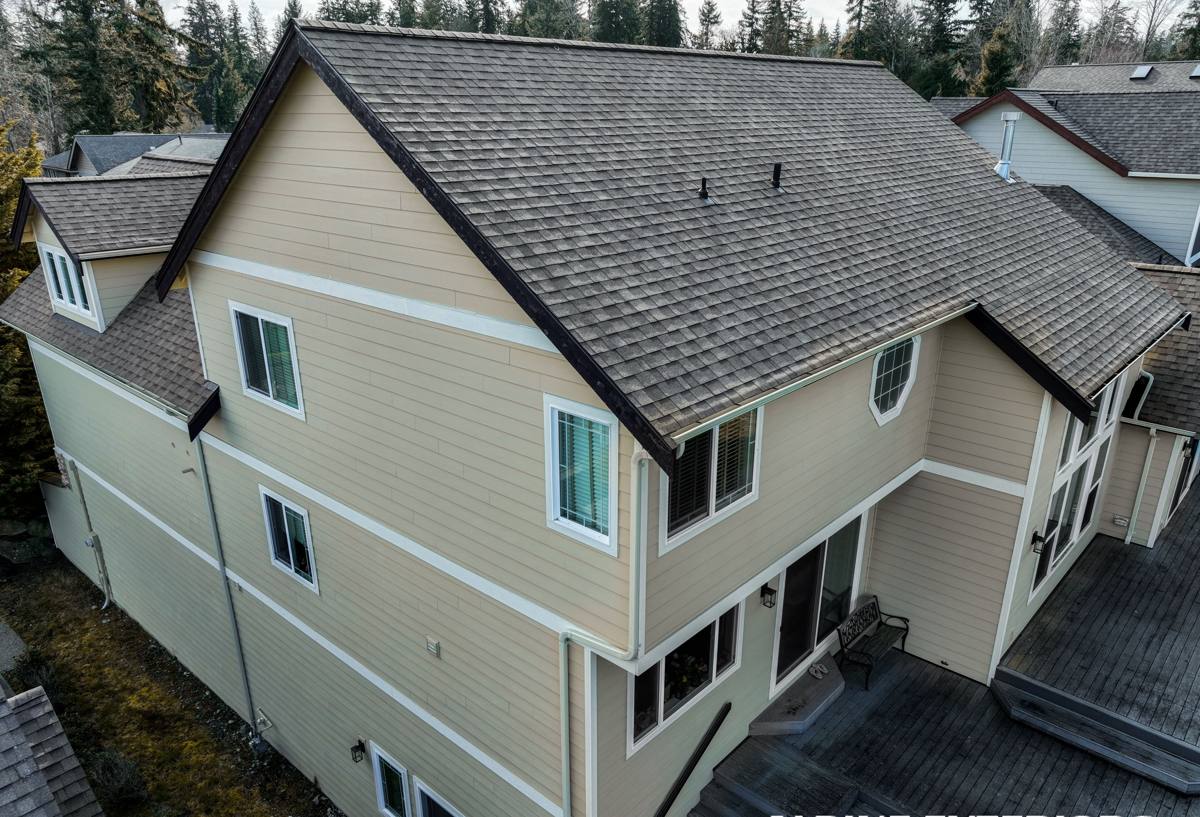
What Fiber Cement Offers This Neighborhood
Moisture and Moss Resistance
Fiber cement is made from sand, cement, and cellulose fiber, cured into a dense, stable board. It doesn't absorb water the way wood does, and it doesn't warp, cup, or delaminate when it stays damp for extended stretches. That matters a great deal on a north-facing wall under a stand of firs that might not see direct sun for weeks at a time. Moss and mildew still need to be cleaned off periodically — no siding material stops organic growth from landing on its surface — but fiber cement doesn't feed that growth or degrade underneath it the way untreated or thinly primed wood products can.
Fire-Conscious Construction in a Wooded Community
Sudden Valley is surrounded by trees, which is part of its character but also means homes here sit closer to the kind of vegetation that raises wildfire exposure during the dry stretches of late summer. Fiber cement is non-combustible. That's not a marketing point for us — it's one of the practical reasons we standardized on it. When a home is tucked into a forested lot, a siding material that won't ignite or contribute fuel to an exterior fire is a real, tangible benefit, not an abstract one.
The James Hardie Product Lines We Install Here
We install James Hardie fiber cement exclusively — not LP SmartSide, not vinyl, not Cemplank or Allura, not primed cedar or spruce. That's a deliberate standard, not a default. Here's what we're actually putting on a Sudden Valley home.
HardiePlank Lap Siding
The most common choice for this area — horizontal lap boards available in a range of widths and textures, from a smooth modern look to a traditional cedar-grain profile. It's the workhorse product for most single-family homes in the neighborhood and pairs well with the wooded, natural setting.
ColorPlus Technology Finish
Rather than relying on field-applied paint, ColorPlus is a factory-applied, baked-on finish that resists fading and chipping far better than site painting. In a shaded, damp environment where paint film can hold moisture against the substrate longer, a factory-cured finish is a meaningful advantage — it sheds water instead of holding it.
HZ5 Engineered for the Pacific Northwest
James Hardie makes climate-specific formulations, and the HZ5 line is engineered for regions with heavy moisture exposure and freeze-thaw cycling — which describes Whatcom County's winters well. We spec HZ5 for Sudden Valley homes rather than a generic national product, because the extra moisture engineering is doing real work here, not sitting unused.
What a Correct Installation Involves in This Climate
Moisture Management Behind the Panel
The siding itself is only part of the system. Behind every board there needs to be a properly lapped weather-resistive barrier, correctly integrated flashing at every window, door, and penetration, and in many cases a drainage plane that lets any incidental moisture find its way back out instead of getting trapped against the sheathing. On a shaded, high-moisture lot, this hidden layer often matters more than the visible siding — it's the difference between a wall that dries out and one that slowly rots from the inside over several years without any visible sign until it's a serious repair.
Fastening, Clearances, and Caulking
James Hardie publishes specific fastening patterns, minimum clearances from grade, decks, and roof lines, and joint treatment requirements — and those specs exist for a reason. A board fastened too tight, caulked in the wrong joints, or installed with insufficient ground clearance will trap moisture and can void the manufacturer warranty regardless of how good the material itself is. This is where a lot of installation problems actually originate, not in the product.
What Drives the Cost of a Sudden Valley Siding Job
Every home is different, but these are the factors that most commonly move the price up or down on jobs in this neighborhood:
| Factor | Why It Matters |
|---|---|
| Tree canopy and site access | Tight lots with mature trees can slow staging, scaffolding, and material delivery |
| Existing wall condition | Hidden moisture damage behind old siding sometimes means sheathing repair before new siding goes on |
| Home elevation changes | Multi-story walls and steep lots common in Sudden Valley add labor and safety equipment time |
| Trim and detail complexity | Dormers, bay windows, and multiple roof lines increase flashing and cut work |
| Product line and profile | HZ5 panel width, texture, and factory finish selections affect material cost |
| HOA or design review requirements | Color and material approval timelines can affect scheduling, if applicable to your property |
Mistakes We Find on Older or Poorly Installed Siding
Re-siding calls in Sudden Valley often start with a homeowner noticing bubbling paint, soft spots, or persistent staining on a shaded wall. When we open those walls up, the pattern is usually the same short list of installation shortcuts:
- Siding installed tight to grade or a deck surface with no clearance for water to drain away
- Missing or improperly lapped flashing above windows and doors
- Caulk used in horizontal joints where the product is designed to be left open or back-primed instead
- Nails driven too tight, restricting the board's ability to handle normal expansion and contraction
- House wrap installed upside down or with seams facing the wrong direction, letting water track inward instead of out
None of these are Hardie product failures — they're installation failures. It's the main reason we treat installation practice as seriously as the material itself.
Our Process, Start to Finish
We start with an on-site walkthrough of the home, looking at existing siding condition, trim details, moisture patterns from tree shading, and any areas where past water intrusion may have already caused hidden damage. From there we put together a written scope covering product line, profile, color, and any sheathing or flashing repairs the walls need before new siding goes on — no surprises added mid-job. Installation follows manufacturer fastening and clearance specifications exactly, with flashing detail work done before panels close the wall up. We clean up thoroughly at the end of each work day, not just at project completion, since an active job site around trees and landscaping in Sudden Valley needs to stay tidy and safe throughout.
Living With Fiber Cement in a Shaded, Wooded Community
Fiber cement is low-maintenance, not no-maintenance. In a canopy-heavy neighborhood like this one, a little seasonal attention goes a long way toward protecting the investment:
- Rinse siding down once or twice a year, focusing on shaded and north-facing walls where moss and algae collect fastest
- Keep gutters clear so overflow doesn't run down the siding face during heavy storms
- Trim back branches and shrubs that hold moisture against the wall or block airflow and sun
- Inspect caulking at trim and penetrations annually and have any cracked or missing sections addressed promptly
- Watch for soft spots, staining, or bubbling paint near ground level or below decks, which usually signal a moisture issue at the wall base
Why Local Sudden Valley Experience Matters
A lot of siding contractors will happily quote a Sudden Valley job using the same specs they'd use anywhere else in Whatcom County. That's how you end up with siding that looks fine for a couple of years and then starts showing shaded-wall problems that a crew unfamiliar with this specific setting wouldn't have planned around from the start. Working this neighborhood regularly means knowing which elevations need extra attention to drainage and airflow, understanding how mature tree cover changes drying time compared to a more open lot, and — for homes inside the Sudden Valley community association — being prepared for the design review and color approval process that some exterior projects require. That familiarity shows up in fewer callbacks and siding that actually performs the way it's supposed to for decades, not just the first few dry summers.
If you're weighing a siding replacement or repair for a Sudden Valley home, we're happy to walk the property with you and give you a straight, no-pressure assessment. Use the form below to request a free estimate.