 Bellingham Exterior
 Decks in Sudden Valley Face a Different Set of Problems
Sudden Valley sits along Lake Whatcom, wrapped in fir and cedar canopy that most Bellingham neighborhoods closer to the water don't have. That canopy is part of why people live there — but it changes what a deck has to deal with. Less direct sun means decking stays damp longer after rain. Falling needles and leaf litter collect in gaps and against ledger boards. Moss doesn't just grow on the north side of the house here; on a shaded, tree-covered lot it can take over an entire deck surface within a season or two if the wrong material and the wrong drainage details get used.
That's on top of the general Whatcom County climate every exterior contractor in the area has to plan around: long stretches of driving rain from fall through spring, humidity that doesn't fully let up between storms, and a moss season that in some yards runs nine months of the year. Closer to Bellingham Bay, salt-laden air adds another layer of corrosion risk to fasteners and hardware. Homes on the Sudden Valley side of the county are further inland, so salt exposure is lighter, but the trade-off is more standing shade and slower-drying wood — a different problem, not a smaller one.
A deck built without those specifics in mind will still look fine the day it's finished. The failures show up in year two or three: soft spots at the ledger, black streaking on fascia boards, joists that stay wet under decking that never fully dries between rains. Building correctly for this specific neighborhood means designing for the shade and drainage conditions it actually has, not the conditions of a sunnier, more exposed lot across town.
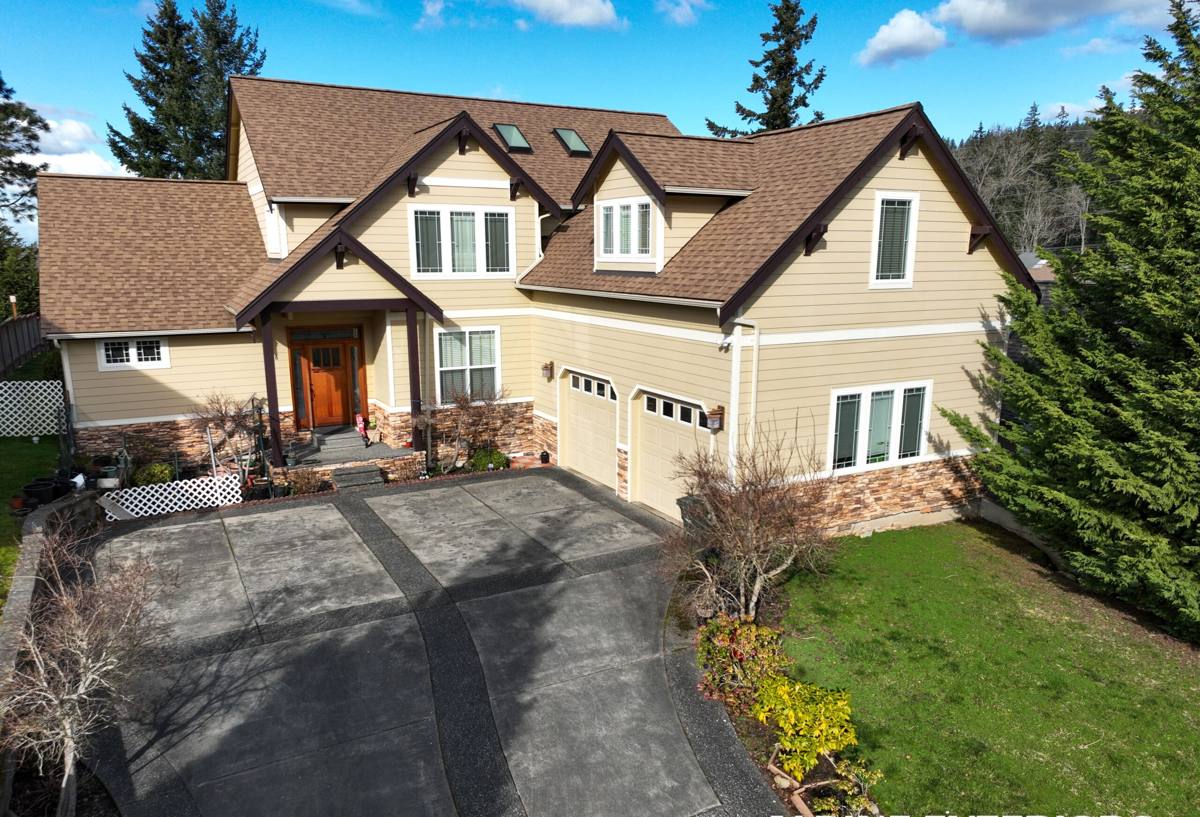
What a Correctly Built Deck Needs Here
Airflow underneath, not just on top
On a shaded, tree-covered lot, the space under the deck matters as much as the surface. Framing height, joist spacing, and skirting design all affect how quickly air moves through and dries out the structure after rain. Low clearance decks with solid skirting on a shaded lot are one of the most common reasons we get called out to look at rot that's invisible from above.
Ledger and flashing details done right the first time
The ledger board — where the deck attaches to the house — is the single most common point of failure on any deck in this climate, shaded or not. Correct flashing, proper fastener spacing, and a gap that lets water shed away from the house band board are non-negotiable. On a lot that stays damp longer between dry spells, a marginal ledger detail fails faster than it would somewhere sunnier.
Footings sized for real soil, not average soil
Lake-adjacent lots and wooded lots often have soil that holds more moisture and shifts more with freeze-thaw cycles than open, well-drained sites. Footing depth and diameter need to match what's actually in the ground on that lot, which is one reason we don't quote a deck without walking the site first.
Fasteners and hardware matched to the exposure
Every exterior fastener and structural connector on a deck should be rated for outdoor ground-contact use at minimum. On lots with heavier moisture retention from shade and tree cover, we don't cut corners here — the labor to fix a hidden hardware failure later costs far more than spending correctly on connectors up front.
Choosing the Right Decking Material for a Shaded Lot
Every decking material has real trade-offs, and those trade-offs shift depending on how much sun and airflow a deck actually gets. What performs well on an open, south-facing lot in one part of Bellingham can perform very differently under Sudden Valley's tree canopy.
| Material | How it handles shade & moisture | Maintenance burden | Typical lifespan here |
|---|---|---|---|
| Cedar | Naturally moisture-resistant, but shaded surfaces need regular cleaning to stay ahead of moss and mildew | Annual cleaning, periodic re-staining or sealing | 15-20 years with upkeep |
| Pressure-treated fir/pine | Treated for rot resistance, but shaded boards hold surface moisture longer and show graying and checking sooner | Regular cleaning, sealing every 2-3 years | 15-25 years with upkeep |
| Composite decking | Doesn't rot, but shaded, damp composite surfaces still grow surface moss/algae and need periodic cleaning | Low — occasional washing, no staining or sealing | 25-30+ years |
| Tropical hardwood | Very dense and rot-resistant, handles shade well structurally, but can stay slick when wet under canopy | Low structurally, occasional oiling for appearance | 25+ years |
We don't push one material as universally "best." What we do is factor in how much direct sun a given deck actually gets, how close the tree line sits, and how the homeowner wants to spend their maintenance time — a little bit every year, or as little as possible.
The moss and slip-resistance question
On heavily shaded lots, surface texture matters as much as the material itself. Smooth-faced boards of any material — wood or composite — get slicker faster under moss and algae growth than grooved, brushed, or textured surfaces. We factor board texture into the material conversation specifically because of how many Sudden Valley lots sit under full canopy for most of the day.
Railings, Stairs, and Hardware Built for the Long Haul
Railings and stair stringers take on water differently than open decking because they hold moisture in joints and end grain longer. On a shaded lot, that means:
- Post bases set with proper standoff from the deck surface so water doesn't pool at the base
- Balusters and rail caps sloped or capped to shed water rather than collect it
- Stair stringers cut and treated to expose as little end grain as possible to standing moisture
- Corrosion-resistant fasteners throughout, sized for the specific hardware manufacturer's structural ratings
- Metal connectors and brackets rated for exterior/ground-contact exposure, not interior-grade hardware
None of this is exotic. It's disciplined, ordinary craftsmanship applied consistently — the kind of thing that's easy to skip on a rushed job and expensive to fix once it's covered by decking.
Working Within Sudden Valley's Community Guidelines
Many homes in Sudden Valley are part of a community association with its own design review process for exterior projects, separate from county permitting. A deck project here typically needs to clear both: county building permit requirements for the structure itself, and any applicable community architectural review for things like size, height, railing style, or setback from property lines. We build the timeline for both into the schedule up front rather than discovering a design constraint halfway through construction. Homeowners don't have to manage two separate approval processes on their own — that coordination is part of the job.
How Our Process Works
1. On-site assessment
We walk the actual lot — tree cover, sun exposure, slope, existing structure if there's a deck to replace or tie into — and talk through how the space gets used. Shade patterns and drainage on a wooded lake lot vary enough from house to house that a phone quote isn't a real quote.
2. Design and material selection
Based on that walk, we go over material options honestly, including the maintenance trade-offs above, and settle on a layout that accounts for sun, sightlines, and any community design requirements.
3. Permitting and approvals
We handle county permit submission and provide what's needed for community architectural review, so the paperwork doesn't fall on the homeowner.
4. Build
Footings sized to the actual soil, correctly flashed ledger attachment, framing with real airflow underneath, and fastener/hardware choices matched to the site's exposure — not generic minimums.
5. Final walkthrough and maintenance guidance
We go over the specific care that material needs given the lot's shade and moisture conditions, so the deck actually reaches its expected lifespan instead of falling short of it.
What Drives the Cost of a Deck Project Here
| Factor | Why it matters on a shaded/lake-adjacent lot |
|---|---|
| Footing depth and count | Softer or more moisture-retentive soil can require deeper or additional footings |
| Site access | Wooded lots and sloped lake-adjacent lots can limit equipment access, affecting labor time |
| Decking material | Composite and hardwood cost more upfront but reduce long-term maintenance labor |
| Railing style and hardware grade | Corrosion-resistant, exterior-rated hardware costs more than basic hardware but avoids early failure |
| Community design requirements | Certain railing styles, materials, or heights may be required by architectural guidelines |
| Demolition of an existing deck | Removing and disposing of an old structure adds time before the new build starts |
Given all these variables, a straightforward ground-level deck and a larger multi-level deck with stairs and built-in railings can land in very different places on cost. We give a firm number after the site walk, not before.
Maintaining a Deck Under Tree Canopy
Whatever material gets chosen, a shaded Sudden Valley deck needs a different maintenance rhythm than an open, sunny lot elsewhere in Bellingham. A simple seasonal checklist:
- Clear leaves and needles out of board gaps and off the surface before they trap moisture through the wet season
- Check for moss buildup at least twice a year and clean it before it establishes, not after
- Inspect ledger flashing and the house band board for any staining or softness once a year
- Clear debris from under the deck and skirting so airflow isn't blocked
- Reseal or restain wood decking on the manufacturer's recommended schedule — shaded wood often needs it sooner than the label assumes
- Check fasteners and hardware for corrosion or loosening, especially at stair stringers and rail posts
Why a Crew That Already Works This Neighborhood Matters
A contractor who mainly builds decks on open, sunny lots elsewhere in Whatcom County will still build a structurally sound deck — but they may not default to the drainage, airflow, and material choices that a shaded, lake-adjacent lot actually needs. That's not a knock on their work; it's just a different set of conditions than what they see most often. A crew that's already built and maintained decks in Sudden Valley knows which lots hold moisture longest, which parts of the neighborhood see the heaviest moss growth, and what the community's design review process actually asks for — so there are fewer surprises in both the build and the approval process.
If you're planning a new deck, or replacing one that's showing rot, soft spots, or moss buildup it never had a fair chance to fight off, we're glad to come take a look. The estimate is free, there's no pressure attached to it, and you'll get a straight answer about what your specific lot needs.