 Bellingham Exterior
 Sudden Valley's Roofs Work Harder Than Most
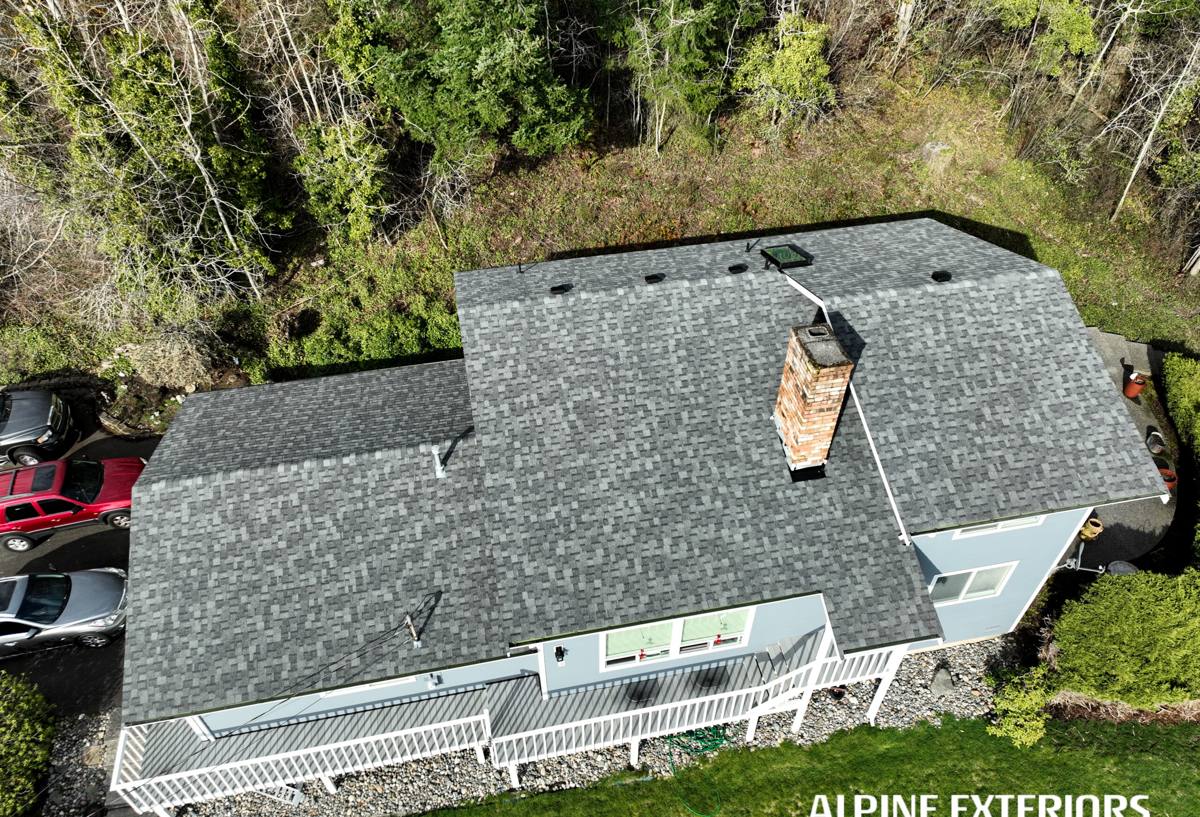
Sudden Valley sits in one of the more demanding microclimates around Bellingham. The heavy tree canopy that makes the neighborhood so appealing also means constant shade, trapped moisture, and a steady rain of needles, leaves, and cone debris onto every roof plane. Add in the driving rain that blows through Whatcom County off the water and the humid, marine-influenced air that never fully dries a shaded roof surface, and you have conditions that push asphalt shingles toward moss, algae staining, and premature wear far faster than they'd fail in a drier, more open part of town.
Metal roofing holds up differently in this environment, but only when it's specified and installed correctly for the site. This page covers what Sudden Valley homes specifically need from a metal roof, what a correct installation looks like, and how we approach the job when we're working in this neighborhood.
Why Metal Roofing Fits This Neighborhood
Moss and Debris Don't Get the Same Foothold
Asphalt shingle surfaces are granular and porous — moss spores and organic debris settle into that texture and get moisture to grow. A smooth metal panel gives moss far less to grab onto, and rain sheets off a steep or moderate metal roof faster than it does off shingles. That doesn't mean a metal roof under heavy tree cover is maintenance-free — needles and debris still pile up in valleys and against obstructions, and any organic matter left sitting on metal long enough will eventually support moss too. But the baseline resistance is real, and it matters more in Sudden Valley than almost anywhere else in the Bellingham area.
Fire Considerations in a Wooded Community
Homes surrounded by mature trees carry more exposure to wind-driven embers than homes in open subdivisions. Metal roofing is non-combustible, which is one of the more meaningful long-term advantages for a heavily wooded lot. We're not going to make specific claims about insurance discounts or code requirements here — those vary by carrier and by property — but it's worth raising with your insurance agent once a metal roof is installed.
Longevity Under Trees
A roof that's shaded most of the day and rarely gets a full dry-out cycle ages differently than one in full sun. Metal's resistance to moisture absorption and rot is a genuine advantage here — there's no substrate mat to hold water the way shingle fiberglass does. Properly installed and maintained, a metal roof on a shaded Sudden Valley lot can outlast several shingle replacement cycles on the same house.
Choosing the Right Metal Roofing System
"Metal roofing" covers a range of products with real differences in cost, appearance, and long-term performance. For a shaded, moss-prone, high-rainfall property like most homes in Sudden Valley, the panel type and fastening method matter as much as the metal itself.
| System | How It's Fastened | Best Fit For | Trade-Offs |
|---|---|---|---|
| Standing seam | Concealed clips, no exposed fasteners | Most Sudden Valley roofs — best water shedding, longest service life | Higher material and labor cost |
| Exposed-fastener panel | Screws through the panel face into decking or purlins | Outbuildings, garages, budget-conscious re-roofs | Fasteners loosen over time and need periodic re-torquing or replacement |
| Stone-coated steel | Interlocking panels resembling shingle or shake profiles | Homeowners who want a traditional look with metal's durability | More seams and surface texture, so debris and moss have more places to catch |
Our standard recommendation for shaded, debris-heavy lots is standing seam. Fewer seams, no exposed fasteners to fail, and the smoothest surface for shedding needles and moss. We'll walk through the trade-offs with you based on your roof's pitch, sun exposure, and budget rather than defaulting to one answer for every house.
What a Correct Metal Roof Installation Involves
Underlayment and Moisture Barrier
Metal panels are only as good as what's underneath them. On a roof that stays damp and shaded much of the year, we install a high-temperature synthetic underlayment across the full roof, with self-adhered ice-and-water membrane at eaves, valleys, and any low-slope transitions — the areas most likely to see standing water or wind-driven rain intrusion during a heavy Whatcom County storm.
Flashing, Valleys, and Penetrations
Most metal roof failures that we get called out to inspect trace back to flashing, not the panels themselves. Valleys collecting needle litter, chimney and vent penetrations sealed with the wrong sealant, or step flashing that wasn't properly integrated with siding — these are where water actually gets in. We detail every valley, penetration, and wall transition to shed water and debris rather than trap it.
Ventilation and Panel Movement
Metal expands and contracts with temperature swings more than shingles do, and that movement has to be accounted for in how panels are fastened and how trim pieces are installed. We also make sure attic ventilation is adequate — a shaded roof with poor airflow underneath is a setup for condensation issues that have nothing to do with the roofing material and everything to do with what's happening below the deck.
A Few Things We Check on Every Sudden Valley Roof
- Decking condition — soft or delaminated sheathing under old moss growth needs to be addressed before new panels go on, not covered up
- Valley and gutter capacity for the volume of needle and leaf debris the site actually produces
- Existing flashing at chimneys, skylights, and dormers
- Attic ventilation and any signs of trapped moisture
- Overhanging limbs that will keep dropping debris onto the new roof
- Roof pitch and any low-slope sections that need special underlayment treatment
Our Process for Sudden Valley Projects
We start with a walk of the roof and attic, not just a look from the ground — moss coverage can hide a lot, and shaded roofs often have moisture issues that aren't visible from the driveway. From there we give you a straight assessment of whether you're looking at a full tear-off or, in some cases, a re-cover, along with what we found in the decking and flashing.
Once we have a scope agreed on, we handle permitting through Whatcom County where required, schedule around weather windows (driving rain doesn't leave a lot of dry-install days in this area, so timing matters), and install with a crew that's done this work on wooded lots before — narrow driveways, limited staging space, and tree-protection during tear-off are all things we plan for rather than figure out on the day. After installation we do a magnetic sweep for stray fasteners and a full walkthrough with you before we consider the job finished.
Why Local Experience in Sudden Valley Matters
A roofing crew that mostly works flat, open subdivisions elsewhere in Bellingham will approach a Sudden Valley roof differently than one that knows the neighborhood. Steep, wooded lots often mean tighter access for staging material and debris removal. Many homes here are also subject to community design guidelines, so if your property falls under an association's review process, it's worth confirming roofing material and color requirements before you order panels — we're happy to help you figure out what documentation you'll need. Crews familiar with the area also know which valleys and roof sections tend to collect the heaviest debris load locally, and plan tear-off and disposal accordingly instead of being surprised by it mid-project.
Cost Factors to Expect
Metal roofing costs more upfront than asphalt shingles, and the exact number depends on your specific roof. Rather than quote a number that won't apply to your house, here's what actually drives the price up or down:
| Factor | Effect on Cost |
|---|---|
| Panel system (exposed-fastener vs. standing seam) | Standing seam typically runs meaningfully higher due to labor and material |
| Roof complexity (valleys, dormers, penetrations) | More cuts, flashing, and detail work drives labor time up |
| Tear-off vs. re-cover | Full tear-off adds disposal and decking-repair cost but is often necessary on older, moss-damaged roofs |
| Access and staging | Steep or tree-obstructed lots can slow material handling and increase labor |
| Decking condition | Rot or delamination found during tear-off adds repair cost that can't always be predicted in advance |
We give written estimates that break these factors out so you can see exactly what you're paying for, rather than a single lump figure.
Maintaining a Metal Roof in a Moss-Heavy Setting
Metal roofing sheds moss better than shingles, but it isn't immune to it, especially in a shaded lot like most of Sudden Valley. A short annual maintenance routine keeps a metal roof performing the way it's supposed to:
- Clear needles and leaf debris from valleys and around penetrations at least once or twice a year
- Keep gutters and downspouts free-flowing so water isn't backing up under eave flashing
- Trim back branches that overhang the roofline where practical
- Rinse off any moss or algae buildup gently — avoid pressure washing, which can damage seams and finishes
- Have flashing and sealant points checked periodically, since these are the most common source of leaks on any roof, metal included
If you're ready to talk through options for your home, we'd be glad to take a look and put together a straightforward, no-pressure estimate — just fill out the form below.