 Bellingham Exterior
 Sudden Valley's Lake Whatcom Setting Is Hard on Siding
Sudden Valley sits above the south shore of Lake Whatcom, tucked into second-growth timber that keeps most yards shaded for a large part of the year. That tree cover is a big part of the neighborhood's appeal, and it's also a big part of why siding here ages faster than it does on an open lot closer to downtown Bellingham. Shade means walls stay damp longer after every rain, and Whatcom County gets a lot of rain. Moss and algae get a running start every fall and often don't fully dry out until well into spring.
Homes nearer Bellingham Bay deal with salt-laden air working into seams, fasteners, and paint film. Sudden Valley is set back from that directly, but the broader marine climate that brings the salt air also brings the driving, wind-pushed rain that hits siding sideways instead of straight down — the kind of weather that finds every gap in flashing and trim a builder didn't take seriously. Combine that with a long moss season and you get a set of conditions that punishes cheap materials and sloppy installation faster than most parts of the country.
What constant moisture actually does to a wall
Moss doesn't just look bad. A moss mat holds water against the siding surface long after the rain stops, which keeps paint film wet, keeps wood fiber swollen, and gives mildew a foothold at butt joints and corner boards. Over several seasons that cycle of wet-swell-dry-crack is what causes cupping, soft spots, and paint failure well before a siding product's rated lifespan. It's a slow problem, which is exactly why it's easy to ignore until a contractor presses a screwdriver into a wall and it goes in soft.
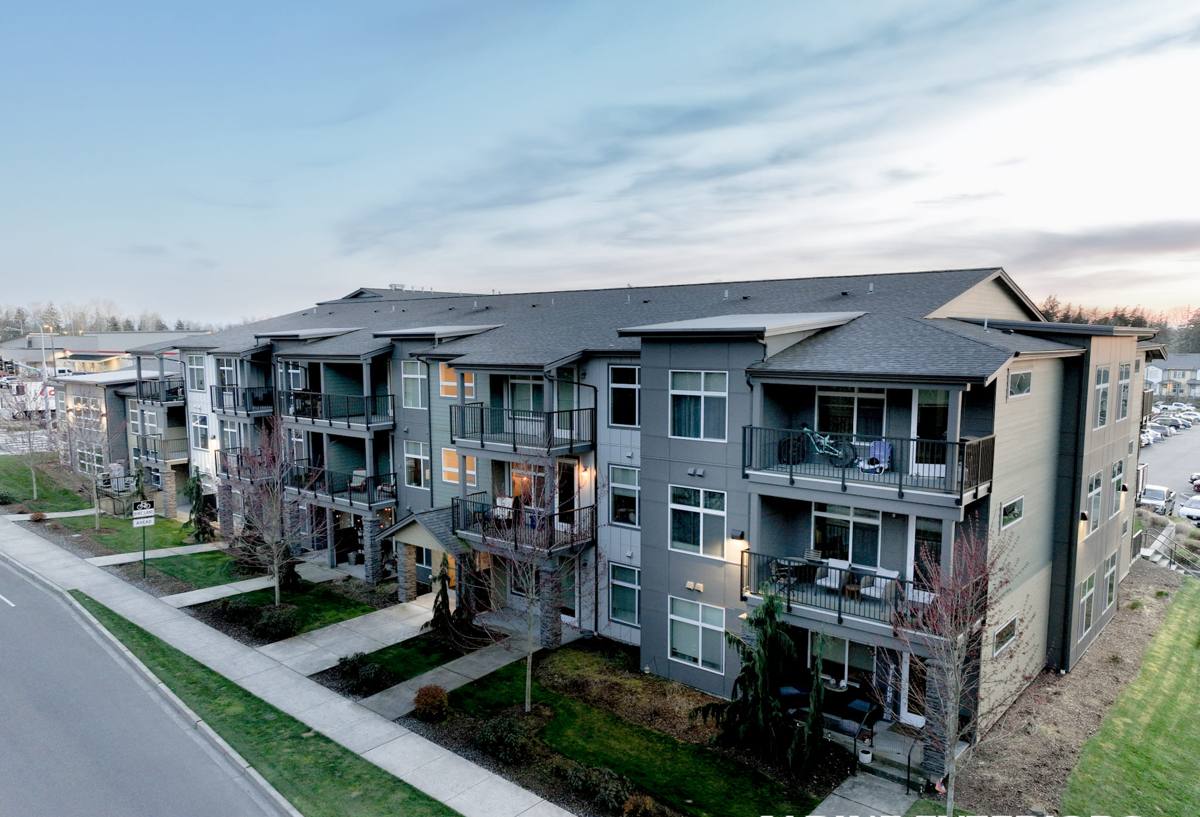
Why We Only Replace Siding With James Hardie Fiber Cement
We install James Hardie fiber cement siding exclusively, and a neighborhood like Sudden Valley is a good example of why. Fiber cement doesn't absorb moisture the way wood-based products do, and it won't rot. It's non-combustible, which matters anywhere near wooded lots. Hardie's HZ5 product line is engineered specifically for wetter, harsher climates like ours, with a formulation built to hold up to prolonged moisture exposure and freeze-thaw cycling better than standard fiber cement.
The factory-applied ColorPlus finish matters just as much as the board itself in a moss-prone environment. A baked-on factory finish resists mildew staining and holds color longer than field-applied paint, which means fewer repaint cycles and less chance of the finish failing before the substrate does. It also comes with a real, transferable warranty — worth asking any contractor to explain in writing rather than taking on faith.
What we don't install, and why it matters here
We don't install vinyl, LP SmartSide, cedar, or primed wood siding. Each of those products has real strengths, but in a shaded, high-moisture lake community they carry trade-offs we're not willing to put our name behind: vinyl relies on caulked seams that open up over time and trap moisture behind them; engineered wood products are more sensitive to sustained dampness at cut edges and butt joints; cedar and primed wood need a repainting and caulking maintenance schedule most homeowners underestimate. Fiber cement is the one option that holds up to this specific climate without asking the homeowner to fight moss and moisture every couple of years.
What a Correct Siding Replacement Actually Involves
Swapping old boards for new ones is the easy part to see and the smallest part of what actually protects a house. The work that matters most happens underneath, and it's the same work regardless of neighborhood — but it matters more in a wet, shaded lot than it does in a dry one.
Tear-off and what it reveals
Removing old siding is when we find out what's really going on behind it — rotted sheathing, missing or degraded weather-resistive barrier, and flashing that was never installed correctly around windows and doors in the first place. On a shaded, moisture-heavy lot, this step often turns up more hidden damage than homeowners expect, which is exactly why it needs to be inspected rather than covered over.
Flashing and drainage, not just caulk
A correct install manages water with flashing, house wrap, and drainage gaps — not caulk. Caulk fails; a properly lapped weather-resistive barrier and correctly flashed window and door openings don't depend on a bead of sealant staying intact for twenty years. This is the single biggest difference between a siding job that lasts and one that fails early, and it's invisible once the new boards go up.
Fastening, clearance, and finish detail
Hardie siding has a manufacturer-specified nailing pattern, minimum ground clearance, and clearance from roof lines and grade — all of which exist specifically to keep the bottom edge of the siding from sitting in standing water or snow melt. Skipping these details voids the warranty and, more importantly, defeats the entire point of using a moisture-resistant product in the first place.
| Existing Siding Found | Common Issue in This Climate | What a Hardie Replacement Addresses |
|---|---|---|
| Cedar lap siding | Repaints and caulk joints fail faster in constant shade/damp | Factory ColorPlus finish holds color without a repaint cycle |
| Vinyl siding | Seams open and trap moisture; can warp or crack in cold snaps | Rigid board with engineered drainage, no reliance on caulked seams |
| T1-11 plywood panel | Absorbs water at seams, delaminates and rots from the edges in | Fiber cement doesn't absorb water or delaminate |
| Older hardboard siding | Swells and crumbles once moisture gets past the surface | HZ5 fiber cement is formulated for sustained wet exposure |
Our Process for a Sudden Valley Siding Replacement
- Walk the property with you, check the existing siding condition, and look for signs of hidden moisture damage
- Provide a written estimate that spells out material, prep work, and any anticipated sheathing repair
- Pull any required permit — Sudden Valley properties can fall under different review depending on jurisdiction, and we handle that paperwork rather than leaving it to you
- Tear off old siding and inspect sheathing and existing moisture barrier before anything new goes on
- Repair or replace damaged sheathing and install a correctly lapped weather-resistive barrier with proper window and door flashing
- Install James Hardie siding and trim to manufacturer specification, including fastening pattern and clearances
- Caulk and paint field-cut edges, then walk the finished job with you before we consider it done
Signs a Sudden Valley Home Needs Siding Replaced Soon
- Boards feel soft or spongy when pressed near the bottom courses or under windows
- Moss or algae comes back within weeks of being cleaned off, especially on shaded, north-facing walls
- Paint is peeling, bubbling, or needing repainted more often than it used to
- Boards are visibly cupping, warping, or separating at butt joints
- Gaps have opened up around trim, corner boards, or window casings
- Interior walls near exterior siding feel cold or drafty in winter
- Visible rot or discoloration at corners, bottom edges, or anywhere siding meets the roofline
What Drives the Cost of a Siding Replacement Project
| Factor | How It Affects Your Project |
|---|---|
| Home size and number of stories | More square footage and taller walls mean more material and more staging/scaffolding |
| Sheathing condition found at tear-off | Rot or moisture damage discovered underneath adds repair scope you can't see until old siding is off |
| Trim and detail complexity | Window surrounds, corner boards, and architectural trim take more labor than plain wall runs |
| Finish choice | Factory ColorPlus finish costs more upfront than field paint but avoids repaint cycles |
| Site access | Wooded, sloped lots common around the lake can mean tighter staging and dumpster placement |
Why Hiring a Crew That Already Works Sudden Valley Matters
Lots around Lake Whatcom aren't laid out like a standard in-town block. Steep driveways, mature trees close to the house, and limited flat space for staging and a dumpster are the norm, not the exception. A crew unfamiliar with the area often underestimates prep time on the first day; a crew that's worked the neighborhood knows to plan for it upfront in the estimate instead of discovering it on-site.
If your property is part of Sudden Valley's HOA community, exterior projects can sometimes involve a quick color or material approval before work starts. That's a small step, but it's one more reason it helps to work with a contractor who has been through it before rather than one who's guessing at the process for the first time on your project.
Local familiarity also means understanding the specific moisture pattern of shaded lake-community lots — where moss tends to establish first, which wall orientations dry out slowest, and how much clearance to leave near mature trees and understory brush so the new siding actually gets airflow. None of that is complicated, but it only gets applied correctly by a crew that's paying attention to it.
Caring for Your Siding After It's Replaced
Fiber cement siding is low-maintenance, not zero-maintenance, and a shaded lake lot benefits from a little routine attention:
- Soft-wash shaded and north-facing walls periodically to keep moss from getting established
- Keep gutters clear so roof runoff doesn't sheet directly down the siding face
- Check caulking at trim joints and penetrations once a year and touch up as needed
- Keep tree branches and shrubs trimmed back from walls so surfaces can dry between rains
If you're weighing a siding replacement for a home in Sudden Valley or elsewhere around Bellingham, we're happy to take a look and give you a straightforward, no-pressure estimate — just fill out the form below.