 Bellingham Exterior
 Deck Building in Cordata: Built for the Weather We Actually Get
Cordata sits in north Bellingham, a mix of newer subdivisions, business park development, and older lots with mature tree cover — and every one of those settings comes with the same underlying problem for an outdoor structure: Whatcom County stays wet for a large part of the year, and a deck is one of the few parts of a house built to sit directly in the weather. Rain doesn't just fall here, it drives in sideways off the water and settles into shaded yards for days at a time. Add a long moss season and enough salt-tinged air drifting inland from Bellingham Bay to matter over time, and you have a climate that will find every weak point in a deck within a few winters if the build wasn't done with that in mind.
We build decks specifically for this environment, not a generic version adapted after the fact. That shows up in the footings we pour, the flashing details at the house connection, the fasteners we choose, and the decking material we recommend based on how much shade and moisture a specific yard actually holds onto.
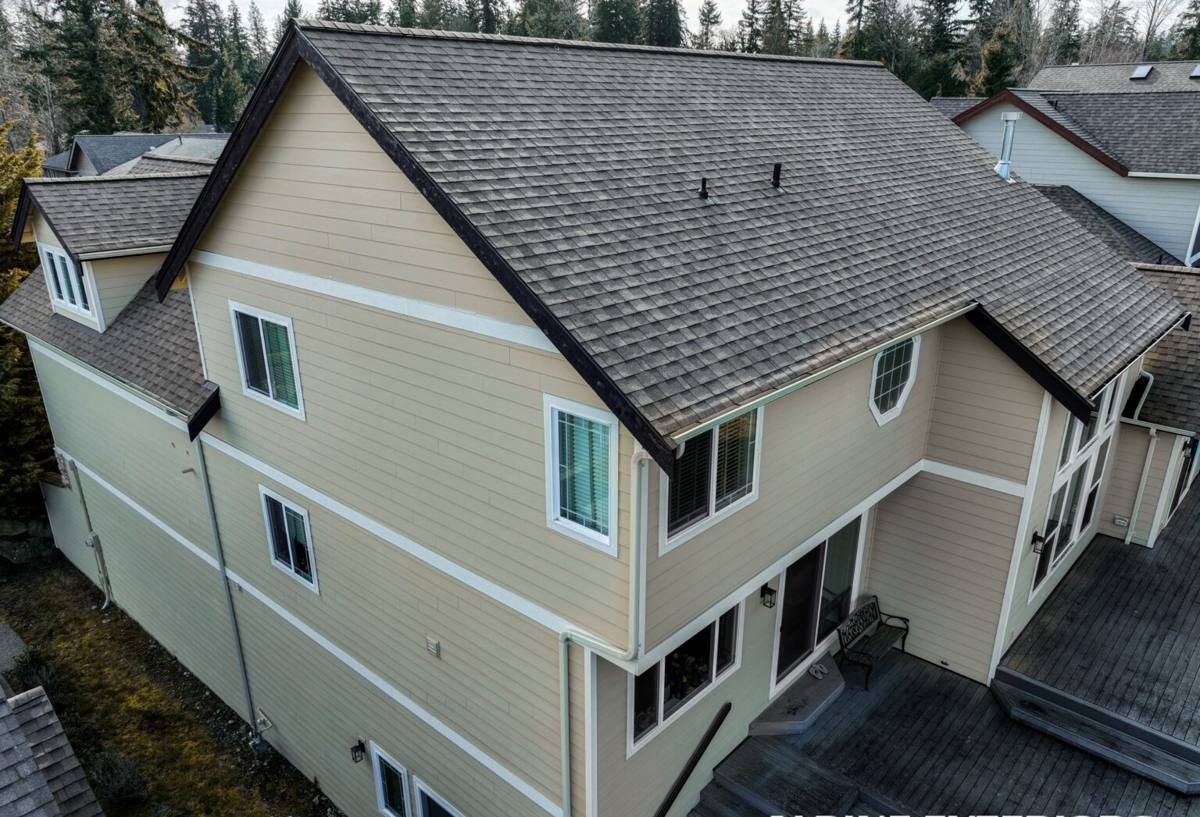
What Cordata Yards Do to a Deck Over Time
Shade, Moisture, and Moss
Many Cordata lots have retained tree cover from before development, and even the newer subdivisions tend to have fencing, neighboring structures, or landscaping that keeps parts of the yard shaded most of the day. Shaded, damp decking is exactly where moss and algae take hold first. Left alone, that growth holds moisture against the board surface, keeps wood from drying between rain events, and turns handrails and stair treads slick and genuinely dangerous underfoot.
Driving Rain and the House Connection
The single most common deck failure we see isn't the deck surface — it's water getting behind the ledger board where the deck attaches to the house. Wind-driven rain pushes water into any gap in that connection, and once it's inside the wall assembly, the damage happens where you can't see it until it's serious.
Salt Air and Metal Hardware
Cordata isn't waterfront, but Whatcom County's marine air moves inland further than people expect, and it accelerates corrosion on any hardware that wasn't rated for it. Fasteners, joist hangers, and railing brackets that would hold up fine in a dry inland climate can start rusting and weakening years earlier here.
Getting the Foundation Right
A deck is only as good as what's underground. Footings need to be sized and set to the depth required for this area's frost and soil conditions, and they need to bear on undisturbed, properly compacted soil — not fill dirt or loose material left over from a build. We see this cut corners on more than almost anything else, because it's invisible once the deck is finished and it's the most expensive mistake to fix later.
Ledger Attachment and Flashing
Where the deck meets the house, we use proper structural fasteners (not deck screws) rated for the load, and we flash that connection so water sheds away from the house rather than behind the siding. This one detail prevents more long-term rot damage than any other single decision in the build.
Joist Spacing and Board Direction
Tighter joist spacing than the minimum, plus attention to how boards will drain, keeps the whole structure drier and stiffer over time — especially important with composite and PVC decking, which behave differently under load and moisture than solid wood.
Choosing a Decking Material for This Climate
There's no single right answer here — it depends on budget, how much shade the yard gets, and how much maintenance you actually want to do. We walk every client through the honest trade-offs rather than pushing one product.
| Material | Moisture & Moss Behavior | Maintenance | Typical Lifespan |
|---|---|---|---|
| Pressure-treated wood | Absorbs water, needs sealing to resist moss and graying | Annual cleaning, periodic staining/sealing | 10-15 years with upkeep |
| Cedar | Naturally moisture-resistant but still needs sealing in shade | Regular cleaning and finish maintenance | 15-20 years with upkeep |
| Composite decking | Won't rot, but can grow surface moss/algae in constant shade — needs cleaning | Periodic washing, no sealing/staining | 25-30 years |
| PVC decking | Fully moisture-resistant, least prone to organic growth | Occasional washing | 25-30+ years |
In heavily shaded Cordata yards specifically, we often steer clients away from bare wood toward composite or PVC — not because wood is a bad material, but because a shaded, damp deck surface is exactly the maintenance schedule most homeowners underestimate when they choose it. If a client wants the look and feel of real wood, we're upfront that it means a real annual maintenance commitment, not a one-time seal-and-forget.
Railings, Fasteners, and Hardware
We use stainless steel or coated fasteners rated for exterior and coastal-adjacent exposure, along with corrosion-resistant joist hangers and structural connectors. It costs more up front than standard galvanized hardware, but replacing rusted structural fasteners on a finished deck is disruptive and expensive, and it's not a repair we want a client facing in year six.
Railing systems matter just as much for how they shed water as how they look. Horizontal surfaces on railing caps and stair treads collect standing water and moss faster than sloped or drained profiles, so we factor that into the railing design itself, not just the decking.
How Our Deck Building Process Works
- On-site visit: We look at sun exposure, drainage, existing grade, and how the deck will attach to the house before recommending anything.
- Material and design walkthrough: Honest comparison of materials and layout options based on your yard, budget, and how much upkeep you want long-term.
- Permitting: We handle the permit process with the City of Bellingham or Whatcom County depending on your lot's jurisdiction.
- Footings and framing: Proper depth, compaction, ledger flashing, and structural fastening before any decking goes down.
- Decking, railing, and stairs: Installed to shed water correctly, with attention to drainage at every horizontal surface.
- Final walkthrough: We go over the finished deck with you, including what maintenance (if any) the material you chose actually needs.
Permits and Code Basics
Most deck projects attached to a house, or built above a certain height, require a permit and inspection in this area. That process covers footing depth, structural connections, guardrail height, and stair dimensions. Skipping permitting on a deck build is one of the more common — and more costly — mistakes homeowners run into later, usually at resale or during a home inspection. We pull the proper permits as part of the build so you're not the one left explaining an unpermitted structure down the road.
Keeping a Cordata Deck Looking Good Year After Year
Whatever material you choose, a little seasonal attention goes a long way in this climate. Here's what we tell every client to stay ahead of moss, moisture, and wear:
- Sweep leaves and debris off the deck surface regularly in fall, especially in shaded corners where moisture collects
- Wash the deck surface at least once a year to remove early moss and algae growth before it takes hold
- Check the ledger board area and flashing annually for any signs of water staining or gaps
- Reseal or restain wood decking on the schedule the product actually requires — not just when it looks faded
- Keep gutters and downspouts clear so roof runoff isn't dumping extra water directly onto or next to the deck
- Trim back overhanging branches and nearby vegetation to let more light and airflow reach the deck surface
- Tighten or replace any hardware showing early rust before it becomes a structural issue
Why Local Experience Matters for This Job
A deck built to a generic national spec sheet and a deck built for a specific Cordata yard aren't the same project, even if they look identical on installation day. Knowing how shaded a lot typically stays through the winter, how far salt air realistically reaches inland, and what the local permitting process actually requires all change decisions we make before the first footing is dug. A crew that already works in this neighborhood has already seen which details cause callbacks in this exact climate — and builds to avoid them the first time, rather than learning it on your project.
If you're planning a new deck or replacing one that's showing its age, we're happy to walk your yard, talk through honest material options for your specific sun and shade conditions, and give you a straightforward, no-pressure estimate using the form below.