 Bellingham Exterior
 Window Installation in South Hill: Built for a Bay-Facing Hillside
South Hill is one of Bellingham's older, higher-elevation neighborhoods, rising up from downtown toward Western Washington University with a lot of homes catching direct, largely unobstructed views out over Bellingham Bay. The same exposure that makes those views worth having also means these homes take weather head-on: salt-tinged marine air moving in off the water, rain that arrives sideways as often as it falls straight down, and a moss season that can run most of the year on shaded, north-facing walls. Windows are usually where that exposure shows up first, because a window opening is the biggest interruption in an otherwise continuous wall, with more seams, more moving hardware, and more places for water to find a way in than any other part of the exterior.
We install siding, roofing, windows, and decks throughout Bellingham and across Whatcom County, and on South Hill specifically we treat window work as its own problem rather than a smaller version of what a sheltered, low-lying neighborhood needs. Elevation and bay-facing orientation change what a correct installation actually requires here.
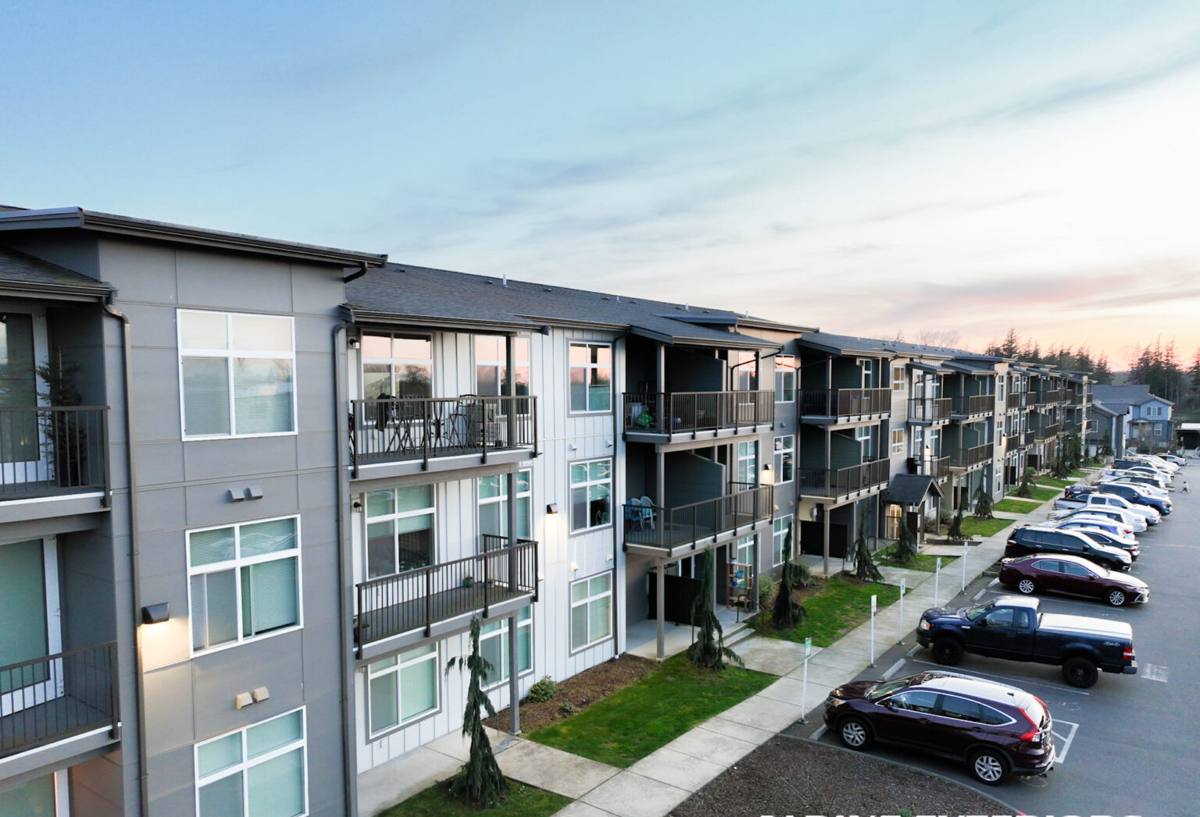
What South Hill's Climate and Elevation Do to Windows
Elevation and Unobstructed Wind
Sitting higher up and facing the bay means a lot of South Hill homes don't get the same wind break that lower, more tucked-away Bellingham neighborhoods pick up from terrain or dense tree cover. Wind coming off the water reaches these homes with less resistance, and that wind is what turns ordinary rain into wind-driven rain, forcing water sideways into window seams, trim joints, and any weak point in the flashing rather than letting it simply run down the glass and off the sill.
Marine Air and Corrosion
Salt-laden air moving inland off Bellingham Bay reaches South Hill's elevated, bay-facing lots more directly than it does neighborhoods set lower or further back from the water. Over years, that steady exposure accelerates corrosion on window hardware, fasteners, and lower-grade frame components. Hardware that would hold up fine in a drier, inland climate can start sticking, pitting, or failing years earlier on an exposed South Hill lot.
Moss, Shade, and Prolonged Moisture
South Hill's tree cover varies block to block. Some streets are open and exposed to sun and wind; others are shaded by mature trees that keep window sills, trim, and the wood framing around older windows damp for long stretches at a time. Mild temperatures and near-constant moisture through fall, winter, and spring give moss and mildew a long growing season across Whatcom County, and anything porous, or any spot where water sits instead of draining away, becomes a growth surface given enough time.
Older Housing Stock and Original Windows
South Hill is one of Bellingham's older residential areas, and its housing stock reflects that: a mix of early-20th-century homes alongside newer infill construction closer to the university. A fair number of those older homes still have original wood windows, or a first-generation aluminum or vinyl replacement installed decades ago that was never built to today's glazing or flashing standards. Those units often look fine from the curb while already underperforming on energy, drafts, and water resistance.
Signs a South Hill Home Needs Window Attention
- Fogging or visible moisture trapped between the panes of a double-pane window
- Drafts or cold spots near window frames even when the window is fully closed and locked
- Wood trim or sills that feel soft, look discolored, or show visible rot, especially on bay-facing walls
- Difficulty opening, closing, or locking a window that used to operate smoothly
- Visible daylight or gaps around the frame where it meets the siding or trim
- Moss or dark staining building up on sills and trim faster than on the rest of the exterior
- Paint or finish that's peeling, bubbling, or chalking around the window opening ahead of the surrounding wall
Full-Frame vs. Insert Replacement: How We Make the Call
Not every window on a South Hill property needs to come out down to the studs. Insert replacement, where a new window unit goes into the existing frame, can be a reasonable option when that frame is still square, dry, and structurally sound. Full-frame replacement, which removes the old frame entirely and rebuilds the opening with new flashing tied into the wall assembly, is the right call when the existing frame has taken on moisture damage, has settled or gone out of square, or when the flashing behind it was never done correctly in the first place. On a bay-facing, wind-exposed lot, we lean toward full-frame more often than we would on a sheltered inland property, because it's the only way to guarantee the flashing detail is actually correct rather than inherited from whatever was there before.
| Condition | Insert Replacement | Full-Frame Replacement |
|---|---|---|
| Frame is square, dry, and sound | Often appropriate | Not required, but an option if upgrading glass size |
| Frame or sill shows rot or soft wood | Not recommended | Yes — the only way to address the damage |
| Original flashing is unknown or suspect | Risk carries forward | Yes — flashing gets rebuilt and verified |
| Homeowner wants a larger or repositioned opening | Not possible | Yes |
| Budget and timeline are the priority | Faster, less disruptive | More labor, but addresses root causes |
Window Flashing: The Detail That Actually Determines Performance
We spend more time talking about flashing than about window brands, because on an exposed South Hill lot, flashing is what separates a window that stays dry for decades from one that starts leaking within a few wet seasons. Correct installation means the flashing laps in the right order with the surrounding weather-resistive barrier and siding, water is directed out and away from the rough opening instead of trapped behind it, and every seam is sealed with materials rated for sustained moisture exposure rather than general-purpose caulk. That's standard practice on every window we install, not an upgrade a homeowner has to specifically ask for.
Common Installation Mistakes We See on Older Homes
On repair and replacement calls around South Hill, the most common source of window water damage isn't the window unit itself failing — it's flashing that was never lapped correctly to begin with, or caulk that was used as a substitute for proper flashing instead of a supplement to it. Caulk alone breaks down, cracks, and shrinks over time; on a wind-exposed hillside lot that's had years of driving rain pushed straight at it, a caulk-only seal tends to fail well before the window itself does.
Choosing Windows for a Bay-Facing Hillside Climate
We install vinyl and fiberglass window systems suited to the Pacific Northwest's wet, mild climate, and we talk homeowners through the real trade-offs instead of pushing one brand as the only correct answer. What matters most for a South Hill property is a tight, well-engineered frame, a glazing package that handles both energy performance and condensation resistance, and hardware rated to hold up under direct marine air exposure.
- Frame material: Vinyl and fiberglass both resist rot in a way uncladded wood-frame windows don't, which matters given how much moisture and wind this hillside sees.
- Glazing package: Double-pane with a low-E coating is a solid baseline for most South Hill homes; triple-pane is worth discussing on the most wind- and view-exposed bay-facing walls where the extra performance is put to real use.
- Hardware grade: Corrosion-resistant hardware holds up longer against the direct marine air South Hill's elevation and orientation expose it to, compared to standard-grade hardware.
- Warranty structure: A manufacturer warranty only covers the product. We stand behind our installation work separately, because on a job like this, poor flashing voids the practical value of a great product warranty long before the glass itself fails.
Window Installation Cost Factors on South Hill
| Factor | What It Affects | Why It Matters Here |
|---|---|---|
| Insert vs. full-frame replacement | Labor scope and flashing rebuild | Bay-exposed lots more often need full-frame work to fix inherited flashing problems |
| Number and size of openings | Material and labor total | South Hill's mix of older, larger openings and newer infill varies widely lot to lot |
| Frame material and glazing package | Unit cost | Higher-performance glazing pays off more on unobstructed, wind-exposed walls |
| Existing substrate condition | Repair costs found once trim is opened up | Years of trapped moisture behind older flashing can rot sheathing before it's visible |
| Site access and slope | Labor time and staging | South Hill's grade and hillside lots can add setup time compared to flat terrain |
Real numbers depend on the specific house and how many openings are involved, which is why we walk the property before quoting rather than pricing off a generic per-window number.
A Checklist Before Hiring for Window Work in South Hill
- Ask specifically how they handle flashing integration with existing siding, not just which window brand they sell
- Confirm current Washington contractor licensing and active liability insurance
- Get a written scope that separates the manufacturer's product warranty from the contractor's installation warranty
- Ask whether they'd recommend insert or full-frame replacement for your specific windows, and why
- Ask about lead times, since custom-sized window orders in this region can run several weeks before installation can even begin
Why a Local Crew That Already Works South Hill Matters
A contractor who works this stretch of Bellingham regularly already understands how wind off the bay and driving rain behave on an elevated, exposed lot compared to a sheltered, tree-lined street a mile away. That shows up in the small decisions: how much lap a flashing detail gets, whether a full-frame rebuild is worth the extra labor on a given opening, which hardware grade actually makes sense for direct marine exposure. Those decisions are what determine whether a window installation on South Hill holds up for one wet winter or for several decades, and they're easy to get wrong for a crew that doesn't see this kind of exposure on a regular basis.
Our Process
We start with an on-site look at the existing windows, checking frame condition, seal integrity, hardware function, and how the current flashing ties into the siding around each opening. From there we give a straightforward read on which windows are reasonable candidates for insert replacement and which need a full-frame rebuild, along with a written scope before any work begins. Flashing and drainage detailing are handled as standard practice on every job we do, not offered as an optional upgrade.
If you're dealing with drafty, foggy, or hard-to-operate windows on a South Hill property, or you're just not sure whether insert or full-frame replacement is the right call for your home, we're happy to take a look and give an honest assessment. Reach out below for a free, no-pressure estimate.