 Bellingham Exterior
 Building Decks for Sudden Valley's Lake Whatcom Climate
Sudden Valley sits in one of the more heavily wooded, lake-adjacent pockets of Whatcom County, and that setting shapes almost every decision that goes into a deck built to last there. Mature tree canopy means constant shade on large parts of most lots. Proximity to Lake Whatcom means humidity lingers longer than it does on more open sites. And like the rest of the Bellingham area, the broader Whatcom County climate brings long stretches of driving rain, damp air off the Puget Sound region, and a moss season that can run from early fall through late spring. None of that makes deck building here impossible — it just means the build has to account for moisture and shade from day one, not as an afterthought.
A deck that would hold up fine in a dry, sun-exposed neighborhood can struggle in Sudden Valley if it's built the same way. The fixes aren't exotic — they're about material choice, drainage, fastener selection, and airflow underneath the structure. Get those right and a deck here can last decades. Skip them and you're looking at premature rot, slick surfaces, and hardware failure well before the structure should need attention.
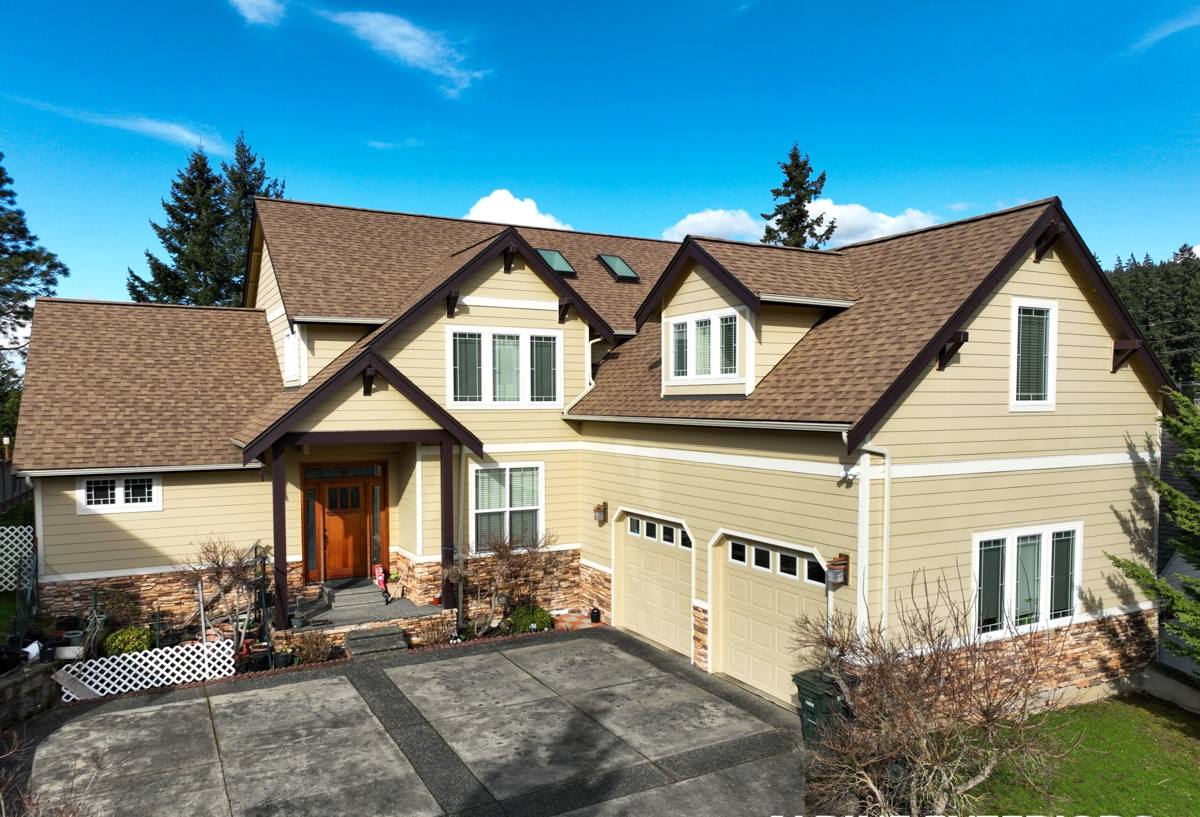
What Sudden Valley's Setting Does to a Deck
Shade and Moisture Retention
Tree cover is one of Sudden Valley's defining features, but it means many decks in the neighborhood dry out slowly after rain. Wood, composite, and even fasteners spend more hours wet or damp here than they would on an open, sun-exposed property. That extended wet time is the single biggest driver of moss growth, algae film, and — on untreated or poorly maintained wood — early decay in ledger boards, joists, and post bases.
Moss and Organic Buildup
Moss doesn't just look bad — it holds moisture against decking boards and stair treads, and it turns walking surfaces slick, especially on shaded north- and east-facing decks. Left unaddressed over a full moss season, buildup can work into board seams and fastener heads, accelerating wear in exactly the spots where water already collects.
Driving Rain and Wind-Driven Moisture
Whatcom County's rain doesn't always fall straight down. Wind-driven rain pushes moisture sideways into ledger connections, under railings, and into any gap where flashing or sealant is thin. On elevated decks — common on Sudden Valley's sloped, wooded lots — that means the ledger-to-house connection and the framing underneath need real attention, not just the visible decking surface.
What a Correct Deck Build Looks Like Here
Framing and Structure
Everything starts below the decking boards. Joists, beams, and posts should be either naturally decay-resistant or pressure-treated lumber rated for ground contact where applicable, with all cut ends and drilled holes re-treated with an appropriate sealant. In shaded, damp settings like Sudden Valley, we don't cut corners on framing lumber grade — it's the part of the deck nobody sees until something fails.
Ledger Attachment and Flashing
The ledger board — where the deck attaches to the house — is the single most common failure point on decks in wet climates. Proper flashing that directs water away from the house sheathing, correct fastener spacing, and a small air gap or drainage path behind the ledger all matter more here than in drier regions. This is not a place to save money.
Decking Material Selection
Wood and composite decking both work in Sudden Valley's conditions, but each comes with trade-offs worth understanding before you commit.
| Material | Moisture & Moss Behavior | Maintenance | Typical Lifespan Here |
|---|---|---|---|
| Cedar | Naturally decay-resistant but still needs sealing; moss can take hold in shaded areas without upkeep | Annual cleaning, periodic re-staining or sealing | 15-25 years with consistent maintenance |
| Pressure-Treated Pine/Fir | Resists rot when properly treated; surface can stay damp longer in shade, inviting moss | Regular cleaning and refinishing to protect the surface | 15-20 years with consistent maintenance |
| Composite Decking | Won't rot, but moisture and organic debris can still sit on the surface and support algae/moss film | Periodic washing; no staining or sealing needed | 25-30+ years, backed by manufacturer warranty |
We don't push one material as universally "best" — we walk through how much shade a given deck will sit in, how much upkeep the homeowner actually wants to do, and budget, then match the material to that reality. A composite deck on a sun-starved, north-facing site behaves differently than the same product on an open, south-facing lot, and that's worth talking through before ordering material.
Spacing, Airflow, and Drainage
Board gapping matters more in a shaded, wet climate than a dry one. Proper spacing lets water shed through instead of pooling on the surface, and adequate clearance underneath the deck keeps air moving so the framing can actually dry out between rain events. On lower decks close to grade, we pay particular attention to this — it's an easy detail to shortcut and a hard one to fix after the fact.
Hardware and Fasteners: Where Cheap Decks Fail First
In a lakeside, shaded climate, standard fasteners corrode faster than most homeowners expect. We use fasteners and structural hardware rated for the level of moisture exposure the deck will actually see — stainless or coated hardware in the connections that stay wettest, like ledger bolts, joist hangers, and post bases. Mixing incompatible metals (certain treated lumber against the wrong fastener alloy) can also accelerate corrosion, so material compatibility is part of the plan, not an afterthought.
Our Process for a Sudden Valley Deck Project
- On-site assessment. We look at sun exposure, tree cover, slope, drainage patterns, and how the deck will tie into the house before recommending anything.
- Material and design walkthrough. We go over decking options, railing style, and structural approach based on that specific site — not a one-size-fits-all package.
- Permitting and structural planning. Elevated decks, guardrails, and stairs typically require permits and inspection in Whatcom County; we handle that coordination.
- Demolition or prep, if replacing an existing deck. We check the ledger and any framing that's being reused for hidden rot before building over it.
- Framing and structural work. Ledger flashing, joist layout, and post footings go in first, built for the moisture load this site will see.
- Decking, railing, and finish work. Boards, fasteners, and hardware are installed to the spec discussed up front — no substitutions without a conversation.
- Final walkthrough. We cover basic care — cleaning schedule, what moss buildup to watch for, and how to spot early wear — before we consider the job done.
Signs an Existing Sudden Valley Deck Needs Attention
- Soft, spongy, or springy spots when you walk across the deck
- Green or black film on boards that doesn't fully clean off, especially in shaded corners
- Visible gaps, cracking, or separation where the deck meets the house (the ledger)
- Rust streaking around fastener heads or structural hardware
- Railing posts that wiggle or feel less rigid than they used to
- Standing water on the deck surface more than an hour or two after rain stops
- Wood that's noticeably darker, splintering, or soft near ground level on support posts
Any one of these on its own might not be urgent. Several together, especially on a deck that's more than 10-15 years old, usually means it's worth a real inspection rather than a patch job.
Repair, Rebuild, or Replace
Not every aging Sudden Valley deck needs to be torn out. If the framing and ledger connection are sound and the problems are limited to surface boards or railing, targeted repair or a decking swap can extend the deck's life at a fraction of full replacement cost. But if the ledger flashing was done wrong originally, or moisture has worked into the joists and posts over years of shaded, damp exposure, patching the surface just hides a structural problem. Part of our job on an estimate is being straight with you about which situation you're actually in before you spend money either way.
Why a Crew That Already Works Sudden Valley Matters
Sudden Valley's mix of tree cover, sloped lots, and lake-driven humidity isn't the same as building a deck on an open lot elsewhere in Bellingham. A crew that's worked in the neighborhood already knows to check shade patterns before recommending decking material, knows how the moss season here behaves differently than in more open parts of Whatcom County, and doesn't need to relearn the site conditions on your dime. That familiarity shows up in fewer surprises mid-project and a deck that's built for the conditions it will actually sit in, not generic conditions from a spec sheet.
If you're planning a new deck or need an honest read on one that's showing its age, we're happy to come take a look. Reach out for a free, no-pressure estimate using the form below.