 Bellingham Exterior
 Roof Repair Built for Happy Valley's Weather
Happy Valley sits close enough to Bellingham Bay and the surrounding hills that its homes take a specific kind of weather beating. Salt-laden air off the water accelerates corrosion on fasteners, flashing, and exposed metal. Driving rain off the Pacific pushes water sideways into laps and seams that were never designed to shed water horizontally. And the tree cover that makes the neighborhood pleasant to live in also means shade, damp organic debris, and a moss season that can run most of the year in a marine climate like ours. None of this is unique to one house — it's the baseline every roof in this part of Whatcom County has to handle, year after year.
Roof repair here isn't just patching a leak and moving on. A repair that doesn't account for how water actually moves across a Bellingham roof — and how quickly moss and algae re-establish in our humidity — tends to fail again within a season or two. Our approach is to fix the actual cause, not just the symptom that showed up on your ceiling.
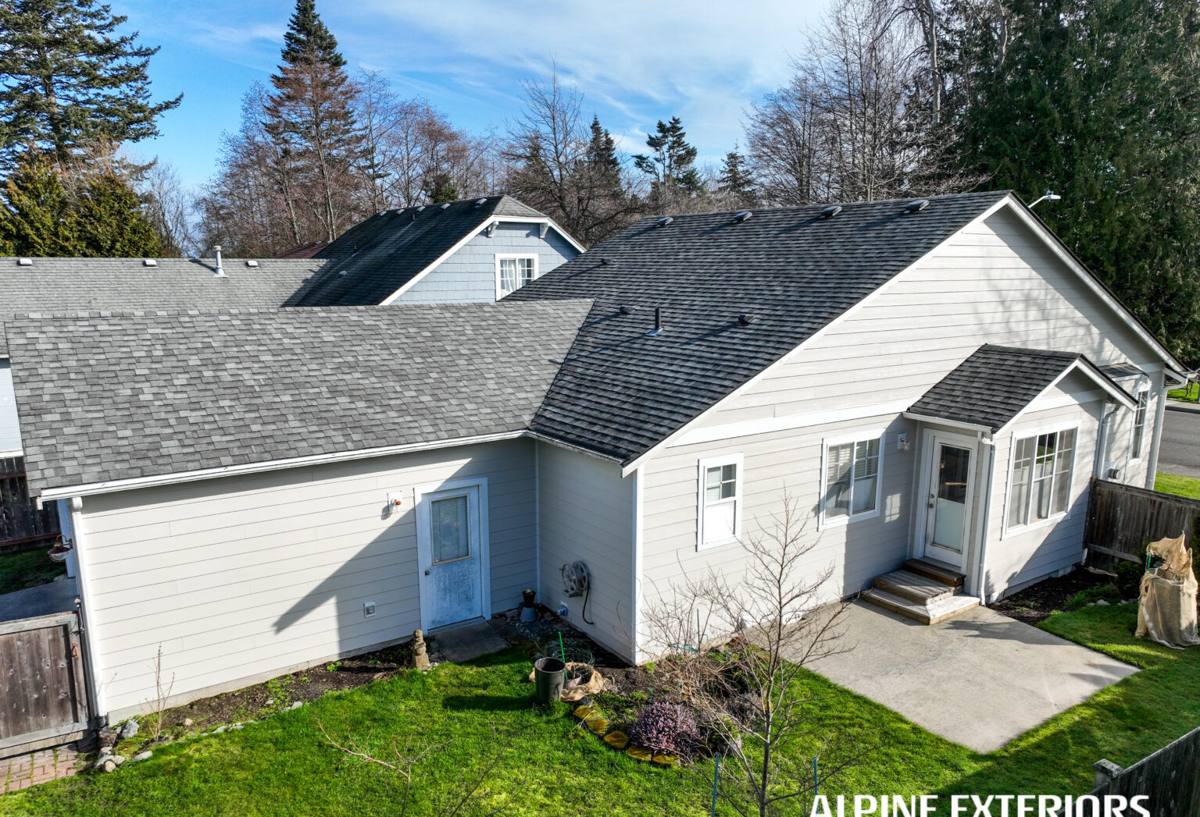
Why This Neighborhood's Roofs Age the Way They Do
Several factors compound here more than in drier parts of the state:
- Moisture load. Long stretches of overcast, drizzly weather mean roofing materials rarely get a full dry-out period, which slows shingle recovery and keeps wood-based components damp longer than manufacturers assume in their warranty testing.
- Tree canopy and shade. Shaded roof sections stay damp longer after rain, which is exactly the condition moss and algae need to take hold.
- Wind-driven rain. Storms coming off the water don't just fall straight down — they drive rain up under shingle edges, around chimneys, and into vents, which is why flashing and edge details fail before the field of the roof does.
- Salt air influence. Proximity to the bay means metal components — nails, flashing, vent boots, gutter hardware — corrode faster than the same materials would inland.
- Housing age mix. Like much of Bellingham, Happy Valley has a mix of older homes with original roofing details and newer construction. Older homes often have flashing and venting that was correct for its era but doesn't meet current best practice, which shows up as recurring leak points.
None of this means a roof in this neighborhood is doomed to constant problems. It means the repair has to be matched to these conditions, not treated as a generic patch job.
Signs You Need a Repair — And Signs You Might Need More
Most homeowners call us after noticing one of a handful of warning signs. Catching these early is almost always the difference between a contained repair and a much larger job.
Common early signs
- A ceiling stain that appears after a hard rain and then seems to dry out — this is usually an active leak, not a stain that "already happened."
- Moss buildup along shingle edges or in shaded valleys, especially north-facing slopes.
- Granules collecting in gutters or at downspout outlets, a sign the shingle surface is wearing.
- Flashing that's visibly lifted, rusted, or separated around chimneys, skylights, and roof-to-wall joints.
- Daylight visible through the attic roof deck, or damp insulation under a specific section of roof.
- Curling, cracked, or missing shingles concentrated in one area rather than spread evenly.
When it's more than a repair
If the roof has widespread granule loss across most slopes, multiple leak points in unrelated areas, soft or spongy decking in more than one spot, or is already past its expected service life for its material, an honest repair assessment may conclude that repair isn't the responsible recommendation. We'll tell you that plainly rather than layering patches onto a roof that needs to be replaced — a patched roof that's structurally past its useful life doesn't save you money, it just delays a bigger bill.
What a Correct Roof Repair Actually Involves
A repair done right isn't just sealing the spot where water is showing up inside the house. Water almost always travels before it appears — a stain on your living room ceiling might trace back to a flashing gap several feet away. A correct repair process looks like this:
- Trace the water path. We inspect from the interior (attic, ceiling, affected framing) and the exterior (roof surface, flashing, penetrations) to find where water is actually entering, not just where it's showing up.
- Assess the surrounding material condition. Shingles, underlayment, and decking near the entry point often have hidden damage even if they look fine from the ground. We check for soft decking and saturated underlayment before closing anything up.
- Replace only what's compromised — correctly. Matching shingles, resetting flashing with proper laps and fasteners, and re-sealing penetrations (vent boots, pipe collars, skylight curbs) with materials rated for our climate.
- Restore proper water shedding, not just a seal. Caulk and sealant are a last line of defense, not the primary fix. The repair should restore the layered, shingled water path the roof was designed to have.
- Check ventilation and moisture pathways. A leak repair that ignores poor attic ventilation often comes back as condensation damage even after the original leak is fixed.
Common Repairs We Handle in Happy Valley
| Issue | Typical Cause Here | What the Fix Involves |
|---|---|---|
| Leak near chimney or skylight | Flashing corroded or lifted by wind-driven rain | Remove and reset flashing with correct laps and new fasteners |
| Moss on north-facing slopes | Shade, moisture retention, slow drying between rains | Manual removal, treatment, and addressing the moisture source |
| Granule loss / bald patches | UV and moisture cycling wearing the shingle surface | Section replacement matched to existing shingle where possible |
| Leak at vent pipe or exhaust boot | Rubber boot cracked from age and weather cycling | Boot replacement with a durable, climate-appropriate material |
| Ceiling stain with no visible roof damage | Water traveling along decking before showing inside | Interior/exterior trace, targeted repair at the actual entry point |
| Fastener corrosion / rust streaking | Salt air exposure on exposed metal components | Replace corroded hardware with corrosion-resistant fasteners |
Our Process, Start to Finish
We keep the process straightforward because most homeowners just want a clear answer and a fair price, not a sales pitch.
1. Inspection and honest assessment
We walk the roof and the attic, document what we find, and explain it in plain terms — including whether repair is genuinely the right call or whether we think replacement makes more sense long-term.
2. A written scope and estimate
You get a clear description of what's being fixed and why, not a vague line item. If there's a range depending on what we find once we open up an area, we'll tell you that upfront.
3. The repair itself
Work is done to match the existing roofing system where possible, using materials suited to marine, wet-climate exposure rather than generic minimum-grade parts.
4. Cleanup and a final walk-through
We clear debris, check gutters and downspouts for anything dislodged during the repair, and walk you through what was done.
Repair vs. Replacement: How to Think About the Decision
| Factor | Favors Repair | Favors Replacement |
|---|---|---|
| Age of roofing material | Well within expected service life | At or beyond typical lifespan for the material |
| Extent of damage | Localized to one area or system (flashing, one slope) | Widespread across multiple slopes or systems |
| Decking condition | Solid, no soft spots found | Soft, delaminated, or repeatedly wet decking |
| Leak history | First occurrence or isolated cause | Recurring leaks in different locations over time |
| Shingle matching availability | Matching material still available | Discontinued product, visible patchwork unavoidable |
We don't have a financial reason to steer you toward the bigger job — a good repair that actually solves the problem is a better outcome for us long-term than a replacement recommendation you didn't need. We'll tell you honestly which side of this table your roof falls on.
What a Fair Repair Estimate Should Include
- A specific description of what's damaged and why, not just "roof repair"
- Whether decking or underlayment replacement is included or a separate contingency
- What material will be used and whether it matches your existing roof
- Whether flashing and ventilation are being addressed or just the visible leak point
- A clear statement of what is and isn't covered if related damage is found once the area is opened
Between Repairs: Maintenance That Actually Matters Here
A repair holds up much longer when the roof isn't fighting moss, debris, and clogged drainage year-round. In a climate like Whatcom County's, a little regular attention prevents a lot of premature repair calls.
- Keep gutters and downspouts clear — clogged gutters back water up under the roof edge, which is one of the most common causes of edge rot and repeat leaks.
- Have moss and algae growth addressed before it spreads across a full slope, especially on shaded, north-facing sections.
- Trim back overhanging branches where practical — less debris on the roof means faster drying and less moss pressure.
- After major windstorms, a quick visual check (from the ground, or have us look) can catch lifted flashing or shingles before the next rain gets under them.
- Check attic ventilation periodically — poor airflow traps moisture that shortens the life of decking and underlayment from the inside out.
Why a Crew That Already Works in Happy Valley Matters
A roofer who works this neighborhood regularly already knows how the local tree cover, terrain, and weather exposure tend to play out on a roof — which slopes typically hold moisture longest, which flashing details tend to fail first on homes of a certain age, and what a repair needs to survive our wet season rather than just look finished on a dry afternoon. That local pattern recognition shortens the diagnostic process and reduces the chance of a repair that looks fine in July and fails again by November.
It also means accountability. A crew based in Bellingham and working across Whatcom County isn't going anywhere after the job — if something about the repair doesn't hold up, we're a phone call away, not a company that did one job in the area and left town.
Get a Straight Answer About Your Roof
If you're seeing a stain, missing shingles, moss buildup, or just want a second opinion before committing to a bigger job, we're happy to take a look. The estimate is free, there's no pressure to book anything on the spot, and we'll tell you honestly whether you're looking at a repair or something bigger. Use the form below to get started.