 Bellingham Exterior
 Composite Decking Built for Sudden Valley's Climate
Sudden Valley sits in a pocket of Whatcom County where lake moisture, tree cover, and long stretches of Pacific Northwest rain create tougher conditions for outdoor living spaces than most homeowners expect. Add in the salt-tinged marine air that moves inland off Bellingham Bay on a regular basis, and you've got a combination that ages an under-built deck fast. We install composite decking for homes throughout this community, and we've seen firsthand what holds up here and what doesn't.
This page covers composite decking specifically for Sudden Valley properties — what the climate demands, what a correctly built deck actually involves, and how we approach the job from first look to final walkthrough.
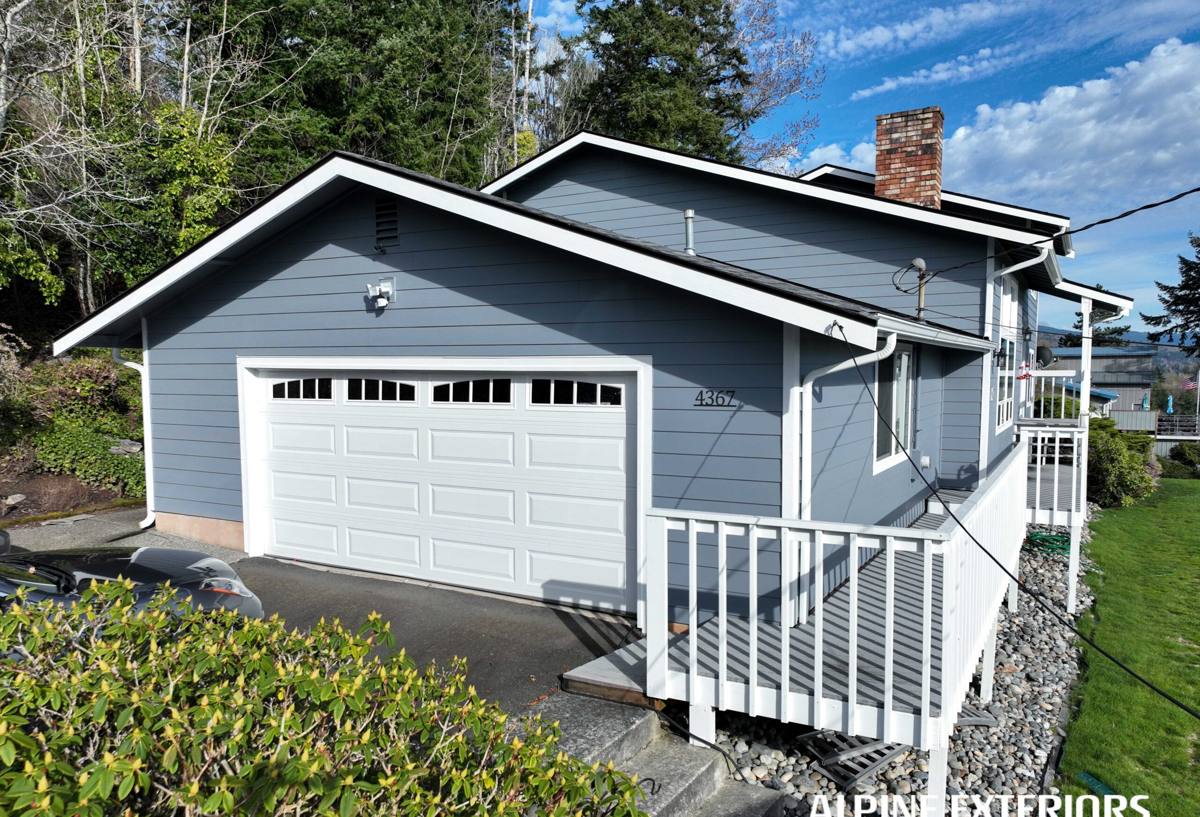
What Sudden Valley's Climate Does to a Deck
Decks in this part of Whatcom County deal with a specific set of stresses, and they compound each other over a full year rather than showing up one at a time.
Moisture That Doesn't Let Up
Sudden Valley's tree canopy and proximity to the lake mean shaded sections of a deck can stay damp for days after a storm passes. Wood decking in those conditions absorbs water, swells, and eventually cups or splits. Composite doesn't absorb moisture the way wood does, but the substructure underneath it — joists, ledger boards, fasteners — still needs to be built to shed water, or you're just hiding a wood-rot problem under a nicer surface.
Moss and Algae Growth
Bellingham's long wet season gives moss and algae plenty of time to establish on any surface that stays damp and shaded. On decking, that growth isn't just a cosmetic issue — it makes boards slick underfoot and, left unaddressed, can trap moisture against the board surface. Board selection, gap spacing, and airflow underneath the deck all affect how much moss problem a homeowner ends up dealing with.
Salt Air and UV Cycling
The marine air that reaches inland communities like Sudden Valley carries fine salt content that accelerates corrosion on exposed metal fasteners and hardware. Combine that with UV exposure during summer months and freeze-thaw cycling in winter, and you get a slow breakdown of any material or hardware that wasn't rated for the exposure.
Why Composite Makes Sense Here
Composite decking isn't the right call for every project or every budget, but for Sudden Valley's climate specifically, it solves problems that wood decking struggles with:
- No annual staining or sealing to keep moisture out of the board — the cap layer is already sealed
- Resists the swelling, cupping, and splintering that shaded, damp wood decking develops here
- Color and texture don't rely on a maintained finish, so fading is slower and more even
- Many composite lines carry stain and mold resistance built into the cap, which matters given the moss pressure in this area
- Longer product warranties than most wood decking options, backed by the manufacturer
The trade-off is upfront cost — composite runs higher per square foot than standard wood decking — and it's not a material that forgives a sloppy install. Gapping, fastening, and substructure ventilation all have to be done to spec, or you lose the advantages the material is supposed to give you.
What a Correct Composite Deck Build Involves
A composite deck is only as good as what's underneath it. We treat the substructure as the part of the job that actually determines how long the deck lasts.
Substructure and Framing
Joists and beams get sized for the actual load and span, not just "what's typical." In a wet climate like this one, we also pay close attention to ledger board flashing and joist protection — a composite deck with an unprotected wood frame underneath is still vulnerable to the same rot issues as a full wood deck, it's just hidden from view.
Ventilation and Drainage
Airflow underneath the deck surface matters as much as what's on top of it. Poor ventilation traps moisture, which speeds up substructure decay and gives moss and mildew a place to take hold even on a composite surface. We plan skirting, gap spacing, and grading underneath the deck to keep air moving and water draining away from the house.
Fasteners and Hardware
Given the salt content in the regional air, we use fasteners and structural hardware rated for corrosion resistance rather than standard-grade hardware. This is a small cost difference at install time and a significant difference in how the deck holds up over the years.
Board Layout and Expansion
Composite boards expand and contract with temperature swings, and correct gapping accounts for that movement. Rushed installs that skip proper spacing end up with buckled boards or gaps that trap debris and moisture.
Comparing Decking Materials for Sudden Valley Conditions
| Factor | Wood Decking | Composite Decking |
|---|---|---|
| Upfront cost | Lower | Higher |
| Annual maintenance | Staining/sealing needed regularly | Cleaning only, no sealing required |
| Moisture/moss resistance | Vulnerable without upkeep | Better resistance with proper install |
| Typical lifespan (with correct build) | 15–20 years | 25–30+ years, warranty-backed |
| Repair approach | Sand, re-stain, replace boards as needed | Limited refinishing options, board replacement |
Wood is a legitimate choice for homeowners who want a lower upfront cost and don't mind the maintenance schedule. Composite is the better fit for homeowners who want to spend less time maintaining the deck year to year, especially in a climate where neglecting maintenance shows up fast.
Our Process for Sudden Valley Deck Projects
- On-site assessment — We look at sun/shade exposure, drainage around the foundation, existing deck condition if there is one, and how the space connects to the house.
- Honest material walkthrough — We go over composite board options, cost ranges, and warranty terms so you're choosing based on real trade-offs, not a sales pitch.
- Structural plan — Framing, ledger flashing, ventilation, and fastener spec get worked out before material orders go in.
- Demo and prep — Removal of any existing structure, site protection, and grading corrections if drainage needs work.
- Build — Framing first, inspected for level and structural soundness, then composite board installation with correct spacing and fastening.
- Final walkthrough — We check the deck with you before calling the job done, including how to clean and maintain it going forward.
Cost Factors for Composite Decking in This Area
Every project is different, but the main variables that move the price on a Sudden Valley composite deck job are:
| Factor | Why It Matters |
|---|---|
| Deck size and layout complexity | Multi-level decks, curves, and built-in features add labor and material |
| Substructure condition | Existing rot or undersized framing means more rebuild work before decking goes on |
| Composite product tier | Board lines vary in cap technology, color options, and warranty length |
| Site access and grading | Sloped or heavily wooded lots, common in Sudden Valley, can add site prep work |
| Railing and stair requirements | Code-compliant railing and stairs add to material and labor scope |
We give straightforward, itemized estimates so you can see where the cost is actually going — not a flat number with no explanation behind it.
Why Hire a Crew That Already Works in Sudden Valley
A contractor who's worked in Sudden Valley specifically understands the practical realities of the community — tree cover affecting sun exposure and drying time, the drainage patterns common to lots near the lake, and the moss pressure that shows up in shaded areas year after year. That local familiarity shapes decisions on ventilation, board selection, and where extra attention to moisture management actually pays off.
It also matters for the basics: knowing the access points for the neighborhood, understanding typical lot layouts, and being able to plan a realistic project timeline around Whatcom County's weather patterns instead of guessing at it.
Maintaining Your Composite Deck
Composite decking is lower-maintenance than wood, not maintenance-free. A few habits go a long way in this climate:
- Sweep debris off the deck regularly, especially in fall when leaf litter builds up in shaded corners
- Rinse or wash the surface periodically to keep moss and algae from establishing, particularly in shaded sections
- Keep gutters and downspouts clear so water isn't dumping onto or near the deck structure
- Check railing and stair hardware annually for corrosion, especially in homes closer to open exposure
- Address any standing water or drainage issues underneath the deck promptly rather than letting them sit
If you're planning a new deck or replacing an aging one in Sudden Valley, we're happy to come take a look and walk you through what your specific property needs. The estimate is free, there's no pressure, and you'll get straight answers about what a correct build costs and why — just fill out the form below to get started.