 Bellingham Exterior
 Siding Repair Built for Sudden Valley's Microclimate
Sudden Valley sits in a pocket of Whatcom County that gets its own weather story. Tucked along Lake Whatcom with heavy tree cover on most lots, homes here deal with a combination that's tougher on siding than what you'll find in more open parts of Bellingham: filtered sun that never fully dries north-facing walls, lake humidity that lingers into the afternoon, and a moss season that can run eight months out of the year. We've worked on homes throughout this community long enough to know that a repair here needs to account for all three, not just patch the spot that's visibly failing.
Siding repair sounds simple until you're the one standing on a ladder looking at a wall that's rotted from the inside out while the paint on the surface still looks fine. That's the pattern we see most in Sudden Valley: damage that starts behind the siding, in the sheathing and framing, long before it shows up where you can see it.
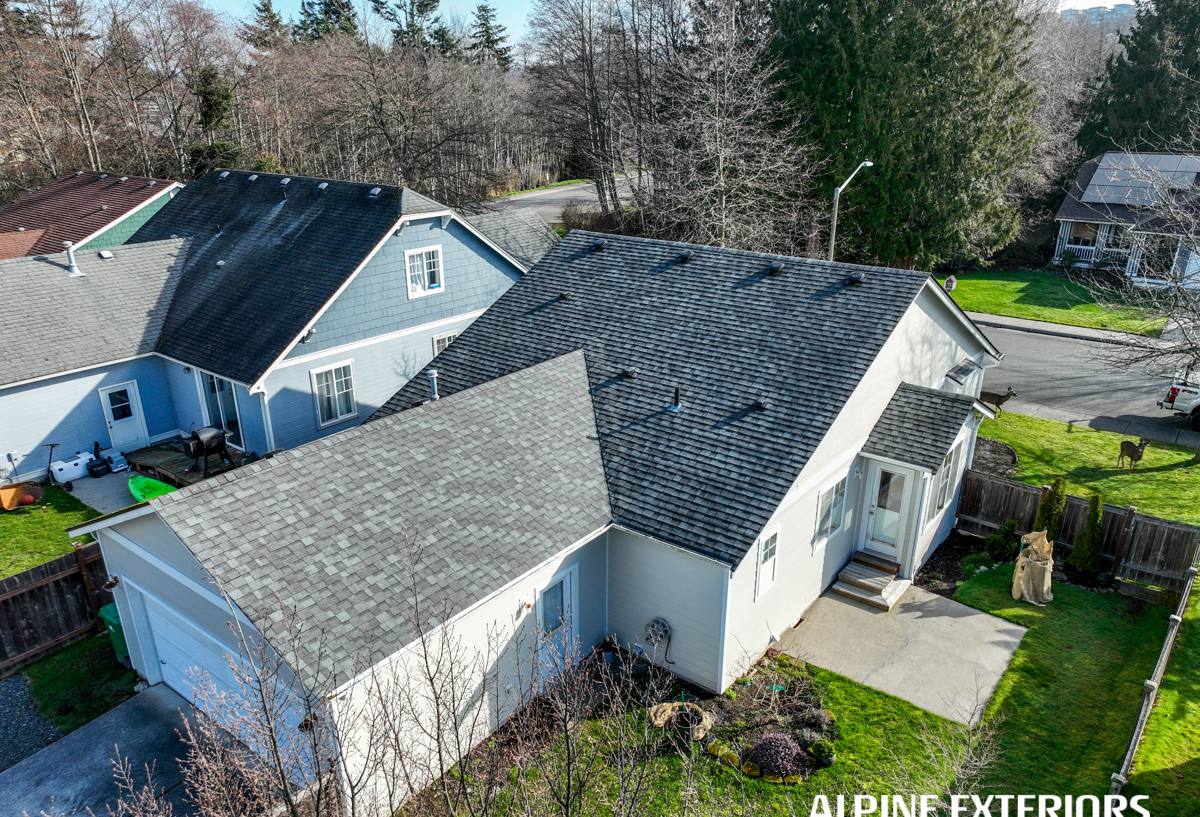
What's Actually Damaging Sudden Valley Siding
Moss and Organic Growth
The tree canopy that makes Sudden Valley desirable also keeps siding shaded and damp for long stretches, especially on north and east-facing walls and anywhere gutters overflow onto the wall below. Moss and algae hold moisture against the surface far longer than open air would, and on wood-based sidings that constant dampness is what starts rot. On fiber cement, moss is mostly cosmetic, but it's still a sign that a wall is staying wet longer than it should — worth checking for a bigger moisture problem behind it.
Driving Rain Off the Lake
Storms that track across Lake Whatcom pick up wind that drives rain sideways into west and south-facing elevations. Driving rain finds every gap in flashing, every failed caulk joint, and every place where siding wasn't lapped correctly. Water that gets behind the cladding doesn't evaporate quickly in a shaded, humid lot — it sits in the wall cavity and does its damage slowly.
Ground-Level and Splash-Zone Wear
Many Sudden Valley homes have landscaping, sloped yards, or proximity to the lake that puts the bottom courses of siding in near-constant contact with splashback, irrigation overspray, or standing moisture at grade. This is almost always where we find the worst rot and the most urgent repairs, regardless of what siding material is on the rest of the house.
Age and Original Material
A lot of Sudden Valley homes were built or last re-sided with vinyl or older wood-composite products that were standard decades ago. Both react differently — but not well — to sustained damp shade. Vinyl can warp and pull away at the seams; older wood composites delaminate and swell. Neither reacts to the local climate the way fiber cement does.
How to Tell If You Need a Repair
- Soft or spongy siding when you press on it near the bottom of the wall or below windows
- Visible gaps, cracks, or separated seams, especially around window and door trim
- Persistent moss or algae streaking that comes back within weeks of cleaning
- Peeling or bubbling paint that keeps returning to the same section
- Dark staining or discoloration on interior walls or ceilings near an exterior wall
- A musty smell in a room that backs up to an exterior wall
- Visible warping, buckling, or bowing when you sight down the wall from the corner of the house
What a Correct Repair Actually Involves
A siding repair that only replaces the damaged board and stops there is a repair that will likely need to be done again. Here's what we check every time, regardless of how small the visible damage looks:
1. Find the Water Source First
Before we touch the siding, we trace where the water is getting in. That might be failed flashing above a window, a gap where trim meets siding, a downspout dumping water against the wall, or a roof-to-wall transition that was never sealed correctly. Replacing siding without fixing the entry point just buys a year or two before the same spot fails again.
2. Open Up the Damage and Check the Sheathing
Rot rarely stops exactly at the edge of the visibly bad board. We pull back enough surrounding material to see how far the moisture traveled, and we check the wall sheathing and framing underneath. If the sheathing is soft or the framing has started to rot, that gets addressed before any new siding goes back on — patching over compromised structure is how small repairs turn into bigger problems two years later.
3. Rebuild the Water Management, Not Just the Surface
Correct flashing, properly lapped house wrap, and the right gap and fastening pattern matter more to the long-term outcome than the siding material itself. We rebuild this system to current best practice, not just to match what was there before, since what was there before is often part of why the repair was needed.
4. Match or Upgrade the Material
Where possible, we match existing siding for a clean, seamless repair. But when a section has failed due to a material or design issue — vinyl that's warped from repeated wet-dry cycling, wood composite that's delaminating — we'll tell you honestly if a patch is the wrong long-term call and what replacing that section with something more durable would look like instead.
Repair vs. Replacement: How We Help You Decide
| Factor | Points Toward Repair | Points Toward Replacement |
|---|---|---|
| Extent of damage | Isolated to one or two wall sections | Recurring rot in multiple areas or elevations |
| Underlying material | Sound fiber cement or newer siding | Aging vinyl, wood composite, or original builder-grade material |
| Sheathing/framing condition | Dry, solid wood behind the damage | Soft, delaminated, or repeatedly re-repaired sheathing |
| Age of existing siding | Under 10-15 years, well maintained | Original siding on an older home, past its practical service life |
| Repair history | First repair in this location | Same spot has been patched before |
Most of the time the honest answer is a repair — and we'll say so. But if a home is on its third patch in the same corner, or the moisture damage traces back to a material that simply doesn't hold up in a shaded, lake-humid lot like Sudden Valley, we'll walk you through why a section or full replacement makes more financial sense than repairing the same failure again next year.
Why Sudden Valley's Conditions Shape Our Material Recommendation
When a repair does turn into a full re-siding conversation, we install James Hardie fiber cement exclusively — and Sudden Valley is exactly the kind of environment that recommendation is built for. Fiber cement doesn't absorb water the way wood-based products do, so it isn't feeding the rot cycle that shaded, damp lots create. It's also non-combustible, which matters on wooded lots where wildfire risk has become a more serious consideration for Pacific Northwest homeowners in recent years. And Hardie's ColorPlus factory finish is engineered to hold color and resist the moss and mildew staining that's a near-constant fight on heavily shaded Sudden Valley elevations.
We don't install LP SmartSide, vinyl, Cemplank, Allura, primed spruce, or cedar. Each has legitimate uses elsewhere, but none of them hold up to sustained damp shade, moss exposure, and driving lake rain the way fiber cement does — and we'd rather tell a homeowner that upfront than sell a repair on a material we don't believe will last in this specific setting.
Our Process for a Sudden Valley Siding Repair
- Inspection: We walk the full exterior, not just the spot you called about — moisture problems in this area rarely stay isolated to one wall.
- Moisture check: We probe suspect areas and, where needed, open a section to see how far damage extends before quoting anything.
- Honest scope: You get a clear explanation of what's a straightforward patch, what needs structural attention, and what we'd flag as a replacement conversation.
- Written estimate: A specific plan and price before any work starts — no surprise change orders for damage we should have caught during inspection.
- Repair and water management rebuild: Damaged material is removed, framing/sheathing addressed if needed, and flashing and drainage rebuilt correctly.
- Final walkthrough: We show you what was done and why, including anything worth keeping an eye on going forward.
Why It Matters to Hire a Crew That Already Works This Neighborhood
Sudden Valley's mix of lake-adjacent lots, mature tree cover, and private-road access means the practical realities of a job here — where water actually collects, which elevations take the worst weather, how tree cover affects drying time — aren't the same as a job in an open subdivision closer to downtown Bellingham. A crew that's worked this community before isn't guessing at any of that. We know what to check first, and we don't waste your time or money chasing the wrong cause.
It also matters for the boring logistical stuff: knowing the access points, working around HOA expectations where they apply, and being a known, reachable local business rather than a crew that drove in from out of the area for one job and won't be easy to reach if something needs a follow-up look.
What Homeowners Can Do Between Now and an Inspection
- Clear gutters and downspouts so water isn't overflowing onto walls below — this alone prevents a lot of the damage we see
- Keep landscaping and shrubs trimmed back a few inches from siding to improve airflow and drying
- Avoid pressure-washing damaged or soft-feeling siding yourself — it can force water further into a wall that's already compromised
- Note any interior signs — musty smells, soft drywall, visible staining — and where they are relative to the exterior wall
- Don't caulk over a soft or damaged area as a stopgap; it traps moisture in rather than keeping it out
Get an Honest Look at What Your Siding Needs
If you're seeing early signs of trouble, or you already know a section of your Sudden Valley home needs attention, we'll come take a straightforward look and tell you what we actually find — repair, partial replacement, or otherwise. There's no pressure and no obligation. Use the form below to request a free estimate.