 Bellingham Exterior
 Sudden Valley's Setting Puts Extra Stress on Siding
Sudden Valley sits along Lake Whatcom southeast of Bellingham, tucked into wooded, hilly terrain that gives most homes here something a lot of Whatcom County properties don't have: heavy tree canopy right up against the house. That's part of what makes the community desirable, but it also creates a microclimate that's harder on exterior materials than a typical open lot. Shade from surrounding trees means walls stay damp longer after rain. Morning fog and humidity off the lake linger under the canopy well past the point where a sunnier lot would have dried out. And the broader marine climate of the Pacific Northwest coast — the same air mass that carries a faint salt tang inland from Bellingham Bay — keeps humidity high across the region for months at a time.
Put those factors together and you get a long moss and algae season, driving rain that finds its way into any gap or weak seam, and siding that rarely gets a real chance to dry out between storms. North-facing and heavily shaded walls take the worst of it. Cheaper or poorly maintained siding materials show it fast — soft spots, streaking, moss creeping up from the bottom courses, paint that fails years ahead of schedule. This is exactly the kind of environment where the siding material and the installation quality both matter more than they would in a drier, sunnier part of the state.
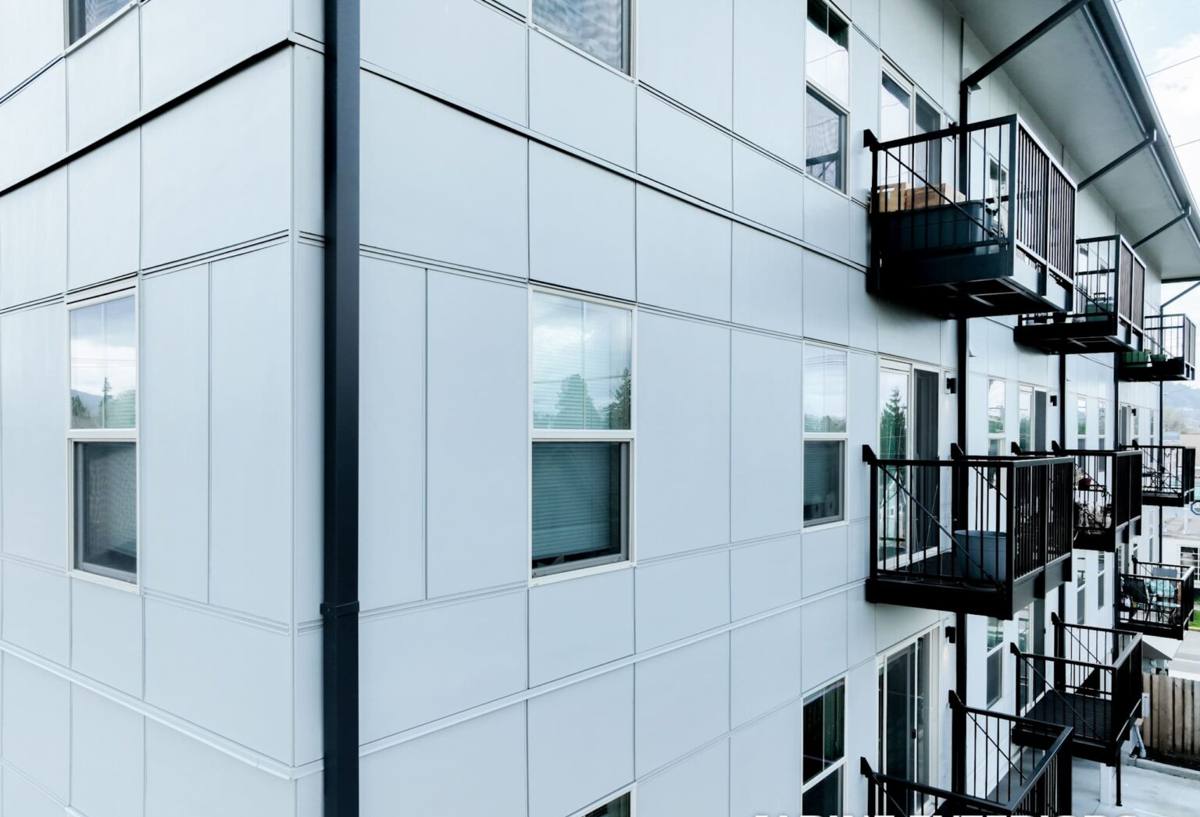
Why We Install Only James Hardie Fiber Cement Here
We don't install vinyl, LP SmartSide, Cemplank, Allura, primed spruce, or cedar. On a lot like the ones common in Sudden Valley, those trade-offs aren't theoretical — they show up in the first few wet seasons. Wood-based products, including engineered wood siding, rely on a factory coating to keep moisture out; once that coating is compromised at a cut edge, a fastener hole, or a joint, the wood substrate underneath can swell, soften, or rot, and shade slows down any drying that would otherwise limit the damage. Vinyl doesn't rot, but it flexes with temperature swings, can warp or crack over time, and gives moss and mildew an easy surface to cling to in a shaded, humid setting.
James Hardie fiber cement is made from cement, sand, and cellulose fiber — there's no wood substrate to rot and nothing for moisture to feed on. It's dimensionally stable, so it doesn't swell or contract the way wood-based products do, and it's non-combustible, which is worth noting on tree-covered lots where defensible space around the home is a real consideration. Installed correctly, it holds up to the specific combination of shade, moisture, and long-duration dampness that defines this part of the lake basin.
Engineered for This Climate, Not a Generic Product
James Hardie doesn't sell one siding formulation for the whole country. Its HZ5 product line is engineered for cooler, wetter climate zones like ours, as distinct from the HZ10 formulation built for hot, humid, or freeze-thaw-heavy regions. That distinction matters — a product engineered for the wrong climate zone performs worse than one matched to local conditions, even if it looks identical on the truck.
The ColorPlus Finish Advantage in a Moss-Prone Environment
Most of what fails first on shaded siding isn't the substrate — it's the finish. A field-applied paint job on any siding material is only as good as the prep, the weather on install day, and how evenly it was applied. James Hardie's ColorPlus Technology is a multi-coat finish baked on at the factory under controlled conditions, which gives it better adhesion and more consistent coverage than paint applied on site. That matters directly for moss and algae resistance: a smoother, more uniformly cured finish gives organic growth less to grab onto, and it holds its color longer under the kind of persistent damp shade that Sudden Valley's tree cover creates. It also comes backed by a substantial finish warranty — a meaningfully different commitment than "the paint should last a while."
What a Correct Installation Involves on a Shaded, Wet Lot
Fiber cement siding is only as good as the installation behind it. On a lot with limited sun exposure and prolonged moisture, the details that get skipped on an easy job become the details that cause callbacks two winters later.
Flashing and Moisture Management
Every window, door, and roofline intersection needs proper flashing that directs water out and away from the wall assembly, not just caulk covering a gap. Behind the siding, a correctly lapped weather-resistant barrier creates a drainage plane so any moisture that does get past the cladding has somewhere to go besides the sheathing. This is the single biggest factor in whether a wall stays dry through a Whatcom County winter.
Clearance, Gaps, and Fastening
Hardie's install specifications call for specific clearances from grade, roofing, and decks, along with gaps between panels and at trim to allow for material movement and drainage — not caulked tight in a way that traps water behind the board. Fastener spacing and placement also need to follow Hardie's published guidelines exactly; this is what keeps panels secure through the driving, wind-blown rain that comes off the lake during fall and winter storms, without over-penetrating and creating new points for water to enter.
Ventilation Behind the Cladding
On heavily shaded walls especially, a ventilated rainscreen gap behind the siding gives trapped moisture a path to escape instead of sitting against the wall assembly. It's an extra step that pays for itself specifically in low-sun, high-humidity conditions like the ones common on tree-covered Sudden Valley lots.
Moss and Algae Prevention Beyond the Siding Itself
Even the right product installed correctly benefits from a few maintenance habits that matter more here than in a drier, sunnier neighborhood:
- Keeping tree limbs trimmed back from exterior walls so more light and airflow reach the siding surface
- Cleaning gutters regularly so overflow doesn't run down the face of the siding and streak it
- Extending downspouts away from the foundation so splash-back doesn't keep the lowest courses perpetually wet
- Keeping mulch beds and plantings from piling up against the bottom edge of the siding, which traps moisture against the board
- Rinsing the siding occasionally with a garden hose rather than a pressure washer, which can force water behind panels or damage the finish
None of this replaces a correct installation — it just protects the investment once the siding is up.
James Hardie Compared to the Alternatives in This Climate
| Factor | James Hardie Fiber Cement | Vinyl Siding | Wood or Cedar Siding |
|---|---|---|---|
| Moisture/moss resistance | High — cement-based, no organic substrate to feed growth | Moderate — doesn't rot but moss adheres readily in shade | Low — absorbs moisture, prone to rot under prolonged shade |
| Fire resistance | Non-combustible | Combustible, can melt/deform near heat | Combustible |
| Maintenance in shaded, damp conditions | Low — factory finish, occasional rinse | Low-moderate — moss/mildew cleaning | High — regular sealing/painting and rot inspection |
| Typical lifespan installed to spec | Decades, often 30+ years | 20-30 years, more with degraded appearance | Highly variable, shortened by chronic moisture |
| Warranty structure | Strong transferable manufacturer warranty | Varies by manufacturer, often prorated | Typically no meaningful product warranty |
Our Process for Sudden Valley Projects
We start with an on-site walk-through, not a generic estimate. Because tree cover, shade patterns, and moisture exposure vary house to house even within the same neighborhood, we look at your specific walls — which sides get the least sun, where water tends to pool or run, and what the existing siding is telling us about how the home has weathered so far.
Permitting in Unincorporated Whatcom County
Sudden Valley is unincorporated, so permitting for exterior work runs through Whatcom County rather than the City of Bellingham. We handle that process as part of the job so it doesn't fall on you.
Working Within Community Guidelines
Communities like Sudden Valley often have their own design or architectural guidelines for exterior changes. If yours does, we'll work with you to make sure the color and product selections fit within those requirements before work begins, so there are no surprises partway through the project.
What to Expect Once Work Begins
- A detailed written scope covering tear-off, moisture barrier, flashing details, and the specific Hardie products and colors selected
- Removal of the existing siding and an inspection of the sheathing underneath for any hidden moisture damage before new material goes up
- Correct installation of the weather-resistant barrier and flashing at every penetration and intersection
- Hardie panels installed to manufacturer clearance, gap, and fastening specifications
- A final walk-through so you know exactly what was done and what routine care, if any, the finish needs going forward
Why a Crew That Already Works in Sudden Valley Matters
Sudden Valley's private roads, hills, and tree-lined lots aren't hard to work in once you know them, but they're not the same as a flat lot on a city street either. A crew that's already staged material deliveries here, navigated the access points, and seen how differently the north- and south-facing walls in this community age knows what to look for before the tear-off even starts. That familiarity translates into fewer surprises, a more accurate estimate up front, and a job that's planned around the realities of your specific lot rather than a generic Bellingham address.
If your siding is showing moss, soft spots, or finish failure — or you're planning ahead before it gets there — we're happy to come out, walk the property, and give you a straight assessment. The estimate is free, there's no pressure, and you'll get a clear picture of what correct James Hardie installation looks like for your specific home.