 Bellingham Exterior
 Deck Replacement for Sudden Valley: Built for This Specific Setting
Sudden Valley sits in a part of Whatcom County where the decks take a different kind of beating than a deck out in the open would. Heavy tree cover, hillside lots, and long stretches of shade mean a deck here can stay damp for days after a storm has already passed everywhere else. Add in the region's driving rain, a moss season that runs longer than most homeowners expect, and the general moisture load that comes with living in this corner of the Pacific Northwest, and you end up with decks that look fine from a distance but are quietly failing underneath. When a deck in Sudden Valley reaches the point where boards are soft, framing is spongy, or the whole structure just doesn't feel right anymore, patch repairs stop being a real answer. That's a full replacement, done correctly for this specific environment, not just a fresh set of boards nailed onto whatever's underneath.
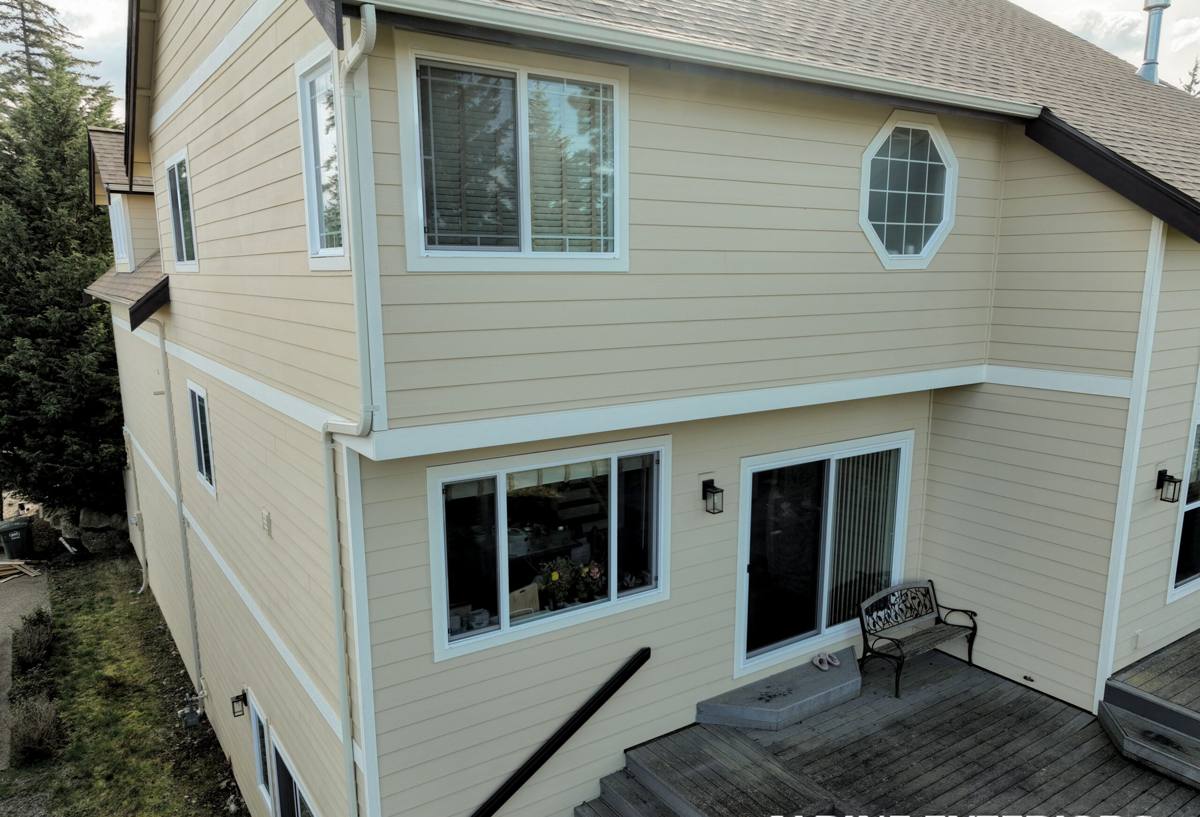
What Sudden Valley's Environment Actually Does to a Deck
Shade and Moss
Tree canopy is part of what makes Sudden Valley a pleasant place to live, and it's also exactly what keeps deck surfaces from drying out between rain events. Moss and algae take hold fastest on wood and composite surfaces that stay damp, and shaded decking here can hold moisture for days at a time during the wetter months. Beyond making the surface slick and unattractive, sustained moss growth traps moisture against the board itself, which accelerates rot in real wood and can dull or stain lower-grade composite over time.
Driving Rain and Standing Water
Rain in this part of Whatcom County rarely just falls straight down. Wind pushes it sideways and under railings, into ledger connections, and across joints that were never designed to handle water arriving at an angle. On a deck, that means water finds its way into fastener holes, board gaps, and the connection points where the deck meets the house, areas that a casual inspection from the surface won't reveal until the damage is already advanced.
Regional Marine Moisture
Even set back from the water and tucked into wooded terrain, Sudden Valley isn't isolated from the broader moisture pattern that defines this region, the steady, salt-tinged marine air and sustained humidity that move through Whatcom County generally. It's a slower, quieter contributor than direct rain exposure, but it adds to the overall moisture load a deck has to shed, and it's part of why fasteners and hardware matter as much as the decking material itself.
Signs a Sudden Valley Deck Needs Replacement, Not Repair
Not every problem deck needs to come out entirely. But there's a point where repair is just delaying the inevitable and spending money that doesn't carry forward into the new structure. Here's what tends to signal that point has arrived:
- Soft or spongy spots in the decking that give slightly underfoot
- Visible rot, cracking, or splitting at the ledger board where the deck attaches to the house
- Rust streaking or corroded fasteners, especially on older galvanized hardware
- Persistent moss or algae that returns within weeks of cleaning
- Wobble or movement in railings or posts that wasn't there a year or two ago
- Gaps opening up between structural members as wood shrinks, swells, and cycles through wet seasons
- Visible daylight or water staining underneath the deck at joist-to-beam connections
Any one of these on its own might be a repair. Several together, especially anything involving the ledger board or main structural framing, usually means the deck's working life is over and a replacement is the honest recommendation.
What a Correct Deck Replacement Actually Involves
Structural Framing and Footings
The framing underneath a deck does the real work, and it's the part homeowners see least and think about even less. On a replacement, that means checking footing depth and condition, confirming posts and beams are sized correctly for the span and the load, and replacing anything that's been sitting in ground contact moisture longer than it should have. On sloped or hillside lots, which describes a fair number of properties around Sudden Valley, footing placement and post height also have to account for grade changes that a flat-lot deck wouldn't deal with.
Ledger Board and Flashing
The ledger board, where the deck attaches to the house, is the single most common failure point on decks in this climate. Water that gets behind a poorly flashed ledger has nowhere to go and sits against both the deck framing and the house's own wall assembly. A correct replacement means proper flashing integrated with the house's water-resistive barrier, not just caulk smeared over a gap and called good.
Decking Material Selection
What goes on top matters, but it matters less than what's underneath if the framing and flashing aren't right. Even so, in a shaded, damp environment like Sudden Valley, the surface material has to be chosen with moss resistance and long-term moisture behavior in mind, not just upfront cost or appearance.
Fasteners and Hardware
Given the sustained moisture and marine-influenced air this region deals with, fastener and connector selection isn't a minor detail. Stainless steel or heavy-duty coated fasteners rated for exterior and coastal-adjacent exposure hold up far longer than standard galvanized hardware, which can start corroding within a few seasons in a wet, shaded setting.
Decking Material Options for a Shaded, Damp Lot
There's no single right answer for every homeowner, but there are real trade-offs worth understanding before you choose:
| Material | Moss/Moisture Behavior | Maintenance | Typical Lifespan |
|---|---|---|---|
| Pressure-treated wood | Absorbs moisture, moss-prone in shade without upkeep | Regular cleaning, sealing, occasional board replacement | 10-15 years in this climate |
| Cedar | Naturally rot-resistant but still needs sealing to shed moss and moisture long-term | Periodic sealing/staining | 15-20 years with upkeep |
| Composite decking | Sheds moisture better, but lower-grade composites can still stain and grow algae in deep shade | Occasional washing, no sealing needed | 20-30 years, varies by product grade |
We'll walk through which option fits a given lot's actual sun and shade pattern during the estimate, since a deck tucked under heavy canopy has different needs than one with a few hours of afternoon sun.
Our Deck Replacement Process
- On-site assessment: We evaluate the existing deck's framing, ledger connection, footings, and overall condition, not just the surface boards, and account for the specific shade and drainage pattern on your lot.
- Full tear-out: The old deck comes out down to the connection points at the house, so nothing hidden gets built over.
- Structural repair or replacement: Framing, posts, and footings are brought up to current standards, with attention to how the deck actually sits on a sloped or shaded lot.
- Ledger flashing: Proper flashing is integrated at the house connection, the single detail most likely to determine how long the new deck lasts.
- Decking and railing installation: Installed using fasteners and hardware rated for this region's sustained moisture exposure.
- Final walkthrough: We go over the finished deck with you, including what maintenance, if any, the chosen material will need going forward.
Permits and Structural Requirements in Whatcom County
Deck replacements of any real size typically require a permit under Whatcom County's building code, particularly when footings, framing, or the ledger connection are being altered or replaced. This isn't paperwork for its own sake. A permitted job gets inspected, which is a real check that the structural work underneath the boards was done to code, not just made to look right on the surface. We handle the permitting process as part of the job rather than leaving it for the homeowner to sort out separately.
What Affects the Cost of a Deck Replacement Here
| Factor | Why It Matters in Sudden Valley |
|---|---|
| Deck size and height | Larger or elevated decks on sloped lots need more framing, footings, and railing |
| Ledger and flashing condition | Water damage at the house connection often means added repair beyond the deck itself |
| Decking material chosen | Composite costs more upfront but less in long-term maintenance than wood in a shaded, damp setting |
| Site access | Wooded, hillside lots can require more labor to move materials and equipment |
| Permit and inspection scope | Structural changes trigger a fuller permitting process than a cosmetic resurface |
We don't quote decks off a flat price sheet, because two decks the same size can need very different amounts of structural work once we're actually underneath them. That's why every estimate starts with a real look at the specific deck, not a phone-quoted number.
Why a Crew That Already Works in Sudden Valley Matters
A contractor who's worked on decks in Sudden Valley already knows how the shade pattern on a wooded lot changes where moss takes hold first, how a hillside footing needs to be set differently than one on flat ground, and how much moisture a ledger board in this setting is really dealing with over a full year. That's the kind of judgment that shows up in small decisions on the job, where to add extra flashing, which board orientation drains best, that a crew unfamiliar with this specific community has to learn the hard way, often at the homeowner's expense. We also handle roofing, siding, and windows, so if a deck problem turns out to be connected to a larger moisture issue on the house itself, like a leaking ledger flashing that's also affecting the wall behind it, we can address it as one connected system instead of treating the deck in isolation.
If your Sudden Valley deck is showing signs of wear, or you just want an honest opinion on whether it's a repair or a replacement, we're happy to take a look. Reach out using the form below to schedule a free, no-pressure estimate.