 Bellingham Exterior
 Why Sudden Valley Roofs Age Differently
Sudden Valley sits in the hills along Lake Whatcom, southeast of Bellingham, under heavy tree cover that most in-town neighborhoods don't have. That combination changes how a roof ages here compared to a roof out on open ground. Shaded, tree-lined lots stay damp longer after a storm passes. Needles, cones, and leaf litter collect in valleys and behind chimneys year-round, holding moisture against the shingle surface. And the same marine weather pattern that brings salt-tinged air in off the Salish Sea and Bellingham Bay reaches inland through Whatcom County, adding a slow corrosive edge to metal flashing, fasteners, and vents.
None of that is dramatic on its own. It's the accumulation that gets homeowners: moss that seemed cosmetic two years ago has worked granules loose and opened seams; a "small" leak at a skylight curb turns out to be years of slow saturation in the decking underneath. By the time a roof in Sudden Valley shows obvious problems, it's often further along than it looks from the ground.
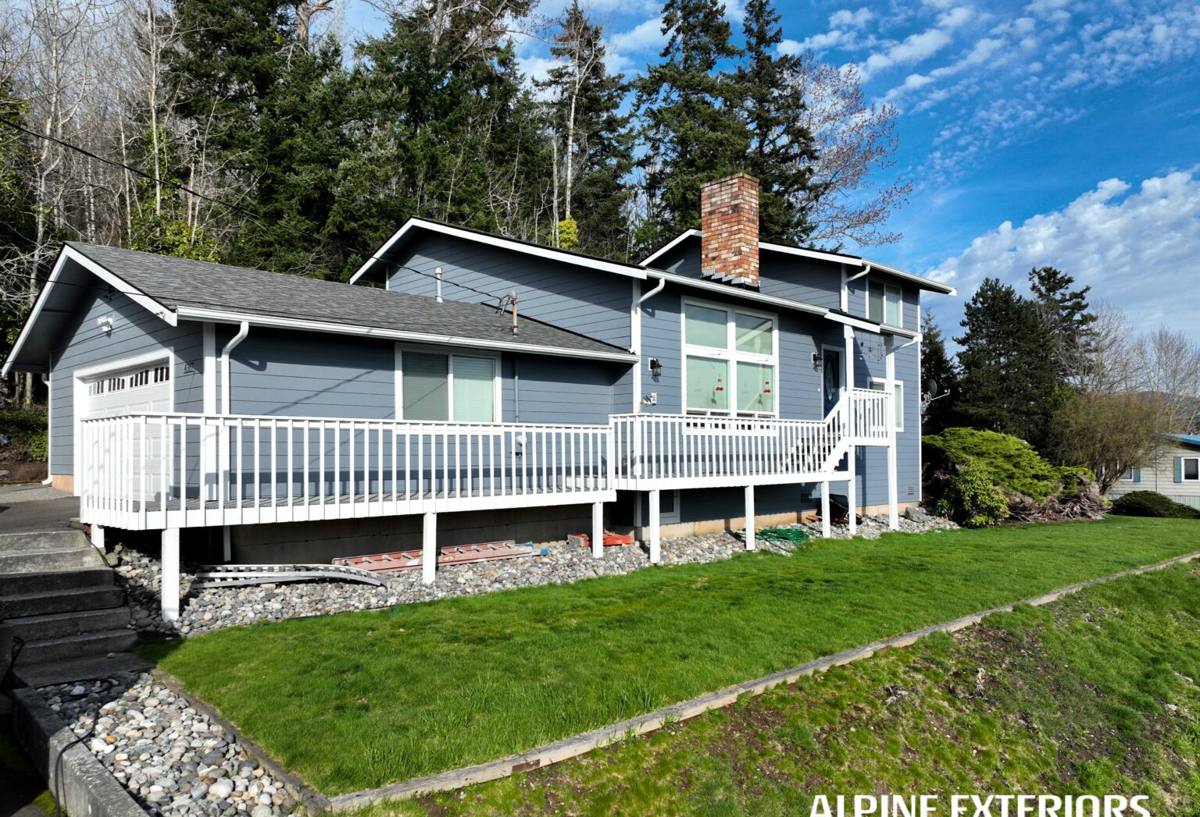
Repair or Replace? Reading the Real Signs
Not every roof in Sudden Valley needs full replacement, and we'll tell you plainly when a repair is the honest answer. But there are signals that point past patching and toward a new roof.
Age and Wear
Standard asphalt composition shingles in this climate typically perform well for 20-25 years, sometimes less on north-facing, shaded slopes where they never fully dry out between rains. If your roof is in that age range and you're already doing yearly repairs, replacement usually costs less over time than continuing to chase leaks.
Moss and Granule Loss
Thick moss growth isn't just an appearance issue. Moss holds water against the shingle mat, lifts tabs as it grows, and accelerates granule loss, which is what actually protects the shingle from UV and weather. If you're seeing bare, dark patches or finding granules in the gutters every season, the shingles are wearing faster than their age would suggest.
Storm and Wind Exposure
Winter windstorms are routine in this part of Whatcom County, and Sudden Valley's tree canopy means falling limbs and wind-driven debris are a real factor, not a hypothetical one. Cracked or missing shingles after a storm, especially in clusters, are often a sign the roofing is past the point where individual repairs hold up.
- Daylight visible through the attic roof deck
- Soft or spongy spots when walked (we check this, not something to test yourself)
- Recurring leaks in the same area despite prior repairs
- Shingles that are curling, cupping, or losing their granule coating in patches
- Heavy, sustained moss growth across north-facing or shaded slopes
- Rusting or failing flashing around chimneys, skylights, and roof-wall intersections
Choosing a Roofing System Built for This Climate
The right material for a Sudden Valley home isn't necessarily the cheapest or the most expensive option — it's the one that handles sustained shade, moisture, and moss pressure without turning into a maintenance chore. Here's how the common choices stack up for this specific environment.
| Material | Moss / Moisture Resistance | Typical Lifespan Here | Maintenance Needs |
|---|---|---|---|
| Standard 3-tab asphalt shingle | Fair — needs regular cleaning on shaded roofs | 15-20 years | Moderate to high in shaded areas |
| Architectural (laminate) asphalt shingle | Good — thicker mat sheds moisture better | 25-30 years | Moderate |
| Metal (standing seam or panel) | Very good — hard surface resists moss anchoring | 40-50+ years | Low |
| Synthetic/composite shake or slate | Good — engineered for wet-climate durability | 30-50 years | Low to moderate |
We install architectural asphalt on the large majority of Sudden Valley homes because it strikes the best balance of upfront cost, appearance, and real-world performance in a shaded, wet environment. Metal comes up more often on steeper pitches or homes near the lake where owners want the lowest long-term maintenance and are comfortable with the higher initial investment. We steer clients away from basic 3-tab shingles on heavily shaded lots specifically — not because the product is defective, but because its thinner profile and shorter warranty structure make it a poor match for a roof that will spend much of the year damp.
What a Correct Roof Replacement Actually Involves
A roof replacement is more than swapping old shingles for new ones. In a moisture-heavy environment like Sudden Valley, the layers underneath the shingles matter as much as the shingles themselves.
Tear-Off and Deck Inspection
We remove the existing roofing down to the deck rather than layering over it. That's the only way to actually see the plywood or plank sheathing underneath — which is where hidden rot, soft spots, and past leak damage show up. Any damaged decking gets replaced before anything new goes down; skipping this step is the single most common shortcut that causes early failures.
Ice and Water Protection
Along eaves, valleys, and around every roof penetration — chimneys, vents, skylights — we install self-adhering waterproof membrane, not just standard felt. These are the areas where wind-driven rain and ice damming (which does happen in Sudden Valley's colder winter stretches) push water backward under standard shingle coverage. This membrane is a physical barrier that standard underlayment alone doesn't provide.
Underlayment
Over the rest of the deck, synthetic underlayment provides a second water-resistant layer beneath the shingles. It's more tear-resistant and consistent in wet weather than old-style felt paper, which matters on a job site where conditions can change mid-install.
Flashing and Ventilation
New flashing at every wall intersection, chimney, and valley — not reused old flashing — along with balanced intake and exhaust ventilation at the eaves and ridge. Correct ventilation is often the difference between a roof that dries out between rains and one that stays damp long enough for moss and rot to take hold.
Ventilation and Moisture Control Under Tree Cover
This deserves its own section because it's the part most easily overlooked, and it's especially relevant to shaded, tree-surrounded homes like many in Sudden Valley. A roof deck that can't breathe traps humid attic air against its underside. Over a few seasons that trapped moisture leads to sheathing degradation from the inside, out of sight, even while the shingles up top look fine.
Balanced ventilation pulls cooler outside air in low, through soffit or eave vents, and lets warm, moist air escape high, through ridge or roof vents. On homes with heavy tree canopy, we also pay close attention to whether nearby limbs or foliage are blocking soffit vents outright — a common, easily fixed issue that quietly starves a roof's airflow.
Our Replacement Process
- On-site inspection and estimate. We walk the roof (not just look from the ground), check the attic where accessible, and give you a written, itemized estimate — no pressure, no expiring "today only" pricing.
- Material selection. We walk through the options in the table above based on your roof's pitch, sun exposure, and budget, and explain the real trade-offs rather than steering you toward the highest-margin product.
- Scheduling around weather. Whatcom County's wet season narrows the practical installation window, so we plan around forecasts to avoid tearing off more roof than we can dry-in and protect the same day.
- Tear-off, deck repair, and installation. Full removal, deck inspection and repair, waterproof membrane, underlayment, new flashing, ventilation, and the new roofing system, installed to manufacturer specification so warranties stay intact.
- Cleanup and magnetic sweep. Full site cleanup, including a nail sweep of the yard and driveway, before we consider the job done.
- Final walkthrough. We review the completed roof with you directly and go over warranty paperwork before we leave.
What Affects the Cost of a Sudden Valley Roof Replacement
We won't quote a number without seeing the roof, but the honest factors that move price up or down are consistent from job to job:
- Roof size and number of facets, valleys, and penetrations (chimneys, skylights, vents)
- Pitch and accessibility — steep roofs and hillside lots with limited staging area take longer
- Extent of deck damage found once old roofing is removed
- Material chosen — architectural asphalt, metal, and synthetic products carry different price points
- Amount of tree trimming or debris clearance needed before work can safely start
- Ventilation or flashing upgrades needed to correct existing problems, not just replace what's there
We'd rather flag a deck repair or ventilation fix as a possible added cost upfront than surprise you with it mid-project. If we find something once tear-off starts, we show you before doing the work, not after.
Why Local Experience in Sudden Valley Specifically Matters
Roofing crews that mainly work flat, open-lot neighborhoods run into things in Sudden Valley they don't plan for: narrow or shared driveways that limit where a dumpster or material delivery can sit, steep and wooded lots that change how staging and fall protection get set up, and tree cover that affects both the moss situation and how a job gets scheduled around drying time. Crews who already work this area know to check for these constraints during the estimate, not on installation day.
There's also the Whatcom County permitting side. Roof replacement generally requires a permit, and having done that process repeatedly in this specific area means fewer surprises and delays for you.
Protecting Your New Roof Going Forward
A correctly installed roof in this climate still benefits from basic upkeep, especially under tree cover. Keep gutters and valleys clear of needles and leaves so water has somewhere to go. Have overhanging limbs trimmed back where they shade the roof heavily or drop debris directly onto it. A periodic gentle moss treatment — not aggressive pressure washing, which can strip granules and shorten shingle life — keeps growth from re-establishing on shaded slopes. And a quick visual check after major windstorms catches small issues, like a lifted shingle tab or dented vent cap, before they become active leaks.
If your Sudden Valley roof is showing its age, or you just want an honest read on where it stands, we're happy to take a look. The estimate is free, there's no pressure to commit on the spot, and you'll get a straight answer whether that means a repair, a partial fix, or a full replacement — use the form below to get started.