 Bellingham Exterior
 New-Construction Windows in Cordata: Getting It Right the First Time
Cordata has seen steady new-home and infill construction over the past decade, and window installation on a new build is a different job than swapping out an old window in a finished wall. There's no existing frame to work around, no old caulk to scrape off, but there's also no room for a shortcut — because whatever gets built into the wall assembly at this stage is what you're stuck with for the next 30-plus years. Get the flashing sequence wrong on a new build and you won't see the problem for a year or two, until water starts finding its way behind the siding.
Bellingham's climate makes this especially unforgiving. Whatcom County sees a long wet season, wind-driven rain off the Salish Sea, salt air that speeds up corrosion on fasteners and hardware, and a moss season that keeps north-facing walls damp for months at a stretch. New-construction windows in Cordata need to be installed with all of that in mind from day one, not treated as an afterthought once the framing crew moves on.
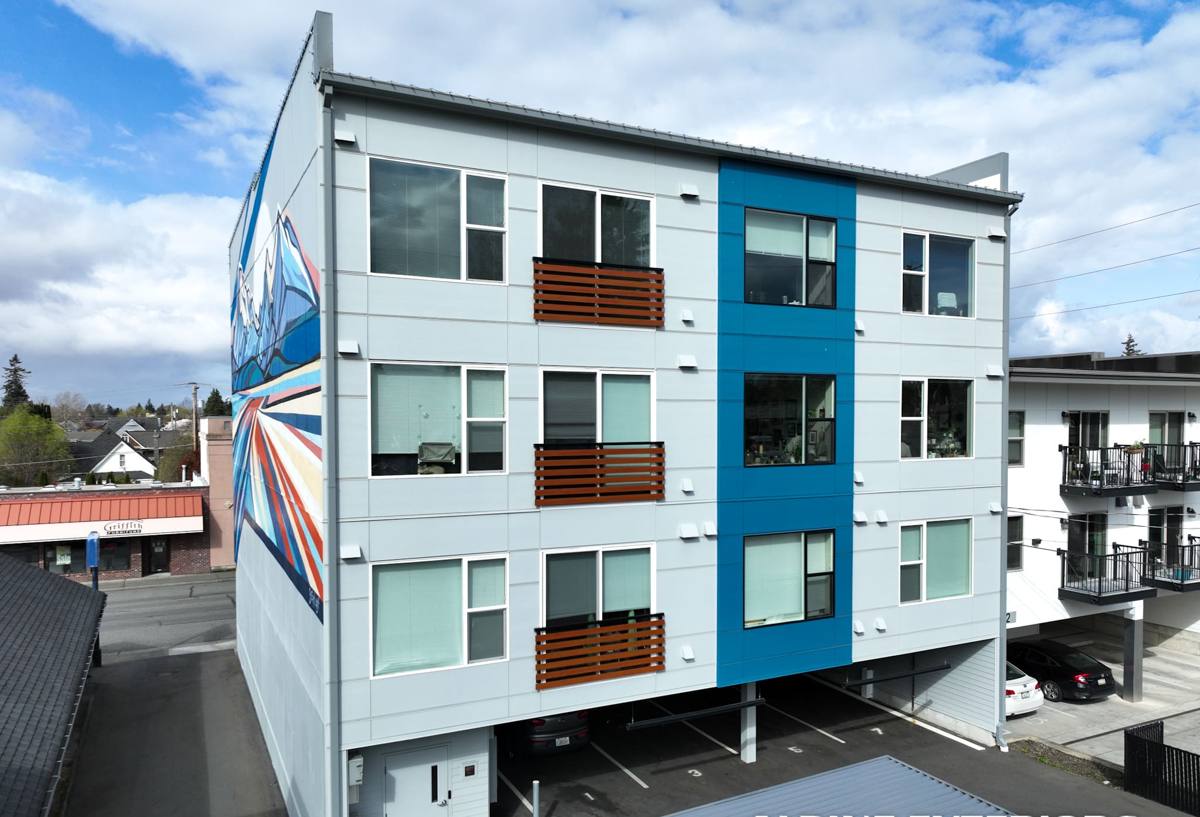
Why New Construction Is a Different Job Than Replacement
On a replacement job, we're working with an existing rough opening and an existing weather barrier that's already tied into the siding. On new construction, we're installing into a bare rough opening, which means we control — and are responsible for — every layer of the water management system: the weather-resistive barrier (WRB), the flashing tape, the window's nailing flange, the sill pan, and the sealant joints. There's more work, but there's also more opportunity to build it correctly instead of patching around what's already there.
What "Correct" Actually Means
A correctly installed new-construction window follows a shingle-lap sequence, meaning every layer overlaps the one below it so water is always directed outward and downward, never trapped behind the cladding. That includes:
- A sloped or pre-formed sill pan at the bottom of the rough opening, so any water that does get past the window has somewhere to drain instead of pooling on wood sheathing
- Self-adhered flashing tape at the jambs and head, lapped in the correct order over the WRB
- Proper fastening of the nailing flange — right fastener type, right spacing, right pattern, seated but not overdriven
- A backer rod and sealant joint at the interior and exterior trim lines, sized correctly for the gap
- Shimming that supports the frame without racking it, so the window operates smoothly for its full service life
Skip any one of these steps and the window can look fine for years while quietly letting moisture into the wall cavity.
What Whatcom County's Climate Demands from a New Build
Cordata sits inland from Bellingham Bay but still gets plenty of the same weather that defines the region: sustained wet stretches from fall through spring, periods of wind-driven rain that push water sideways against a wall rather than straight down, and enough humidity and shade on north- and west-facing elevations to grow moss and algae on siding and trim. None of this is unusual for Whatcom County, but it does mean the margin for error on flashing and drainage is smaller here than it would be in a dry climate.
Salt Air and Hardware
Proximity to Puget Sound means salt-laden air reaches inland neighborhoods like Cordata more than people expect. Salt air accelerates corrosion on unprotected fasteners, hinges, and cranks. We spec corrosion-resistant fastener and hardware options for new-construction installs in this area rather than defaulting to whatever's cheapest, because a corroded hinge or a rusted-out flange fastener a few years in is a callback we'd rather avoid.
Driving Rain and Orientation
Walls that face the prevailing weather take a harder hit from wind-driven rain than sheltered elevations. On new builds we pay closer attention to flashing detail and sealant joint quality on exposed elevations — south- and west-facing walls in particular — since that's where a marginal install is most likely to show a leak first.
Moss Season
Extended damp periods keep shaded surfaces wet longer, which is what drives moss and algae growth on siding, trim, and window sills. Correct sill pan drainage and a slight outward slope at the sill keep water moving off the window instead of sitting against wood trim, which matters more here than in drier parts of the state.
Our Process on a New-Construction Job
Whether we're working directly for a homeowner building in Cordata or coordinating with a general contractor, the sequence stays the same:
- Rough opening check. We verify the opening is square, plumb, and sized correctly to the window's specified rough opening dimensions before anything gets installed.
- Sill pan and flashing. Sill pan goes in first, sloped to drain outward, followed by jamb and head flashing in the correct shingle-lap order over the WRB.
- Window set and shim. The window gets set into the opening, shimmed level and plumb, and fastened per the manufacturer's schedule — not just "however many nails fit."
- Flange and cladding integration. Flashing tape goes over the nailing flange, tying the window into the WRB so the whole assembly sheds water as one system, not a patchwork of separate layers.
- Interior and exterior sealant. Backer rod and sealant at the trim lines, sized and tooled correctly — not just a bead of caulk smeared over a gap.
- Final operational check. Every window gets opened, closed, and locked to confirm smooth operation before we call the install done.
We document flashing details as we go, which matters if a building inspector wants to see the work before siding goes on, and gives the homeowner a record of what's actually behind their walls.
Choosing Windows for a Cordata New Build
New construction gives you more product flexibility than a replacement job, since you're not constrained by an existing frame. That's worth using well. Key decisions for this climate:
| Factor | Why It Matters in Whatcom County |
|---|---|
| Frame material | Vinyl, fiberglass, and clad-wood all perform differently in sustained damp conditions; fiberglass and quality vinyl resist moisture-related warping better than uncoated wood exposed to the elements |
| Glass package | Double-pane with low-E coating and argon fill is a practical baseline here; it helps with both heat retention through wet winters and condensation control |
| Hardware finish | Corrosion-resistant hardware matters more near salt air than it would inland; cheap plated hardware shows pitting and staining faster in this climate |
| Sill design | A sloped sill with a functional weep path sheds water better than a flat sill, which matters on any elevation that takes direct rain |
| Warranty structure | Look at what's covered — glass seal failure, frame defects, and finish are often on separate warranty terms, and installation-related failures are typically excluded unless installed by a certified installer |
We don't push a single brand as the only option, because the right product depends on the home's design, budget, and the builder's specifications. What we do insist on is installing whatever product is chosen correctly, since even a premium window performs poorly if the flashing behind it was done wrong.
Working With Your Builder or General Contractor
On new construction, window installation touches several other trades — framing, WRB/house wrap, siding, and sometimes interior trim. Sequencing matters. We coordinate directly with the general contractor or framing crew so the rough openings are ready and correctly sized before we show up, and so the WRB is installed in a way that lets our flashing tie in cleanly rather than fighting against how house wrap was hung. If you're an owner-builder managing your own subcontractors in Cordata, we're glad to walk the site with you before framing is finalized to flag anything that would make the window install harder or weaker than it needs to be.
Why Local Experience on New Builds Matters
Building code minimums and manufacturer install instructions are a starting point, not the whole picture. A crew that's installed windows on new construction across Bellingham and Whatcom County knows which elevations in a given neighborhood tend to take the worst weather, how local WRB and siding choices typically get sequenced, and where inspectors tend to focus their attention. That local pattern recognition is the difference between an install that meets code and one that's actually built for the way weather behaves here.
A Practical Pre-Drywall Checklist
- Rough openings squared, plumb, and correctly sized before window delivery
- Sill pans installed and sloped to drain, not flat or reverse-sloped
- Flashing tape lapped in the correct shingle order over the WRB
- Fastener type, spacing, and torque matched to the window manufacturer's schedule
- Every window operates smoothly — opens, closes, and locks without binding
- Photos or notes documenting flashing details before siding covers them up
If your builder or window installer can't walk you through each of these points, it's worth asking more questions before siding goes on and that work disappears behind the wall.
Get a Free Estimate for Your Cordata New Build
If you're building new in Cordata and want a crew that treats window flashing as a system rather than an afterthought, we're happy to take a look at your plans or your framed site and walk you through exactly how we'd handle the install. Reach out for a free, no-pressure estimate — we'll give you a straight answer on scope, product options, and timeline before any work begins.