 Bellingham Exterior
 Board & Batten Siding for Blaine's Coastal Climate
Blaine sits at the northern edge of Whatcom County, right where the Salish Sea meets the Canadian border, and that location shapes everything about how siding performs there. Homes in Blaine take on salt-laden air off the water, long stretches of driving rain pushed in by marine storms, and a moss season that can run most of the year in shaded, north-facing areas. Board and batten siding is a strong fit for this environment when it's built from the right material and installed the right way — but the same style done with the wrong product or a shortcut installation will show problems within a few winters.
This page covers what board and batten siding needs to hold up in Blaine specifically, what a correct installation actually involves, and why we install it exclusively in James Hardie fiber cement rather than wood, vinyl, or engineered wood alternatives.
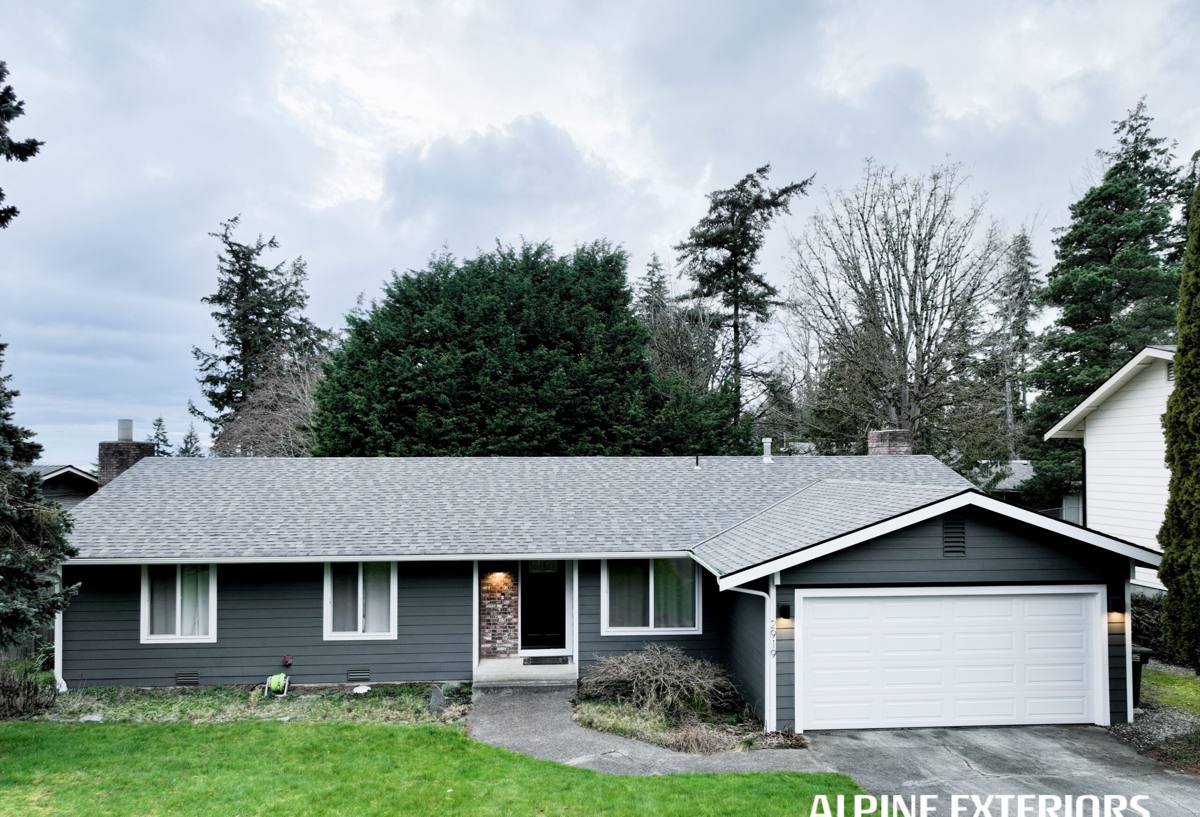
Why Board and Batten Works Well in Blaine
Board and batten is a vertical siding pattern — wide panels or boards with narrow battens covering the seams — that reads as clean, modern, or classic farmhouse depending on color and trim choices. It's popular on Blaine homes for a few practical reasons beyond looks:
- The vertical lines shed water faster than some horizontal profiles, which matters when rain is coming in sideways off the water.
- It pairs well with the mix of architectural styles in the area, from newer builds near the water to older homes further inland.
- Fewer horizontal ledges means fewer places for wind-driven rain and debris to collect and hold moisture against the wall.
That said, board and batten has more seams and more fastener penetrations per square foot than a standard lap siding job, which means the installation details matter even more in a wet, salty climate like Blaine's.
What Salt Air, Driving Rain, and Moss Actually Do to Siding
Salt Air
Airborne salt accelerates corrosion on fasteners, flashing, and any exposed metal trim. Over years, corroding fasteners can loosen, stain the siding face, and eventually fail structurally. It also breaks down cheaper paint finishes and coatings faster than an inland climate would, leading to chalking and fading well ahead of schedule.
Driving Rain
Blaine's storms don't just fall — they blow. Wind-driven rain gets forced sideways into seams, laps, and any gap around windows, corners, or penetrations. Siding that isn't properly flashed and back-vented will trap that moisture behind the cladding, where it can sit against sheathing and framing for weeks at a time in the wetter months.
Moss and Persistent Moisture
North-facing walls, shaded elevations, and anywhere tree cover blocks sun and airflow are prone to moss and algae growth for much of the year. Beyond the cosmetic staining, moss holds moisture directly against the siding surface, which is a problem for any material that isn't dimensionally stable or that swells and softens when wet.
What a Correct Board & Batten Installation Involves
A good-looking board and batten job and a durable one are not always the same thing. The parts that actually determine how the siding performs over 20-plus years happen before the first board goes up and behind the finished surface where nobody sees them:
Drainage Plane and Rainscreen
A weather-resistive barrier goes over the sheathing first, and in a climate like Blaine's, a vertical furring strip or rainscreen gap behind the siding is worth the extra step — it lets any moisture that does get past the cladding drain and dry instead of sitting against the wall assembly.
Flashing at Every Penetration
Windows, doors, hose bibs, light fixtures, and vents all need proper head flashing and kick-out flashing where rooflines meet walls. This is where most water intrusion actually starts, and it's the detail that separates a crew that's done hundreds of Whatcom County homes from one that hasn't.
Fastener Choice and Placement
Corrosion-resistant, manufacturer-approved fasteners driven at the correct spacing and depth are non-negotiable this close to salt water. Overdriven or underdriven fasteners are one of the most common causes of premature siding failure, regardless of material.
Batten Spacing and Board Movement
Battens need consistent spacing and correct nailing into the field boards below to allow for normal expansion and contraction without cracking the finish or pulling fasteners loose over time.
Why We Only Install James Hardie for This
Board and batten's vertical seams and higher fastener count make material choice matter more than it does with some other profiles. We standardized on James Hardie fiber cement for board and batten applications in Blaine for specific reasons:
- Non-combustible — fiber cement doesn't feed a fire the way wood-based products can.
- Dimensionally stable when wet — it doesn't swell, cup, or soften the way engineered wood or untreated cedar can after repeated soaking in a wet marine climate.
- ColorPlus factory finish — a baked-on finish that holds color and resists the chalking and fading that salt air and UV speed up on field-applied paint.
- HZ5/HZ10 engineering — Hardie's climate-specific formulations are built for exactly this kind of moisture exposure, rather than a one-size-fits-all product.
- Strong transferable warranty — backed by a manufacturer with decades of performance data in wet coastal climates like this one.
We install James Hardie's vertical panel and board-and-batten systems, including their Artisan and HardiePanel lines, in a range of factory finish colors suited to both modern and traditional Blaine homes.
Comparing Board & Batten Material Options
| Material | Moisture Behavior in Blaine's Climate | Maintenance Burden | Typical Lifespan |
|---|---|---|---|
| James Hardie fiber cement | Dimensionally stable, engineered for wet marine exposure | Low — factory finish, occasional wash | Decades with proper install |
| Cedar or primed spruce | Absorbs moisture, prone to cupping and rot without diligent upkeep | High — repainting/staining, caulk checks, moss treatment | Shorter without consistent maintenance |
| Vinyl | Doesn't rot but can warp, and seams allow water behind panels | Low, but limited repair options if damaged | Variable, brittle over time in UV and cold |
| Engineered wood (e.g. LP-type products) | Vulnerable at cut edges and seams if moisture gets in | Moderate — edge sealing and inspection matter | Depends heavily on installation quality |
This is a general comparison of how each material category tends to behave, not a claim about any specific manufacturer's product failing. Every one of these materials can perform reasonably well when installed correctly — but fiber cement gives Blaine homeowners the widest margin for error against salt air, driving rain, and constant dampness.
Our Process for Blaine Board & Batten Projects
1. On-Site Assessment
We walk the exterior, note which elevations take the most weather, check existing moisture damage or trapped water at windows and corners, and talk through style and color options that fit the home and the neighborhood.
2. Tear-Off and Sheathing Check
Old siding comes off and we inspect the sheathing underneath for rot or soft spots before anything new goes up — covering up existing damage is how small problems become expensive ones.
3. Weather Barrier and Rainscreen
We install the drainage plane, flashing at every penetration, and furring for airflow behind the siding before a single board is hung.
4. Hardie Installation
Boards and battens go up to manufacturer spec — correct fastener type, spacing, and clearances at grade, roofline, and trim.
5. Final Walkthrough
We inspect every elevation with you before calling the job done, including flashing details and finish quality up close.
Why a Crew That Already Works Blaine Matters
Blaine's exposure isn't uniform — a home a few blocks from the water takes a different beating than one further inland, and shaded, tree-covered lots deal with moss and slow-drying walls that sunnier lots don't. A crew that regularly works this part of Whatcom County knows which elevations need extra flashing attention, where moss pressure tends to be worst, and how the local building department handles siding and moisture-barrier inspections. That local pattern recognition is hard to replicate on a first job in an unfamiliar area, and it's the difference between a crew guessing at Blaine's climate and one that's already accounted for it.
Maintenance Checklist for Blaine Homeowners
- Rinse siding annually to remove salt residue, especially on elevations facing the water.
- Check north-facing and shaded walls for early moss or algae growth and treat it before it spreads.
- Inspect caulking at trim, corners, and penetrations yearly and reseal if it's cracked or pulling away.
- Keep gutters clear so overflow isn't running down the siding face during heavy storms.
- Trim back vegetation and tree cover that's keeping any wall section shaded and damp longer than the rest of the house.
- Watch for any soft spots, staining, or bubbling near the base of the wall, which can signal trapped moisture behind the cladding.
If you're weighing board and batten siding for a Blaine home, we're happy to take a look, walk the exterior with you, and put together a straightforward, no-pressure estimate — just fill out the form below.