 Bellingham Exterior
 Deck Repair Built for Blaine's Coastal Conditions
Blaine sits right at the edge of Semiahmoo Bay, and that location shapes everything about how a deck ages here. Salt-laden air off the water, driving rain that comes in sideways during winter storms, and a moss season that can stretch from October through April all work against wood, fasteners, and finishes in ways that inland decks simply don't experience. A deck in a sheltered Bellingham neighborhood might go five or six years before needing real attention. A deck in Blaine, especially one with any water exposure or a north-facing shade line, often needs a closer look every year or two.
We work on decks throughout Whatcom County, but Blaine jobs get treated differently from the start. We know which framing details tend to fail first in salt-air exposure, which fastener types have already let owners down, and where moss and standing water like to collect on local deck layouts. That local knowledge changes how we inspect, what we recommend, and how we price the work.
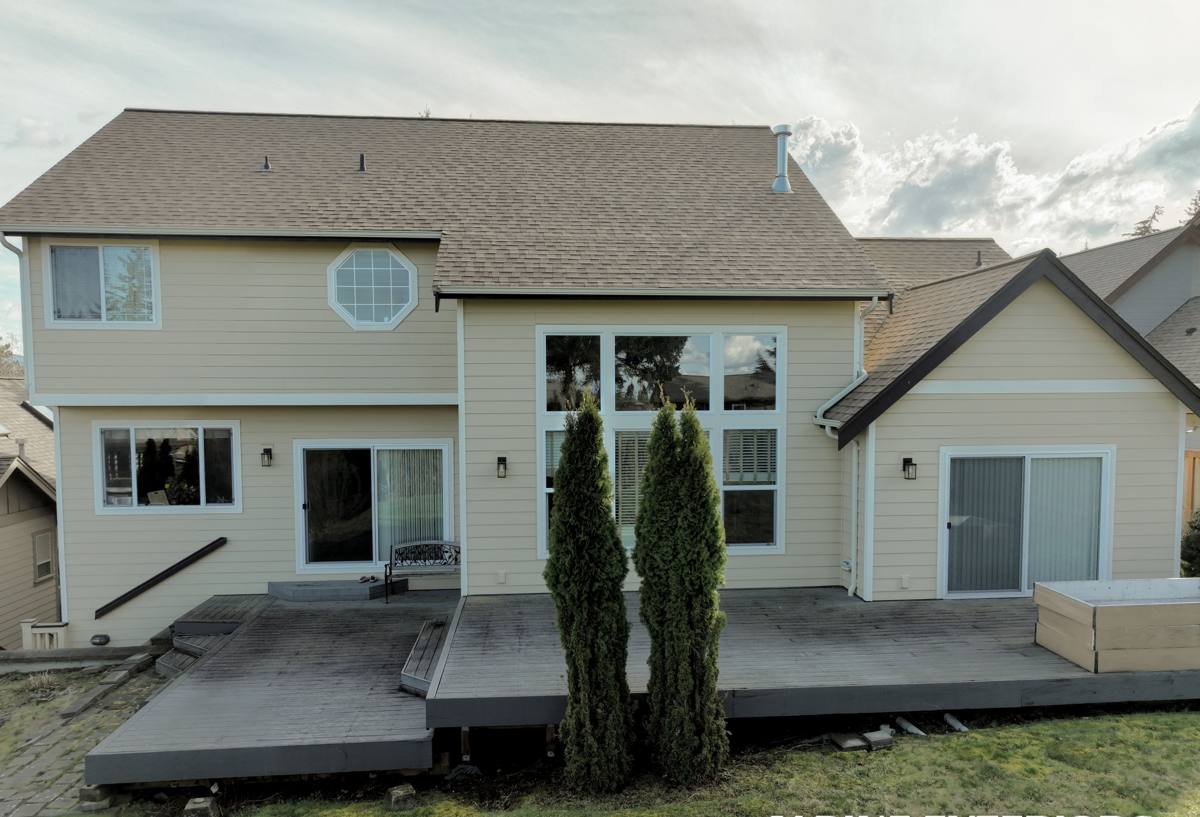
What Blaine's Climate Actually Does to a Deck
Salt Air and Metal Fasteners
Airborne salt accelerates corrosion on anything metal — nails, screws, joist hangers, bolts, and railing hardware. Once corrosion starts, it doesn't stay cosmetic for long. A rusted joist hanger loses holding strength gradually and silently, which is why hardware problems are often the most serious issue we find on a repair call, even when the surface boards still look fine.
Driving Rain and Water Intrusion
Storms coming off the water tend to drive rain at an angle rather than straight down, which pushes moisture into places a typical deck design assumes will stay dry — under railing posts, behind ledger boards, and into end-grain cuts on stair stringers. Once water gets past the surface finish and into raw wood, rot can develop from the inside out, so a board can look sound on top while the structure underneath is compromised.
Moss and Surface Decay
A long moss season means more months where a deck surface stays damp instead of drying out between rains. Moss holds moisture against the wood, blocks sunlight and airflow, and makes boards slicker and more slippery underfoot. Left alone, it also breaks down finishes faster and traps organic debris in the gaps between boards, which speeds up rot in exactly the spots that are hardest to inspect.
Signs a Blaine Deck Needs Repair, Not Just Cleaning
Some problems can be solved with a good cleaning and re-coating. Others are structural and need to be caught early. Knowing the difference matters, because covering up a structural issue with a fresh coat of stain doesn't fix it — it just hides it until it gets worse.
- Boards that feel spongy, springy, or noticeably softer than the boards around them
- Visible gaps opening up around fasteners, or screw heads that have worked loose
- Rust staining bleeding out from nail or screw heads onto the surface
- Railings or posts that wobble or flex more than they used to
- Persistent green or black staining that comes back quickly after cleaning
- Stair stringers or ledger connections that show cracking, splitting, or gaps
- A change in the deck's sound underfoot — hollow spots, creaking, or give
- Standing water that doesn't drain within a few hours after rain stops
Any one of these on its own might be minor. Several together, especially near railings, stairs, or the ledger where the deck attaches to the house, usually mean it's time for an actual inspection rather than another season of waiting.
What a Correct Deck Repair Actually Involves
A repair that just replaces the boards you can see, without checking what's underneath, tends to fail again within a couple of seasons in a climate like Blaine's. We approach repair work in a specific order so nothing gets covered up before it's checked.
1. Structural Inspection First
Before any board comes off, we check the framing — joists, beams, posts, and the ledger connection to the house — for rot, corrosion, and movement. This is where the real condition of the deck shows up, and it's the step that gets skipped when a repair is done too fast.
2. Isolate the Actual Damage
We identify exactly which boards, connections, or framing members are compromised versus which ones are still sound. This keeps the repair focused and honest — we're not looking to replace more than the deck actually needs, but we're also not going to leave a rotted joist under a new board just because the board itself looks fine.
3. Replace Fasteners in Kind
Where corrosion is part of the problem, we don't just swap a bad screw for the same type of screw. Hardware gets matched to the exposure — coastal conditions call for fasteners and connectors rated for that environment, not standard interior-grade hardware.
4. Rebuild Drainage and Airflow
A lot of repeat deck problems come from water that has nowhere to go. Where we can improve drainage, gapping, or airflow underneath the deck as part of the repair, we do — it's often the difference between a repair that lasts and one that needs redoing in a few years.
5. Finish for the Environment
The sealant or finish applied at the end matters as much as the repair itself. In a high-moisture, salt-air area, the wrong product — or the right product applied at the wrong time of year — can fail early. We match the finish to the deck's actual exposure rather than defaulting to whatever's easiest to apply.
Repair vs. Replacement: How We Make the Call
Not every deck problem needs a full rebuild, and not every deck is worth patching. The table below outlines the general factors that push a decision one way or the other — every deck is different, and a proper answer requires an on-site look.
| Factor | Leans Toward Repair | Leans Toward Replacement |
|---|---|---|
| Framing condition | Solid, no rot or corrosion in joists/beams | Rot or corrosion found in multiple framing members |
| Age of the deck | Under 10-12 years, built to current standards | Older deck, outdated fastening or framing methods |
| Extent of damage | Isolated to a few boards or one area | Damage spread across the surface or structure |
| Ledger connection | Sound, properly flashed | Compromised, improperly flashed, or water-damaged |
| Code compliance | Railings, spacing, and connections meet current code | Older railing height, spacing, or attachment doesn't meet code |
| Cost over time | Repair cost is a fraction of replacement | Repairs are becoming frequent or covering the same areas repeatedly |
When a deck is structurally sound and the damage is localized, repair is usually the right call, and it's the more cost-effective one. When we're finding compromised framing in more than one spot, or the deck has already been patched a few times in the same areas, replacement often ends up costing less over the long run than another round of repairs.
Why a Bellingham Crew That Knows Blaine Matters
Deck repair advice that works for a dry inland climate doesn't automatically transfer to a coastal Whatcom County property. A crew unfamiliar with Blaine's conditions might spec standard hardware, standard drainage details, or a standard finish schedule — all reasonable choices in a different climate, and all likely to underperform here. Working regularly in Blaine and the surrounding coastal areas means we've already seen which shortcuts don't hold up against salt air and driving rain, and we build that into the repair from the start rather than learning it the hard way on a callback.
Being based in Bellingham also means we're not driving in from out of the area for a quick patch job. We can get out for an inspection promptly, and if a repair needs a follow-up visit or a seasonal check before the next round of storms, that's a short trip, not a special arrangement.
Maintenance That Extends the Life of a Repair
A good repair buys time, but a bit of regular upkeep buys a lot more of it in this climate. None of this requires special skills or heavy equipment — it's mostly about staying ahead of moisture and moss before they get a foothold.
- Clear debris out of gaps between boards a few times a year, especially heading into fall
- Treat moss and algae growth early rather than waiting for it to spread
- Check fastener heads periodically for rust bleed or loosening
- Keep gutters and downspouts near the deck clear so runoff isn't dumping onto it
- Reapply sealant or finish on the schedule it's rated for, not just when it visibly looks worn
- Watch railings and stair connections for any new movement after major storms
What to Expect From Our Process
We keep the repair process straightforward: an on-site inspection to assess the deck's actual condition, a clear explanation of what we find and why it matters, and a written estimate that separates what needs to happen now from what can reasonably wait. We'll tell you honestly if a repair is the right call or if the deck has reached the point where replacement makes more financial sense — our goal is a deck that holds up to Blaine's weather, not the largest possible invoice.
If you're noticing soft spots, loose railings, rust stains, or moss that won't quit on a deck in Blaine or anywhere else in the Bellingham area, we're glad to take a look. Reach out for a free, no-pressure estimate using the form below.