 Bellingham Exterior
 Why Blaine's Coastal Climate Is Hard on Siding
Blaine sits about as close to saltwater and the Canadian border as a Whatcom County home can get, and that location comes with a specific set of siding problems. Salt-laden air off the Strait of Georgia and Semiahmoo Bay accelerates corrosion on fasteners, trim, and any siding material that isn't built to resist it. Add the driving, wind-pushed rain that comes through this corner of the county in fall and winter, and you've got moisture finding every gap, seam, and nail hole a siding job left behind. Then there's the long moss season — cool, damp, and shaded conditions that let algae and moss colonies take hold on north-facing walls and anywhere siding stays wet longer than it should.
None of this is unique to one house on one street. It's the baseline condition every exterior wall in Blaine deals with for most of the year. Siding that isn't matched to that reality — or that was installed with shortcuts on flashing and moisture management — tends to fail early, and it usually fails from the inside out, which means the damage is often worse than what you can see from the yard.
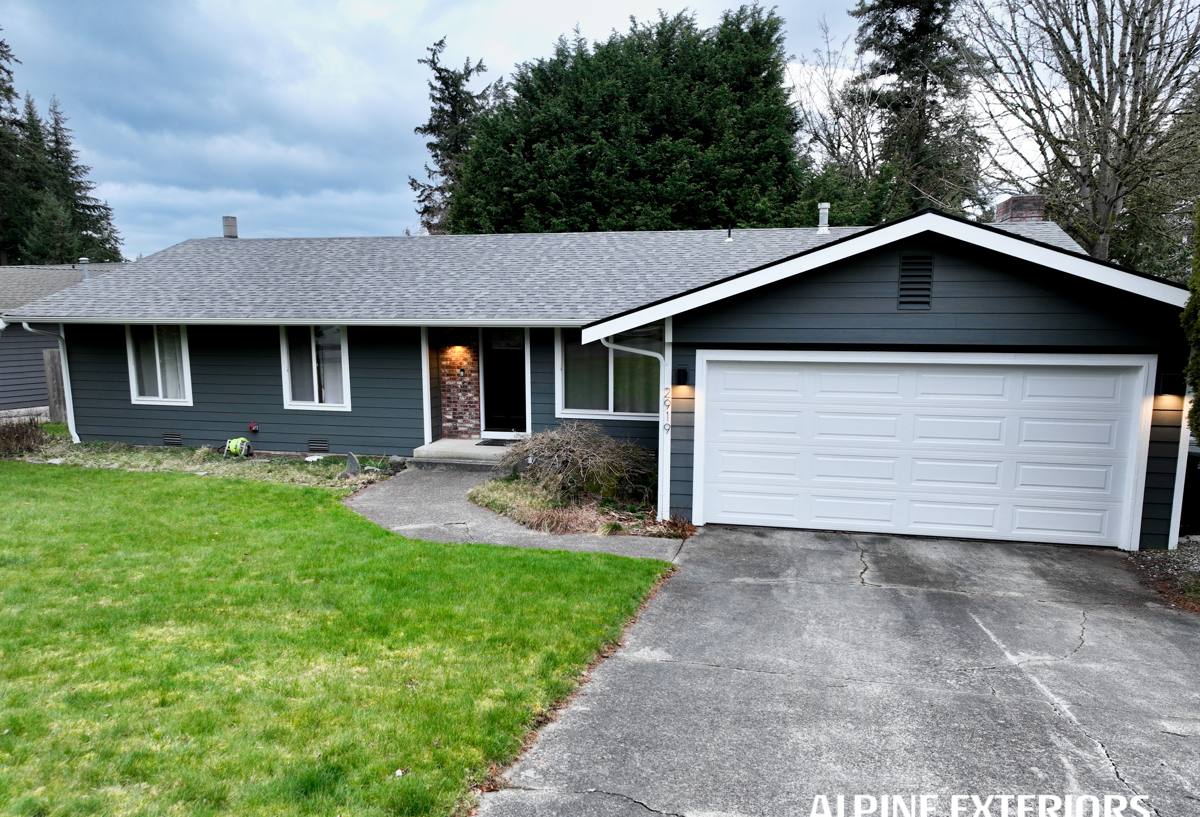
Signs a Blaine Home Needs Siding Replacement
Repainting or patching can buy time on minor cosmetic issues, but certain signs mean the siding itself — or what's behind it — has reached the point where replacement is the honest recommendation.
- Soft or spongy spots when you press on the siding, especially near the bottom of walls or below windows
- Visible warping, buckling, or panels that have pulled away from the wall
- Persistent moss or algae growth that returns within weeks of cleaning, particularly on shaded or north-facing elevations
- Paint that's peeling, bubbling, or failing faster than a normal repaint cycle would suggest
- Cracked or crumbling siding, especially on older wood or hardboard products nearing end of life
- Rust streaking from fasteners or trim, a common sign of salt-air corrosion on the wrong metal or coating
- Rising energy bills that suggest the wall assembly behind the siding has lost its ability to keep moisture and air where it belongs
If you're seeing more than one of these, it's worth having someone open up a section and look at the sheathing underneath before deciding how far the problem actually goes.
Why We Install Only James Hardie Fiber Cement Siding
We made a decision as a company to install James Hardie fiber cement siding exclusively — not vinyl, not LP SmartSide, not primed spruce or cedar, and not other fiber cement brands. That's not a marketing position, it's a standard we hold because of what we've seen hold up in this climate and what hasn't. Fiber cement doesn't rot, it's non-combustible, and it doesn't expand and contract the way vinyl and wood-based products do when they cycle through wet, cold, and salt exposure repeatedly. James Hardie backs its product with a factory-applied ColorPlus finish and a long, transferable warranty, and its HZ product lines are engineered specifically for climate zones like ours rather than a one-size-fits-all product.
We're not going to tell a homeowner that every other siding product is worthless — plenty of them have real strengths. But when we're the ones putting our name on the installation, we want a material that we know performs under the conditions Blaine actually throws at it, year after year, without the maintenance headaches that shorten a homeowner's list of things to worry about.
What This Means in Practice
When you get an estimate from us, you're getting a James Hardie proposal — not a menu of competing materials. We'll walk you through which Hardie product and color fit your home, but we won't be pitching vinyl as a "budget option," because we don't install it and we can speak honestly about why.
What a Correct Siding Replacement Job Involves
Replacing siding is not just swapping old panels for new ones. Done right, it's a full rebuild of the wall's moisture management system, and skipping steps here is exactly how a new siding job ends up with the same rot problem in eight years.
| Step | Why It Matters in Blaine |
|---|---|
| Full tear-off and sheathing inspection | Reveals hidden rot or moisture damage from years of driving rain before it's covered up again |
| Repair or replace damaged sheathing/framing | New siding over compromised sheathing just hides a structural problem |
| Install a weather-resistant barrier (housewrap) | Provides a drainage plane behind the siding so wind-driven rain has somewhere to go |
| Correct flashing at windows, doors, and penetrations | The single most common failure point on coastal homes — water finds unflashed gaps |
| Proper fastener selection and placement | Corrosion-resistant fasteners, set to Hardie spec, resist salt-air degradation |
| Correct gapping, caulking, and clearance from grade | Allows the siding to shed water and dry properly instead of trapping moisture |
| Factory-finished ColorPlus panels | Consistent, baked-on finish that resists the fading and peeling that field-applied paint struggles with here |
Every one of those steps is a place where a rushed crew can cut corners without it being obvious at final walkthrough. The problems show up later, usually during the next big storm season.
Choosing the Right Hardie Product for a Blaine Home
James Hardie makes several product lines, and picking the right one depends on your home's exposure, style, and how much of the coastal weather a given wall actually takes on directly.
| Product | Best Fit |
|---|---|
| HardiePlank lap siding | Most common choice for traditional home styles; wide color and texture range |
| HardiePanel vertical siding | Board-and-batten look, often used as an accent or for a more modern exterior |
| HardieShingle siding | Shingle-style appearance without the maintenance burden of real wood shingles |
| HardieTrim boards | Corners, fascia, and window trim finished to match, resisting the same rot and pest issues as old wood trim |
Homes in Whatcom County's coastal zones generally call for Hardie's HZ5 engineered product, formulated for wetter, more variable climates rather than the HZ10 line built for hot, dry regions. We'll confirm the right specification for your home's exposure during the estimate rather than assuming a default.
Our Process From Estimate to Finished Job
We keep the process straightforward and walk you through it before any work starts:
- On-site evaluation of your current siding, trim, and any visible moisture damage
- Honest assessment of whether full replacement or targeted repair actually makes sense
- A written estimate specifying the Hardie product, color, and trim package
- Tear-off, sheathing repair as needed, and correct weather-barrier and flashing installation
- Hardie panel installation to manufacturer spec, including fastening and clearances
- Final walkthrough so you know exactly what was done and what the warranty covers
Cost Factors for Siding Replacement in Blaine
Every home is different, but the same handful of variables tend to drive the price of a project up or down. We'll give you specifics for your home, but here's what generally moves the number.
| Factor | Effect on Cost |
|---|---|
| Extent of sheathing/framing repair needed | Hidden rot from long-term moisture exposure can add meaningfully to the scope |
| Home size and wall complexity | More corners, gables, and dormers mean more cutting, flashing, and labor |
| Product line chosen (lap vs. panel vs. shingle) | Some profiles and trim details cost more in material and install time |
| Trim and accent work | Full HardieTrim packages add cost but reduce long-term maintenance |
| Access and site conditions | Steep lots, tight setbacks, or difficult access can affect labor time |
Why Hiring a Crew That Already Works Blaine Matters
Siding installation looks similar on paper anywhere in the Pacific Northwest, but the details that actually protect a home shift with local conditions. A crew that regularly works Blaine and the surrounding Whatcom County coastline already knows how aggressive the salt exposure is on fasteners and trim, how much rain-driving wind a given elevation typically takes, and where moss and algae tend to establish first on local homes. That's not something you pick up from a spec sheet — it comes from doing the work here repeatedly and seeing what holds up and what doesn't.
It also matters for something more practical: local permitting and code familiarity. Working with a crew that's pulled permits and passed inspections in this area means fewer surprises and fewer delays once your project starts.
Caring for Your New Siding
James Hardie siding is low-maintenance compared to wood or vinyl, but "low-maintenance" isn't "no-maintenance," especially in a moss-prone climate like Blaine's. A periodic gentle rinse to clear off algae buildup, keeping gutters clear so water isn't sheeting down walls, and trimming back vegetation that keeps siding shaded and damp will go a long way toward getting the full life out of the installation and keeping the ColorPlus finish looking like it did on day one.
If you're seeing warning signs on your current siding or you're just planning ahead for a home in Blaine, we're happy to take a look and give you a straightforward, no-pressure estimate — no obligation, just an honest read on where your home stands.