 Bellingham Exterior
 Why Blaine Roofs Wear Out Differently
Blaine sits right on the water at the top of Whatcom County, and that location shapes what a roof has to survive year after year. Salt-laden air off Semiahmoo Bay and the Strait of Georgia works on metal fasteners, flashing, and exposed hardware in ways that inland Bellingham roofs don't experience nearly as much. Add driving, wind-blown rain that comes in almost sideways during winter storms, and a long, damp moss season that can run from October through May, and you have a roof system that's under near-constant stress even when nothing looks obviously wrong from the ground.
A roof replacement in Blaine isn't just about swapping old shingles for new ones. It's about building a system — decking, underlayment, flashing, ventilation, and surface material — that's matched to salt exposure, wind-driven moisture, and moss growth specific to this stretch of coastline. Get any one of those layers wrong and the others can't compensate.
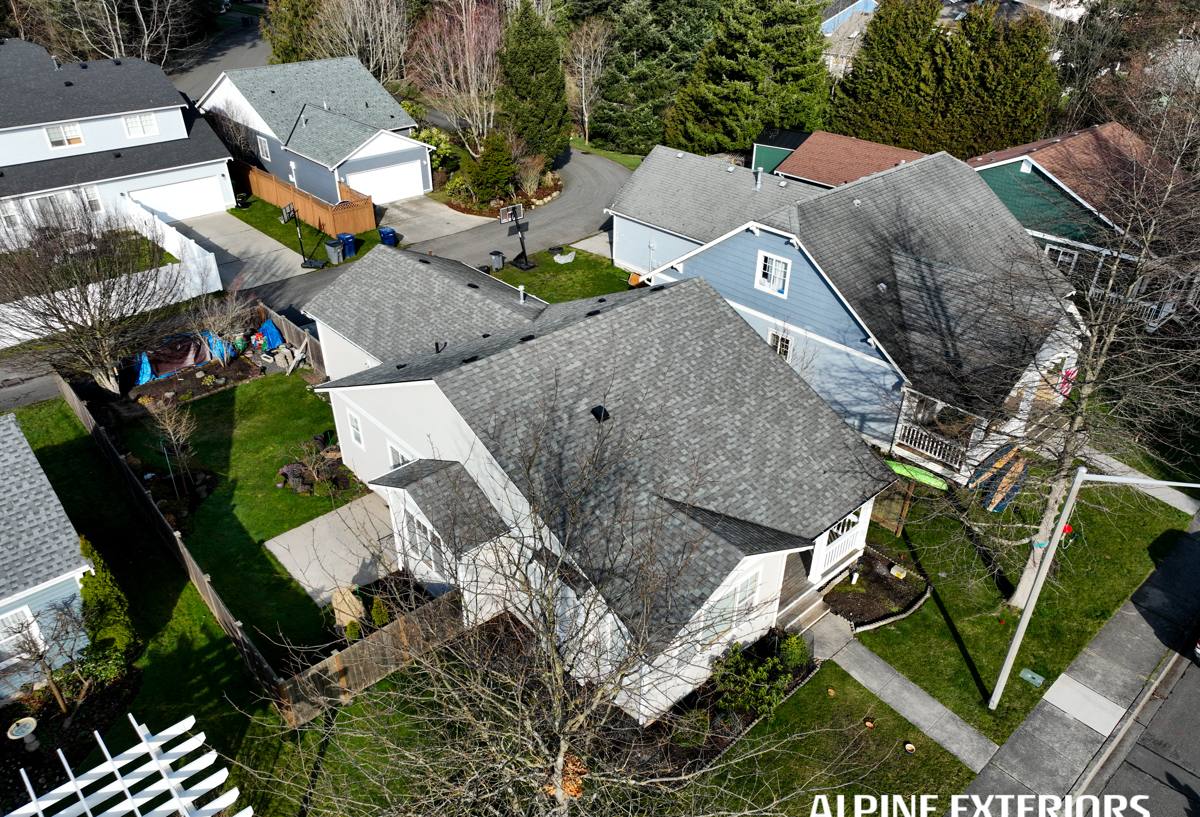
Signs Your Roof Has Crossed the Line From Repair to Replacement
Not every roof problem in Blaine calls for a full replacement, and we'll tell you honestly when a repair is the right call. But there are signs that mean patching is just delaying an inevitable, more expensive failure:
- Granule loss heavy enough that you're finding shingle granules pooling in gutters or downspouts every season
- Moss that keeps returning within months of cleaning, especially on north-facing slopes that stay shaded and damp
- Soft or spongy decking felt underfoot during an inspection, which usually means moisture has already reached the plywood
- Flashing around chimneys, vents, or valleys that's corroded, lifted, or was never properly step-flashed to begin with
- Daylight visible through the attic roof deck, or water stains on attic sheathing after wind-driven rain
- A roof approaching or past the manufacturer's expected service life for its material and exposure conditions
If you're seeing two or more of these, it's worth having a straightforward conversation about replacement versus repair before winter storms make the decision for you.
What a Correct Roof Replacement Actually Involves
A roof replacement done right in a coastal Whatcom County location involves more layers than most homeowners expect. Each one matters more here than it would on a drier, more sheltered site inland.
Full Tear-Off and Deck Inspection
We don't install new roofing over old. A full tear-off lets us see the actual condition of the roof deck underneath — which is where moisture damage from years of driving rain tends to hide. Any soft, delaminated, or rotted decking gets replaced before anything new goes down. Skipping this step is the single most common shortcut that leads to early roof failure.
Underlayment and Water Barrier
Given how much wind-driven rain Blaine gets off the water, we treat underlayment as a real second line of defense, not a formality. Synthetic underlayment across the full deck, with self-adhering ice-and-water barrier at eaves, valleys, and around every penetration, gives the roof a backup layer if wind ever pushes water up under the surface material.
Ventilation
Balanced intake and exhaust ventilation keeps moist air moving out of the attic instead of condensing on the underside of the deck. In a moss-prone, damp climate, poor ventilation doesn't just shorten shingle life — it can also feed the exact conditions that let moss and mold take hold on the roof surface and in the attic.
Flashing and Salt-Air Hardware
Flashing and exposed fasteners are where salt air does the most damage over time. We use corrosion-resistant flashing and fastener materials appropriate for a coastal exposure, and we step-flash chimneys, walls, and valleys properly rather than relying on caulk or roof cement as a long-term seal.
Matching Materials to Blaine's Climate
There's no single "best" roofing material for every home — the right choice depends on your home's exposure, roof pitch, budget, and how much long-term maintenance you want to take on. Here's how the common options stack up for a salt-air, high-moss environment like Blaine's:
| Material | Salt Air Performance | Moss Resistance | Typical Lifespan | Maintenance |
|---|---|---|---|---|
| Architectural asphalt shingle (algae-resistant) | Good with proper flashing | Good — copper/zinc granules built in | 25-30 years | Low to moderate |
| Standard 3-tab asphalt shingle | Fair | Fair — more prone to moss without treatment | 15-20 years | Moderate |
| Standing seam metal | Very good with coastal-grade coating | Very good — smooth surface sheds moss | 40-60 years | Low |
| Cedar shake | Fair — needs regular treatment near salt air | Poor without upkeep | 20-30 years | High |
We're upfront about the trade-offs on each of these rather than steering everyone toward one product. Cedar shake, for example, can look great on the right home, but it demands consistent treatment and moisture management in a climate like Blaine's, and we'll walk you through that maintenance burden honestly before you commit to it. Metal roofing carries a higher upfront cost but tends to shrug off both salt exposure and moss better than any other option over the long run. Algae-resistant architectural shingles remain the most common choice because they balance upfront cost, appearance, and reasonable performance against moss and salt air.
Our Roof Replacement Process
Homeowners in Blaine tend to want to know exactly what's happening on their roof and when, especially since a job usually means a few days of exposed decking if weather doesn't cooperate. Our process is built around minimizing that exposure window:
- On-site inspection and estimate — we walk the roof, check the attic, and measure for an accurate material takeoff, not a rough guess.
- Material selection — we go over the options above in the context of your home's specific exposure, pitch, and budget.
- Scheduling around weather — we plan tear-off days around forecasts to keep the deck covered and dry as briefly as possible.
- Tear-off and deck repair — old material comes off, decking is inspected, and any damaged sections are replaced.
- Underlayment and flashing installation — ice-and-water barrier, synthetic underlayment, and all new flashing go in before any surface material.
- Surface material installation — shingles, metal, or shake installed to manufacturer spec, including proper nailing patterns and exposure.
- Ventilation check — intake and exhaust ventilation confirmed balanced for the attic space.
- Final walkthrough and cleanup — magnetic sweep for stray fasteners, full site cleanup, and a walkthrough so you know exactly what was done.
What Affects Roof Replacement Cost in Blaine
Every roof is different, so we won't quote a number without seeing your home, but these are the real variables that move a project's cost up or down:
| Factor | Why It Matters |
|---|---|
| Roof size and number of facets | More squares and more valleys/hips mean more material and labor time |
| Deck condition | Rotted or soft decking found during tear-off adds repair cost that can't always be predicted upfront |
| Roof pitch and accessibility | Steep or hard-to-access roofs require more safety setup and slow the work down |
| Material choice | Metal and cedar cost more upfront than asphalt but shift the long-term maintenance and lifespan math |
| Flashing and penetration count | Chimneys, skylights, and multiple vent penetrations each add flashing labor |
| Ventilation upgrades | Adding or correcting intake/exhaust ventilation during the same job is far cheaper than doing it later |
Why a Crew That Already Works in Blaine Matters
A roofing crew that regularly works this part of Whatcom County knows things that don't show up in a generic roofing manual: which flashing details actually hold up against wind off the water, how aggressively moss returns on shaded north slopes near the coast versus more sheltered inland lots, and how local permitting and inspection expectations run. That familiarity shows up in fewer surprises mid-project and fewer callbacks after a storm season. It also means we're not learning Blaine's climate on your roof — we already account for salt exposure and driving rain in how we spec flashing, fasteners, and underlayment before we ever climb the ladder.
Keeping Your New Roof Performing
A new roof still needs some basic upkeep to hit its full expected lifespan in this climate. A few habits go a long way:
- Clean gutters and downspouts at least twice a year so wind-driven rain has somewhere to drain instead of backing up under the roof edge
- Have moss growth treated early rather than letting it establish, especially on shaded or north-facing slopes
- Trim back overhanging branches that keep sections of the roof shaded and slow to dry after rain
- Schedule a roof check after any major windstorm to catch lifted shingles or flashing before the next system moves through
- Keep attic ventilation paths clear of insulation or debris so moisture keeps moving out as designed
If you're weighing whether your Blaine home needs a roof repair or a full replacement, we're happy to take a look and give you a straight answer along with a free, no-pressure estimate — just fill out the form below to get started.