 Bellingham Exterior
 Roof Repair Built for Blaine's Coastal Weather
Blaine sits right up against the water in the far northwest corner of Whatcom County, and that location shapes what a roof has to survive here. Salt-laden air off the water accelerates corrosion on fasteners, flashing, and any exposed metal. Driving rain pushed sideways by coastal wind finds every weak seam a roof has. And a long, damp moss season keeps shaded and north-facing slopes wet for months at a stretch. None of that is unusual for this part of Washington, but it does mean a roof repair done for Blaine needs to account for conditions that a drier inland climate simply doesn't produce.
A lot of roof problems in this area aren't dramatic. They're small: a lifted shingle tab, a flashing seam that's opened up a sixteenth of an inch, a clogged valley holding water against the decking. Left alone through one more wet season, any of those becomes a much bigger job. Caught early, they're a straightforward repair.
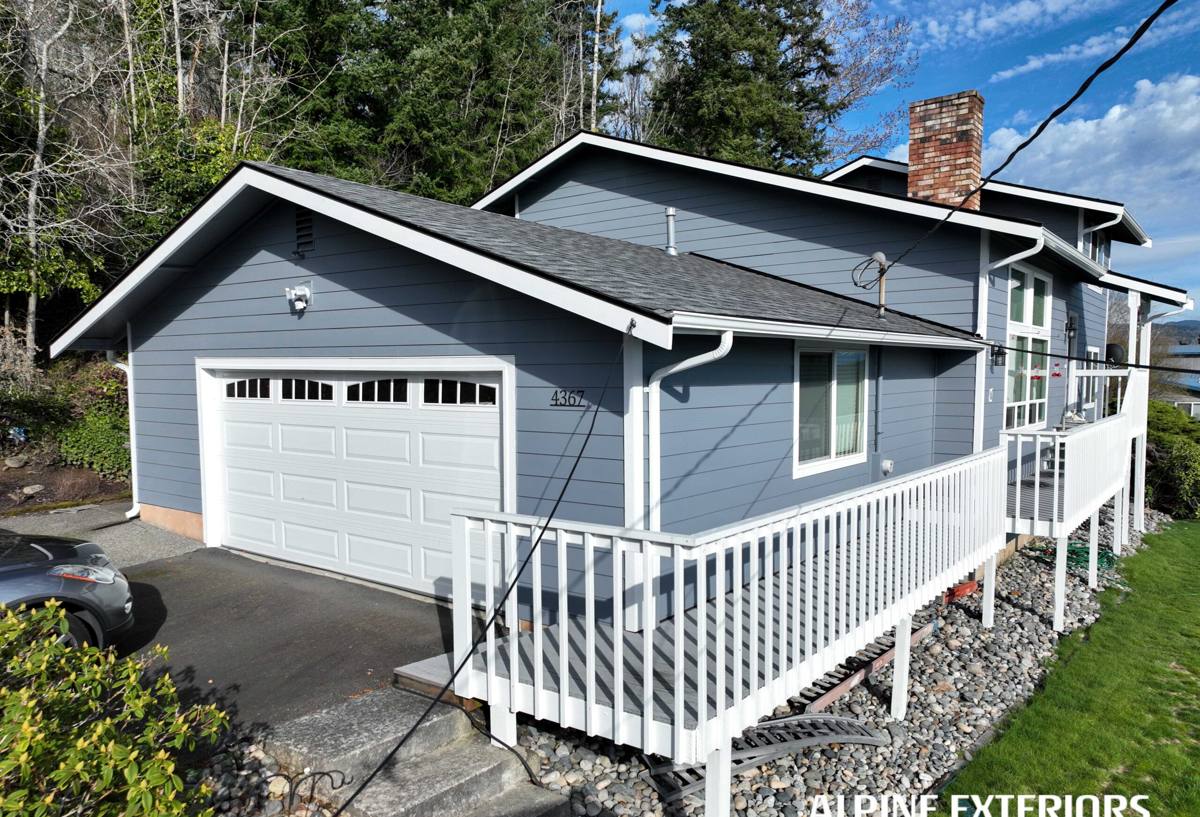
Signs a Blaine Roof Needs Repair, Not Replacement
Most roofs don't fail all at once — they show localized trouble first. Knowing what to look for from the ground can save you a call for something minor, or prompt you to call before a small leak becomes water damage inside the house.
- Granules collecting in gutters or at downspout outlets, especially after a windy rain
- Shingles that look cupped, curled at the edges, or have visibly lifted tabs
- Dark streaking or thick moss growth concentrated on shaded or north-facing slopes
- Rust staining or a soft, spongy feel around chimney, vent, or skylight flashing
- Water stains on interior ceilings or in the attic near a roof valley or penetration
- Daylight visible through the roof deck from inside the attic
- Sagging along a ridge line or between rafters
If what you're seeing is confined to one area — one valley, one chimney, one slope — that's usually a repair. Widespread granule loss across the whole roof, or multiple leak points in different areas, is often a sign the roofing material itself is at the end of its service life, and repair stops being cost-effective.
What an Honest Roof Repair Actually Involves
Diagnosis Before Anything Gets Touched
The most common mistake in roof repair isn't bad workmanship — it's fixing the spot where the stain appeared instead of the spot where the water actually got in. Water travels along the underlayment and decking before it shows up as a ceiling stain, sometimes several feet from the actual entry point. A correct repair starts with tracing the leak back to its source, not patching the visible symptom.
Flashing Comes First
In our experience, flashing failure causes more leaks in this climate than worn-out shingles do. Flashing around chimneys, skylights, vent pipes, and roof-to-wall transitions is the part of a roof most exposed to wind-driven rain, and it's the part most often installed with shortcuts — reused old flashing, undersized step flashing, or sealant used in place of proper metal work. A repair that doesn't address flashing is usually a temporary fix.
Matching Materials, Not Just Covering the Spot
A patch that doesn't match the surrounding shingle profile, color, or exposure will shed water differently than the rest of the roof and often becomes the next leak point. We match existing materials where possible and integrate new shingles or flashing into the existing water path — over, under, and around adjacent courses — rather than surface-mounting a patch on top.
Checking the Deck
Any repair that's been leaking for a while means checking the roof decking underneath for soft spots or rot before new material goes down. Covering damaged decking with new shingles doesn't solve anything — it just hides the problem until it fails again, usually with more damage the second time.
Our Roof Repair Process
- Inspection and assessment — We walk the roof (or inspect from a lift where pitch or access requires it), check attic space where accessible, and identify the actual source of the problem, not just the symptom.
- Honest scope and estimate — You get a clear explanation of what's actually wrong, what's involved in fixing it correctly, and a written estimate before any work starts.
- Repair execution — Damaged material is removed back to sound decking and flashing, the area is rebuilt with correctly integrated materials, and the surrounding roof is checked for related wear that could cause a repeat call.
- Cleanup and walk-through — Job site cleared of debris and fasteners, and we show you what was done and why.
Repair vs. Replacement: What Actually Drives the Decision
| Factor | Leans Toward Repair | Leans Toward Replacement |
|---|---|---|
| Age of roofing material | Under roughly two-thirds of expected lifespan | At or beyond expected lifespan for the material |
| Extent of damage | Localized to one area or penetration | Spread across multiple slopes or areas |
| Granule loss | Minor, isolated | Widespread, shingle mat visible |
| Deck condition | Sound, dry decking | Soft spots, rot, or repeated water intrusion in multiple spots |
| Leak history | First occurrence, single source | Recurring leaks in different locations |
Cost is part of this conversation too, but it should follow the roof's actual condition rather than drive it. A roof that's fundamentally sound with one damaged area is almost always cheaper and smarter to repair. A roof that's failing broadly is one where repeated repairs end up costing more over a couple of years than one properly done replacement.
Moss, Algae, and the Blaine Growing Season
Whatcom County's damp, mild climate is close to ideal moss-growing conditions for a large part of the year, and roofs with any shade — from trees, from a neighboring structure, or simply from north-facing exposure — take the brunt of it. Moss isn't just cosmetic. It holds moisture against the roofing surface, works its way under shingle tabs as it grows, and can lift material enough to let water in underneath. Left unaddressed for a few seasons, moss growth on a valley or lower slope is a common cause of the slow leaks that eventually show up as ceiling stains.
Repair work in moss-affected areas isn't just about patching the damaged spot — it includes removing the growth correctly (not power-washing, which can drive granules off and force water under shingles) and identifying whether zinc or copper strips, better attic ventilation, or tree trimming would reduce regrowth going forward.
Why Local Experience with Blaine Roofs Matters
A roofing crew that regularly works Blaine and the surrounding Whatcom County coastline already knows which slopes tend to hold moss the longest, how far wind-driven rain travels under a poorly lapped shingle course, and which flashing details fail first in salt-air exposure. That's not something you can fully substitute with a general inspection checklist — it comes from having repaired enough roofs in this specific stretch of coastline to know where the recurring problems actually live.
It also matters for scheduling and follow-up. Roof repair in coastal weather often needs a dry window to do correctly, and a crew based in the area can respond faster when conditions open up, rather than working around a long drive from somewhere inland.
Maintaining a Roof Between Repairs
Regular attention between repairs is what keeps small problems small. A few habits go a long way in this climate:
- Clear gutters and downspouts at least twice a year, more often under overhanging trees
- Trim back branches that shade the roof or drop debris into valleys
- Have moss growth addressed early in the season, before it spreads or lifts shingle edges
- Check attic ventilation — poor airflow traps moisture and accelerates deck rot from the inside
- After any major windstorm, do a visual check from the ground for lifted or missing shingles
- Have flashing around chimneys, skylights, and vents inspected every couple of years, since sealant and metal both degrade with age and UV exposure
None of this replaces a professional inspection, but it reduces how often you need one for anything urgent.
What to Expect From a Repair Estimate
A repair estimate should tell you exactly what's damaged, why it failed, what the fix involves, and what it will cost — not a vague number based on square footage alone. If a contractor can't explain the cause of the leak before quoting the fix, that's worth questioning. We look at the actual roof, explain what we find in plain terms, and give you a written estimate that matches the scope of the real problem, whether that's a single flashing detail or a full slope.
If you're seeing signs of a leak, moss buildup, or damaged shingles on a Blaine home, we're glad to take a look and give you a straightforward, no-pressure estimate — just fill out the form below.