 Bellingham Exterior
 Roofing in a Salt-Air, High-Moisture Town
Blaine sits right on the water at the northern edge of Whatcom County, and that location shapes everything about how a roof ages here. Homes just a few blocks from Drayton Harbor or Semiahmoo Bay take on salt-laden air that speeds up corrosion on metal flashing, fasteners, and vents. Add the driving rain that comes in sideways off Georgia Strait during winter storms, plus a moss season that can stretch from October well into spring, and you have a climate that is genuinely tougher on asphalt shingles than what a roof fifty miles inland deals with.
None of that means asphalt shingles are the wrong choice for Blaine — they're still one of the most practical, cost-effective roofing systems available, and the majority of homes in this area are shingled for good reason. It means the installation details, ventilation, and maintenance schedule have to account for what this specific location throws at a roof. A shingle roof installed the same way you'd install one in a dry climate will not hold up the same way here.
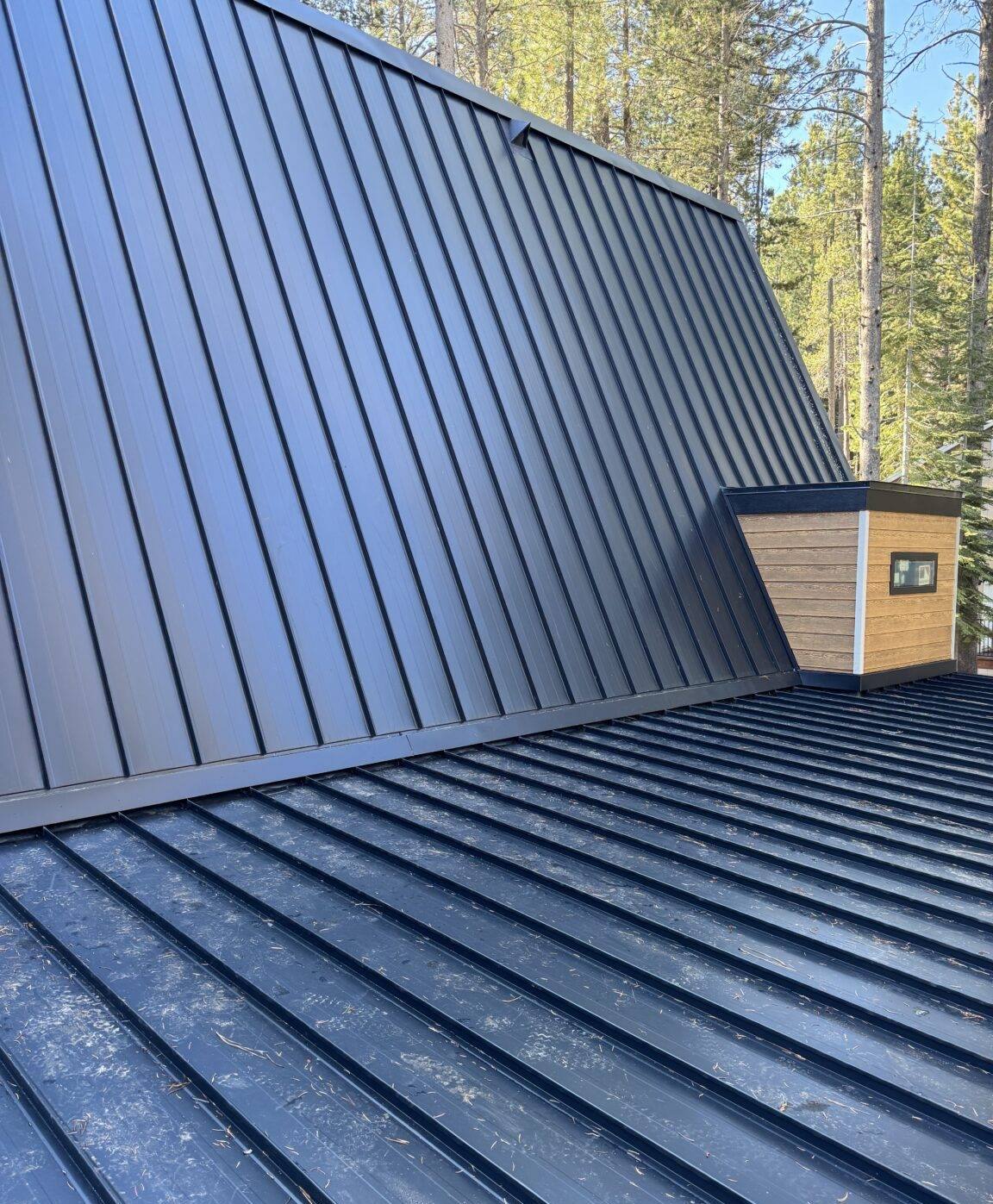
What Salt Air, Rain, and Moss Actually Do to a Roof
It helps to understand the specific failure points, because they're different from generic "roof wear."
Salt Air and Metal Components
Salt accelerates corrosion on anything metal — nail heads, drip edge, flashing around chimneys and skylights, and vent stacks. Corroded fasteners lose their grip on shingles over time, and pitted or rusted-through flashing is one of the most common sources of hidden leaks we find on homes closer to the water in Blaine.
Driving, Wind-Driven Rain
Rain that falls straight down is easy for any roof to shed. Rain that's being pushed sideways by wind off the water finds its way under shingle tabs, around valleys, and behind flashing that isn't properly lapped. This is why fastening pattern, nail placement, and underlayment choice matter more here than in a calmer inland setting.
Moss and Prolonged Moisture
Blaine's wet season runs long, and shaded or north-facing roof sections can stay damp for weeks at a stretch. Moss thrives in that environment. It's not just cosmetic — moss holds moisture against the shingle surface, lifts shingle edges as it grows, and in bad cases works its way under tabs and into the underlayment, which is where real leaks start.
What a Correct Asphalt Shingle Job Involves Here
A roof that's going to hold up under these conditions needs more than shingles nailed to plywood. The details that matter most in Blaine include:
- Ice-and-water shield at eaves and valleys — a self-adhering membrane that seals around fastener penetrations, critical where wind-driven rain and ice dams both occur.
- Corrosion-resistant fasteners and flashing — stainless steel or heavy-gauge galvanized components hold up far longer than standard-grade metal this close to salt water.
- Proper nailing pattern for wind exposure — Blaine's coastal wind loads call for following manufacturer high-wind nailing guidelines, not the minimum standard pattern.
- Balanced attic ventilation — intake at the eaves and exhaust at the ridge, sized correctly, to keep the underside of the roof deck dry and reduce the temperature swings that shorten shingle life.
- Careful valley and flashing detail work — where two roof planes meet, or where the roof meets a chimney, wall, or skylight, is where the vast majority of leaks originate.
- Starter strip and drip edge at all edges — often skipped or done cheaply, but essential for keeping wind-driven rain from getting under the first course of shingles.
Skipping any one of these doesn't necessarily cause an immediate problem — it shows up two, five, or ten years later as a leak that's hard to trace back to its actual cause.
Signs Your Blaine Roof Needs Attention
Because coastal wear is often gradual, homeowners frequently don't notice a roof is in trouble until there's a leak inside the house. Worth checking for, or having a contractor check for, periodically:
- Moss buildup along the ridge, in valleys, or on shaded slopes
- Granules collecting in gutters or at downspout outlets
- Curling, cupping, or cracked shingle tabs
- Rust staining below metal flashing or vent stacks
- Dark streaking that doesn't wash off with rain (algae staining)
- Soft spots or sagging when walked on (deck-level moisture damage)
- Daylight visible through the roof deck from inside an unfinished attic
- Interior ceiling stains, especially after a windy rainstorm
Any one of these on its own isn't necessarily an emergency, but they're worth a professional look before the next wet season.
Choosing Shingles for a Coastal, Moss-Prone Climate
Not all asphalt shingles perform the same way in this environment. The differences that matter for a Blaine home:
| Shingle Type | How It Handles Blaine's Climate | Trade-offs |
|---|---|---|
| Standard 3-tab | Adequate wind rating for many sites; lowest upfront cost | Thinner profile wears faster under driving rain and heavy moss growth; shorter realistic service life here |
| Architectural (dimensional) | Heavier, thicker construction sheds wind-driven rain better and holds up longer under repeated wet-dry cycling | Higher material cost, though the cost gap has narrowed and the added durability generally pays for itself over the roof's life |
| Algae-resistant (AR) shingles | Copper- or zinc-infused granules that actively resist the algae staining common in humid coastal climates | Modest upcharge; doesn't fully prevent moss, which is a different organism, but reduces staining significantly |
| Impact-rated (Class 4) shingles | More resistant to debris impact during coastal windstorms | Higher cost; may qualify for insurance discounts in some cases, worth confirming with your carrier |
For most Blaine homes, we recommend at least an architectural shingle with algae resistance as the baseline — the added upfront cost is modest compared to the labor cost of a full re-roof, and it directly addresses the two things this climate is hardest on: wind-driven rain and organic growth.
Moss Management Is Part of the Job, Not an Afterthought
A long wet season means moss isn't a one-time problem you solve during installation and then ignore. Zinc or copper strips installed near the ridge can help suppress regrowth over time as rain washes trace metal down the roof slope. Beyond that, periodic soft-washing (never pressure-washing, which strips granules and shortens shingle life) and manual removal of established moss patches on a reasonable schedule will add real years to a roof's service life. We factor this into the maintenance guidance we give every Blaine customer, not just the installation itself.
How We Approach a Blaine Roofing Project
Every roof starts with an actual inspection, not a guess from the ground. That means getting on the roof to check deck condition, existing ventilation, flashing condition, and how much of the existing damage (if any) is limited to the shingle layer versus the deck underneath.
- Inspection and assessment — full roof walk, attic check for ventilation and moisture signs, photos of problem areas.
- Written scope and estimate — clear breakdown of materials, tear-off (if needed), flashing work, and ventilation changes, with no vague line items.
- Tear-off and deck check — old roofing removed down to the deck, with any soft or damaged sheathing replaced before anything new goes down.
- Underlayment and flashing — ice-and-water membrane at vulnerable areas, new corrosion-resistant flashing throughout.
- Shingle installation — installed to manufacturer high-wind specifications appropriate for Blaine's exposure.
- Final walkthrough — cleanup, magnetic sweep for stray fasteners, and a review of what was done and why.
We also handle repairs that don't require a full replacement — localized shingle replacement, flashing repair around a chimney or skylight, and ventilation corrections on roofs that are otherwise sound.
Why Local Experience Matters for This Kind of Work
A contractor who works mainly inland or in drier parts of the region can install a technically fine roof that still underperforms in Blaine, simply because the details that matter here — fastener grade, flashing metal, nailing pattern for wind exposure, moss-resistant material choice — aren't things you'd prioritize somewhere without salt air and a long wet season. A crew that regularly works Blaine and the surrounding Whatcom County coastline has already seen which failure points show up first on homes like yours, and builds the job around avoiding them from day one rather than fixing them later.
What Affects the Cost of an Asphalt Shingle Roof in Blaine
| Factor | Why It Matters |
|---|---|
| Roof size and pitch | More surface area and steeper slopes both increase labor time and material needs |
| Number of layers to remove | Tear-off of an existing roof (or multiple layers) adds labor cost versus a bare deck |
| Deck condition | Sections of rotted or soft sheathing need replacement before new roofing goes on |
| Shingle grade chosen | 3-tab, architectural, and impact-rated products carry different material costs |
| Flashing and ventilation work | Upgrading corroded flashing or adding proper intake/exhaust ventilation adds scope but reduces future problems |
| Roof complexity | Valleys, dormers, skylights, and chimneys all add cutting, flashing, and labor time |
Costs for a full residential re-roof vary widely based on these factors, and anyone quoting a firm number without walking the roof first is guessing. We give honest, itemized estimates after an actual inspection, not a generic per-square-foot number pulled off a phone call.
Get a Straightforward Look at Your Roof
If your Blaine home's roof is showing moss, granule loss, staining, or you just want an honest read on how much life it has left, we're happy to take a look. The estimate is free, there's no pressure attached to it, and you'll get a clear explanation of what we find — whether that means a repair, a full replacement, or simply a maintenance recommendation. Use the form below to get started.