 Bellingham Exterior
 Deck Replacement Built for Blaine's Coastal Exposure
Blaine sits right on the water, and that changes what a deck has to survive year after year. Between Semiahmoo Bay's salt air, the steady wind off the Strait, and Whatcom County's long wet season, decks here take a different kind of beating than a deck twenty miles inland. We've replaced enough decks along this stretch of coastline to know that what works in a sheltered Bellingham backyard doesn't always hold up in Blaine, and what looks fine from the yard often isn't fine underneath.
This page covers what a deck replacement actually involves for a Blaine property, how we approach the job, and why hiring a crew that already understands this specific coastal environment matters more here than in most parts of Whatcom County.
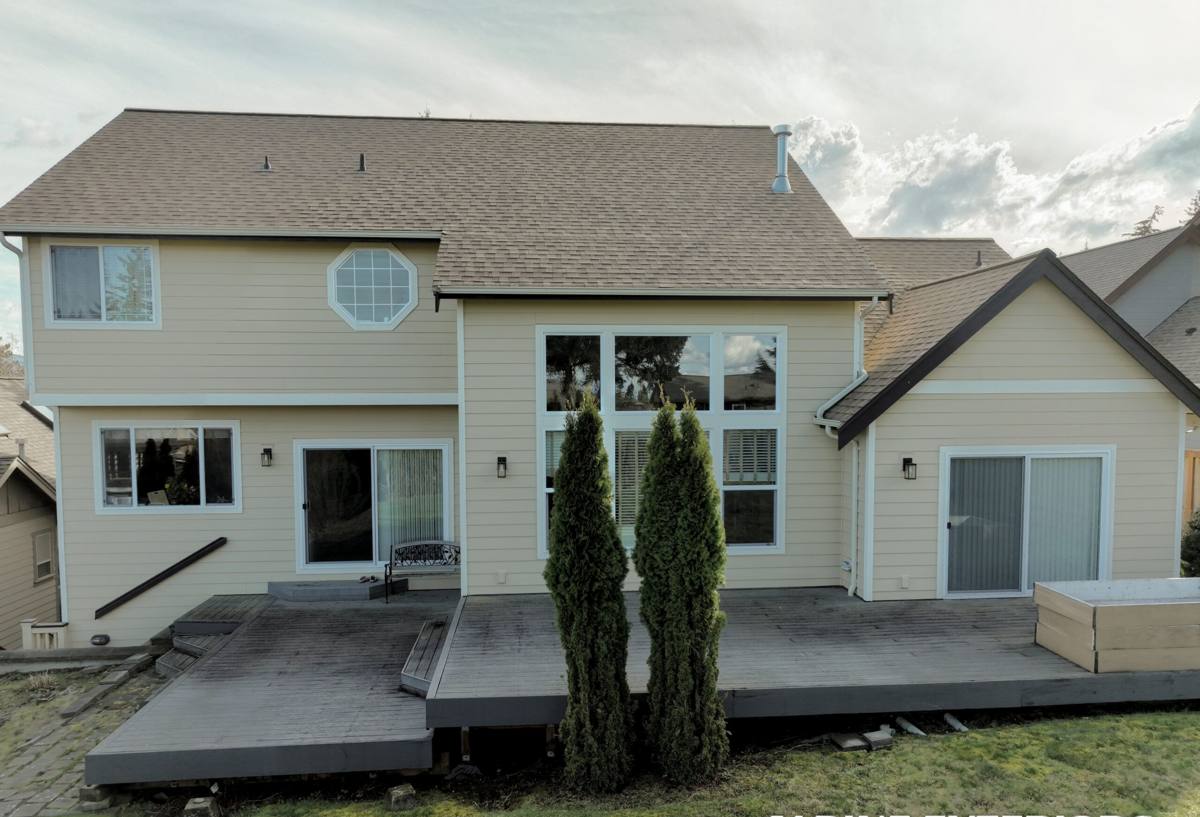
Why Blaine Decks Fail Faster Than You'd Expect
Salt Air and Metal Fasteners
Salt-laden air corrodes exposed fasteners, joist hangers, and hidden hardware faster than standard inland exposure. A deck built with the wrong grade of screws or hangers can start rusting from the inside within a few years, well before the surface boards show any obvious wear. This is one of the most common failure points we find on decks that are otherwise structurally sound-looking from above.
Driving Rain and Water Intrusion
Wind-driven rain off the water doesn't fall straight down — it gets pushed sideways into ledger boards, rim joists, and any gap where flashing was skipped or done poorly. Over time this drives moisture into framing connections that were never designed to handle standing water, which is where rot actually starts.
Moss and the Long Wet Season
Whatcom County's moss season runs long, and a north-facing or shaded deck in Blaine can stay damp for weeks at a stretch. Moss holds moisture against the wood surface and in board gaps, accelerating decay in exactly the spots that are hardest to inspect from a casual walk-through.
Signs Your Deck Needs Replacement, Not Repair
- Soft or spongy spots in the decking, especially near the house or along the perimeter
- Rust streaks below joist hangers, ledger boards, or fastener heads
- Persistent moss or algae staining that comes back within weeks of cleaning
- Gaps or separation where the ledger board meets the house
- Posts that feel loose or show soft wood when probed near ground level
- Railings that flex or wiggle under normal hand pressure
- Boards that have cupped, split, or pulled away from fasteners
If you're seeing two or more of these, especially anything involving the ledger connection or support posts, that's usually a replacement conversation rather than a spot repair. Patching individual boards on a deck with compromised framing just delays the real fix and can mask a safety issue.
What a Correct Deck Replacement Involves
Removal and Structural Inspection
We tear off the old decking and railings and get a real look at the framing underneath — joists, beams, posts, and especially the ledger connection to the house. This is where we find most of the problems a homeowner couldn't have seen from the surface. In a coastal setting like Blaine, we pay particular attention to any hardware that's been exposed to salt air, since corroded connectors are a common reason a deck that "looked fine" turns out not to be.
Ledger and Flashing Details
The ledger board connection is the single most important structural and weatherproofing detail on an attached deck. It needs proper flashing that directs water away from the house, not into it, and fasteners rated for the exposure. Given how much wind-driven rain this area sees, we don't cut corners on this step — it's the detail most likely to cause hidden rot if it's done wrong.
Framing and Fasteners
For a coastal property, we use fasteners and structural hardware rated for corrosive exposure rather than standard-grade hardware. It costs more up front and it's worth it — replacing rusted-out hangers under a five-year-old deck is a far more expensive and disruptive job than specifying the right hardware the first time.
Decking Material Selection
Wood and composite decking both have a place in Blaine, but they come with different maintenance realities in this climate. We'll walk through the honest trade-offs for your specific site — sun exposure, shade, proximity to the water — rather than pushing one product for every job.
| Material | Coastal / Moss-Prone Performance | Maintenance |
|---|---|---|
| Pressure-treated wood | Solid if properly sealed and re-coated; needs attention in shaded, damp areas | Annual cleaning and periodic sealing |
| Cedar | Naturally rot-resistant but still needs finish maintenance near salt air | Re-stain/seal every 2-3 years |
| Composite decking | Resists moisture and moss staining well; surface doesn't absorb water like wood | Periodic washing, no sealing required |
| Hardware/fasteners | Must be corrosion-rated for coastal exposure regardless of decking choice | Inspect yearly for rust, especially near the ledger |
Railings, Stairs, and Code Requirements
Whatcom County building codes set specific requirements for railing height, baluster spacing, and stair geometry, and any deck replacement is a chance to bring an older deck up to current code — something older Blaine decks built decades ago often don't meet. We handle permitting and inspection coordination as part of the job so you're not left chasing paperwork or guessing whether your new deck will pass.
Beyond code minimums, railing hardware in a coastal environment deserves the same corrosion-resistant treatment as the framing below the decking. A railing post that loosens because its anchor bolts rusted out is a safety issue, not just a cosmetic one.
Our Deck Replacement Process
1. On-Site Assessment
We walk the existing deck with you, probe suspect areas, and look at the ledger connection, posts, and any spots showing moss or moisture staining. This tells us what we're actually dealing with before we quote anything.
2. Honest Scope and Material Recommendation
You get a clear explanation of what needs replacing, what materials make sense for your site's sun and moisture exposure, and why — not a one-size-fits-all package.
3. Permitting
We handle the permit application and inspection scheduling required for structural deck work in Whatcom County.
4. Demo and Framing
Full removal of the old structure, correction of any ledger or flashing issues found underneath, and new framing built with corrosion-rated hardware appropriate for a coastal property.
5. Decking, Railings, and Finish Work
Installation of your chosen decking and railing system, finished to code, with attention to drainage and airflow underneath to reduce future moss and moisture buildup.
6. Final Walkthrough
We walk the finished deck with you, cover basic maintenance for whatever material you chose, and answer any questions before we call the job done.
Cost Factors for a Blaine Deck Replacement
Every deck is different, but a few factors consistently move the price on jobs in this area:
- Deck size and footprint, including multiple levels or attached stairs
- Extent of hidden framing damage discovered once the old decking comes off
- Material choice — wood versus composite, and grade within each category
- Railing style and any glass, cable, or custom baluster work
- Ledger and flashing repairs needed at the house connection
- Site access and height above grade, which affect labor and safety requirements
We don't give ballpark numbers over the phone for structural work like this — too much depends on what we find once we're into the framing. What we can promise is a written scope and quote before any work starts, with hidden-damage contingencies explained up front rather than sprung on you mid-project.
Why a Local Crew Matters for This Job
A deck replacement in Blaine isn't the same job as one in a sheltered inland yard, and a contractor who hasn't worked this stretch of coastline can miss the details that actually matter here — the hardware grade, the flashing detail at the ledger, the drainage gaps that keep moss from taking hold. We work throughout Whatcom County and know which failure points show up again and again on waterfront and near-waterfront properties, because we've opened up enough old decks to see the pattern firsthand.
That local experience shows up in small decisions — which fastener spec to use, where to add extra flashing, how to detail the underside for airflow — that don't cost much more at build time but save you a premature rebuild ten years down the road.
Get a Free, No-Pressure Estimate
If your Blaine deck is showing rust, soft spots, or persistent moss staining, it's worth a straightforward look before you decide between repair and full replacement. Fill out the form below for a free estimate — no pressure, just an honest assessment of what your deck needs.