 Bellingham Exterior
 Building Decks That Actually Hold Up in Birch Bay
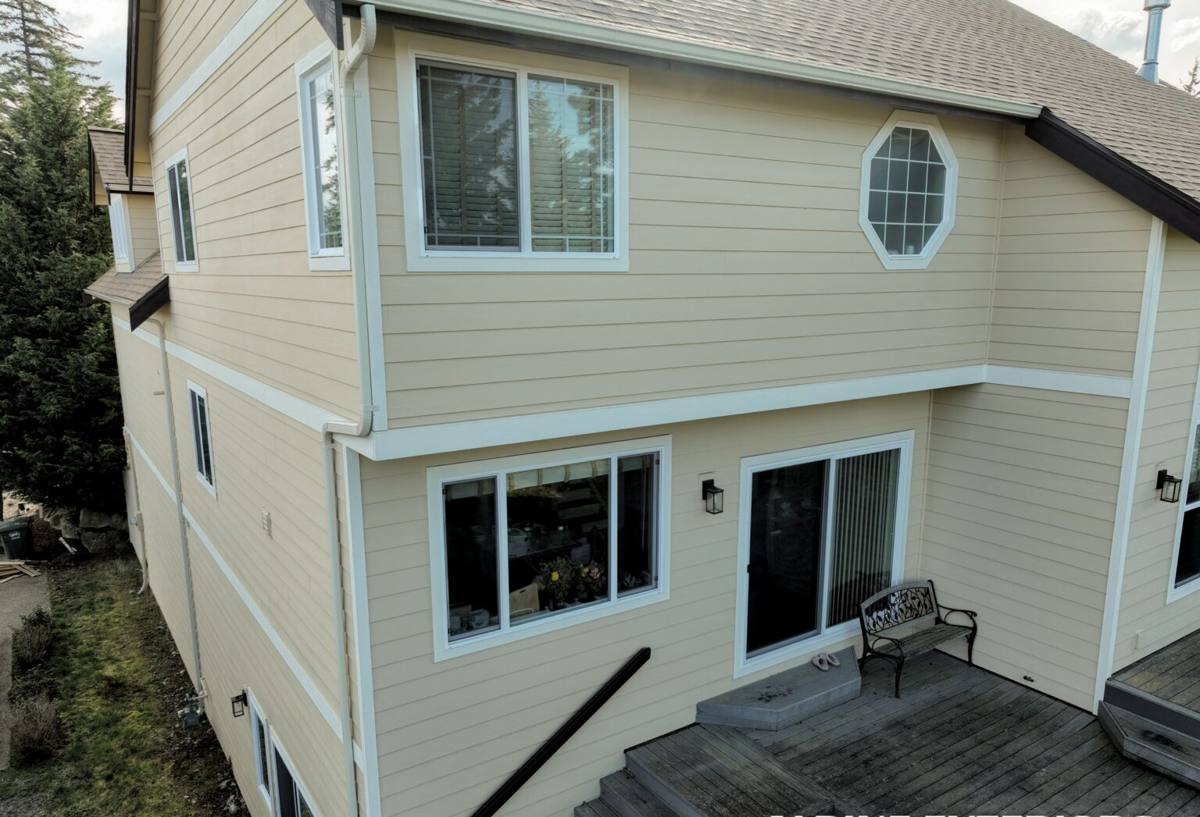
Birch Bay sits close enough to the water that its decks live a different life than a deck built ten miles inland. Salt-laden air moves through the area regularly, driving rain comes in sideways off the Strait more often than most homeowners expect, and the long gray stretch of fall and winter in Whatcom County gives moss and algae months to get established on any surface that stays damp. A deck built without those specifics in mind will look fine for a season or two, then start showing problems that are expensive to fix after the fact.
We build custom decks for homes throughout Bellingham and the surrounding Whatcom County communities, and Birch Bay projects get their own set of decisions from day one — not because the carpentry is different, but because the environment the deck has to survive is.
What Birch Bay's Climate Does to an Ordinary Deck
Salt Air and Corrosion
Homes closer to the shoreline deal with airborne salt that settles on every exposed surface, including the deck itself. Over time, salt exposure speeds up corrosion on fasteners, brackets, and any hardware that isn't rated for it. A deck fastened with standard interior-grade screws or coated hardware not designed for coastal exposure can develop rust streaks, weakened connections, and staining around every screw head within a few years.
Driving Rain and Water Intrusion
Rain in this part of Whatcom County doesn't always fall straight down. Wind off the water pushes it sideways into ledger boards, fascia, and any gap where a deck meets the house. If flashing details are done poorly — or skipped — water finds its way behind the decking and into framing, ledger connections, or the wall the deck attaches to. That's where the real damage happens, often invisibly, for years before anyone notices.
Moss, Algae, and a Long Wet Season
Whatcom County's wet season stretches long, and Birch Bay's proximity to the water keeps humidity and moisture lingering even on days it isn't actively raining. Any deck surface that doesn't shed water and dry out reasonably fast becomes a place for moss and algae to take hold — and once established, they're not just cosmetic. Moss holds moisture against the decking surface, which accelerates wood decay and makes boards slick and unsafe underfoot.
What a Correctly Built Deck Needs Here
None of this means a deck in Birch Bay has to be over-engineered or unusually expensive. It means the details that get skipped on an easier job can't be skipped here.
- Fasteners and structural hardware rated for coastal or high-moisture exposure, not just generic exterior-grade
- Proper ledger board flashing where the deck attaches to the house, sealed against wind-driven rain
- Decking material chosen with moss and moisture resistance in mind, not just appearance
- Adequate gapping between boards so water and debris don't sit and hold moisture against the wood
- Structural framing pressure-treated to a rating appropriate for ground contact and sustained dampness
- A surface texture and drainage slope that actually sheds water instead of pooling it
Skip any one of these and the deck will still get built — it just won't last the way it should, and the homeowner ends up paying for the fix later instead of paying for it right the first time.
Choosing the Right Decking Material
There's no single "best" decking material for every home — it depends on budget, how much maintenance a homeowner is willing to do, and how close the home sits to the water. We walk through these trade-offs honestly rather than pushing whatever has the highest margin.
| Material | Moisture & Moss Resistance | Maintenance | Relative Cost | Best For |
|---|---|---|---|---|
| Pressure-treated wood | Moderate — needs sealing to perform well | Annual cleaning and periodic sealing/staining | Lowest | Budget-conscious projects, homeowners who don't mind upkeep |
| Cedar | Good natural resistance, but still absorbs moisture over time | Regular cleaning and refinishing to preserve color and protection | Mid | Homeowners who want a natural wood look and are willing to maintain it |
| Capped composite | Strong — resists moisture absorption and staining | Occasional washing, no sealing or staining | Mid-High | Homeowners who want low upkeep with a wood-like appearance |
| PVC decking | Excellent — essentially non-absorbent | Lowest of all options, occasional rinse | Highest | Homes closest to the water or owners who want minimal long-term maintenance |
For homes in Birch Bay specifically, we lean toward recommending capped composite or PVC for anyone who wants to minimize how often they're out there scrubbing moss off the boards. Wood can absolutely work, but it asks more of the homeowner in upkeep, especially given how much moisture this area sees over a typical year.
Why We're Selective About Certain Products
Some decking and railing products on the market perform well in drier climates but aren't a good match for sustained coastal moisture — not because they're poorly made, but because their installation tolerances or moisture behavior make them a poor fit for this environment. When we steer a homeowner away from a particular product, it's about matching the material to the site, not a knock on the manufacturer.
Framing and Structure: What's Underneath Matters Most
The decking surface is what everyone sees, but the framing underneath is what determines whether the deck is still safe and level in fifteen years. For Birch Bay projects, we pay close attention to a few structural points that matter more here than in a drier inland location:
- Footings sized and set to local frost and soil conditions, not just minimum code
- Ledger attachment with proper flashing and moisture barrier, since this is the single most common point of hidden water damage
- Joist hardware rated for exterior and coastal exposure
- Adequate ventilation underneath the deck so framing can dry out between rain events instead of staying damp
A deck can look identical from the top with good or mediocre framing underneath. The difference only shows up years later, which is exactly why it's worth getting right the first time.
Our Process for a Birch Bay Deck Project
1. On-Site Assessment
We start by looking at the actual site — sun exposure, wind direction relative to the water, drainage patterns, and how the deck will tie into the existing structure. This is where climate-specific decisions get made, not guessed at later.
2. Design and Material Selection
We talk through decking material, railing style, and layout based on how the homeowner actually plans to use the space, along with an honest conversation about maintenance expectations for each option.
3. Permitting
Deck projects in Whatcom County typically require a permit depending on size, height, and attachment to the home. We handle that process as part of the project so homeowners aren't left figuring out county requirements on their own.
4. Construction
Framing, flashing, and decking installation follow in sequence, with attention to the fastener and flashing details covered earlier. We don't shortcut the parts that don't show.
5. Final Walkthrough
Before we consider the job finished, we walk the deck with the homeowner, check railing security, board spacing, and finish work, and answer any questions about care going forward.
Permits and Local Requirements
Whatcom County generally requires permits for decks above a certain height or attached to the primary structure, and requirements can vary depending on setback, lot conditions, and whether the property falls within a shoreline management area — which is a real consideration for homes near Birch Bay's waterfront. We manage this process directly rather than leaving homeowners to interpret county code on their own.
Keeping a Birch Bay Deck Looking Good Year-Round
Even the right materials benefit from basic seasonal care, especially given how long the wet season runs here.
- Sweep debris off the deck regularly — trapped leaves and needles hold moisture and speed up moss growth
- Rinse the surface periodically to remove salt residue, especially after storms with onshore wind
- Check railing hardware annually for corrosion or loosening, particularly on older or lower-grade fasteners
- Inspect ledger flashing and the point where the deck meets the house for any signs of water staining
- Treat visible moss promptly rather than letting it spread — it's far easier to manage early
- For wood decking, plan on resealing or restaining on the schedule the product actually requires, not just when it looks bad
Why Local Experience in Birch Bay Matters
A contractor who mostly builds decks inland can still build a structurally sound deck in Birch Bay — but the material choices, fastener specs, and flashing details that separate a deck that lasts from one that doesn't are things you learn from working this specific area, not from a general contracting license. We've built decks throughout Bellingham and the surrounding Whatcom County coastline, and the recurring problems we get called to fix on other people's work are almost always the same: the wrong hardware, missed flashing, or a decking material that was never a good match for this much moisture and salt exposure.
Hiring a crew that already understands what Birch Bay's climate does to a deck means fewer surprises later and a project built to actually hold up, not just pass inspection on day one.
Get a Free, No-Pressure Estimate
If you're planning a new deck or replacing one that hasn't held up to the weather here, we're glad to take a look and walk you through your options honestly. Fill out the form below for a free estimate — no pressure, no obligation.