 Bellingham Exterior
 Why Birch Bay Roofs Wear Differently Than Inland Bellingham Roofs
Birch Bay sits right on the water, and that changes what a roof has to deal with every single day. Homes a few miles inland in Bellingham get rain and gray skies like the rest of Whatcom County, but a roof facing the bay also takes on salt-laden air, steady onshore wind, and the kind of driving, sideways rain that finds every weak seam in a roofing system. Add in the tree cover that shades a lot of Birch Bay lots, and you get long stretches where roof surfaces simply don't dry out. That combination — salt, wind-driven moisture, and shade — is why roofs out here often show their age faster than a textbook lifespan would suggest, and why a "one size fits all" installation approach doesn't hold up over time.
A correct new roof install in this neighborhood accounts for all three factors at once: materials and fasteners that tolerate salt exposure, detailing that shuts out wind-driven rain rather than just vertical rain, and ventilation that keeps the deck dry enough to resist moss and rot even in shaded, low-airflow yards.
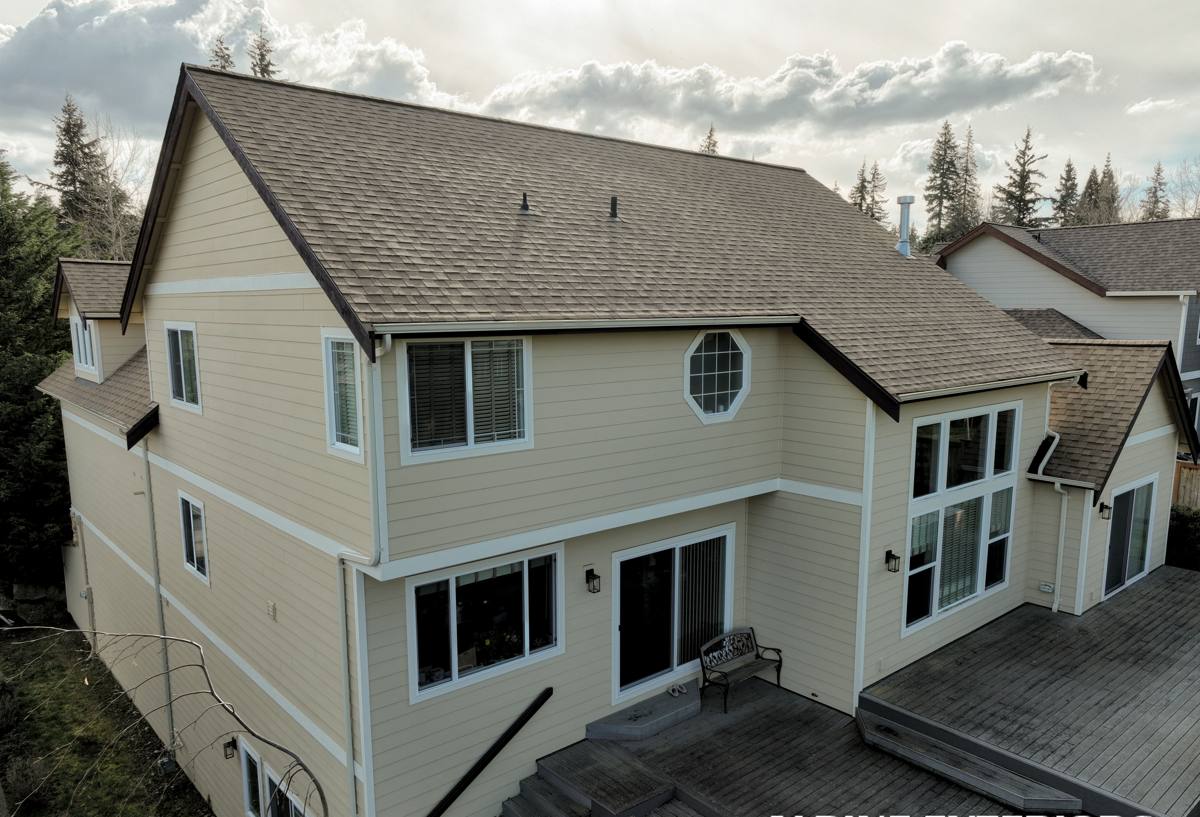
Signs a Birch Bay Home Needs Replacement, Not Another Repair
Roof repairs make sense when the underlying system is still sound. In Birch Bay, we see a lot of roofs that are past that point — patched more than once, with the underlying deck or underlayment already compromised by years of trapped moisture. Some signs it's time to talk about full replacement instead of another patch:
- Moss that regrows within a season or two of cleaning, especially on north-facing or shaded slopes
- Granule loss heavy enough that you can see bare asphalt or the shingle mat underneath
- Soft or spongy spots when walking the roof, which usually means the decking underneath has taken on water
- Rust streaking or corrosion around metal flashing, vents, or fasteners
- Daylight visible through the attic at roof edges, ridges, or around penetrations
- Interior water stains that reappear after repairs, or ceiling stains near exterior walls facing the water
- A roof nearing or past its material's expected service life, especially if it's had more than one layer of shingles installed over the years
If a roof is showing two or more of these at once, repair costs tend to stack up fast without actually solving the underlying moisture problem. A full replacement resets the clock properly instead of chasing symptoms.
Choosing a Roofing System for Salt Air and Moss
There's no single "best" roofing material for every Birch Bay home — it depends on how close the lot is to the water, how much shade the roof gets, and what the homeowner wants to spend upfront versus over the life of the roof. Here's how the common options compare for this specific environment:
| Material | Typical Lifespan Here | Moss/Algae Resistance | Salt Air Performance | Relative Cost |
|---|---|---|---|---|
| Architectural asphalt shingles (algae-resistant type) | 20-30 years | Good with proper ventilation; still needs periodic cleaning in shaded areas | Good — coastal-rated fasteners recommended | Lower-mid |
| Standing seam metal | 40-50+ years | Very good — smooth surface sheds moss more easily | Excellent when properly coated and fastened | Higher |
| Exposed-fastener metal panels | 25-40 years | Good | Fair to good — exposed fasteners are the weak point near salt air and need monitoring | Mid |
| Synthetic/composite shingles | 30-40 years | Good | Good with corrosion-resistant fastening | Mid-higher |
Asphalt Shingles
Still the most common choice in Birch Bay, and for good reason — modern architectural shingles with algae-resistant granules hold up well against moss when they're paired with real attic ventilation. The mistake we see most often isn't the shingle itself, it's installing a good shingle over poor ventilation, which lets moisture linger in the deck and undercuts the shingle's own resistance to growth.
Metal Roofing
Metal performs well near saltwater, but "metal" isn't one product — standing seam systems conceal their fasteners and shed moss and debris more cleanly, while exposed-fastener panels cost less upfront but put screws directly in the weather, which matters more here than it would twenty miles inland. Either way, fastener and flashing material need to be matched to the coastal environment, not just whatever's standard stock.
Synthetic and Composite Options
Composite shakes and similar products can give the look of cedar or slate without the moisture retention problems those traditional materials have in a wet, shaded climate. They're a reasonable middle ground for homeowners who want a specific appearance but don't want the upkeep that comes with natural wood in a moss-prone setting.
What a Correct Installation Actually Involves
The material on top only matters as much as what's underneath it. A proper new roof install in Birch Bay is built in layers, and skipping or shortcutting any one of them is where coastal roofs tend to fail early.
Tear-Off and Deck Inspection
We remove the old roofing down to bare decking rather than layering over it. That's the only way to actually see the plywood or plank sheathing underneath, replace any sections that have soft spots or rot from years of trapped moisture, and confirm the deck is properly nailed before anything new goes on.
Ice-and-Water Barrier and Underlayment
Eaves, valleys, and roof-to-wall transitions get self-adhering ice-and-water membrane, since those are the areas most exposed to wind-driven rain blowing off the bay. The rest of the deck gets a synthetic underlayment, which handles the incidental moisture that gets past shingles or panels far better than old felt paper does over a long, wet install season.
Flashing and Fastener Selection
Around chimneys, skylights, and sidewalls, flashing has to be formed and sealed correctly, not just caulked — caulk is a maintenance item, not a waterproofing detail. For fasteners and exposed metal near the water, we use corrosion-resistant hardware rather than standard-grade, since standard fasteners can start showing rust within just a few years this close to salt air.
Ventilation
Balanced intake (soffit) and exhaust (ridge or roof-mounted) ventilation keeps the attic and deck dry from the underside, which is just as important as shedding water off the top. Under-ventilated roofs trap warm, moist air against the deck, and that trapped moisture is a major reason moss and algae come back so fast on shaded Birch Bay roofs even after a fresh cleaning.
Our Installation Process
- On-site assessment — we walk the roof and attic, check deck condition, ventilation, and note the site's specific wind and shade exposure
- Written scope and material selection — a clear proposal covering tear-off, deck repair allowance, underlayment, flashing, fasteners, and material, so there are no surprises mid-project
- Scheduling around weather — Whatcom County's wet season narrows the install window, so we plan for dry-day stretches and protect open sections if weather turns
- Tear-off and deck repair — remove old roofing, replace any compromised sheathing, confirm the deck is solid before covering it
- Underlayment, flashing, and ventilation install — the waterproofing layers that do the real long-term work
- Final roofing material installation — shingles, panels, or composite laid per manufacturer specification, not shortcuts
- Cleanup and walkthrough — magnetic sweep for stray fasteners, debris removal, and a final review of the finished roof with the homeowner
Cost Factors for a Birch Bay Roof Replacement
Every roof is priced on its own specifics, but the variables that move the number most in this area are fairly consistent:
| Factor | Why It Matters |
|---|---|
| Roof size and pitch | More surface area and steeper pitches mean more material, labor, and safety setup |
| Number of existing layers | Multiple old layers add tear-off time and disposal cost |
| Decking condition | Rot or soft sheathing found during tear-off requires repair before new roofing goes on |
| Material choice | Asphalt, metal, and composite carry different material and labor costs |
| Ventilation upgrades | Adding or correcting intake/exhaust venting is worth the modest added cost given how much it affects moss and moisture problems long-term |
| Site access | Tree cover, steep driveways, and tight lot lines common in Birch Bay can affect staging and cleanup |
We give a firm, itemized estimate after the on-site assessment — not a rough phone quote — so the homeowner knows exactly what's driving the price before work starts.
What to Ask Before You Hire
A roof is one of the largest single investments in a home, and it's worth vetting a contractor the same way you'd vet any major purchase. Before signing anything, make sure you can check these off:
- Current Washington contractor license and active liability insurance
- A written, itemized scope of work — not just a one-line price
- Specifics on underlayment, flashing, and fastener materials, not just the visible shingle or panel brand
- A clear plan for ventilation, not just "replace what's there"
- References or completed work you can actually see, ideally in a similar coastal setting
- A manufacturer warranty that stays valid because the installation followed spec, plus a workmanship warranty from the contractor itself
- A realistic timeline that accounts for Whatcom County's weather, not an unrealistic rush
Why a Crew That Already Works Birch Bay Matters
General roofing knowledge gets you a roof that works fine in a dry, inland climate. It doesn't automatically account for what a bay-facing roof deals with — the wind direction that drives rain up under eaves that face the water, the specific spots on a lot where shade keeps moss coming back no matter how good the shingle is, or which fastener grades hold up versus which ones start rusting within a few seasons. A crew that's already worked roofs throughout Birch Bay and the greater Bellingham area has seen how these variables actually play out on real homes here, not just in a spec sheet.
That local experience also means fewer surprises during the project itself — knowing how the weather window typically behaves this time of year, understanding Whatcom County permitting and inspection expectations, and having relationships with suppliers who stock the corrosion-resistant materials this environment calls for rather than having to special-order them mid-job.
If your roof is showing its age or you just want an honest read on where it stands, we're happy to take a look. Reach out for a free, no-pressure estimate using the form below — we'll walk the roof, tell you what we see, and give you a straight answer on what it needs.